
#HajiMike

Writing music online is nothing new. In 1994 ResRocket was the first online ‘band’ project with over 1,000 participants who exchanged ideas and files via a mailing list and ftp server.
By 1999 this had developed into one of the first live online music collaborations, screened on BBC TV in front of 55 million viewers. Bob Marley’s ‘Them Belly Full (but we hungry)’ was recorded live involving Sinead O’Connor, and Brinsley Forde in London, Thomas Dolby in San Francisco and Lucky Dube in South Africa.
While this marked a radical change in online music production it would take another few years before such creative collaborations would have more mass appeal from a production standpoint.
An obvious change came in radical developments in music production itself. The advent of more accessible and affordable Digital Audio Workstations (DAWs) which evolved from early pricey microprocessor based non-analogue tapeless systems, such as the Synclavier and Fairlight CMI to software such as DigiDesign’s Pro Tools, Logic Audio and Cubase ( the latter via the earlier pioneering Atari ST). Digitisation in more recent years has resulted in even cheaper or freeware options.
A PreSonus soundcard for example comes with a free version of the company’s own DAW software called Studio One (Presonus, 2010). Reaper from Cockos calls itself ‘Audio Production without limits’ and while it can be purchased the free evaluation copy functions in exactly the same manner (Reaper, 2010).
Simultaneously, The Internet itself has changed dramatically in terms of bandwidth, speed and accessibility. We have moved from archaic (by today’s standards) brick sized modems for the few who knew how to use binary computer code in the mid-1980’s to more compact modems with increased bandwidth and more recently DSL and fibre optic connections. Ten years ago it was possible to send a wav or aiff file online, it may have taken a few hours but now, it is much faster and easier, taking perhaps 10-15 minutes for say a 54 megabyte wav file. This is usually done through file transfer web sites such as ‘Sendspace’ and ‘Yousendit’. Many musicians now work together through their own ftp sites accessible with a username and password through their own web sites.
These advances have made a-synchronous music collaboration much more accessible to more people online in different locations around the world.
Fully synchronised collaboration exists as well, although this is usually subscriber based with a fee and requires substantial outbound bandwidth, often not accessible to as many people.
Examples of this include RiffWorks ( http://www.riffworld.com/) and NinJamm (http://ninjam.com/) although at times there are latency issues with both.
So although it is possible to link up studios in real time by using a service such as ‘source direct’ or an Avid Satellite link the cost of these options would be substantially high.
Synchronised music production online in different studios is still an emerging form of technology at least in terms of mass usage. It is likely, given rapid changes in technology that this may change through existing online communication tools, such as say Skype.
It is tempting at this point to view all these developments simply from a technologically deterministic standpoint, a view which one often finds in professional music production magazines which can be interpreted like a bunch of reviews on products, software and releases which exist in a kind of non-social world. I find such approaches based on technological determinism to be flawed from the outset as for me it is more important to understand how we can utilise various tools to create and make music through social engagement. The bottom line is not so much how the tools use us but how we use the tools and how these changes have had a sociological impact in interactive creative processes from symbolic and symbiotic points of view.
We have moved from a ‘sit-back-and-be-told culture’ to a ‘making-and-doing culture’. There are many social media web sites now which allow us to upload, share and exchange music, such as FaceBook, YouTube, Twitter, ReverbNation, Myspace, Soundcloud and Soundclick to name just a few. More niche oriented social media sites and web portals that specialize in particular forms of music and music scenes also exist. So people work within specific genres and across them. For example, Dubstep, The Dub Scrolls, BeatPort, and HipHop Makers. Through such sites, generic and niche, I found myself working online with people in Greece, Malta, Portugal, Sweden, UK, USA, and Cyprus.
The main reasons why I engaged in online musical collaboration was partly a frustration I had with studio based work, particularly being a spoken word based artist based in Cyprus making reggae, where many local studios and producers lack experience in these genres. I also entered into online collaborations by being approached by various people, who were more grounded in the kinds of music I engage in, to work with them online.
What appealed most to me was the openness of the Internet and the fact that it allowed users to explore so many different avenues in an accessible and democratic manner. Immediacy was also a major bonus. A song as I found out could be created, recorded, edited, mixed and mastered in different
places in say 24 hours. Additionally, various aspects of music production, distribution, promotion, and management became demystified. It became that much easier to make and share music with specific audiences via free social media web sites.
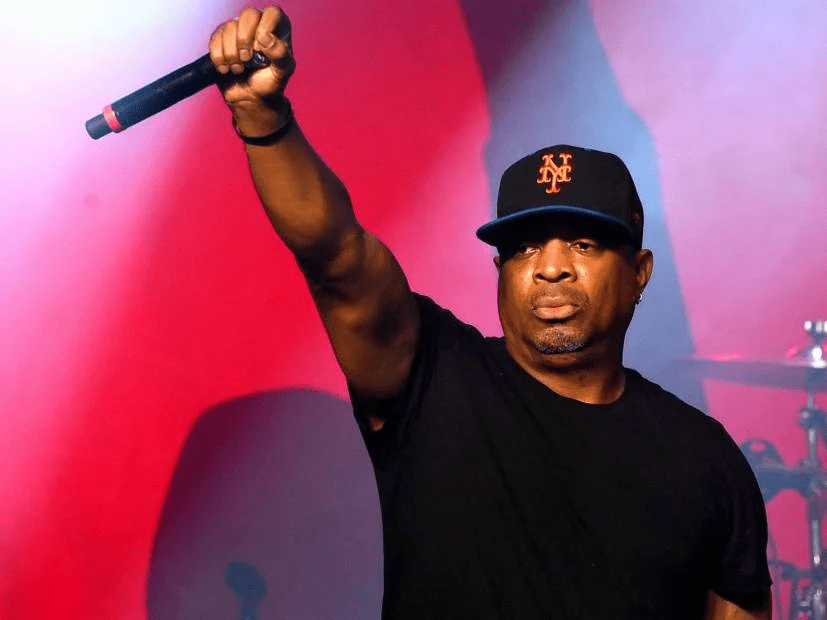
So independent net based labels, which Chuck D from Public Enemy dubbed as ‘Winties’ (web based independent labels) sprouted up in many countries around the world. The traditional filtering role played by radio and TV in the music industry in some ways became obsolete, after all much of the time they played only material that was signed to major labels and artists that had spent substantial amounts of money on their video clips. Now it is much easier to set up say a myspace account, upload some songs, live band footage, and gets known. Guerilla music making and self-marketing techniques are nothing new. They were deeply embedded in so many popular music scenes from punk rock to reggae. But the Internet suddenly gave that much more power to musicians to simply make, share and raise awareness of their existence. It is for example pointless and many people could also argue that it was from time, to send hundreds of cassettes or CD’s or vinyl demos out to record companies for consideration. Now an electronic press kit (EPK) could be assembled for free and sent to hundreds of targeted people with the click of a mouse.
Parts from Background – The Revolution has many interfaces! found in
By Mike Hajimichael aka Haji Mike, 2010.
 OUT OF MANY COME DUB AND OUT OF DUB COME ONE