
Author: Jah Billah
JAH BILLAH creates anachronical synchro-mystical DUB outta riddims built by various artists from all over the world. Linking up within independent network of riddim makers, producers and fellow dubbers into global organic sum of musical efforts. So far Jah Billah dubbed reggae music from Bosnia & Herzegovina, China, Croatia, Czech Republic, Denmark, Finland, France, Germany, Jamaica, Mexico, Netherlands, New Zealand, Poland, Romania, Russia, Spain, Switzerland, Sweden, Trinidad, UK, USA, Vietnam... and all around so awarded by the people the title of honor „AMBASSADOR OF DUB GALACTIC NATIONS“ .
Back in July, the mighty Mungo’s crew released a perfect antidote to stress: dubs of songs to come.
The Amen Break Universe
Famous “Amen Break”, champion drum loop sampled by everyone, has a long history.
You can catch most of it in this short MixMag documentary released in 2019:
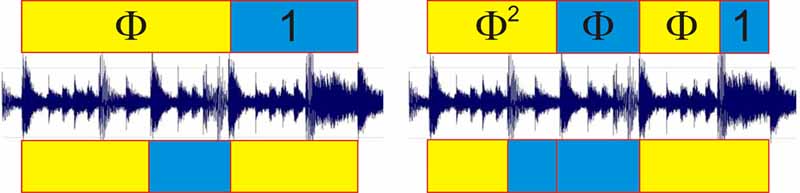
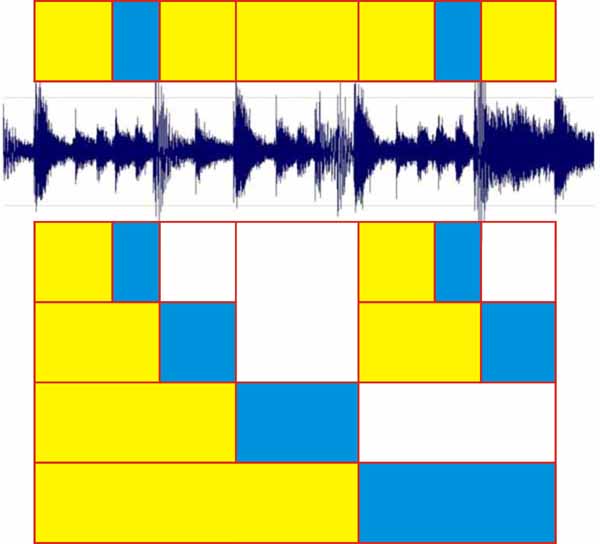
What I want to focus on today is article from 2008 “The Amen Break and the Golden Ratio” by Michael S. Schneider, mathematician.
“Human bodies and created sounds, like flowers, crystals and galaxies, can never exactly equal any ideal mathematical template. But the major wave peaks of the Amen Break, and many of its smaller ones, seem reasonably close to being an expression of the fractal nature of the wonderful Golden Ratio. I wonder what it would sound like if it was more precisely proportioned to the ideal, but I also know that slight differences are what make it human and alive.”
Article has since been refuted, for example by Sean Barrett in 2012 “The Amen Break Does Not Involve The Golden Ratio”.
But I would argue that what Michael Schneider saw in Amen Break drum loop still stands in principle, and can be applied to any musical or rhythmical construction:
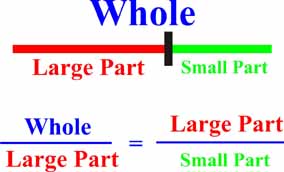
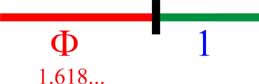
“A whole line may be divided in such a way that the length of the whole relates to its large part in the same way that the large part relates to the small part. In other words, the same relationship appears on different scales, comprehending a mathematically balanced whole.”

On the many faces of Rasta: Nyabinghi Order
Michael Barnett in his 2005 essay “The many faces of Rasta: Doctrinal Diversity within the Rastafari Movement” gives description of main branches of Rastafari: Twelve tribes of Israel, BoboShante and Nyabinghi Order.
First part of the chapter on Nyabinghi Order also goes into the origins of Rastafari dreadlocks:
The Nyahbinghi Order
This Mansion is the oldest of the previously mentioned in that it has its roots strongly connected to those of the vintage Rastafari.
The Nyahbinghi order is generally regarded as the most orthodox mansion within the broader Rasta movement and is variously known as the House of Nyabinghi, Theocracy Reign Ancient Order of Nyahbinghi, the Theocratic Government of Rastafari, Haile Selassie I, and even the Theocratic assembly.
The term Nyahbinghi according to Campbell came from the anti -colonialist movement of Kigezi in Uganda which called for death to Black and white oppressors.
The University of the West Indies Report, details that on the 7th December 1935 the Jamaica Times published an account of the Nyahbinghi Order in Ethiopia and the Congo.
According to this account in the Times, the Ethiopian Emperor was head of the Nyahbinghi Order, the purpose of which was to overthrow the white (Italian) domination of Ethiopia, by racial war.
According to the University Report the term Nyahbingi came to mean in Jamaica, for many Rastafari, death to Black and white oppressors.
Those who were in accord with this ideology quickly adopted the title, Nyah-men (alternatively spelt as Niyamen).
What is clear from the University Report is that Leonard Howell’s followers at Pinnacle were perceived by the researchers to be the most prone to violence of all the Rastas in Jamaica; they further argue that from 1933 Howell had been preaching violence, thus they surmise that it was mainly Howell’s followers who adopted the name, Nyahmen, and who appropriated a countenance that was consistent with the name.
Howell’s followers are also credited by the University Report to have been the first dreadlocked Rastamen (locksmen) in the history of the
movement, appearing on the scene with the second installation of the Pinnacle camp in 1943.
However, according to Chevannes , the first dreadlocked Rastamen were those of the Youth Black Faith movement, who took on this appearance in about 1 947. In weighing both accounts this researcher proposes that there is validity in both, on the basis that it is highly possible that both the Youth Black faith Movement and the Howellites were inspired by the Mau Mau who spearheaded the revolt against the British colonial powers in Kenya.
This perspective takes into account that much of the early history of Rastafari is derived from oral testimonies and is thus subject to distortion, as Chevannes so astutely points out.
However, while Ras Boanerges (Bongo Wato), one of the founders of the Youth Black Faith has given testimony that his organization was the first to start wearing dreadlocks, this writer feels that there are too many accounts of Howellites who used to stand guard over the second installation of the pinnacle camp, having dreadlocks, to be discounted.
What we do know is that by the early 1950s the wearing of dreadlocks starts to become visible among the Jamaican Rastafarian community and this very noticeably coincides with the prominence of
the Mau Mau in Kenya.
Was this merely a coincidence?
…
From:
The many faces of Rasta: Doctrinal Diversity within the Rastafari Movement
By: Michael Barnett
Source: Caribbean Quarterly, Vol. 51, No. 2 (June 2005)
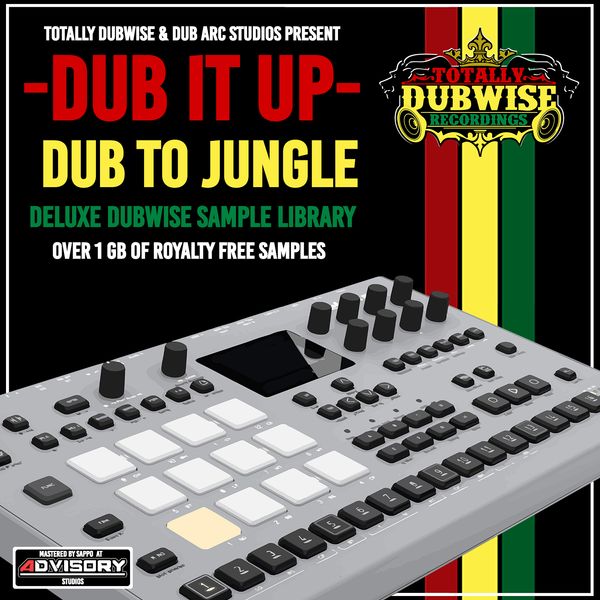
From Dub to Jungle Loop Pack – Deluxe Dubwise
Subtifuge from Totally Dubwise Recordings teams up with Dub Arc Studio to cover entire scope of musical genres from Dub to Jungle ready to load up for any soundclash!
Fonki Cheff – All vinyl mix
Fonki Chef runs a DJ-ing school and a video series of crucial all vinyl selections delivered with impeccable style. Coming in with nuff flavors, 45’s and 7″ inna extra large mix.
Check check check it out!
Deconstructing Hip Hop
Deconstructing Hip Hop is a great video series running from 2012 way back before “how to sound like” videos, the show in which “geek meets ghetto” a.k.a. where hip hop classics are broken down using original samples and digital audio tools.
Kanka – My Bubble
Original Kanka coming in tuff with his 10th album featured for free download on ODG Prod- future of dub music.
LEE SCRATCH PERRY 1936-2021
40 days are gone since the sad news of Lee Scratch Perry leaving this earthly domain.
Lee Scratch Perry was fundamental force in shaping of Ska, Reggae, Dub, Techno, Jungle and essentially every modern genre of music.
His legacy is such that he will never be forgotten.
New York Times:
Rolling Stone:
NBC:
Lee ‘Scratch’ Perry, reggae pioneer who was producer for Bob Marley, dies at 85
Wire:
Scratch and me: Steve Barker remembers Lee Perry
NPR:
Lee ‘Scratch’ Perry, Visionary Reggae Producer, Dies At 85
NME:
Lee ‘Scratch’ Perry, 1936-2021: eccentric, brilliant dub legend who heard what we couldn’t
Lee Perry@discogs
LONG LIVE KING JAH MUZIK!
Dubmatix – Getting Organized : Proper Workflow Structure In Your DAW
Some of you might need this, I-specially if you have 108+ tracks and can’t get a mixdown. Doctor Dubmatix pon the case:
 OUT OF MANY COME DUB AND OUT OF DUB COME ONE