
Here comes another Kuff remix, this time directed by mighty Sub Albine kitchen.
Catch it!
Author: Jah Billah
JAH BILLAH creates anachronical synchro-mystical DUB outta riddims built by various artists from all over the world. Linking up within independent network of riddim makers, producers and fellow dubbers into global organic sum of musical efforts. So far Jah Billah dubbed reggae music from Bosnia & Herzegovina, China, Croatia, Czech Republic, Denmark, Finland, France, Germany, Jamaica, Mexico, Netherlands, New Zealand, Poland, Romania, Russia, Spain, Switzerland, Sweden, Trinidad, UK, USA, Vietnam... and all around so awarded by the people the title of honor „AMBASSADOR OF DUB GALACTIC NATIONS“ .
AI 5G by 2020
5G network is the talk of electric globe.
According to Ericsson, “By 2024, 5G is expected to cover more than 40% of the world’s population. ”
5G promise a lot of things:
“Basically, …to provide a real wireless world…the year 2020 will bring a revolutionary change in the field of Communication system where everybody is connected from anywhere, at any time.”
You hear about Internet of Things (IoT).
“It is a hyper-connected computing environment that builds on the following: (1) Broadband wireless internet connectivity; (2) Miniaturised sensors built into everyday objects; and (3) Collaborative robots (Cobots), supported by AI and machine learning, interpreting the Big Data collected by the sensors.”
IoT will be run by artificial intelligence (AI).
Ericsson reports that “More than half of service providers – a total of 53 percent – expect to have adopted AI within their networks by the end of 2020. Some are working to an even shorter timescale, and expect to have adopted AI by the end of this year. A further 19 percent are looking at an adoption timescale of within 3 to 5 years.”
According to IOT ANALYTICS, this AI will take over control in transportation, industry , health care and security.
However, before your smart car drives you trough smart city rolling your smart spliffs, hear about what comes up ugly in all of this:
Surveillance state using smart weapons autonomous killing systems to replace you with robot work force bringing on Terminator’s Judgment Day Skynet.
On Ciphers and Korans
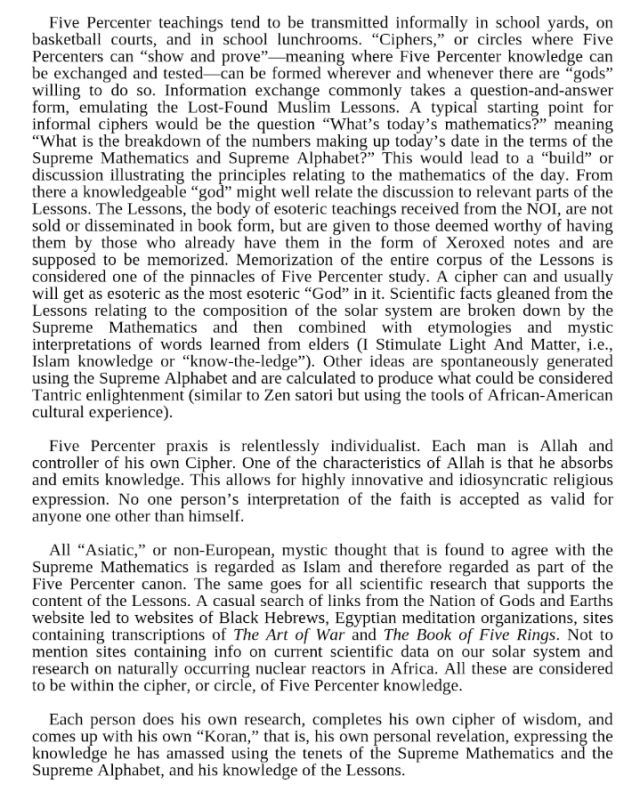
Found in ThugGods : spiritual darkness and hip-hop by Melvin Gibbs , from:
Everything but the burden : what white people are taking from Black culture
Author: Greg Tate
Publisher: New York : Harlem Moon/Broadway Books, 2003.

On Dubbing With Your Mind
World’s first Brain-Computer codec is announced during the 3rd World Intelligence Congress at Tianjin.
Before you start dubbing with your mind, this Brain–computer interface is designed for “medical treatment, education, self-discipline, security as well as games and entertainment.”

On Bob Marley’s Lambs Bread
“A Jamaican scientist is recreating a ‘supreme’ marijuana that was smoked by Bob Marley in the 1970s before it was wiped out the following decade during the American war on drugs.
Amid mangos, lychees and other jackfruit, Dr Machel Emanuel has planted a field of cannabis plants measuring dozens of square meters in his lab in the botanical garden of the Biology Department at the University of the West Indies in Kingston.
His specialty: landrace cannabis, which grew naturally in Jamaica before it disappeared as a result of human intervention.”
From: Lost variety of ganja smoked by Bob Marley before it was wiped out during war on drugs is being recreated by expert who wants Jamaica to market marijuana ‘like Champagne in France
Image source: AFP/Getty Images
Jah Billah – Holy Dub ft. All Your Favorites
Jah Billah dubs Holy Mountain, hottest tune right now ushering a new era of dub music. Track featuring All Your Favorites: DJ Khaled, Buju Banton, Sizzla, Mavado, 070 Shake and late and great Billie Boyo.
Haris Pilton – Reggae Station
Fresh from Positive Reality records come full roots album. Nah miss!
207 – Shocker VIP
207 is biggest dubstep producer DJ from Croatia’s scene which is well underground.
So get ready for some basement style sub pressure.
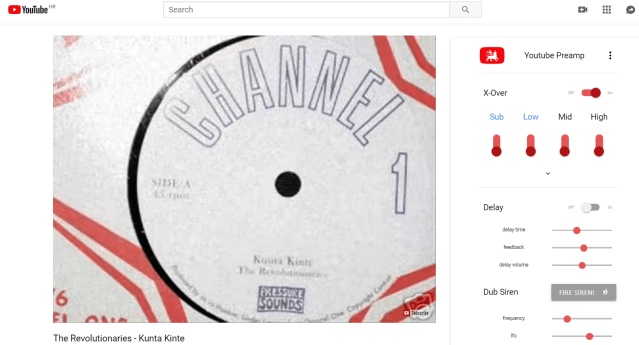
Youtube Preamp
Youtube Preamp for Chrome! Featuring Sub, Low, Mid and High, alongside Delay and Siren options. If you can’t wait for your local soundsystem session this is it.
Dubwise Yoga
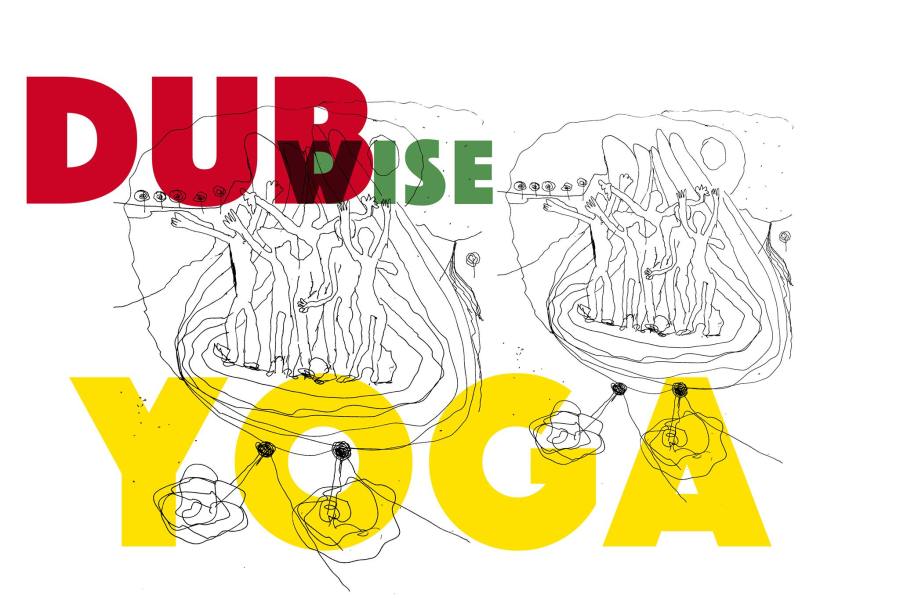
I need you to know that Dub Yoga is a real thing. Tonight in Berlin you can join selektress Sister Julie from Roots Daughters sound and yogini Regina Sebald for a unique experience:
DUBwise YOGA
“We use the music as a tool in exploring our body through yoga and the healing sounds of dub.”
Our prophecy of Yogi Dread is slowly but surely coming to fulfillment. With Ganja Yoga in Canada, Dubwise Yoga in Germany, outernational Jah9 movements all amass and rally Yogi Dread army globally.
Peace, love and unity shall conquer.
I had a conversation about this not a year ago with a beautiful yogini that moved forward to pure lands. I dedicate this post to you Kate.
Augustus Pablo – Santa Cruz 1989
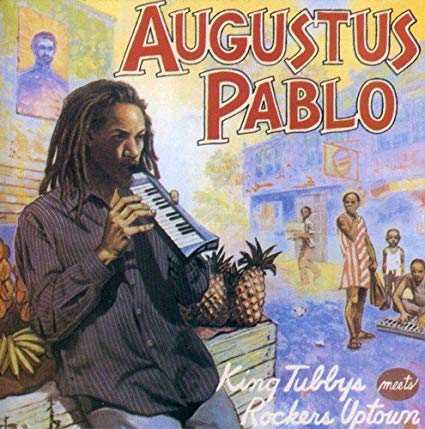
You know reggae music is past, present and future. Take a listen to lovely live performance by late and great melodica master Augustus Pablo. Augustus Pablo inspired generations to come, making melodica a iconic dubwise instrument. Many music man pick up a flute, a trumpet or a sax. And so legacy lives on.
Who can name the backing band on this one? Drums are insane!
Image source: King Tubbys Meets Rockers Uptown (Deluxe Edition) by Augustus Pablo
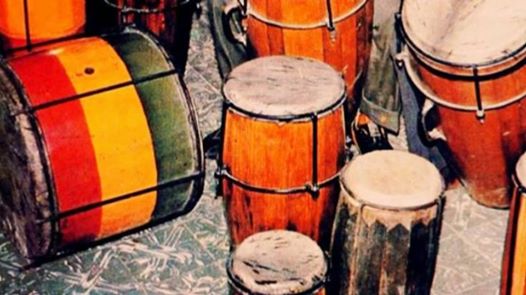
On African music and transculturation
African music forms and rhythms that emerged in the Americas constituted a beat that has “always threaded back to Africa.”
In the words of the Caribbean poet, Edward Kamau Brathwaite, the middle passage created “bridges of sound” that carried memories of Africa to the Americas, music that echoed down the generations from “Harlem” to “Havana.”
Individual islands in the Caribbean and the mainland diasporic slave communities in the Americas shared the basic rhythms (and some instruments) derived from Africa. But these were fused with the instruments and rhythms of the cultures with which African slaves interacted, a process that the Cuban ethnomusicologist Frederick Ortiz termed “transculturation.”
Trinidadian calypso and parang, and the samba and son rhythms in Cuba (son was a modified, more refined version of rumba which became popular in the second half of the nine- teenth century) combined the structure and elements of Spanish canción (song) and Spanish guitar with African rhythm and percussion instruments.
Son, samba, rumba, and other Latin and African-Caribbean dances influenced salsa. In the Southern U.S., the European fife and drum convey some of the rural music that has the most authentic African rhythms.
The fife and drum are also the basis of Jonkanoo music in Jamaica (Jonkanoo is a Jamaican Christmas tradition, incorporating African traditions going back to the days of slavery).
This incorporation of European instruments and music forms demonstrates how Africans in the diaspora subverted the dominant culture and asserted positive African identities. Slaves played for their master and learnt European instruments and rhythms but these became syncretized into popular folk music (defined as played with acoustic
instruments). Jamaican mento draws on the fife and drum of Jonkanoo, Pocomania (an African-Christian revivalist cult) and church music, the European quadrille, and slave work songs passed through the generations.
Musical forms in different parts of the diaspora have also retained purer African elements where percussion instruments and call-and-response vocals predominate. Examples here include rumba in Cuba, Rastafarian Nyabhingi in Jamaica, and the Kongo and Yoruba music found in African-derived religious sects such as Kumina in Jamaica,
Shango in Trinidad, Haitian Voodoo, and Cuban Santeria. Such music was performed “beyond the ken” of whites during slavery and continues to be associated with peasant or urban working-class cultures.
From:
Barbara Bush (2006) African Echoes, Modern Fusions: Caribbean Music,
Identity and Resistance in the African Diaspora, Music Reference Services Quarterly.
Image source: Nyabinghi Drum Circle with Wolf
 OUT OF MANY COME DUB AND OUT OF DUB COME ONE