On Reggae as true world music

Thirty years after the release of The Harder they Come, the narratives and the images that the movie presented in 1972 remain a central aspect of a broader Jamaican narrative. In the interim, the political scene in Jamaica has experienced volatile and often violent changes.

Large multinational corporations like Sony and MCA have replaced the Mr. Hiltons of the early 1970s, Jamaica has become a bridge for transporting cocaine between South America and the U.S., and “Uzis have replaced hand guns.”

The tourist industry continues to thrive, achieving more and more isolation from the daily lives of most Jamaicans, and Jamaicans continue to migrate to Britain and the U.S. As reggae has spread through the world, like most music of “the black atlantic,” it has undergone tremendous transformations and mixed with rap and other forms of music.

As Maureen Sheridan reports, “reggae today is a true world music. From Siberia to the Seychelle Islands, from Agadir to Tokyo, the talking drum and bass of Jamaica have spread their seductive message, and there are no signs of its movement slowing down.”

Some social theorists and arts intellectuals speculate on the power of popular music style like reggae and rap to trigger social consciousness and radical change.

However, this analysis of The Harder They Come illustrates the precarious balance between music as a revolutionary force and the cooptation of cultural products for “producing, reproducing or destroying the representations that make groups visible for themselves and for others.”

Ultimately, the effectiveness of a cultural product like reggae does not rely in itself as an artistic form, as Herbert Marcuse would argue.

Instead, the subversive potential of the arts lies in the practices and the struggles over meaning around which they are produced and consumed. When new cultures encounter each other and when political processes force different cultural practices, symbols, and values to intersect and interact with each, as in the case of India or Jamaica, interstices
that emerge are the true “location of culture,” defined as an active process of negotiation, redefinition, and re-presentation.

Found in THE LAST “REDEMPTION SONG,” SELLING JAMAICA, from:
Reggae, Ganja, and Black Bodies: Power, Meaning, and the Markings of Postcolonial Jamaica in Perry Henzell s The Harder They Come
by Rubn A. Gaztambide-Fern ndez (2002.), Review of Education, Pedagogy, and Cultural Studies.
Art source: Words in the Bucket.


Onomatopoeia as the beginning of music

Each shaman melody is the tune of the shaman helper-spirit, who has an animal-like form. That is why the onomatopoeic sounds play the important role in the musical composition of shaman rituals – the sounds of voices of a reindeer, a swan, a goose, a loom, a bear, a wolf are available to hear on recordings” .

Onomatopoeia is actually the beginning of music, the first appearance of the musical ability of man. According to ethno-musicologists, in this fashion, the songs of shamans retain memories from the times of the original emergence of music.
An important characteristic of healing shaman music is that the helping spirits of the individual shamans themselves each have their own distinguishing tune, sometimes more than one, and this is the case in distant South America as well as in Eurasia.
Thus it is barely surprising that the power of the individual shamans was measured by the number of songs they knew. In other words, the shaman’s power was in his songs and the power of the instruments was only an additional force.

Found in: On Shamanic Origin of Healing and Music, from SHAMANS AND SYMBOLS
PREHISTORY OF SEMIOTICS IN ROCK ART by Mihály Hoppál.
International Society for Shamanistic Research. Budapest. 2013.
Art source: Shamanic Drumming

The Dubbstyle – Sub Is Dub (DPH037)

VIS Idoli – Vetar I Zastave – Fokus Remix

Original badboy Fokus a king specialist in Balkan drum n bass arena comes up with freshness of old school again.


Sleepy Time Ghost & Bazza Ranks feat. Shumba Youth & Natty Campbell – Rip it up – FLeCK Remix

My main man FleCk been rippin up any jungle stage anywhere for last years since tears so here comes video to brand new tune out on Irish Moss.

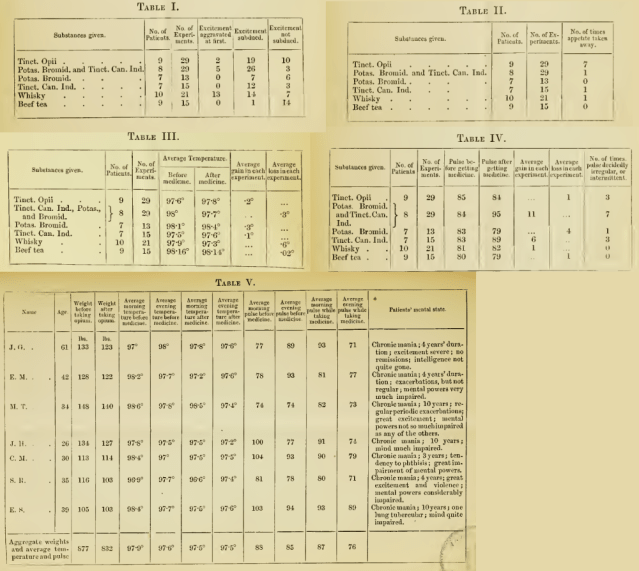
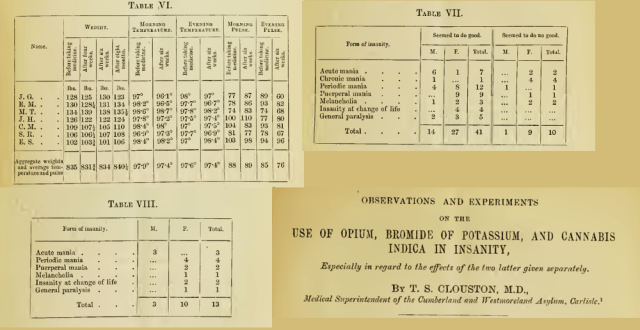
8 tables on neurotic medicines

Tables from THE ACTION OF NEUROTIC MEDICINES measuring effects of opium, cannabis, potassium bromide, whiskey, and a ting called Beef tea. From year 1870.
table1table2

On eating with Christ

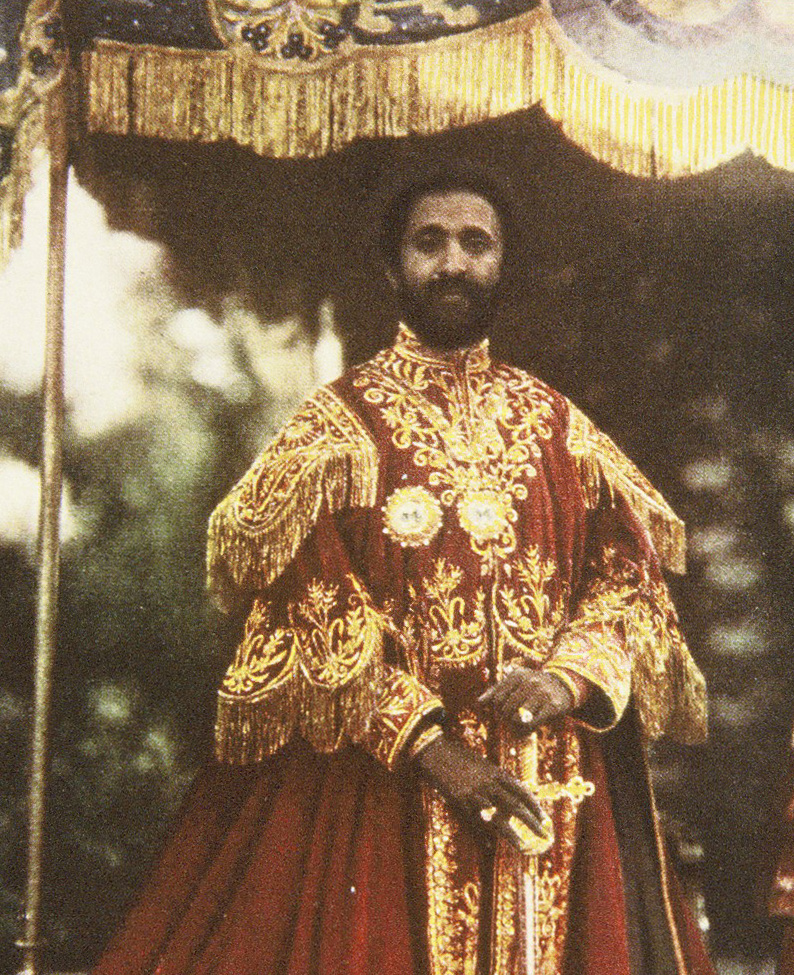
On Friday, March 16, 1934, Leonard Howell and Robert Hinds, founding evangelists of the Rastafari gospel, were in the fourth day of their trial for sedition in a Jamaican court. They were on trial because they promoted a message that threatened Jamaica’s colonial status quo: Black Jamaicans should transfer their loyalty from Britain’s King George V to King Ras Tafari of Ethiopia. They preached that King Ras Tafari was Christ returned to redeem Black people and to inaugurate a new and just order.

Jamaica’s national newspaper, the Daily Gleaner, which covered the trial, reported that “Howell said that it was prophesied that in the days of the kings of the earth, Jehovah would raise up a king with a righteous government . . . that Christ would return to earth as the Messiah, in the flesh; and that they would be able to see Him, and touch Him,
and eat with HIM.”

Found in:
The Cultural Production of a Black Messiah: Ethiopianism and the Rastafari
by Charles Price, from:
Journal of Africana Religions, Volume 2, Number 3, 2014, pp. 418-433

Art source: Christ ‘Pantocrator’

The Trustees of the British Museum, Museum number 1998,0605.34.

BriZion – Good Over Evil (Chapter II)

Straight outa Dub Strand studio comes Chapter II of Good Over Evil by heavyweight stepper BriZion. Nuff tracks and dubs (Verse I, II and III) for a lovely price of one pizza, so quench your dubbing hunger.

Six conclusions on Science of magic

Based on thousands of psi experiments published over the last century by researchers around the world, many properties of psychic phenomena have been discovered.

In order of scientific confidence, meaning the degree to which the evidence has been successfully and independently repeated, six conclusions may be drawn:
1. We have the capacity to gain information unbound by the everyday limitations of space or time, and without the use of the ordinary senses. In the vernacular, psi is a genuine “sixth sense.” Based on the available scientific evidence, this is a virtual certainty.
2. Psi capacities are widely distributed among the general population. Extreme levels of psi talent are rare, but laboratory tests indicate that most people have some discernible ability, whether they’re aware of it or not.
3. These effects arise from the unconscious. Psi abilities can be observed during conscious awareness, but more reliable effects can be detected below the level of awareness via physiological measurements and other techniques used to study “implicit” and unconscious responses.
4. Psi effects are stronger during non-ordinary states of consciousness, such as during meditation, while dreaming, or while under the influence of psychedelic compounds.
5. We have the capacity to mentally influence the physical world, probably not through application of the four known physical forces, but perhaps through as yet unidentified principles that either affect the probabilities of events or “warp” the fabric of space-time.
6. We can gain information from sources purported to be nonphysical entities.

Found in: Chapter 8 TOWARD A SCIENCE OF MAGIC, from:
REAL MAGIC Ancient wisdom, Modern science and A Guide to the Secret power of the Universe,  by Dean Radin (2018)

Art source: Merlin`s Magic by Josephine Wall

Exo Fam Remixed by Dubmatix

Another ODGPROD delivery, this time with mighty king Dubmatix remixing Exo family.

JUNGLE WARS 2019

Amid heap of real good regular and special jungle tunes out there, real raw and bloody  jungle wars rages on in year 2019. leaving sounds dead and maimed so do not get caught ina di crossfire. Just search for #junglewars2019 everywhere.

Sadhu reasoning on cannabis use

sadhus.png

Found in: Cannabis, Lord Shiva and Holy Men: Cannabis Use Among Sadhus in Nepal

by Acharya SL, Howard J, Pant SB, Mahatma SS, Copeland J

(J Psychiatric Association of Nepal Vol .3, No.2, 2014 )
Photo source: Skanda Gautam/ THT