JAH BILLAH FEAT. IYANO IYANTI – GLOBAL SHOWCASE VOLUME ONE

GLOBAL SHOWCASE VOLUME ONE goes live worldwide this friday! World premiere exclusive on Jahbillah.bandcamp.

Global Showcase Volume One (MSDT 018) is a various artist worldwide project. Started as raw digital reggae riddims by Jah Billah in Zagreb, Croatia, and digitally transported to the recording studios of Kingston, Jamaica, for the vocal collaboration with the emerging artist Iyano Iyanti.

For the past 3 years, Magu Shan Dub Tong family has been joined with world wide dub artists for special DUB versions.

Volume One showcases Monodread, Buds Kru, Bademah, Seed Organization, Process Rebel, Dubsmith, Tony Dubshot and Ras Bruno. Each artist brings a unique style from deep dubstep meditation to analogue dancehall madness. The result is 18 Track Global Showcase compilation full of Dubs, Remixes and Instrumental riddim versions. The original series of singles (MSDT 003-017) remains available for collectors, with more dub and extended mix versions from Dr. Obi, Seed Organization and Dubsmith. Also including progressive genre-breaking Hardtek Jungle and Zouk bass remixes of Chase Babylon by Wr1ng and Caballo! Global Showcase includes special VIP remix from Process Rebel alongside previously unreleased dubs from Bademah and Ras Bruno for pure fresh listening experience. Magu Shan Dub Tong proudly presents 77 minutes of sheer dubness.

Album Name: Global Showcase Volume One.

Album Artist: Jah Billah featuring Iyano Iyanti.

Album Producer: Jah Billah.

Album Lyrics: Iyano Iyanti.

Additional Artists: Monodread, Dr. Obi, Buds Kru, Bademah, Seed Organization, Process Rebel, Dubsmith, Tony Dubshot, Ras Bruno. Album Release Date: 28. 04. 2017.

Album Length: 1h 16m 55s.

Album Genre: Reggae, Dub, Dancehall, Dubstep, Trap, Breakbeat.

Album Label: Magu Shan Dub Tong.

Album Label Catalogue Number: MSDT 018.

Album Copyright: Magu Shan Dub Tong. 2017.

Album Cover Art: Magu Shan Dub Tong. 2017.

Album Format: Digital Download.

Album Available: Wordwide.

Album Track List & Length
01.Jah Billah ft. Iyano Iyanti: Chase Babylon (Original Mix) (4:02)
02.Jah Billah ft. Iyano Iyanti: Chase Babylon (Monodread Remix) (4:01)
03.Jah Billah ft. Iyano Iyanti: Chase Babylon (Dr. Obi Dub Pt.2) (4:01)
04.Jah Billah ft. Iyano Iyanti: Chase Babylon (Buds Kru Dub) (4:46)
05.Jah Billah ft. Iyano Iyanti: Chase Babylon (Bademah Dub) (4:02)
06.Jah Billah: Chase Babylon (Instrumental) (4:02)
07.Jah Billah ft. Iyano Iyanti: Make It Right (Original Mix) (4:23)
08.Jah Billah ft. Iyano Iyanti: Make It Right (Seed Organization Remix) (4:34)
09. Jah Billah ft. Iyano Iyanti: Make It Right (Monodread Dub) (4:27)
10. Jah Billah ft. Iyano Iyanti: Make It Right (Process Rebel VIP Remix) (4:30)
11. Jah Billah ft. Iyano Iyanti: Make It Right (Dubsmith Remix) (4:29)
12. Jah Billah ft. Iyano Iyanti: Make It Right (Breaks Mix) (3:56)
13. Jah Billah ft. Iyano Iyanti: Good Music Give I Strength (Original Mix) (4:11)
14. Jah Billah ft. Iyano Iyanti: Good Music Give I Strength (Monodread Dub) (4:19)
15.Jah Billah ft. Iyano Iyanti: Good Music Give I Strength (Tony Dubshot Remix) (4:23)
16.Jah Billah ft. Iyano Iyanti: Good Music Give I Strength (Ras Bruno Dub) (4:15)
17.Jah Billah ft. Iyano Iyanti: Good Music Give I Strength (Bademah Dub) (4:20)
18.Jah Billah: Good Music Give I Strength (Instrumental) (4:11)


EGOLESS – TIPS & TRICKS VOL. 1

Nice likkle booklet bout tings and stuff, including timeless matters such as ITB vs OTB so once again head over to EGOLESS FB for download link.


Scotch Bonnet Records – Mungo’s Hi Fi – Raggamuffin rock DUB mk2#05 [Free Download]

ON ISHTAR

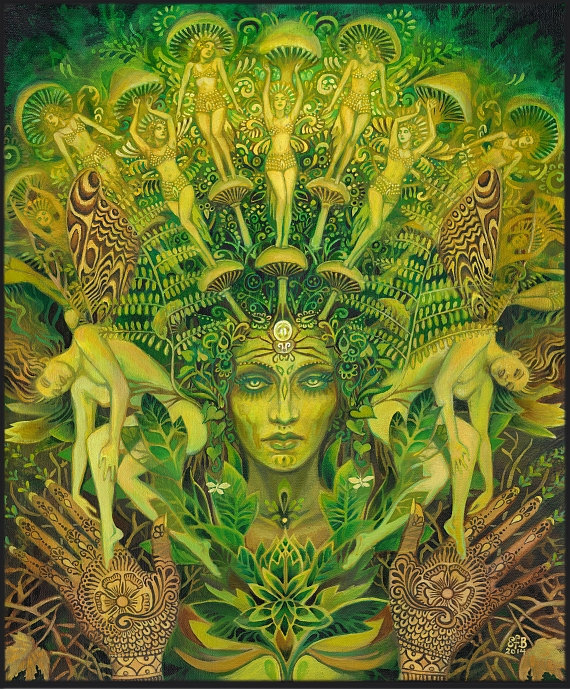
In ancient Sumeria, “Ishtar was held in high esteem as a heavenly monarch,” writes Jeanne Achterberg in Woman as Healer. “Her temples have been found at virtually every level of excavation.” The Ishtar Gate to the inner city of Babylon was one of the ancient wonders of the world. Also called the Queen of Heaven, Ishtar was a compassionate, healing deity. Her medicine kit likely included plant allies: a clay pot likely used for distillation of plant essences into medicines was found at a Sumerian grave site circa 5500 BC. The herb called Sim.Ishara, meaning “aromatic of the Goddess Ishtar,” is equated with the Akkadian qunnabu, or “cannabis,” writes Assyriologist Erica Reiner.
As the land of Sumer became a perpetual battlefield, Ishtar became the goddess of war and destiny, and became more sexualized, even as women were restricted from education and the healing arts.
In mankind’s first written story The Epic of Gilgamesh (circa 2000 BC), the cruel king Gilgamesh calls Ishtar a predatory and promiscuous woman, and rebukes her advances, just before taking off with his buddy Enkidu to chop down the great cedar forest. Gilgamesh’s repudiation of Ishtar, some scholars say, signifies a rejection of goddess worship in favor of patriarchy in ancient times. In ancient Babylon, around the spring solstice, people celebrated the resurrection of their god Tammuz, who was brought back from the underworld by his mother/wife Ishtar (pronounced “Easter” in most Semitic dialects). Flowers, painted eggs, and rabbits were the symbols of the holiday then, as now. Thus the goddess Ishtar resurrects every spring at Easter time, by way of the German goddess Ostara, “the divinity of the radiant dawn,” doubtlessly a reincarnation of Ishtar, who the Babylonians called “the morning star” and “the perfect light.” The biblical heroine Esther is also a descendant of Ishtar.

From: Tokin’ Women A 4000-Year Herstory
by Nola Evangelista (2015)

Image source: The Dryad Forest Nymph Goddess by Emily Balivet

ZACKY MAN FEAT. ANJA G – LISTEN – DR. OBI SLENG TENG

The art of riddim versioning is at heart of every reggae producer. Here comes Dr. Obi with fresh slengtenging  vocal combination.

ON BHAJAN POWER

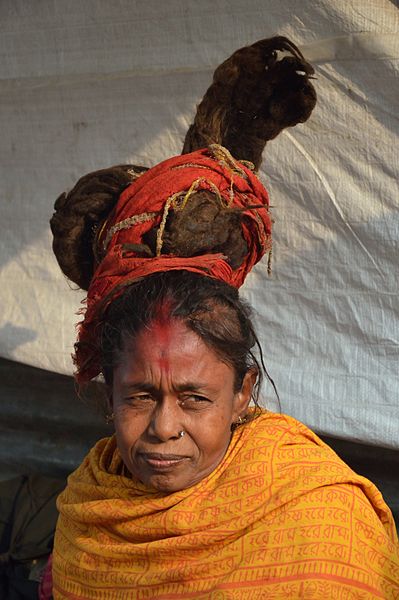
Another context where the female sādhus exercise agency and power is their devotional song, bhajan, performances. Most of the female sādhus consider bhajan singing to be a powerful vehicle for receiving sacred knowledge and experiencing the divine directly; it may even catalyse their divine visions. Further, bhajan singing is understood to effect religious power for the female sādhus. Gangagiri often says, ‘My bhajans are my power.’ This statement indicates her perception that bhajans function as a performative medium by which means sādhus express bhakti to God. Gangagiri’s comment suggests that her bhakti is the basis of her own power and authority.
Female agency is explicitly linked to devotional practice by these female sādhus. By comparison, the male sādhus rarely discussed bhajan singing as a means for meeting God and rarely considered nirguṇī bhakti to be the basis of their own power and authority.

Found in ‘My bhajans are my power’: Performing Nirguṇī Bhakti through Devotional Song, from: ‘Crossing Over the Ocean of Existence’: Performing ‘Mysticism’ and Exerting Power by Female Sādhus in Rajasthan, by Antoinette E. DeNapoli.

Source: The Journal of Hindu Studies 2010

Image source: Wikimedia Commons

ON RASTA ART

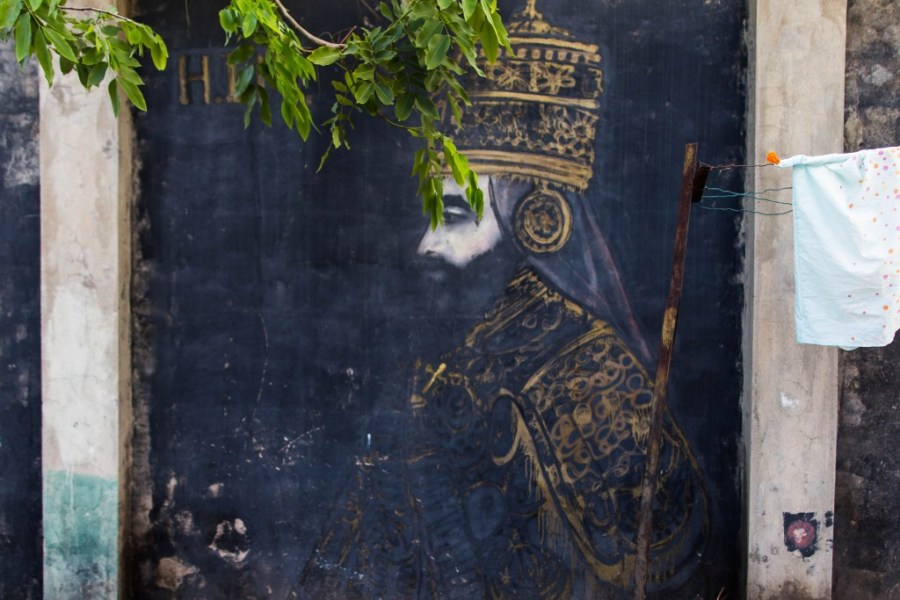
” “Art.” By “art” is meant the ability to perceive the things of God and to be sensitively aware of the sacred in life; it is a man’s inherent ability to see through the apparent to the real, to separate the false from the true, and to discern the good; but not only this. It is also, and essentially, the power of communicating knowledge, and a knowledge which is basically neither the learning from books nor sheer doctrine, but a mystical experience. Elders of the movement say that they will only accept a man with this “art.” “Not every man with a beard is a Rasta- man-We take a man with art. ” In a sense, also, “art” means the art of understanding the minds of other men. This is something inborn, which cannot be acquired by study and good works if it is not already there, but which can be sharpened by discussion with right- minded people and by ritual observance. A man may discover it in himself after living the major part of his life in dis- solute unawareness. It was there all the time, but he did not know it. The more men can learn about themselves and their natures the more they can draw out this skill and develop it. When a man is expounding doctrine movingly, or praising God in powerful fashion, his listeners call out “Art I Art I Mighty art I Ja Rastafari I” Nothing can make up for the absence of art. In the words of one Rasta informant, “Some have all the zeal of God, but not the knowledge.”

Found in Doctrine,  from: Protest and Mysticisim: The Rastafari Cult of Jamaica

Author: Sheila Kitzinger
Source: Journal for the Scientific Study of Religion, Vol. 8, No. 2 (Autumn, 1969)

Image source: http://www.islandoutpost.com


ON PSALMS AND REGGAE

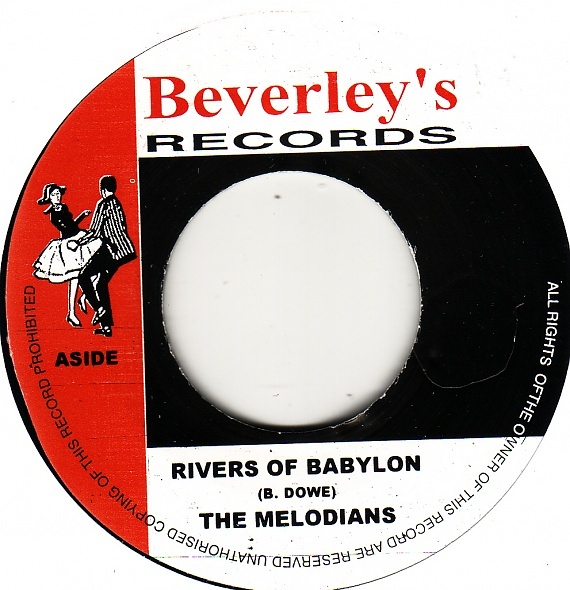
So tuned to the beat of Burru drums, the early Rasta lamentations, comprised of mournful dirges of Christian songs, hymns, and psalms from the Psalter, were social, political, and religious commentary on the unfavorable condition of the black Jamaican masses, and of the Rastafarians in particular. As the movement responded to harassment and persecution from the Jamaican public and the “Babylon police” in the 1950s, these lamentations became increasingly militant with a strong revolution and liberation motif. By the 1960s, Rastas had developed an impressive repertoire of musical lamentations adopted to their peculiar method of black revolutionary protest and call for political, social, and economic change in Jamaica. In 1969, The Melodians, comprising Brent Dowe, Tony Brevette, and Trevor McNaughton, sang Psalm 137 in new Rasta voices under the title “Rivers of Babylon.” The song remained local until “Bonnie Em,” singing under the influence of reggae star Bob Marley and the Wailers, did a Cover Disco Version in 1975, which became an immediate hit internationally.

Found in Why the Hebrew Psalms? from Tuning Hebrew Psalms to Reggae Rhythms: Rastas’ Revolutionary Lamentations for Social Change

Author: NATHANIEL SAMUEL MURRELL.
Source: CrossCurrents, Vol. 50, No. 4, Jewish–Christian Relations (WINTER 2000/2001)

Image source: The Melodians – Rivers of Babylon 7″

DUBKASM – DUB TIPS

Check out these Dub Tips 01-10, short, sweet and on a dubbing point!

ON SCHIZOPHRENIC SLACKNESS

*BREEZE: I think the whole Caribbean is naturally schizophrenic [laugh], and most of all about sex.
I think it’s one of the most sensual, sexual sets of people, but with more hang-ups and still very Victorian about their sexuality. So you have a kind of freedom and spontaneity about the body, and at the same time all kinds of dogma and taboos about different kinds of sex, or the nature of the sex you are having, or who you’re having sex with. I think it’s a schizophrenia that stems from the meeting of Europe and Africa in the first place, which can sometimes be a perfect blend and sometimes can be completely destructive. And I think it shows up most strongly in sex.

So you have Lady Saw, for example, who is very explicit in her sexual lyrics and is loved by the majority of Jamaicans. Yet, there is the whole social establishment that says she must be banned from the stage for the kind of lyrics she’s performing.
And then you have a man like Beenie Man, who sings completely sexually about women, yet his audience is full of women that love him and think that he’s the greatest thing that ever happened. You have poets like me talking about how slackness is degrading to women, and at the same time it’s all women who are jumping up to the slackness at the dancehall. So it’s really hard to kind of say that there’s a true line. I do find it very schizophrenic, and that’s a word that I use a lot. [laugh] My current work is getting much more sexual. I think it’s about time.

Excerpt from:
Dub and Difference: A Conversation with Jean “Binta” Breeze by Jenny Sharpe.
Source: Callaloo, Vol. 26, No. 3 (Summer, 2003)

Image source: Ken Ryan

*Jean “Binta” Breeze  (11 March 1956 – 4 August 2021) was a Jamaican dub poet and storyteller, acknowledged as the first woman to write and perform dub poetry. She worked also as a theatre director, choreographer, actor, and teacher. She performed her work around the world, in the Caribbean, North America, Europe, South-East Asia, and Africa, and has been called “one of the most important, influential performance poets of recent years”.

ON GANJA BOMBING

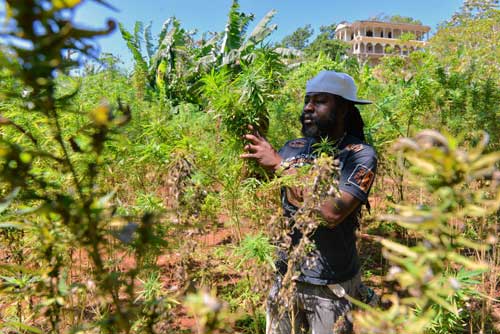
Despite the initiative by the Rastas those forces which harangued Bishop on the question of elections but turned a blind eye to the elections in Guyana still hoped to foment discontent from within. The elementary initiatives towards solving the needs of the working people were affected by the deteriorating security situation as the incidents of bombings and shootings increased, culminating in the June 19, 1980 bombing attack at Queens Park, St George. The Prime Ministers and the officials of the State had gathered to celebrate Labour Day when the bomb exploded. But no one on the platform was hurt; the force of the bomb killed three children and injured others. Some of the elements involved in this bombing campaign were involved in the large scale planting of ganja. This ganja was not for local consumption but for the international capitalist market and the big planters attempted to use the centrality of the weed in the lives of many youths as a leverage to move the Rastas after the previous attempt at demonstrations had failed. Ganja and its use pose a serious problem throughout the Caribbean for the way in which the trade is now linked to international gangsterism. Those imported psychologists and doctors who describe ganja as a dangerous narcotic forget that the British State imported ganja into the Caribbean up until 1907 to sell to the Indian indentured workers. The use of ganja by youths in the sixties and seventies was a principal method of social control and as soon as a youth was perceived by the state as rebellious the charge of – possession of ganja was always a useful weapon in the hands of the coercive apparatus of the state.

Found in Rasta, Ganja and Capitalism, from: THE RASTAFARIANS IN THE EASTERN CARIBBEAN by HORACE CAMPBELL. Source: Caribbean Quarterly, Vol. 26, No. 4, RASTAFARI (December 1980)

Image source: AP Photo/David McFadden

DJ CUT LA VIS – THE REAL ROCK MIXTAPE