Murray Man – Walk & Talk

First release on Homegrown records in form of transparent 10″ vinyl now on pre-sale.
Featuring Murray Man vocal cut and Vanja O melodica cut followed by dubs.

All profits from physical 10″ release will be donated towards organisations and solidarity actions for human and animal rights!

Judah Eskender Tafari & McPullish – Journey

McPullish outta Texas releases 2015 “Journey” recording of late and great Judah Eskender Tafari featuring steppers anthem cut and fitting “niyacoustic” mix meditation mix in limited color sleeve 300 7″ vinyl.

From press release:

Judah Eskender Tafari’s musical journey began at Studio One (Jamaica) in 1978, voicing now-classic songs such as “Danger in Your Eyes,” “Rastafari Tell You,” “Jah Light,” “Always Trying” and many others. He worked with many producers and musicians over the course of his impressive music career.

In 2015 Judah traveled to Austin, TX to perform and work with McPullish at his Dubhaus studio. “Journey” is a co-production between these two friends that has stood the test of time and become a favorite, beginning or ending almost every McPullish live dub set in recent years. Judah was not only a great singer but a genuine and caring person who mentored McPullish and many others, always willing to share his musical knowledge and kind spirit with whoever he met. Judah Eskender Tafari passed away in 2020 and is greatly missed, celebrated by his many friends, family and fans.

In 2022 McPullish reached out to Dan I Locks (musician, producer and operator of Deng Deng Hi Fi in Sweden) to record Niyabinghi drums and percussion for a more acoustic version of the song which is featured as the B side.

Egoless – The Last Solitude

Brand new in Egoless sound The Last Solitude starts with epic 6 and half minutes post-techno drive trough whirlwind of deep emotions.

This is second EP from meastro this year as ongoing experiments in meeting place of modular and acoustic, analog and digital, man and culture carry on, with All the Shit Left Behind released in January.

More pronounced direction of free explorations of sound is welcomed presence of vocal harmonies.

On Rastas in Ghana

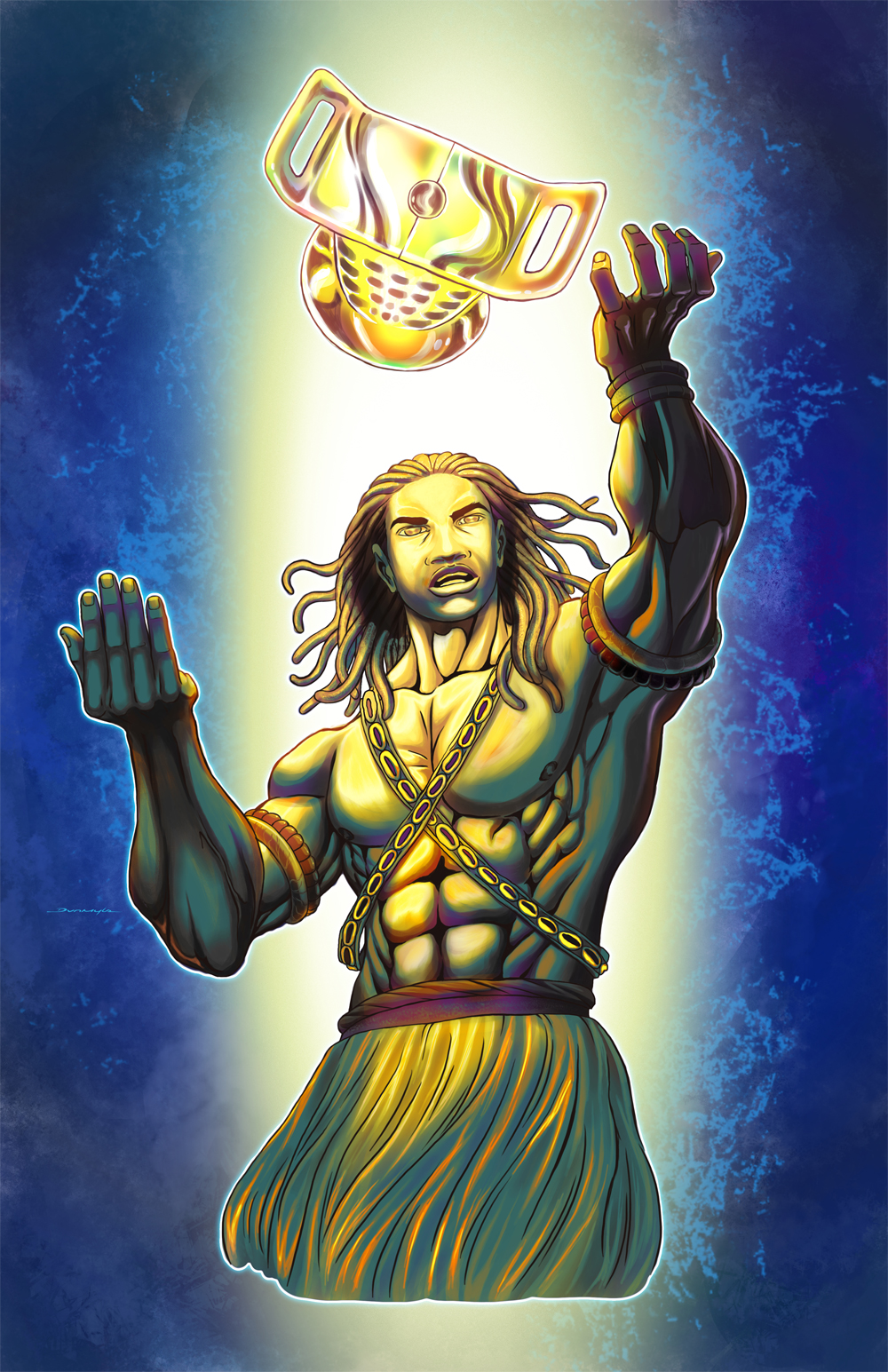
Okomfo Anokye by dvnmyls

Reggae is not unlike “highlife,” the most popular form of Ghanaian music, which mixes both African and Caribbean influences and can be traced to the 1920s and 1930s.

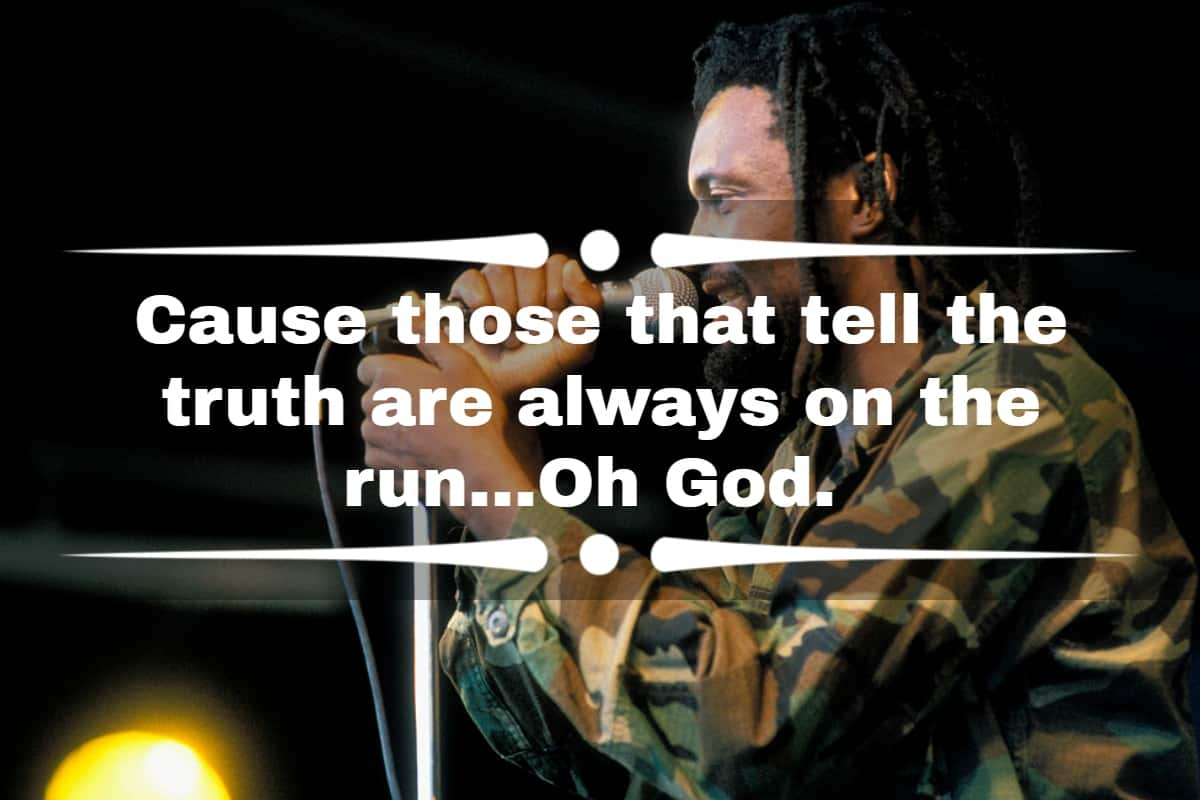
20+ best Lucky Dube quotes about life, love, success, and politics
Read more: https://www.tuko.co.ke/418729-20-lucky-dube-quotes-life-love-success-politics.html


While the South African singer Lucky Dube pioneered reggae in places like Ghana during the 1970s, and still ranks as one of the most sought-after performers throughout contemporary Africa, other “imports,” such as Don Carlos, Jimmy Cliff, and Bob Marley, not forgetting more recent acts such as Black Uhuru, Steel Pulse, and Buju Banton, have emerged to create and define a certain ethos that, at least from one perspective, may be seen as “Rasta.”

In all likelihood, “Rasta” as a religious-cultural import influenced a few Ghanaian youth to practice Rastafarianism in the 1970s and 1980s. Its social message, often wrapped in musical garb, would have been appealing, for instance, to disenfranchised youth during those long years of economic mismanagement and domestic privation.

Reggae was, and remains, an important “Rasta fashion,” and so too is the general appearance of “the Rastaman,” particularly the dreadlocks, which seem to carry enormous appeal in Ghana. It seems highly likely that some of these early Rastas noted the similarity between the appearance of Rasta celebrities like Bob Marley, with his long matted hair, and traditional African fetish priests and, therefore, perceived Rastafarianism as an authentically African way of life.
Okomfo Anokye is worth noting here, as a truly legendary figure in Ghanaian religion and culture. According to Ashanti mythology, he established the Ashanti Kingdom by calling forth its sacred Golden Stool from the sky. In addition, Ashantis claim that one of the three palm nuts Anokye threw on the ground marks the spot that would later become Kumasi, the capital of the Ashanti kingdom.

Furthermore, they link him to a legendary sword, observable today in a small room behind Kumasi’s Okomfo Anokye Hospital. According to Ashanti tradition, this sword was mysteriously placed at the exact spot where Okomfo Anoyke called forth the Golden Stool. Royal lore claims that the Ashanti dynasty will suffer unspeakable tragedies should the sword ever be removed.

Not only do Ashantis treat Okomfo Anoyke as their founder and protector, they hold him as one of their highest fetish priests, mysteriously born as a locksman with fully-grown, matted hair.
This arresting detail is not lost on current Ghanaian Rastafarians. While it is difficult to prove that early Ghanaian Rastafarians made any kind of solid connection between their faith and the figure of Okomfo Anokye, from my perspective, the link seems obvious. More than a few non-Rastafarian Ghanaians remarked to me that with the emergence of Rastafarianism among Ghanaian youth in the mid-to-late 1970s, fetish priests found a wider audience for their words and deeds.


Excerpt from:
AS IT IS IN ZION:SEEKING THE RASTAFARI IN GHANA,WEST AFRICA
Darren J. N. Middleton, Black Theology: An International Journal, 2006.

Ghana’s Rastas and the year of return

Dubmatix – ReWired

King Dubmatix coming in with brand new album out on Echo Beach label.
11 vocal tracks with plethora of riddim riders in all kinds of styles and shapes. Including lovely Blue Monday rendition by none other than Barry Ashworth outta Dub Pistols institution, alongside 3 closing dubwise instrumental tracks. This musical delivery sounds groovy, phat, bouncing and flowing in perfect blend of fresh forward roots and solid foundation future classics.

PRE-ORDER VINYL

On Biomusic

Science has been moving in complementary ways to art for centuries, including recently, with the introduction of biotechnology into the arts.
The mix of eastern/western and holistic/analytical-technocratic thinking contributed to a multi-angular approach to human nature.

The informatics that supports biotechnology became a craftsperson’s tool. According to Whitelaw, especially biotechnology involves technologies such as genetic engineering, tissue culture and cloning, while it produces results that are the source of inspiration for those occupied with the subject.

Bioart rather suggests that any future outcome for embodiment in the field of informatics should leave some space for the aesthetic processes of composition. The term bioart, an invention of artist Eduardo Kac for his work ‘Time Capsule’ in 1997, and its derivatives, such as biomusic, belong to what could be described as the next level of syncretic creativity. It is about a technoetic evolution, where the self comes to the forefront through generative arrangements and processes.
The self is shaped through new dimensions of consciousness.

Excerpt from:

Biomusic: The carrier, by Dimitri Batsis and Xenophon Bitsikas, Anastasia Georgaki, Angelos Evaggelou, Panagiotis Tigas. 2012.

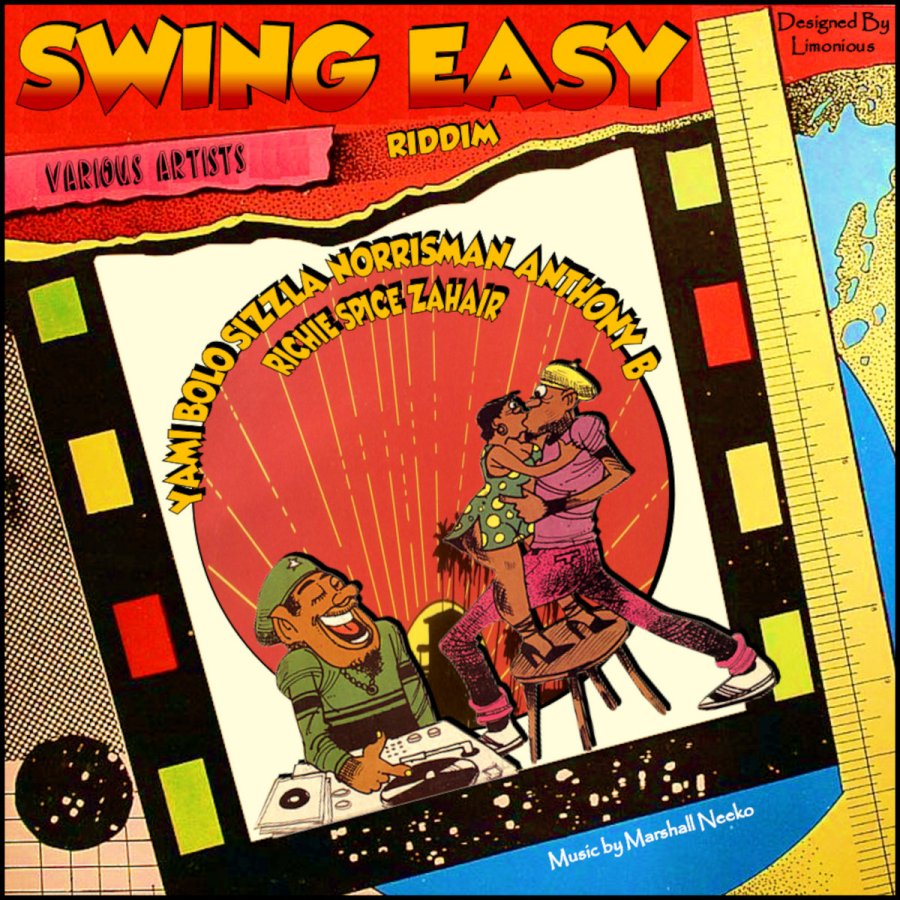
Marshall Neeko – Various Artists – Swing Easy Riddim / General Penitentiary Riddim

Marshall Neeko opening up 2023 with already two riddim albums with various artists. This time reworking Swing Easy riddim and General Penitentiary riddim bringing back that late 90’s sound.

Horace Andy: Tiny Desk Concert

Tiny desk concerts from NPR music are tiny concerts in small rooms. This time it’s Adrian Sherwood’s living room jamming with legendary Andy Horace supported by drums, cello, guitar, bass, keys, trumpet, guitar and cello while dubbing FXs are preformed by maestro himself. Fulljoy!

On role of the Deejay

Dominant and subversive versions of Africa and African history reproduced the dynamic outlined above but on an international scale.
In Britain in the 1980s imperial relations were being re-imagined in the context of humanitarian aid. Black youths in Britain wielded their African heritage as a tool to build their communities and give voice to their analysis.
Meanwhile the mainstream press, and charitable structures,were also building a version of Africa; one of helpless victims of natural disasters.

Given such a context, the ‘performance’ that is being considered here contains dialogues that traverse the African diaspora and are based on the acquisition of‘oral skills’ in Creolised language, which acted as a mode of response to the imposition of European culture on non-European peoples. Resistance became most evident in the contested spaces constructed around specific types of language-use that expressed an alternative black subjectivity that bridged intergenerational gaps within black communities.

The use of particular linguistic forms, both oral and scribal, continued the type of ‘pan Caribbean consciousness‘ that was necessary for the Windrush Generation’s survival and was passed down to the generations born in Britain thereafter.
For many deejays, therefore, the world view expressed through the usage of Standard English reduced them to the voiceless, passive victims of a Eurocentric historical bias.
By blending several aspects of Jamaican oral culture with their own local argot, deejays verbally presented critiques of certain entrenched ideas, for instance, poetry as an exclusively white domain.


This type of engagement was exemplifed in a lyric performed on Diamonds Sound System by the British deejay Papa Benji, which suggested that
‘poetry me better than Shakespeare, and me voice gone clear everywhere’.

The deejay thus became the veritable keeper of memories, for once the word was performed, recorded and disseminated, it became an artefact; a historical document.
It also enabled the performers to present their own arguments, in their own words and on their own terms in a ‘commonly agreed language’ that countered their ‘social problem’ status.

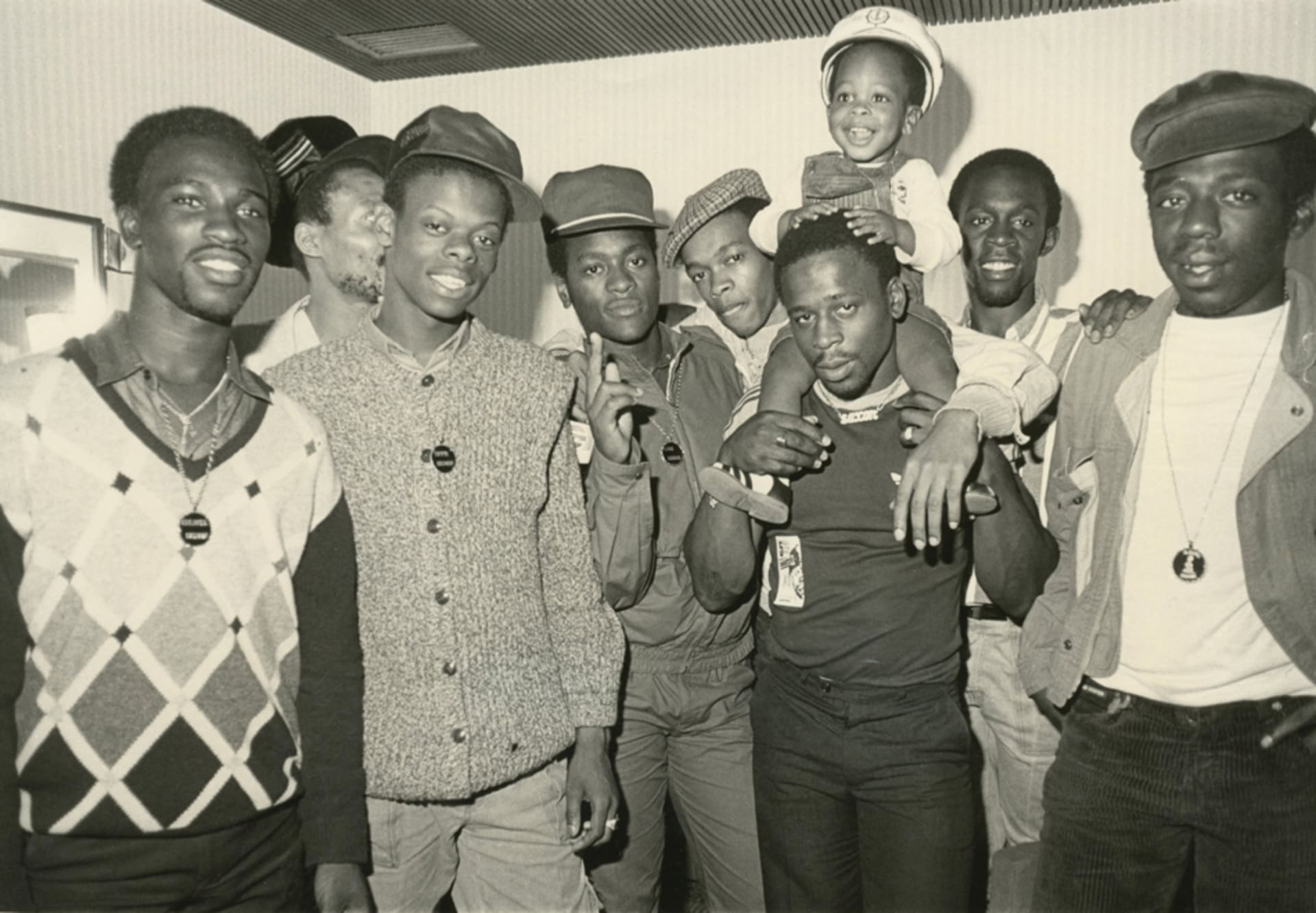
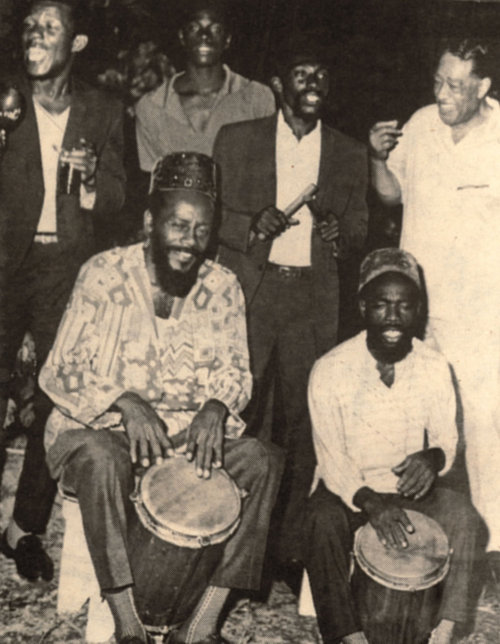
Photo from:

Without The Windrush Generation, British MC Culture Would Be Non-Existent

Excerpt from:

William ‘Lez’ Henry (2012) Reggae, Rasta and the Role of the Deejay
in the Black British Experience, Contemporary British History, 26:3, 355-373,
DOI:10.1080/13619462.2012.703024

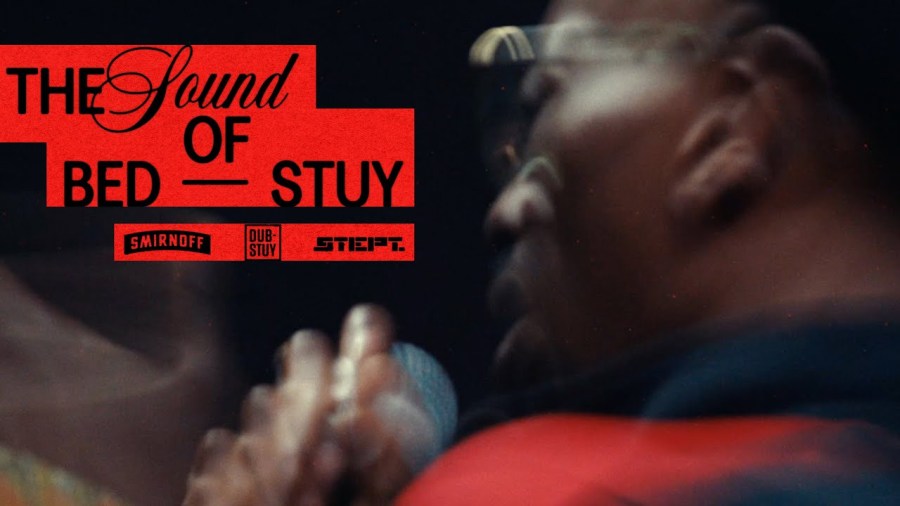
The Sound of Bed-Stuy

Short docu on sound system movements out of New York. Bigup!

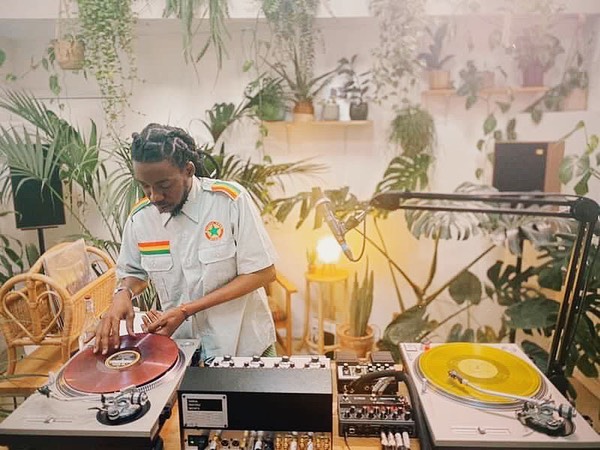
A Journey into Reggae from Dub to Dancehall with Ras Jammy

Original Ras Jammy selection on My Analog Journal with just under 50 minutes of finest roots rock reggae and dubwise. 100% vinyl with crackle, hum and nuff warmth.

Max RubaDub & Natty Campbell – Good Ses

Remix machine Max RubaDub comes with original tune featuring Natty Campbell praising the real highgrade. Version on the flip. Nah miss!