General Two x Doctor Heba – Bosanski Lonac

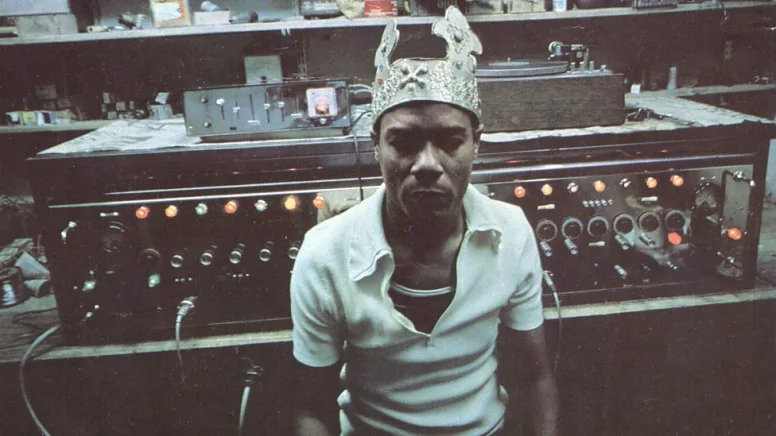
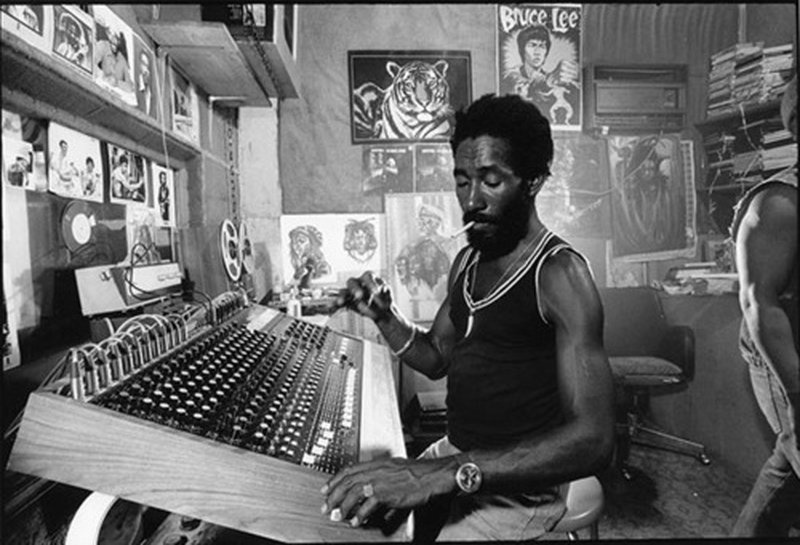
Doctor Heba outa Dub & Roll records crew teams up with legendary underground rapper General Two to produce original dub rap album Bosanski Lonac.
Yes you hear that right. This is not dub-hop or mashup remix style music but original dubwise riddims produced specially for General Two lyrics and mixed live in session.

Entire album mix is filmed and live dubwise action shown without any cuts or edits documenting this unique release.


Favourite track:
Dole u Bosni


Download and support:

On Rasta reasoning


Excerpt from:

THE SOCIAL DRAMA OF RASTAFARI
William F. Lewis
1994. Dialectical Anthropology.

Foundation Roots Reggae with Danniella Dee

Strictly vinyl Golden era selection with Danniella Dee of Sisters in Dub (UK) on My Analog Journal.

On Judah to Jamaica and Rastafari hermeneutics

Ras Fari Joseph, 2012


Verses, names, symbols, and concepts from ancient Judah can come to figure centrally in a religious movement of modern Jamaica only through an unusually varied and extensive series of religious and cultural transmissions.
This process of conceptual transformation and confluence has been the object of interest and inquiry in its own right, as scholars have attempted to trace
the twisted path to a Rastafari hermeneutics as the movement ‘hijacked’ Judeo-Christian Scriptures and converted them into vehicles for identity, ‘ideation,’ and liberation”.
Rastafari reggae involves orders of intertextuality, multiple reconfigurations of language, meaning, names, and symbols, and the continual development and accrual of layers of additional semantic content and commentary.
At one time literally grounded in concrete geopolitical and historical actualities, “Babylon” and “Zion” go on to become abstract concepts that pass themselves on like “memes” through modulating traditions, practices, and translations, eventually to occupy a crucial position in the religious art form of an Afro-Caribbean heterodoxy.
The complex path of influences and inheritances by which the Psalms become Rastafari reggae songs goes back, according to tradition, all the way to the time of David, to whom some of the original psalms are ascribed. Evidence to place and date the Psalms historically is almost completely lacking, however, and thus there is room for considerable disagreement about these texts especially, as compared for example to many of the prophetic writings.
Still, in broad terms, the path of migration may be said to extend from pre-exile Israel and Judah, to the first waves of Assyrian deportations of the northern kingdom in the eighth century BCE; to the sixth century Babylonian captivity and destruction of the Temple, and then the return and restoration; to the flourishing and fixation of the Hebrew scriptural tradition in the Persian or Second Temple period; to the Roman occupation, the watershed destruction of the Second Temple in 70 CE, and the diaspora. Meanwhile the Septuagint, already in Koiné Greek for centuries, is taken up in the rise and spread of early Christianity in the Hellenized Roman Empire, to be Latinized, Europeanized, handed down through a thousand years of medieval, Renaissance, and Reformation developments in the West, ultimately to become the “Old Testament” of the 1611 “Authorized” or King James version (KJV) of the Bible, making its way to the “New World.”


“Conquest of Mexico by Hernán Cortés” depicts the 1521 Fall of Tenochtitlan, in the Spanish conquest of the Aztec Empire.

It was thus in the classic English translation of the Bible that Jamaicans discovered the Judaic texts, but even then the reception was further modulated, mediated by resistance and interference.
One may have expected missionary efforts to have been undertaken on the part of eighteenth-century British colonialists to convert indigenous and slave populations and spread Anglican Christianity, as had been done with Catholicism in Haiti and elsewhere in the Caribbean. Instead, according to Barrett,
the English planters in Jamaica adamantly refused to share their religion with the slave population”; for the Africans of Jamaica, “the Church of England and its high liturgy was considered too sophisticated”.

After England took over Jamaica and established the slave trade, no attempt had been made to Christianize the slaves” for nearly two centuries. It was only through later “nonconformist” denominations like Methodists, Baptists, and Presbyterians that black Jamaicans were introduced to Judeo-Christian religion and the King James Bible.
It is plainly the King James version that reggae psalmists take up and adapt to their own revolutionary purposes, as a number of characteristic examples will show. The language of the “Old Testament,” and especially of the Psalms, appears frequently in Bob Marley’s lyrics and in other reggae songs, notably the classic anthem “Rivers of Babylon,” which is an extended quotation of KJV Psalm 137 (and some of Psalm 19).
This song deserves close analysis, as it is emblematic of the Rastafari reggae tradition, and both song and psalm have been the subject of singular attention in the scholarship.
Rastafari identify especially with the ancient symbolism of “Zion”—under- stood not to be in contemporary Israel or the Middle East, but in Africa, and particularly Ethiopia—and they live in “Babylon,” which refers to realities of oppression far from Mesopotamia, which is (as Peter Tosh says) “everywhere”.
For Rastafari, “two systems exist: Zion and Babylon, the good and the evil.” Babylon is both “the embodiment of evil in biblical literature” and also “a symbol of bondage, not only for ancient Israelites but for all people held in slavery and oppression, especially black people”.

Bob Marley by Nick Twaalfhoven


Through an imaginative and highly subversive reinterpretation, Rastafari read themselves as portrayed in the texts and symbols of the Babylonian exile and the pre- and postexilic periods. In their “free-style approach” to the texts, making such an identification is not difficult:
Rastafari are said to “hijack biblical materials and concepts and relate them to any situation or problem when their language and imagery fit the categories and ideology of the interpreter or movement”.
Judaic biblical verses thus provide many lyrical and conceptual points of departure for religious reggae songs, just as they offer symbols (like the Lion of Judah) that become badges of Rastafari cultural and religious identity.
The core religious vocabulary of Rastafari reggae originates in the King James version, but nearly all the names, places, and words have undergone extensive and creative deformation of language into Jamaicans’ own distinctive idiom.
Key words and phrases are retained, but almost never strictly verbatim; reggae songs freely adapt and inflect the anglicized texts in a highly stylized vernacular that is unique to Jamaican and reggae culture.
“I-an-I,” for example, is a preferred pronominal form; according to Stefffens, the expression “means ‘you and I’ or ‘I and the Creator who lives within I,’ indicating that there is no separation, that disunity is an illusion” , and affirming Rastafari union and identity with “the Divine, who indwells ‘I-an-I’ ”.
These innovations notwithstanding, the overarching religious themes of Rastafari reggae are recognizably, indeed unmistakably Judaic: captivity, oppression, exile, diaspora, longing for freedom and return.
Rastafari reggae” thus designates a specific subset: reggae music is only one form of Rastafari religious expression—i.e. not all Rastafari is reggae— and certainly not all reggae is Rastafari.

Representing far more than mere entertainment, this now classic form of reggae is not, as it were, “just music”—any more than the original psalms were; whether at the First or Second Temple, or by the rivers of Babylon.
Insofar as they are derived from particular biblical verses set to music, many Rastafari songs—at least in what has been called reggae’s “churchical” mode —may be considered distant but direct descendants of the psalm form itself. Reggae songs and themes have resonated even with indigenous peoples who have been colonized on their own land (“Reggae on the Rez”) rather than being carried away into captivity or driven into exile.

Text from:

From Judah to Jamaica: The Psalms in Rastafari Reggae
Thompson, J. (2012).
Religion and the Arts

doi: https://doi.org/10.1163/156852912X651054


On Rastafari branch and roots

Peter Tosh – Live @ The Greek Theater, Los Angeles, CA, – August 23.1983


By 1960, several Jamaican institutions had begun to show an interest in the counterculture, and to contribute to the demarginalisation of the Rastafari movement which had previously been repressed.
One such institution was the University of the West Indies, which put the Rastafari on its agenda.
In the course of these trajectories, Jamaican public opinion, which had predominantly perceived the Rastafari movement to be a crowd of violent criminals, fools and outcasts, changed successfully.

Particularly, reggae music (as the emancipation of Jamaican popular music) was co-opted.
The result of the blending of Afro-Jamaican Burru and Kumina drum techniques and folk traditions with Afro-American musical styles (including jazz, gospel, rhythm and blues, soul and swing) led to the creation of mento, ska, rocksteady and reggae styles like dancehall, dub, lovers, raggamuffin, rockers and roots, which ‘exerted a tremendous influence on the development of post- World War II popular music globally’.
The musical film The harder they come (1972), starring Jimmy Cliff, contributed enormously to the transnationalisation, popularisation and commercialisation of roots reggae. Not until this style developed, did reggae lyrics exhibit the spirituality and socio-political engagement that came to be seen as the hallmark of roots reggae. And, clearly no one represented the Rastafari rhetoric and feelings of this genre to the world more ably and persuasively than Bob Marley.

Augier urges Rastafari to accept Jamaica as home


In fact, conscious reggae music, with its recreational, critical and inspirational dimensions, would soon transcend the Rastafari milieu and succeed in conquering a global audience. Today, Rastafari not only has observer status in the United Nations, but even more importantly it has become part of everyday culture in Jamaica, and even abroad.
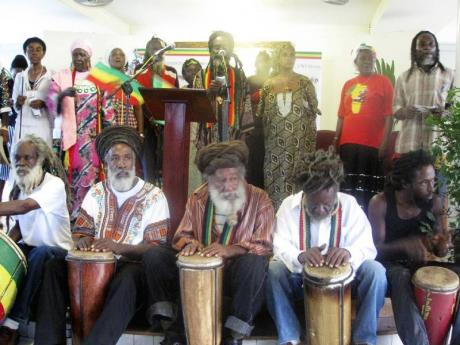
However, the various Rastafari mansions relate differently to reggae music: whereas Boboshanti reject reggae as part of their culture and only consider drumming and chanting as true Rastafari music, the Theocracy Reign Order of the Nyahbinghi describes its relationship to reggae through the metaphor:

‘Reggae is the branch, Nyahbinghi is the root.’


Text from:

The global–local nexus: popular music studies and the case of Rastafari culture in West Africa
Frank Wittmann, 2011.
Critical Arts: South-North Cultural and Media Studies


Ob.dub – Singular Colors

ODGProd label releases one after another future dub albums. Check out Ob.dub coming in with enough ethereal melodies, breakbeats, rootical vocals, hot bass and proper skanks.

Ob.dub – Singular Colors

On co-opting Reggae and Rastafari revolution

Jah Billah intro:
This text highlights tactics used by Babylon to regain social control over revolutionary social movements.
In escalating progression these appear as:

Evasion – ignoring
Counterpersuasion– ridicule and linguistic control
Coercion or Coercive persuasion – violence
Adjustment – co-opting the social movement
Capitulation – Babylon take over

Even if take just a quick look at first tactic “creating dead channels” we can witness how online media surrounds us with fake activist influencers who do the talk yet never remember to do the walk.

CIA, Guns, and Rasta: Inside the Making of Reggae’s Most Iconic Film

The Rhetoric of Social Control 

Responding to the agitation of a social movement, ‘‘establishments’’ tend to Resort first to ‘‘evasion,’’ which involves, in effect, pretending that the social movement ‘‘does not exist or that it is too insignificant to recognize’’.
Establishments can postpone action, appear constrained to grant protest goals, control or change the social or political agenda , lie and control information, deny protestors the physical means of protest, deny protestors access to the media, and create ‘‘dead-­‐end’’ channels of influence.
For example, during the 1960s, several poor, Black communities in Baltimore waged a war on poverty, challenging the dominant White majority who controlled the city’s political structure.
In order to thwart the demands of the protestors, Baltimore’s political establishment employed a standard evasion tactic, changing the political agenda. The protestors insisted that the city government must invest the necessary time and resources to address Baltimore’s impoverished areas. In response, Baltimore’s political establishment changed the political agenda to ‘‘improve the absolute well-­‐being of the city’s entire population, not to effect a redistribution of values in favor of the poverty-­‐stricken blacks’’.

The second strategy is called ‘‘counterpersuasion.’’
In counterpersuasion, governments and their surrogates seek to discredit movement leaders or to show their ideas are ‘‘ill-­‐advised and lack merit’’.
Counterpersuasion may be part of a larger rhetorical matrix called ‘‘administrative rhetoric,’’ or the establishment’s attempt to undermine a social movement’s ideas and influence.
A number of counterpersuasion tactics have been identified, including ridicule, discrediting protest leaders and organizations, appealing to unity by ‘‘crying anarchy’’, and linguistic control.
In a study on the Equal Rights Association, Martha Solomon ( 1978) argued that the STOP-­‐ERA political campaign employed the tactic of ridicule to paint ‘‘an unappealing picture of the feminists’ physical appearance and nature’’.
Portrayed in ‘‘devil’’ terms, ERA supporters were labeled ‘‘anti-­‐male,’’ ‘‘arrogant,’’ and ‘‘abortive.’’ In contrast, ERA opponents were characterized within the ideological framework of the ‘‘Positive Woman’’—physically attractive, intelligent, and emotionally fulfilled.

When milder strategies prove unsuccessful in counteracting the agitation of a social movement, establishments typically resort to a strategy of ‘‘coercion.’’
This strategy may remain largely rhetorical, what Stewart, Smith, and Denton refer to as ‘‘coercive persuasion’’. Simons ( 1972, 1976) coined the term ‘‘coercive persuasion’’ because he believed ‘‘elements of persuasion and inducement or persuasion and constraint are generally manifested in the same act’’.
For example, police officers combine physical and verbal intimidation to control deviance before a social disturbance breaks out.

If ‘‘coercion persuasion’’ fails, the conflict can escalate to more physical tactics, such as restrictive legislation, physically attacking demonstrators, firebombing homes, imprisonment, or even assassination.
Oberschall ( 1973) observed that during this conflictual stage ‘‘the authorities seek to destroy the organization of the opposition, arrest their leaders, and even set up stooges that allegedly speak for the population from which the protestors are drawn’’. In a comprehensive study of how riot commissions interpret and investigate riots, Platt ( 1971) reported that an estimated 34 people died and over 4,000 were arrested during the 1965 Watts riots. According to Platt, a jury later discovered that the Los Angeles Police Department and the National Guard were responsible for 23 of the 26 ‘‘justified’’ murders.

When all strategies have failed, an establishment may employ the ‘‘adjustment’’ strategy, which ‘‘involves making some concessions to a social movement while not accepting the movement’s demands or goals’’ .
Adjustment tactics can encompass ‘‘symbolic’’ concessions, such as Manley’s public praise of the Rastafarian movement, or establishments might sacrifice some of their own personnel if a ‘‘social movement focuses its agitation and hatred upon a single individual or unit’’.
Elites can use economic rewards to satisfy and stratify a protest group or establish committees to investigate issues.
If a social movement’s agitation becomes especially intense, the establishment might even incorporate movement leaders and sympathizers into the establishment by appointing them to low-­‐level decision-­‐ making positions.
Or the establishment might incorporate parts of the dissent ideology into the mainstream, entering into a loose confederation with the social movement.

Yet, cooperation with a dissent group ‘‘may lead to outright co-­‐optation of the cause’’ or a literal takeover of the movement by elements of the mainstream establishment. Gamson ( 1968) suggested that establishments use the co-­‐optation strategy when prior control strategies were unsuccessful.
Social movements that are co-­‐opted are often ‘‘subject to the rewards and punishments that the organization bestows’’. In fact, according to Gamson, ‘‘new rewards lie ahead if they show themselves to be amenable to some degree of control’’.

The final strategy, capitulation, occurs when the social movement’s ideas, policies, and personnel ‘‘replace those of the target institution’’.
In the case of the Rastafarian movement, the Jamaican government did not capitulate to the demands of the Rastafarian movement. Instead, the Jamaican government and its supporters co-­‐opted the cultural symbols of Rastafari and reggae music as authentic reflections of Jamaican society.


Text from:
The Co-optation of a ‘‘Revolution’’: Rastafari, Reggae, and the Rhetoric of Social Control
Author:
King, Stephen A. (1999).
Faculty Research and Creative Activity. 15.
http://thekeep.eiu.edu/commstudies_fac/15

On reggae and hip-hop

DJ Kool Herc: ‘When I extended the break, people were ecstatic, because that was the best part of the record to dance to.’

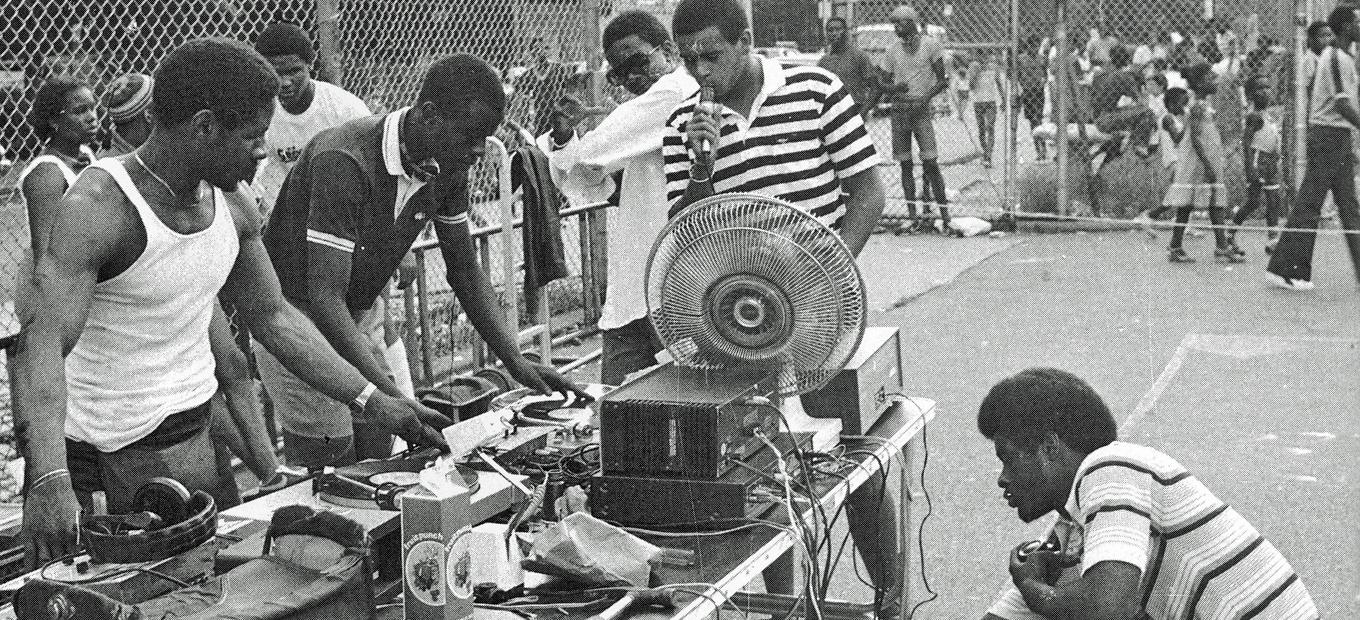
DJ Kool Herc, the chief architect of hip-hop, was born Clive Campbell in Kingston, Jamaica. At the age of twelve, in the winter of 1967, Campbell moved to Bronx, New York. The year he migrated to America, sound-system culture in Jamaica had a ubiquitous presence in Kingston’s lower-class neighbourhoods.
As a twelve-year-old preteen now living in the Bronx, Campbell already possessed a persistent reggae and sound-system consciousness having experienced the innovative music of
Prince Buster, the Skatalites, Don Drummond, and dancehall deejay U-Roy.

At eighteen, Campbell attempted to recreate the Jamaican dancehall experience in the Bronx by spinning the latest Jamaican reggae records at neighbourhood parties, but his young African-American audience was not feeling the reggae beat and did not comprehend the Jamaican patois rhymes of sound-system MCs known as toasters.
As DJ Kool Herc, Campbell shifted to playing funk records, but his reggae background caused him to favour funk with heavy-weight bass lines and lively percussive drumming. Kool Herc’s record selections were transmitted through hi-fi stereo equipment that spoke with the same awesome power and sonic quality of a roots Jamaican sound system.
The selector, as a deejay is called on a reggae sound system, though using one turntable-the norm during the ’60s and ’70s- was still capable of altering the arrangement of a tune spinning off a record on the turntable platter. The selector skillfully inflicted a completely different sound context on a roots reggae recording by manipulating the controls on the sound system’s amplifier to briefly remove the bass on a tune, accentuate the singing of the song’s vocalist, and highlight the harmony of trumpet, saxophone, and trombone. The selector would create tension in a live remix by bringing back the bass booming like a compact implosion.
By the ’70s, the selector had the ability to vary the sonic texture of the recording by creatively deploying reverb and echo chamber to repeat the sweetest elements of a vocal or horn solo and as a special sound effect that dramatized certain aspects of the recording with a live feel.

American Electronic Music Owes It All to People of Color


Kool Herc’s approach to creating something fresh from pre ­recorded funk on vinyl was different because he used two turnta­bles. But his approach was similar in that he shared the same objec­tive as the selector, which was to do a live remix of the record to heighten the entertainment of his audience. He extended the intox­icating rhythmic feel of percussive conga, bongo, or trap drums sizzling the break of records like Mandrill’s “Fencewalk,” the Incredible Bongo Band’s “Apache,” and the live version of James Brown’s “Give It Up, Turn It Loose” by playing the same record on two turntables using a sound mixer to seamlessly prolong the per­cussive breakbeats.

Herc pioneered the innovative use of two turntables and a sound mixer as active instruments that became more than passive facilitators, more than just pieces of electronic equipment that merely played what was recorded on vinyl.

Invention Hot Spot: Birth of Hip-Hop in the Bronx, New York, in the 1970s


These electronic instruments were now used to rearrange pre­recorded music to suit the immediate needs of the disco and the dance floor. When DJ Kool Herc rocked a block party, dispatching African­ American funk with the overwhelming sonic power of a reggae sound system, no other deejay dared to compete.

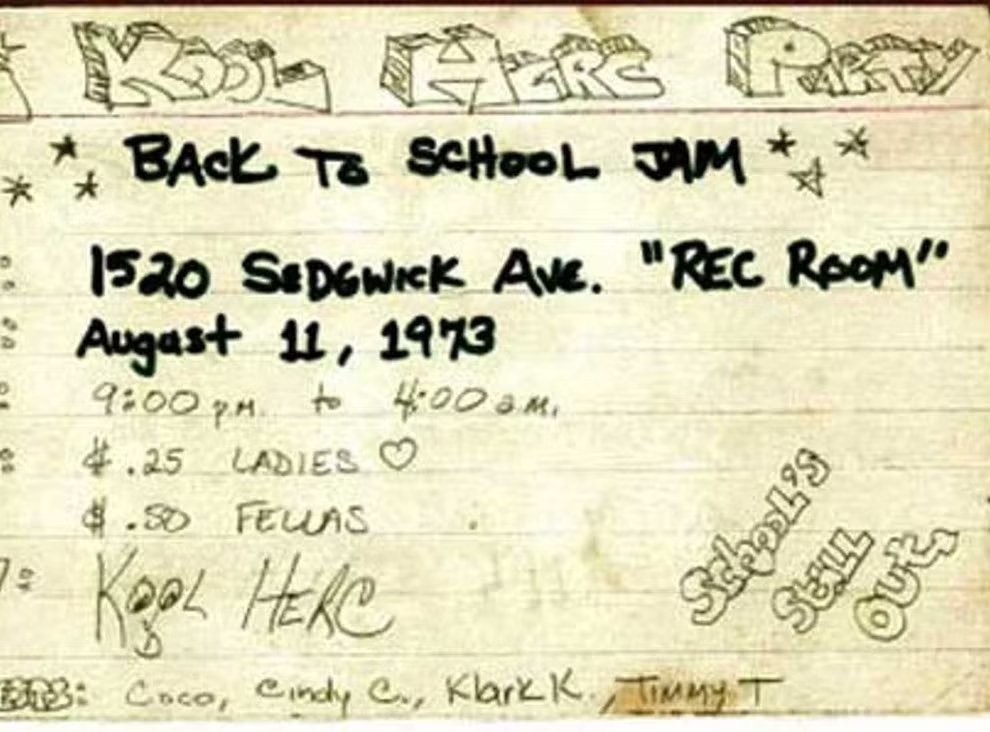
Kool Herc’s party flyer


Text from:
Dubwise : reasoning from the reggae underground
Chapter: Raggamuffin Rap: The Interconnections of Reggae and Hip-Hop
Author:
Klive Walker, 2005.

On art of mixing 12″ single

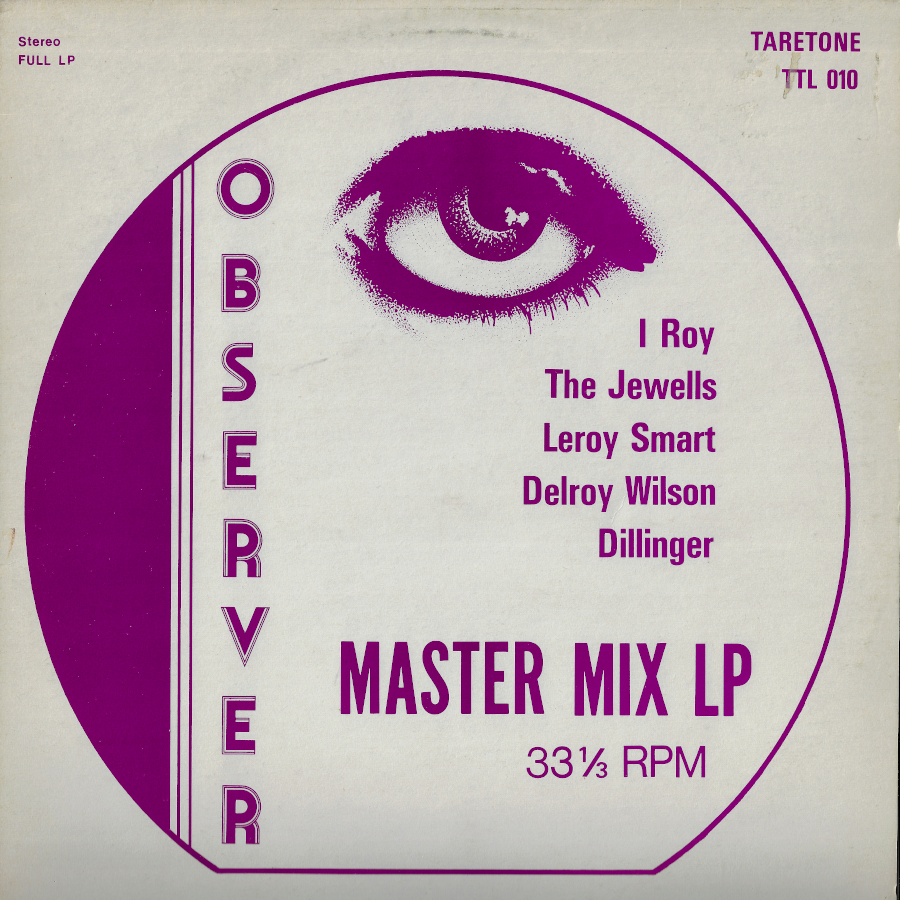
Various – Observer Master Mix LP

The early 1980s were a period in which the lines between studio producers, engineers, songwriters and disc-jockeys became increasingly fuzzy. Many dj’s, in addition to spinning records at clubs, ventured into dance music production, bringing many of the workplace concepts and techniques into the recording studio. In the process, the art of mixing using a multitrack console and recorder, and of mixing at a dance venue, using two or more turntables and a comparatively unsophisticated audio mixer, moved closer to each other. The more savvy djs were the first to feed the know how thus acquired back to the dance venue.
As a result, the number of versions found on a 12-inch single has increased from two (A-and B-side) to about four to six. To account for this new flexibility, different categories of versions or mixes were developed during this period, as djs became increasingly involved in the songwriting, producing and engineering of dance music. The oldest of these now more or less standard categories is the dub .
In addition to containing one extended, one instrumental and one or more dub mixes, contemporary 12-inch dance singles often feature at least one of the following:

-a Club Mix which refers to the location the music is geared for, often specific:
Both the “Paradise Ballroom Mix” on Arnold Jarvis’ “Take some time out” and the “1018 Mega Mix” on Nia Peeples’ “High Time” refer to renowned da& venues in New York City.

-a mix named after one of the current dance music styles: examples are “House Mix.”
“Hip-Hop Mix” or “Hurlev’s Hia House Mix” (the latter refers to the author of the mix as well as

the style).

-a mix bearing the name of the author of the version in question, in almost all cases a dj.
(e,g. “Lam Levan 12″ MegaMix” of Gwen Guthrie’s “Outside in the Rain,” “Shep Pettibone Mix” of Janet Jackson’s “The pleasure principle,” “Duane Bradlev Mix” of Inner City’s “Big Fun”).

This underscores the high social status dj’s may achieve by issuing his own remix.

-one of either an Acapella, or Percapella mix.

-a Bonus track (track here refers to one cut on a vinyl record), either called Bonus Beats, a version stripped of all instrumentation except the percussion and, perhaps, a bassline.
The less frequent alternative is to include a bonus track consisting of an entirely different song, in the way that some CD’s feature songs that are not included on albums featuring otherwise identical music and packaging.

-a radio edit, also called 7-inch edit, featuring a mix whose duration and arrangement conforms with standards used in radio programming, and is most often identical with the album and/or 7-inch single version.


Sizzla
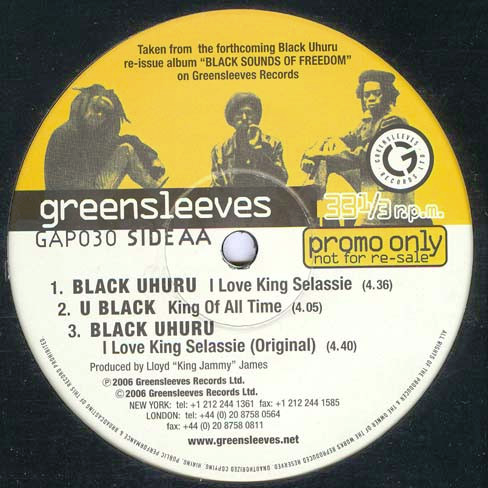
 / Black Uhuru – One Love / I Love King Selassie


The interaction or overlap between the technological approaches characteristic of the recording studio on one side and the dj booth at a dance venue on the other is exemplified by the way the aesthetic domain of the latter former has affected that of the former. When moving from record to the next, the dj bases his choice of sequence on his assessment of the compatibility between the two songs, in order to make as “good” transition as possible.

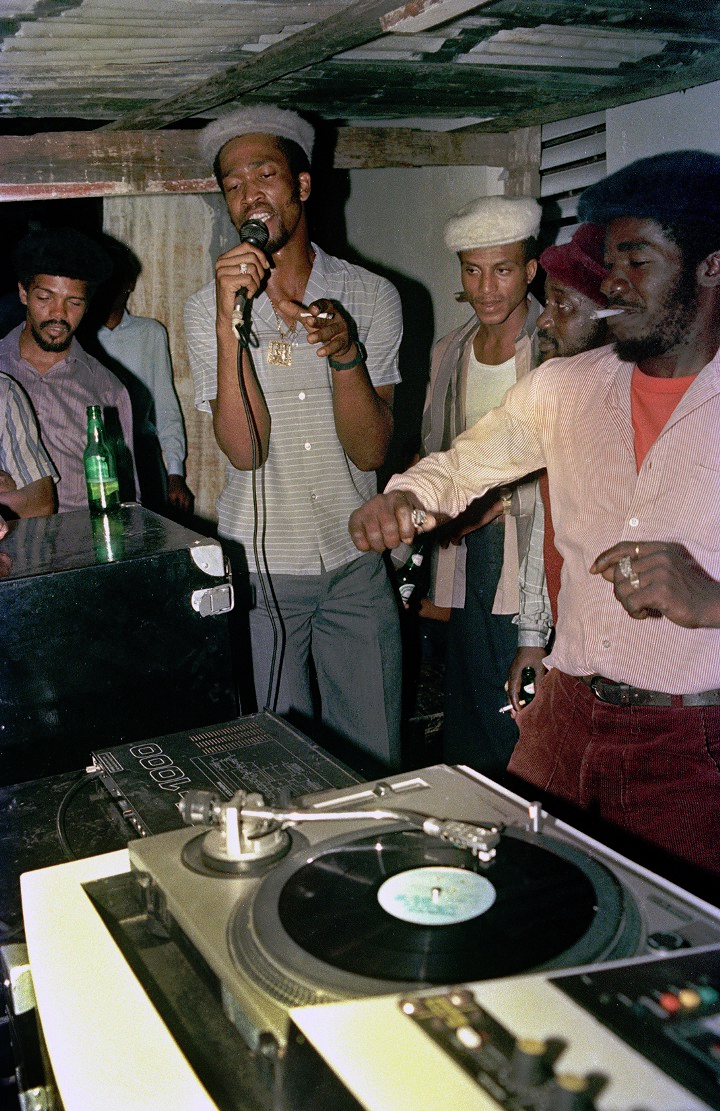
Stur-Mars session with deejay U Brown. © Beth Lesser

Text from:
“Supremely clubbed, devastatingly dub bed” : Some observations on the nature of mixes on 12inch dance singles.
Author:
Kai Fikentscher.
Versions of this paper were presented at the 1990 meetings of the Mid Atlantic Chapter of the Society for Ethnomusicology (MACSEM) in Newark, Delaware, and of the International Association for the Study of Popular Music (IASPM) in New Orleans, Louisiana.

On Rastafari bush doctor

Photo by Simon Lister Photography

The dynamics of herbal medicine are complex within the Western Cape and are typically sectored into different groupings based upon cultural background.
In contemporary Western Cape culture, particularly in urban Cape Town, a hybridization of cultures and healers has led to the development of neo–traditional healers, Rastafari bush doctors.

This group draws from the practices and herbal treatments used by other cultures including:
herbalists called inyanga (Zulu) and amaxwhele (Xhosa); spiritual diviners, who communicate largely with ancestral spirits, called izangoma (Zulu) and amagqirha (Xhosa); faith healers called umthandazi (Xhosa), Christians who heal through prayer; and traditional birth attendants.
In the Western Cape, bossiedokters (in English, bush doctors), healers with knowledge of bush herbs, are recognized as the oldest healers in this area.

Rastafarian herbalists acknowledge their KhoiSan history as the basis for their botanical medical knowledge.

There is evidence that medicinal plant knowledge was shared between KhoiSan and Xhosa cultures from the 16th century onwards; where KhoiSan peoples used highly advanced nomenclature, distinguishing between species and sub–species levels, while Xhosa folk taxonomy discriminates typically to the family or genus level and include flora from a wider geographical range.

Investigations reveal that the growing subculture of Rastafarians promotes and trades medicinal species
in most towns, city centers, and rural areas in the Western Cape.

Rastafari, a socio–political religion, has been a growing phenomenon in South Africa since its introduction in the 1970s. Its tenets promote racial equality, ecological sustainability and, for those in the Western Cape, availability of traditional medicines.
The most visible leaders of this group are their healers who have adopted the Afrikaans name:
bossiedokters.

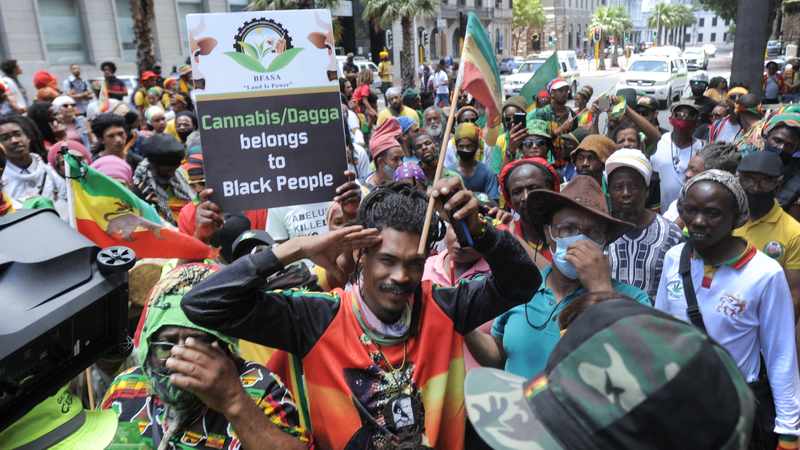
Rastafarians march for access to cannabis industry

Contemporary Rasta bush doctors state that their mission is to reintroduce KhoiSan healing traditions to the disadvantaged people living in townships, housing settlements for people of color that were provided by the Apartheid government.
Bush doctors are an important element to revitalizing a culture of healing and preserving indigenous knowledge specifically for urbanized Coloured communities, a mixed race group descendant from KhoiSan people and other cultures.


Excerpt from:

The Informal Trade of Medicinal Plants by Rastafari Bush Doctors in the Western Cape of South Africa
LISA E. ASTON PHILANDER, NOKWANDA P. MAKUNGA, AND KAREN J. ESLER
Economic Botany, 2014.

On the path to wisdom

On hemp for victory

Jah Billah intro:

There is still some confusion about cannabis plant being used as hemp or marijuana. This text will clear the confusion and show how propaganda made one plant into two varieties: drugless hemp and deadly marijuana.
At this time we should all acknowledge that cannabis saved entire world in World War.

It’s time to grow hemp for the peace.

The U.S. government was able to make hemp illegal for the United States citizens because it was constructed as a threat to society. This threat was overlooked as the advent of World War II created a problem for the U.S. industrial fiber supplies. The U.S. knew it would quickly use up the hemp stores it had along with the abaca and jute, other industrial strength fibers imported from the Philippines and Asia.


This shortage was critical because imports from the South Pacific, necessary for maintaining the armed forces, were no longer available. In this context the federal government was forced to contradict the laws against the threat of hemp, and thus began a campaign to make hemp patriotic. They’ realized the only way to get strong fibers for defense, cloth, rope, and gear was to grow it domestically. Thus began the federal government’s Hemp for Victory campaign to help farmers to grow hemp once more.

By creating a guaranteed market for the hemp and using educational campaigns farmers were encouraged to grow hemp.

The peak of the Hemp for Victory campaign was in 1945 and 1944. Estimates of the tonnage of hemp grown in those two years are about 75,000 tons in 1945 and 150,000 tons in 1944.
In 1945 there was a wealth of articles written about growing hemp. Some showed a concern about growing marijuana. One expressed this fear by stating,

“What can be done to keep these enormous (75,000 tons) new supplies, from which there almost inevitably will be ‘leaks’, out of their (depraved addicted creatures) twitching hands?”, the government conveniently reconstructed hemp in order to calm these masses, which were afraid because of the 1920s construction of hemp.

The United States Department of Agriculture (USDA) said that it created a strain of “drugless hemp” through breeding techniques.

At this point the government began a thorough contradiction of its hemp policies.

As part of the new campaign, the USDA issued the movie Hemp for Victory in 1942 to tell of the advantages of growing hemp for the war effort. Although this movie, along with other forms of government documentation of the campaign, has been removed from public view, a few pieces can be found.

In fact, the transcript of the movie is available on the internet (USDA 1942).

In the movie the USDA states that the decline of hemp was due to an increase in imports:

“then came cheaper imported fibers for cordage, like jute sisal and Manila hemp, and the culture of hemp in America declined.”.

In this movie there is no mention of marijuana.

They conveniently separate them and create hemp into a harmless plant once more. In fact, hemp becomes a symbol of patriotism. The movie concludes with this imagery:

When the Manila hemp reserve is gone, American hemp will go on

duty again: hemp for mooring ships; hemp for low lines; hemp for tackle

and gear; hemp for countless naval uses both on ship and shore. Just as

in the days when Old Ironsides sailed the seas victorious with her hempen

shrouds and hempen sails. Hemp for Victory.


Perhaps the most telling aspect of the reversal of the Hemp for Victory campaign is the education given to children of farmers. There were 4-H programs in place encouraging students to grow hemp. “Growing hemp gives 4-H members a real opportunity to serve their country in wartime…. Labor requirements do not interfere with school work.”

The plant was safe enough for America’s children to grow as a 4-H project when in a bind. There was no mention of careful handling, and no warning that they would be growing a dangerous plant. There was an outline of a typical growing season and a “hemp seed record” to keep track of the plants and quantities harvested.

The government heavily encouraged farmers to grow hemp. They were paid $30 to $50 a ton for the hemp fibers. The only rule was that a row of some other crop should surround the hemp field so that no one could access the hemp easily.
Through all of the favorable publicity for hemp there were some warnings of things to come.

There was a mentality created that only poor countries grow hemp, which is why U.S. farmers would no longer need to grow hemp after the war.

“Although hemp is a very favorable crop now- in all probability after the war, we will find that it will again lose some of its importance. We cannot compete with the cheap labor of the East, and the hand separated hemp is superior [to mechanically separated hemp].”

After World War II ended, the anti-hemp constructions resurfaced. Hemp cultivation was no longer allowed without permits, special taxes, and DEA initiated intervention once more. Hemp was no longer patriotic, but a threat. People returned to either viewing hemp as the dangerous marijuana or as a crop only developing countries, such as the Philippines, should grow.

Wisconsin was the only exception to the rule. Until 1958 they continued to grow hemp, despite strong federal opposition. So even the federal government had to contradict its own law to use hemp.


There was no other substitute for the crop in a time of war. Hemp is a good plant when it saves the country, but a bad plant in peacetime.

Text source:

Industrial Hemp (Cannabis savita L): The Geography of a Controversial Plant
by
April M. Luginbuhl, 2001. California Geographer


Image source:
Hemp for Victory