
Magellano taking on an original twist for the infamous 4/20 occasion, on how to STOP smoking weed and start RESPECTING the herb. Croatian language.
Category: Dub Culture Department
Music, technology, science and wisdom of DuB culture.
On Baba Ku
Baba Ku
Meanwhile, across the border from Persia in neighbouring Afghanistan, hashish aficionados have their own version of Sheik Haidar in the shape of a character called Baba Ku. So striking are the similarities between the stories of Sheikh Haidar and Baba Ku that they probably originate from the same source. Like Haidar, Baba Ku is characterised as a devout Sufi. He is celebrated for first bringing hashish to Afghanistan; he and his followers consumed the drug in prodigious quantities, regarding it as both a divine sacrament and a medicine. Baba Ku is generally acknowledged to be the founding father of cannabis culture in Afghanistan, and he is traditionally depicted as puffing on a giant hubble-bubble pipe. Again paralleling the Haidar legend, on the death of Baba Ku his disciples set up a shrine to him in the town of Balk in northern Afghanistan where they continued to cultivate a plot of cannabis in his memory. Pilgrims to the site were encouraged to smoke it up big time. Indeed, to this day in Afghanistan there are still hashish babas who venerate Baba Ku. Like the sadhus of India, they generally shun possessions other than their stash of hash and lead nomadic lives. However, from time to time they will gather together in smoking fraternities – summoned by a single mournful note blown through a giant conch shell – to fire it up in remembrance of the great Baba Ku. These Afghani hashish babas are some of the most serious smokers on earth and have been known to get through as much as an ounce (28g) per head at a single sitting. Another Islamic country strong on cannabis folklore is Morocco. Although a relative infant in terms of hashish production, the Moroccans have long been renowned for their love of kif – a marijuana and tobacco blend traditionally smoked in pipes. And they too have their patron saint of pot in the form of Sidi Hiri. Yet another Sufi Muslim, Sidi Hiri is said to have originally come to Morocco from Algeria bringing the sacred herb with him. Legend has it that he led a nomadic existence, sleeping rough in caves, wandering round the country, reciting the Koran, getting righteously ripped and turning on the locals to the joys of ganga.
Found in: Spliffs – Celebration of cannabis culture by Nick Jones. 2003.
On God as Placebo
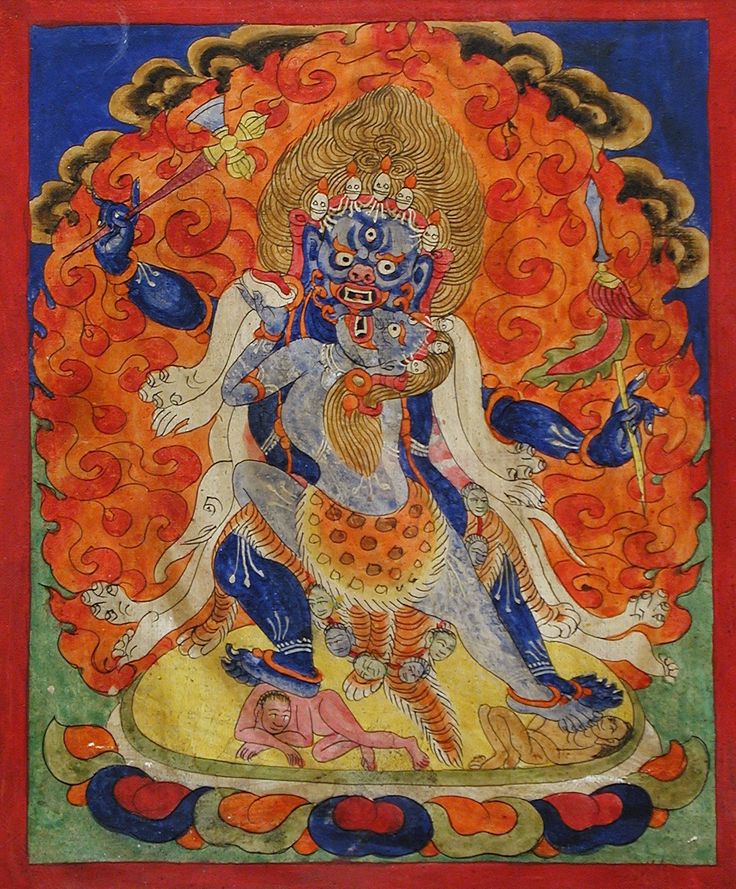
The placebo effect may be a good example to begin with. Although it maintains the almost paradoxical definition as being “medically ineffectual” though being regularly responsible for a “perceived or actual improvement in a medical condition”, we may at least say for certain that the logically derived mechanisms for its effectiveness are somewhere rooted within thought itself, or, believing that the placebo will actually do some good. This belief-derived effect has sometimes manifested itself in the stimulation and activation of the immune and nervous system, almost as if they were being sent the message to “prepare themselves” for the faux-medicine. With this fact in mind, it becomes quickly apparent that consciousness itself may have a direct impact on the physical, material body. As a revision of that thought, it may be more correctly assumed that the body itself is a participating member in the whole of, and is connected to what we tend to convey as consciousness, whatever it may or may not truly be.
In this sense, it may have been necessary for early man to externalize his most pressing worries and desires in the form of Gods; aggregates of thought which were granted governance and supremacy over various aspects of the human condition, and by way of some manner of religious surrenderance, ritualistic re-internalization or perceived divine contact, they might have occasionally managed to bridge the mirrored aspects of that particular god within themselves.
In other words, the imminent juxtaposition between that which was birthed from the internal, made external and given the mask of an anthropomorphic personification of some desire or trouble, connected back to, understood through its own voice and by means of some primordial placebo effect might have indeed aided the species in regards to their budding acclamation and comprehension of such alien subjects as agriculture, mathematics, metallurgy, more fair and concise political and cultural systems and the continued and burning libertarian ideals of the civilized human agenda. Big stuff, indeed, however…
Even today we live alongside various Gods and spirits, although we may have abandoned the practice of their anthropomorphization, but even this is not always the case. One may easily argue, given this point of view, that the ideal and concept of Liberty had been anthropomorphized into one of the best known and most recognizable Goddess monuments in the modern world; the statue of liberty. If one were to really get into the subject, he or she may become astounded by the sheer measure of calculation and pretentiousness demonstrated by the Freemasons and others in the laying out and architecture within Washington DC, with many historical buildings and monuments being made and placed in accordance with the constellation and symbolism ofthe Goddess Virgo. Some still may be taken aback when learning of the rituals held by the Bohemian Grove, an exclusive club where the wealthy and powerful meet to gather around a gigantic carved Owl statue, likely symbolizing knowledge and sacrifice. The practice of externalizing psychic concepts into symbolic figures and totems is not yet completely out of style, even amongst the rich, the powerful and the rational. Most of these modern practices of God or Goddess reverence as they pertain to the externalization of symbolic concepts may be quickly brushed away as nostalgic divergence; the question is whether or not it might hold a positive effect or any effect at all, in which case the only real path towards an answer is: try it for yourself.
Found in On the Mechanism of Gods, Godesses, Servitors & Egregores by Frater E.S.
Lee “Scratch” Perry & Subatomic Sound System – Super Ape Returns To Conquer
The Super Ape returns on Subatomic Sound label outta NYC. Opening with spiritually haunting “Zion’s Blood” and going straight into “Chase The Devil” alongside Schreechy Dan & Jahdan Blakkamoore vibing onto “War Ina Babylon” this album represents finest Subatomic production and proper re-appearance of King Muzik Jesus Perry. Four dubs for the dubheads deya!

On High Commandoing

From The First Earth Batallion Guidlines
Thomas Roebers and Floris Leeuwenberg – FOLI
This reminds me of one time Bob Marley saying that reggae music comes from the rhythm of man chopping woods. This film is a “extraordinary blend of image and sound that feeds the senses and reminds us all how essential it is.”
ON THE HIGHEST SOUND
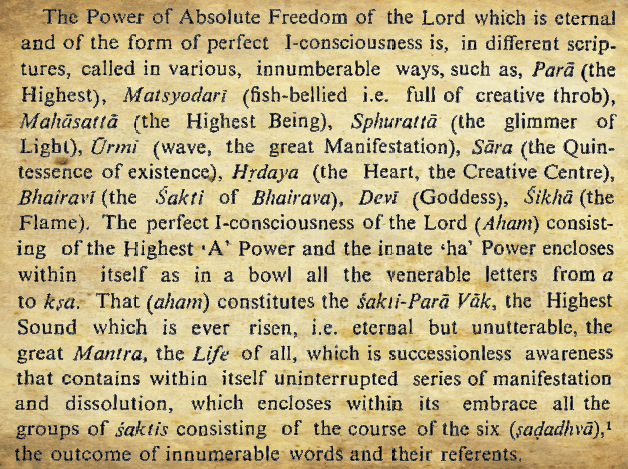
From: The Yoga of Vibration and Divine Pulsation by Jaideva Singh
Published in India by Motilal Banarsidass, Delhi , 1980.


ON ISHTAR
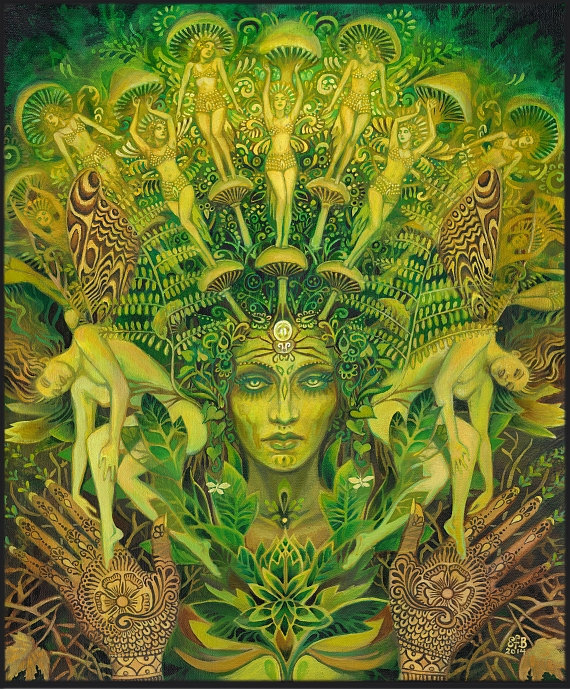
In ancient Sumeria, “Ishtar was held in high esteem as a heavenly monarch,” writes Jeanne Achterberg in Woman as Healer. “Her temples have been found at virtually every level of excavation.” The Ishtar Gate to the inner city of Babylon was one of the ancient wonders of the world. Also called the Queen of Heaven, Ishtar was a compassionate, healing deity. Her medicine kit likely included plant allies: a clay pot likely used for distillation of plant essences into medicines was found at a Sumerian grave site circa 5500 BC. The herb called Sim.Ishara, meaning “aromatic of the Goddess Ishtar,” is equated with the Akkadian qunnabu, or “cannabis,” writes Assyriologist Erica Reiner.
As the land of Sumer became a perpetual battlefield, Ishtar became the goddess of war and destiny, and became more sexualized, even as women were restricted from education and the healing arts.
In mankind’s first written story The Epic of Gilgamesh (circa 2000 BC), the cruel king Gilgamesh calls Ishtar a predatory and promiscuous woman, and rebukes her advances, just before taking off with his buddy Enkidu to chop down the great cedar forest. Gilgamesh’s repudiation of Ishtar, some scholars say, signifies a rejection of goddess worship in favor of patriarchy in ancient times. In ancient Babylon, around the spring solstice, people celebrated the resurrection of their god Tammuz, who was brought back from the underworld by his mother/wife Ishtar (pronounced “Easter” in most Semitic dialects). Flowers, painted eggs, and rabbits were the symbols of the holiday then, as now. Thus the goddess Ishtar resurrects every spring at Easter time, by way of the German goddess Ostara, “the divinity of the radiant dawn,” doubtlessly a reincarnation of Ishtar, who the Babylonians called “the morning star” and “the perfect light.” The biblical heroine Esther is also a descendant of Ishtar.
From: Tokin’ Women A 4000-Year Herstory
by Nola Evangelista (2015)
Image source: The Dryad Forest Nymph Goddess by Emily Balivet

ON BHAJAN POWER
Another context where the female sādhus exercise agency and power is their devotional song, bhajan, performances. Most of the female sādhus consider bhajan singing to be a powerful vehicle for receiving sacred knowledge and experiencing the divine directly; it may even catalyse their divine visions. Further, bhajan singing is understood to effect religious power for the female sādhus. Gangagiri often says, ‘My bhajans are my power.’ This statement indicates her perception that bhajans function as a performative medium by which means sādhus express bhakti to God. Gangagiri’s comment suggests that her bhakti is the basis of her own power and authority.
Female agency is explicitly linked to devotional practice by these female sādhus. By comparison, the male sādhus rarely discussed bhajan singing as a means for meeting God and rarely considered nirguṇī bhakti to be the basis of their own power and authority.
Found in ‘My bhajans are my power’: Performing Nirguṇī Bhakti through Devotional Song, from: ‘Crossing Over the Ocean of Existence’: Performing ‘Mysticism’ and Exerting Power by Female Sādhus in Rajasthan, by Antoinette E. DeNapoli.
Source: The Journal of Hindu Studies 2010
Image source: Wikimedia Commons
 OUT OF MANY COME DUB AND OUT OF DUB COME ONE