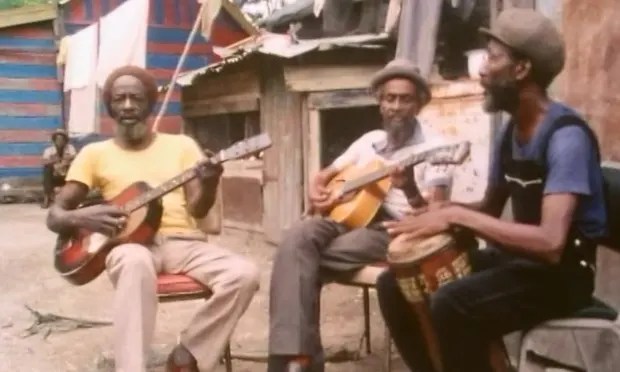
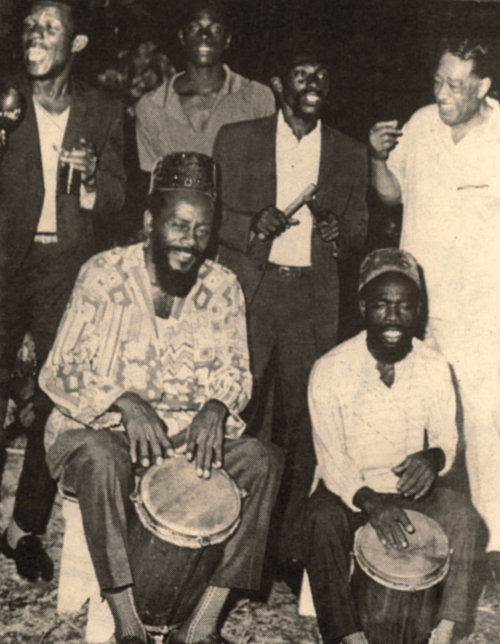
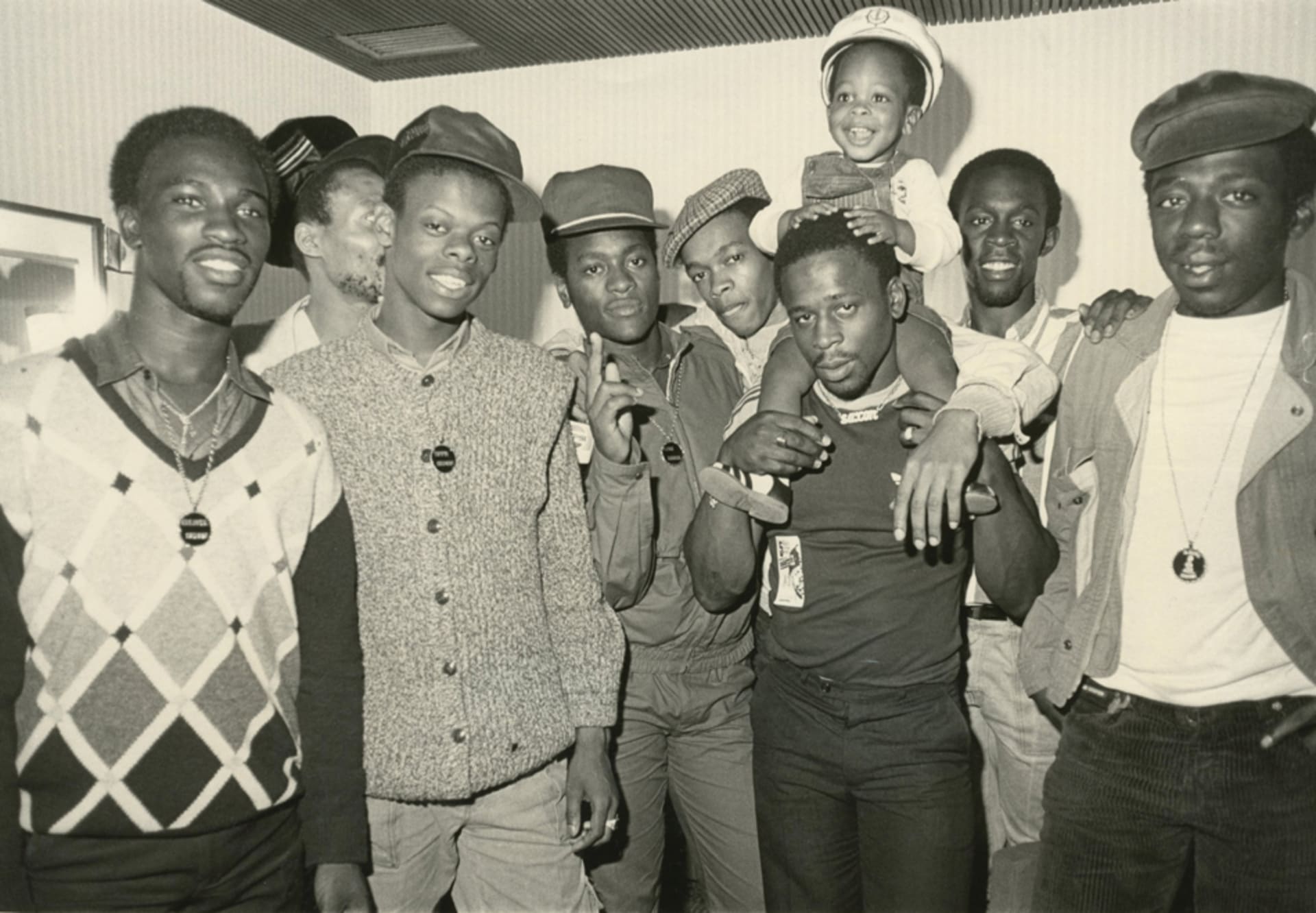
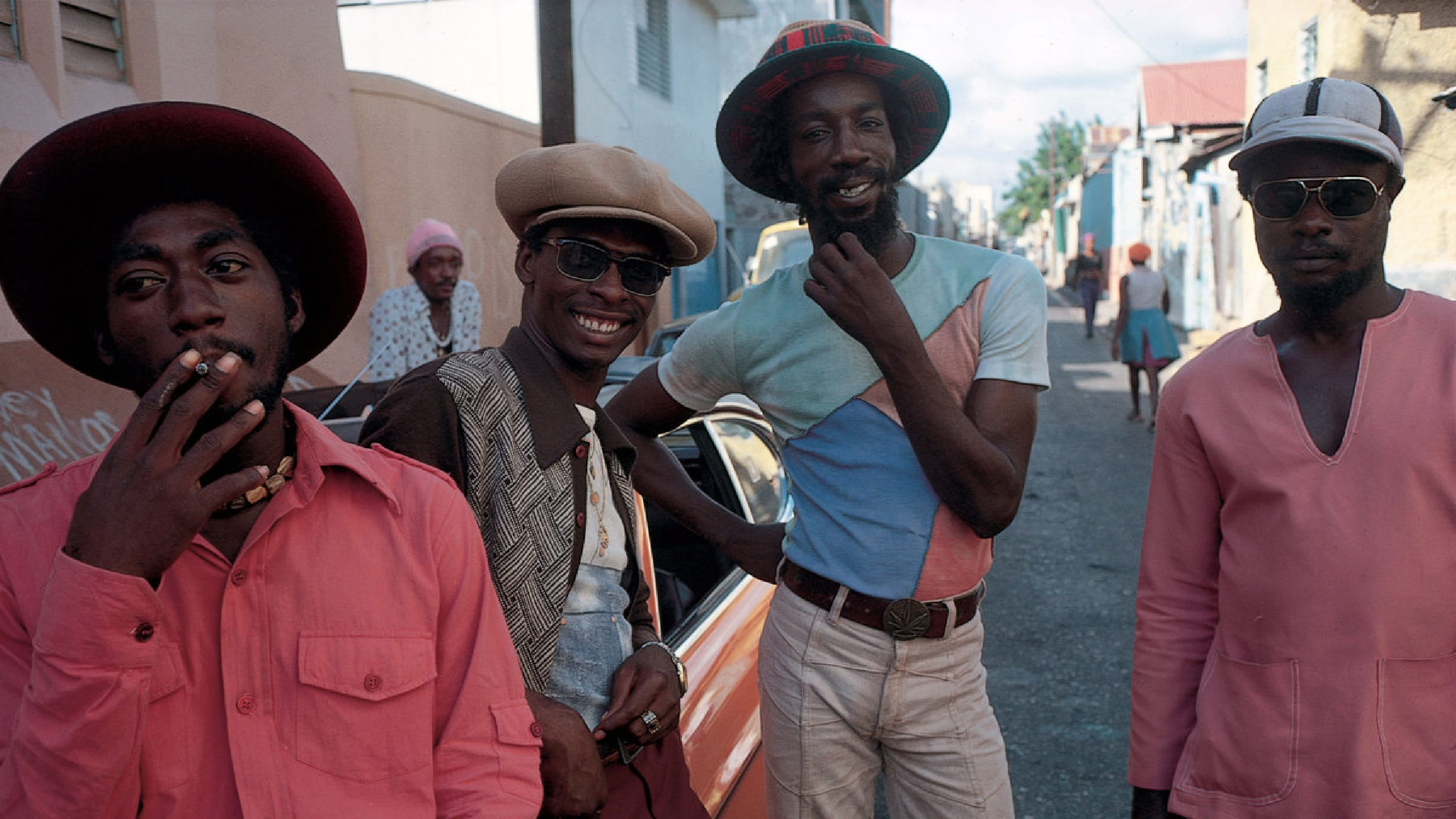
We need to give proper consideration specifically to the Buru (or Burru) tradition as well.
Among the Buru drummers of the first half of the twentieth century was one outstanding and very influential musician who, like Babu Bryan, remains unknown to most Jamaicans, not to mention the rest of the world. The man I am referring to is Watta King. Not to be confused with the notorious West Kingston bad man Woppy King, nor with the Rastafarian patriarch known as Bongo Watto, who were two entirely different individuals, Watta King was a Buru master drummer of Kongo descent who migrated to West Kingston from Clarendon parish.
Although he made his living as a barber, and was not himself a Rasta, Watta gained renown as a drum-builder during the 1940s and 1950s – the very time that Rasta consciousness was beginning to gather force in West Kingston. During these formative years of the Rasta faith, Watta King was the owner of the most sought-after set of African-style drums in the area, and he and his fellow Buru players became the main drummers for the earliest grounations, or ceremonial gatherings, in the Rasta hotbeds of Salt Lane and Back-o-Wall.
It appears that Watta King represents the crucial link between the rural Buru tradition of St Catherine and Clarendon, and the nascent Nyabinghi tradition of West Kingston. His playing appears to have served as a model for many in the first generation of Rasta drummers, and his great influence can be traced through at least four important drummers of later years (and likely several others). Baba Job (also known as Brother Job), who was to become Count Ossie‘s mentor, and Seeco Patterson, Bob Marley‘s percussionist who I mentioned earlier, both spoke to me of Watta King as their “teacher” – the man most responsible for their early development as drummers. And Skully Simms, one of the most important session hand drummers from the 1970s on, told me in considerable detail about the influence Watta King had on him. …
Distant Drums: The Unsung Contribution of African-Jamaican Percussion to Popular Music at Home and Abroad Author: KENNETH BILBY Source: Caribbean Quarterly, Vol. 56, No. 4, Pioneering Icons of Jamaican Popular Music, Part II (December 2010)
First release on Homegrown records in form of transparent 10″ vinyl now on pre-sale. Featuring Murray Man vocal cut and Vanja O melodica cut followed by dubs.
All profits from physical 10″ release will be donated towards organisations and solidarity actions for human and animal rights!
Reggae is not unlike “highlife,” the most popular form of Ghanaian music, which mixes both African and Caribbean influences and can be traced to the 1920s and 1930s.
While the South African singer Lucky Dube pioneered reggae in places like Ghana during the 1970s, and still ranks as one of the most sought-after performers throughout contemporary Africa, other “imports,” such as Don Carlos, Jimmy Cliff, and Bob Marley, not forgetting more recent acts such as Black Uhuru, Steel Pulse, and Buju Banton, have emerged to create and define a certain ethos that, at least from one perspective, may be seen as “Rasta.”
In all likelihood, “Rasta” as a religious-cultural import influenced a few Ghanaian youth to practice Rastafarianism in the 1970s and 1980s. Its social message, often wrapped in musical garb, would have been appealing, for instance, to disenfranchised youth during those long years of economic mismanagement and domestic privation.
Reggae was, and remains, an important “Rasta fashion,” and so too is the general appearance of “the Rastaman,” particularly the dreadlocks, which seem to carry enormous appeal in Ghana. It seems highly likely that some of these early Rastas noted the similarity between the appearance of Rasta celebrities like Bob Marley, with his long matted hair, and traditional African fetish priests and, therefore, perceived Rastafarianism as an authentically African way of life. Okomfo Anokye is worth noting here, as a truly legendary figure in Ghanaian religion and culture. According to Ashanti mythology, he established the Ashanti Kingdom by calling forth its sacred Golden Stool from the sky. In addition, Ashantis claim that one of the three palm nuts Anokye threw on the ground marks the spot that would later become Kumasi, the capital of the Ashanti kingdom.
Furthermore, they link him to a legendary sword, observable today in a small room behind Kumasi’s Okomfo Anokye Hospital. According to Ashanti tradition, this sword was mysteriously placed at the exact spot where Okomfo Anoyke called forth the Golden Stool. Royal lore claims that the Ashanti dynasty will suffer unspeakable tragedies should the sword ever be removed.
Not only do Ashantis treat Okomfo Anoyke as their founder and protector, they hold him as one of their highest fetish priests, mysteriously born as a locksman with fully-grown, matted hair. This arresting detail is not lost on current Ghanaian Rastafarians. While it is difficult to prove that early Ghanaian Rastafarians made any kind of solid connection between their faith and the figure of Okomfo Anokye, from my perspective, the link seems obvious. More than a few non-Rastafarian Ghanaians remarked to me that with the emergence of Rastafarianism among Ghanaian youth in the mid-to-late 1970s, fetish priests found a wider audience for their words and deeds.
Excerpt from: AS IT IS IN ZION:SEEKING THE RASTAFARI IN GHANA,WEST AFRICA Darren J. N. Middleton, Black Theology: An International Journal, 2006.
Science has been moving in complementary ways to art for centuries, including recently, with the introduction of biotechnology into the arts.
The mix of eastern/western and holistic/analytical-technocratic thinking contributed to a multi-angular approach to human nature.
The informatics that supports biotechnology became a craftsperson’s tool. According to Whitelaw, especially biotechnology involves technologies such as genetic engineering, tissue culture and cloning, while it produces results that are the source of inspiration for those occupied with the subject.
Bioart rather suggests that any future outcome for embodiment in the field of informatics should leave some space for the aesthetic processes of composition. The term bioart, an invention of artist Eduardo Kac for his work ‘Time Capsule’ in 1997, and its derivatives, such as biomusic, belong to what could be described as the next level of syncretic creativity. It is about a technoetic evolution, where the self comes to the forefront through generative arrangements and processes. The self is shaped through new dimensions of consciousness.
Dominant and subversive versions of Africa and African history reproduced the dynamic outlined above but on an international scale. In Britain in the 1980s imperial relations were being re-imagined in the context of humanitarian aid. Black youths in Britain wielded their African heritage as a tool to build their communities and give voice to their analysis. Meanwhile the mainstream press, and charitable structures,were also building a version of Africa; one of helpless victims of natural disasters.
Given such a context, the ‘performance’ that is being considered here contains dialogues that traverse the African diaspora and are based on the acquisition of‘oral skills’ in Creolised language, which acted as a mode of response to the imposition of European culture on non-European peoples. Resistance became most evident in the contested spaces constructed around specific types of language-use that expressed an alternative black subjectivity that bridged intergenerational gaps within black communities.
The use of particular linguistic forms, both oral and scribal, continued the type of ‘pan Caribbean consciousness‘ that was necessary for the Windrush Generation’s survival and was passed down to the generations born in Britain thereafter. For many deejays, therefore, the world view expressed through the usage of Standard English reduced them to the voiceless, passive victims of a Eurocentric historical bias. By blending several aspects of Jamaican oral culture with their own local argot, deejays verbally presented critiques of certain entrenched ideas, for instance, poetry as an exclusively white domain.
This type of engagement was exemplifed in a lyric performed on Diamonds Sound System by the British deejay Papa Benji, which suggested that ‘poetry me better than Shakespeare, and me voice gone clear everywhere’.
The deejay thus became the veritable keeper of memories, for once the word was performed, recorded and disseminated, it became an artefact; a historical document. It also enabled the performers to present their own arguments, in their own words and on their own terms in a ‘commonly agreed language’ that countered their ‘social problem’ status.
William ‘Lez’ Henry (2012) Reggae, Rasta and the Role of the Deejay in the Black British Experience, Contemporary British History, 26:3, 355-373, DOI:10.1080/13619462.2012.703024
Jah Billah intro: This text highlights tactics used by Babylon to regain social control over revolutionary social movements. In escalating progression these appear as: Evasion – ignoring Counterpersuasion– ridicule and linguistic control Coercion or Coercive persuasion – violence Adjustment – co-opting the social movement Capitulation – Babylon take over
Even if take just a quick look at first tactic “creating dead channels” we can witness how online media surrounds us with fake activist influencers who do the talk yet never remember to do the walk.
The Rhetoric of Social Control … Responding to the agitation of a social movement, ‘‘establishments’’ tend to Resort first to ‘‘evasion,’’ which involves, in effect, pretending that the social movement ‘‘does not exist or that it is too insignificant to recognize’’. Establishments can postpone action, appear constrained to grant protest goals, control or change the social or political agenda , lie and control information, deny protestors the physical means of protest, deny protestors access to the media, and create ‘‘dead-‐end’’ channels of influence. For example, during the 1960s, several poor, Black communities in Baltimore waged a war on poverty, challenging the dominant White majority who controlled the city’s political structure. In order to thwart the demands of the protestors, Baltimore’s political establishment employed a standard evasion tactic, changing the political agenda. The protestors insisted that the city government must invest the necessary time and resources to address Baltimore’s impoverished areas. In response, Baltimore’s political establishment changed the political agenda to ‘‘improve the absolute well-‐being of the city’s entire population, not to effect a redistribution of values in favor of the poverty-‐stricken blacks’’.
The second strategy is called ‘‘counterpersuasion.’’ In counterpersuasion, governments and their surrogates seek to discredit movement leaders or to show their ideas are ‘‘ill-‐advised and lack merit’’. Counterpersuasion may be part of a larger rhetorical matrix called ‘‘administrative rhetoric,’’ or the establishment’s attempt to undermine a social movement’s ideas and influence. A number of counterpersuasion tactics have been identified, including ridicule, discrediting protest leaders and organizations, appealing to unity by ‘‘crying anarchy’’, and linguistic control. In a study on the Equal Rights Association, Martha Solomon ( 1978) argued that the STOP-‐ERA political campaign employed the tactic of ridicule to paint ‘‘an unappealing picture of the feminists’ physical appearance and nature’’. Portrayed in ‘‘devil’’ terms, ERA supporters were labeled ‘‘anti-‐male,’’ ‘‘arrogant,’’ and ‘‘abortive.’’ In contrast, ERA opponents were characterized within the ideological framework of the ‘‘Positive Woman’’—physically attractive, intelligent, and emotionally fulfilled.
When milder strategies prove unsuccessful in counteracting the agitation of a social movement, establishments typically resort to a strategy of ‘‘coercion.’’ This strategy may remain largely rhetorical, what Stewart, Smith, and Denton refer to as ‘‘coercive persuasion’’. Simons ( 1972, 1976) coined the term ‘‘coercive persuasion’’ because he believed ‘‘elements of persuasion and inducement or persuasion and constraint are generally manifested in the same act’’. For example, police officers combine physical and verbal intimidation to control deviance before a social disturbance breaks out.
If ‘‘coercion persuasion’’ fails, the conflict can escalate to more physical tactics, such as restrictive legislation, physically attacking demonstrators, firebombing homes, imprisonment, or even assassination. Oberschall ( 1973) observed that during this conflictual stage ‘‘the authorities seek to destroy the organization of the opposition, arrest their leaders, and even set up stooges that allegedly speak for the population from which the protestors are drawn’’. In a comprehensive study of how riot commissions interpret and investigate riots, Platt ( 1971) reported that an estimated 34 people died and over 4,000 were arrested during the 1965 Watts riots. According to Platt, a jury later discovered that the Los Angeles Police Department and the National Guard were responsible for 23 of the 26 ‘‘justified’’ murders.
When all strategies have failed, an establishment may employ the ‘‘adjustment’’ strategy, which ‘‘involves making some concessions to a social movement while not accepting the movement’s demands or goals’’ . Adjustment tactics can encompass ‘‘symbolic’’ concessions, such as Manley’s public praise of the Rastafarian movement, or establishments might sacrifice some of their own personnel if a ‘‘social movement focuses its agitation and hatred upon a single individual or unit’’. Elites can use economic rewards to satisfy and stratify a protest group or establish committees to investigate issues. If a social movement’s agitation becomes especially intense, the establishment might even incorporate movement leaders and sympathizers into the establishment by appointing them to low-‐level decision-‐ making positions. Or the establishment might incorporate parts of the dissent ideology into the mainstream, entering into a loose confederation with the social movement.
Yet, cooperation with a dissent group ‘‘may lead to outright co-‐optation of the cause’’ or a literal takeover of the movement by elements of the mainstream establishment. Gamson ( 1968) suggested that establishments use the co-‐optation strategy when prior control strategies were unsuccessful. Social movements that are co-‐opted are often ‘‘subject to the rewards and punishments that the organization bestows’’. In fact, according to Gamson, ‘‘new rewards lie ahead if they show themselves to be amenable to some degree of control’’.
The final strategy, capitulation, occurs when the social movement’s ideas, policies, and personnel ‘‘replace those of the target institution’’. In the case of the Rastafarian movement, the Jamaican government did not capitulate to the demands of the Rastafarian movement. Instead, the Jamaican government and its supporters co-‐opted the cultural symbols of Rastafari and reggae music as authentic reflections of Jamaican society. …
Text from: The Co-optation of a ‘‘Revolution’’: Rastafari, Reggae, and the Rhetoric of Social Control Author: King, Stephen A. (1999). Faculty Research and Creative Activity. 15. http://thekeep.eiu.edu/commstudies_fac/15
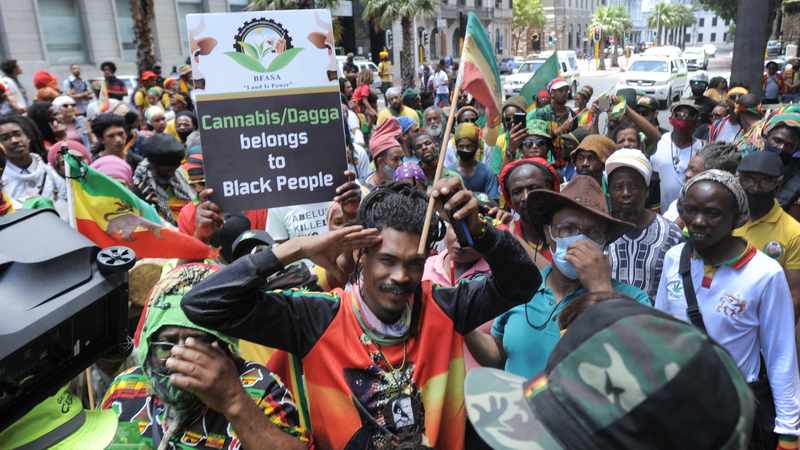
The dynamics of herbal medicine are complex within the Western Cape and are typically sectored into different groupings based upon cultural background. In contemporary Western Cape culture, particularly in urban Cape Town, a hybridization of cultures and healers has led to the development of neo–traditional healers, Rastafari bush doctors.
This group draws from the practices and herbal treatments used by other cultures including: herbalists called inyanga (Zulu) and amaxwhele (Xhosa); spiritual diviners, who communicate largely with ancestral spirits, called izangoma (Zulu) and amagqirha (Xhosa); faith healers called umthandazi (Xhosa), Christians who heal through prayer; and traditional birth attendants. In the Western Cape, bossiedokters (in English, bush doctors), healers with knowledge of bush herbs, are recognized as the oldest healers in this area.
Rastafarian herbalists acknowledge their KhoiSan history as the basis for their botanical medical knowledge.
There is evidence that medicinal plant knowledge was shared between KhoiSan and Xhosa cultures from the 16th century onwards; where KhoiSan peoples used highly advanced nomenclature, distinguishing between species and sub–species levels, while Xhosa folk taxonomy discriminates typically to the family or genus level and include flora from a wider geographical range.
Investigations reveal that the growing subculture of Rastafarians promotes and trades medicinal species in most towns, city centers, and rural areas in the Western Cape.
Rastafari, a socio–political religion, has been a growing phenomenon in South Africa since its introduction in the 1970s. Its tenets promote racial equality, ecological sustainability and, for those in the Western Cape, availability of traditional medicines. The most visible leaders of this group are their healers who have adopted the Afrikaans name: bossiedokters.
Contemporary Rasta bush doctors state that their mission is to reintroduce KhoiSan healing traditions to the disadvantaged people living in townships, housing settlements for people of color that were provided by the Apartheid government. Bush doctors are an important element to revitalizing a culture of healing and preserving indigenous knowledge specifically for urbanized Coloured communities, a mixed race group descendant from KhoiSan people and other cultures.