
Taken straight from REVOLUTIONARY DUB VIBRATIONS – CHAPTER ONE featuring original back cover art work.
Jah Billah – Righteous Man Dub
Music by Jah Billah.
Mastered at Don Fe studios. 2009.
Get it here: https://dubvibrations.wordpress.com
Dicogs:
https://www.discogs.com/Various-Revolutionary-Dub-Vibrations-Chapter-One/release/4217443
Category: Dub Culture Department
Music, technology, science and wisdom of DuB culture.
On Youtube as early childhood music education resource
On subject of Youtube as early childhood music education resource, Jah Billah says: NO NO NO.
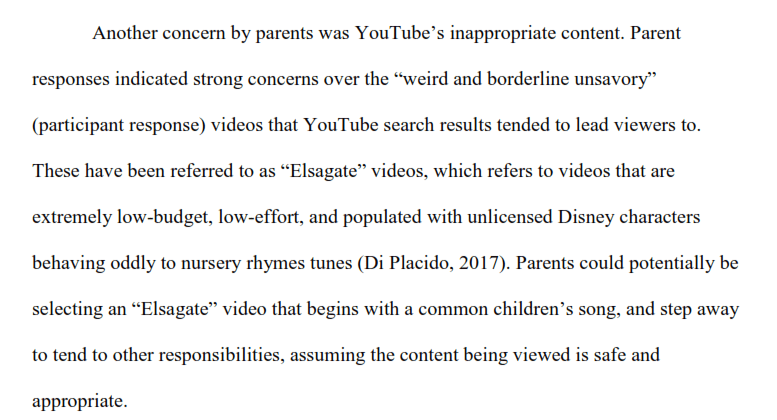
Found in Concers, from Characteristics of Digital Musical Parenting, chapter from:
YOUTUBE AS AN EARLY CHILDHOOD MUSIC EDUCATION RESOURCE:
PARENTAL ATTITUDES, BELIEFS, USAGES, AND EXPERIENCES
A Dissertation presented to the Faculty of the Graduate School at the University of Missouri-Columbia
by
MICHELLE Y. KO
DECEMBER 2018
Discovery of Elsa-gate Detection of Sparse Inappropriate Content from Kids Videos
Jah Billah says: remove all children from inappropriate online content, and remove all inappropriate online content from YT and FB.
Immediately!
Cannabis and Frankincense in religion
Irrefutable archaeological evidence now confirms etymological and theological evidence we already know: cannabis is the root of religious ecstasy found in antiquity of Judaism and Abrahamic religions.
On sound and fear
Sound is often understood as generally having a privileged role in the production and modulation of fear, activating instinctive responses, triggering an evolutionary functional nervousness.
The power of sound to instill dread was well known to the heavily outnumbered Maroons, the tribal nation turned guerrilla fighters who claimed a number of astounding victories in their asymmetric conflict with the English colonialists in Jamaica during the
late eighteenth century.
The abeng, a fashioned cow horn, had two uses: by slave holders to call the slaves to the cane fields and a “traditional form of communication among the communities, warning them and sending messages across difficult terrain.”
The Maroons used the abeng in tandem with their other special techniques—drum communication, the ambush, and camouflage—in order to outwit the British: “They embedded themselves in leaves and vines and melted into the surrounding bushes. The
British repeatedly walked into clearings where their surroundings would suddenly come
alive and close in on them.”
The abeng, as a system of communication, produced signals “reproducing the pitch and rhythmic patterns of a fairly small vocabulary of Twi words, from their mother language, in most cases called Kromantin (Maroon spelling) after the Ghanaian port from which many slave ancestors were shipped.”
Sentries stationed outside the villages would use the different pitches to communicate the British approach, the extent of the weapons they carried, and their path. But the abeng also had another affective function: to scare the British with its “hideous and terrible” dislocated tones, sometimes managing to repel the invaders with sound itself. Gradually, as the British learned to assign a cause to its shrieking, high- pitched sound, their terror of Maroon ambush only intensified.
Found in 1738: Bad Vibrations, from:
SONIC WARFARE Sound, Affect, and the Ecology of Fear, by Steve Goodman.
Massachusetts Institute of Technology. 2010.
On Human Evolution
Humanity Evolved with Cannabis
Sea squirts are marine organisms that shared a common ancestor with vertebrates (animals, reptiles, birds, fish, etc.) 55 million years ago. These primitive animals have a precursor to the human heart. And they have an endocannabinoid system, producing naturally occurring cannabinoids like other animals. According to NORML, “By comparing the genetics of cannabinoid receptors in different species, scientists estimate that the endocannabinoid system evolved in primitive animals over 600 million years ago.”
Mind-altering plant and fungal medicines grow in every habitable place on earth. Chimps eat over a dozen species of plants for medicinal purposes. Large groups of them have been known to walk long distances to get to these medicinal plants, which scientists later discovered do things like kill parasites, fungi, and viruses. In fact, whole classes of compounds for human use have been formulated as a direct result of watching our wild cousins. Evidence from all over the world shows animals in the wild using psychoactive plants and mushrooms.
Early humans would naturally observe and learn from the animals around them, and, being animals themselves, would also be drawn to various forms of plant medicine. Modern anthropologists studying hunter-gatherer tribes found that they have an encyclopedic knowledge of local flora and fauna. The fungi, plants, and animals that they formed a special connection with were integrated into primitive spiritual rituals, rituals that would later evolve into yoga, for example.
Cannabis is known to be one of humanity’s earliest agricultural crops, having evolved between 6 and 34 million years ago. The exact time and place of first contact is still debated: some scientists point toward central Asia and others identify Europe during the last Ice Age. The herb entered the archaeological record of Asia and eastern Europe at about the same time, between about 12,500 and 10,000 years ago. A recent review of cannabis archaeological data links an intensification of cannabis use in East Asia with the rise of transcontinental trade at the dawn of the Bronze Age, about 5,000 years ago.
Humans used both nonpsychoactive hemp and the more medicinal cannabis version of the plant for a variety of reasons. Perhaps it was first used for food, as it was for other animals, then as medicine, and later as an intoxicant to enter an altered state as part of spiritual rituals. At some point we began making rope and textiles from its fiber, and those ropes may have been instrumental in the domestication of the horse.
Charred seeds have been found inside the burial mounds dating back to 3,000 BCE, and the oldest cannabis archaeological relic in existence is a piece of hemp cloth from 10,000 years ago.
Found in: Chapter 4. THE HISTORY OF CANNABIS AND YOGA, from:
Ganja Yoga: A Practical Guide to Conscious Relaxation, Soothing Pain Relief, and Enlightened Self-Discovery , by Dee Dussault, 2017.

On Bob Marley’s Lambs Bread
“A Jamaican scientist is recreating a ‘supreme’ marijuana that was smoked by Bob Marley in the 1970s before it was wiped out the following decade during the American war on drugs.
Amid mangos, lychees and other jackfruit, Dr Machel Emanuel has planted a field of cannabis plants measuring dozens of square meters in his lab in the botanical garden of the Biology Department at the University of the West Indies in Kingston.
His specialty: landrace cannabis, which grew naturally in Jamaica before it disappeared as a result of human intervention.”
From: Lost variety of ganja smoked by Bob Marley before it was wiped out during war on drugs is being recreated by expert who wants Jamaica to market marijuana ‘like Champagne in France
Image source: AFP/Getty Images
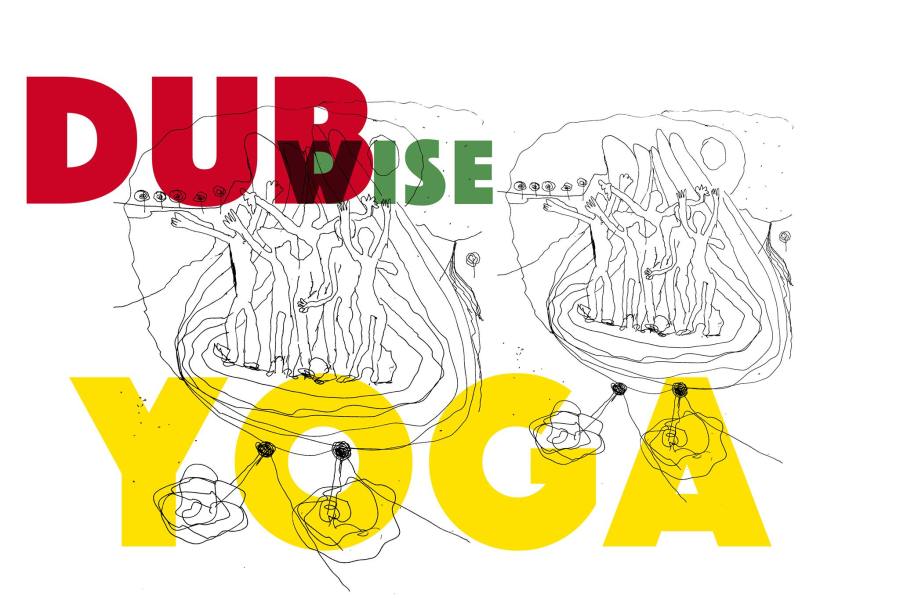
Dubwise Yoga
I need you to know that Dub Yoga is a real thing. Tonight in Berlin you can join selektress Sister Julie from Roots Daughters sound and yogini Regina Sebald for a unique experience:
DUBwise YOGA
“We use the music as a tool in exploring our body through yoga and the healing sounds of dub.”
Our prophecy of Yogi Dread is slowly but surely coming to fulfillment. With Ganja Yoga in Canada, Dubwise Yoga in Germany, outernational Jah9 movements all amass and rally Yogi Dread army globally.
Peace, love and unity shall conquer.
I had a conversation about this not a year ago with a beautiful yogini that moved forward to pure lands. I dedicate this post to you Kate.
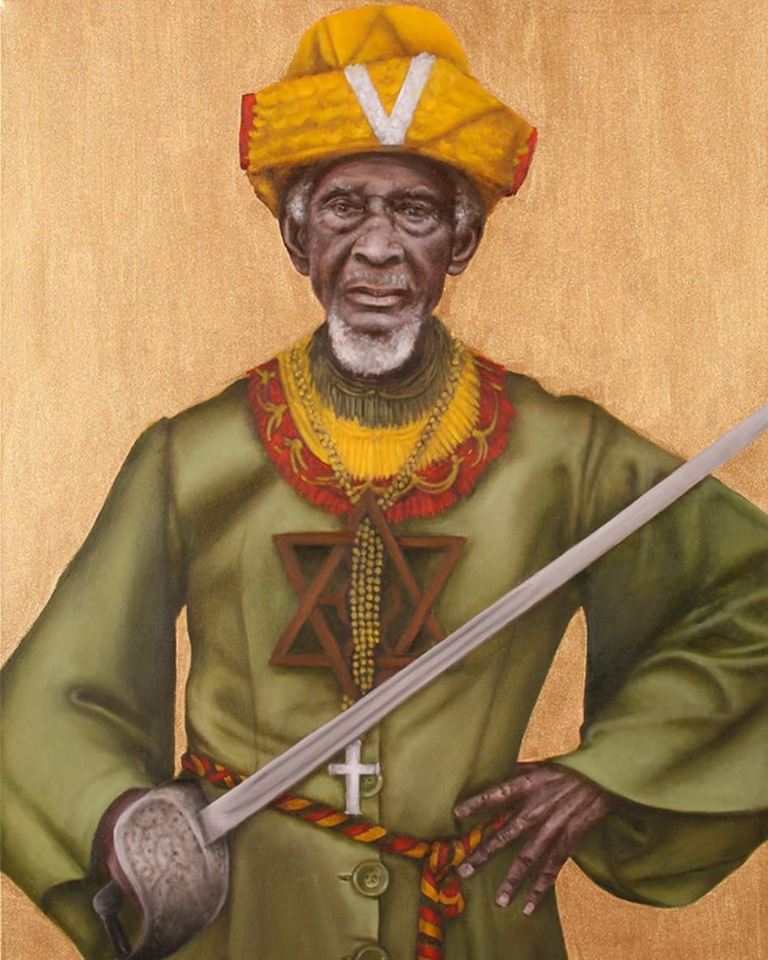
On Emperor Haile Sellassie I as the Living God
The doctrine that Ras Tafari known to the world as the Emperor Haile Sellassie I of Ethiopia, is the Living God, was developed by several persons independently.
Of these Mr. Leonard P. Howell is genuinely regarded as being the first to preach the divinity of Ras Tafari in Kingston. Howell is said to have fought against King Prempeh of Ashanti (1896), and claimed to speak an African language.
‘The Promised Key’, a basic Ras Tafari text, published in Accra, Ghana around 1930, shows clear evidence of Jamaican authorship. (Jamaica Times 28th May 1938).
Howell also spent several years in the north-eastern U.S., where he came into contact with black and white racism.
Another early preacher was Mr. Joseph Nathaniel Hibbert. Mr. Hibbert was born in Jamaica in 1894, but went with his adopted father to Costa Rica in 1911, returning to Jamaica in 1931. In Costa Rica Mr. Hibbert had leased 28 acres, which he put in bananas. In 1924 he had joined the Ancient Mystic Order of Ethiopia, a Masonic society the constitution of which was revised in 1888, and which became incorporated in 1928 in Panama. Mr. Hibbert became a Master Mason of this Order, and, returning to Jamaica, began to preach Haile Sellassie as the King of Kings, the returned Messiah and the Redeemer of Israel.
This was at Benoah District, St. Andrew, from whence he moved to Kingston to find Howell already preaching Ras Tafari as God at the Redemption Market. Mr. H. Archibald Dunkley is another man who may claim to have brought the doctrine to Jamaica. Mr. Dunkley was a Jamaican seaman on the Atlantic Fruit Company’s boats, and finally quit the sea on the 8th December 1930, when he landed at Port Antonio off the s.S. St. Mary. Coining to Kingston, Dunkley studied the Bible for two-and-a half years on his own, to determine whether Haile Sellassie was the Messiah whom Garvey had prophesied. Ezekiel 30, I Timothy 6, Revelation 17 and 19 and Isaiah 43 finally convinced him.
In 1933 Dunkley opened his Mission, preaching Ras Tafari as the King of Kings, the Root of David, the Son of the Living God, but not the Father Himself. Other early preachers include Robert Hinds, who joined Howell, and Altamont Read who turned his following over to one Mr. Johnson when he became Mr. N. W. Manley’s bodyguard about 1940.
Found in: HISTORY OF THE MOVEMENT, from:
The Rastafari Movement In Kingston, Jamaica. PART 1
Authors: M. G. SMITH, ROY AUGIER and REX NETTLEFORD
Source: Caribbean Quarterly, Vol. 13, No. 3 (September 1967)
Image source: Colin Edward Murray Art

On rude reggae
However, rude reggae did not start with the slackness of DJs in the 1980s and later. As Stanley-Niaah notes, Jamaica has a long tradition of rude lyrics dating back to mento, perhaps the first distinctively Jamaican musical genre, in the 1950s. Stanley-Niaah specifically mentions Lloydie and the Lowbites album, Censored, and some tracks by Prince Buster.
The Lloydie and the Lowbites album—the pseudonymous Lloydie was actually the rock steady artist, Lloyd Charmers—was released in 1972 and represents something of a high point in the tradition perhaps influenced by rude reggae’s popularity in Britain among skinheads. Kevin O’Brien Chang and Wayne Chen write that:
Jamaica has a long and honoured tradition of .. . suggestive, sexually-oriented music. Mento, even more than its Trinidadian cousin calypso, was always noted for its earthy themes. Songs such as ‘Mary Ann’ .. . and ‘Big Bamboo’ .. . are still staples on the tourist circuit.
They go on to discuss the importance of rudeness in ska and mention Prince Buster’s 1969 release, ‘Wreck A Pum Pum’ (‘pum pum’ can be translated by the vernacular ‘pussy’) which Buster sang over a version of the Christmas carol, ‘Little Drummer Boy’. A year earlier, Buster had released a ska version of the mento track, ‘Rough Rider’. The album which included it, as well as ‘Wine & Grind’, She Was a Rough Rider, was released in Britain in 1969.
From: Judge Dread, Ska, Rock Steady and Rudeness, found in:
Jon Stratton (2014) Judge Dread: Music Hall Traditionalist or Postcolonial
Hybrid, Contemporary British History.
Image source: Prince Buster’s All Stars / The Rude Girls – Wreck A Pum Pum / Wreck A Buddy
Dexta Daps – Dem gal yah bad – Max RubaDub Blend
King of dancehall blends Max Rubadub dropping lava hot Dexta Dap tune.
 OUT OF MANY COME DUB AND OUT OF DUB COME ONE