This research presents measurements of various neurophysiological effects of different music genres, but it seems to be just a sneaky way of settling age old debate of : “Which is more cerebral, Psy Trance or Goa Trance?” Just kidding. Some people say we should not take music too seriously. Should we take science of music seriously? Genres included in study were: -Classical, Tribal Downtempo, Psychedelic Trance (Psytrance), Goa Trance, and Subject Choice.
Among other results, study finds that people with prior musical training will exhibit higher neurophysiological response to music in delta waves range of brain activity.
“Higher percentages of delta frequencies were found to be most strongly associated with Psytrance within individual cortical regions. Goa Trance also exhibited a significant but weaker association. The superior association observed between Psytrance and higher percentages of delta frequencies may again be attributed to its unique sixteenth note rhythmic beat structure. However, the finding that Goa Trance also had a significant association, although far less robust than what was observed for Psytrance, suggests that the compositional structure of Goa Trance may be similar enough to that of Psytrance that there is some overlap or sharing in their ability to increase delta frequency activity in the cerebral cortex of listeners. Goa Trance has a very similar compositional structure to that of Psytrance, and although it lacks the sixteenth note beat structure found in Psytrance, it still is typically composed of melodies and harmonies made from sixteenth notes layered over a standard quarter note beat structure. Further investigation is warranted to better clarify the reasons why Psytrance exhibited a superior association with higher percentages of delta frequencies compared to the other studied music genres. Given that increased delta frequency activity is observed during stages of NREM sleep, these findings support those of previous music therapy studies which suggest that various types of music may impact the central nervous system by promoting changes in cerebral cortex activity that have similarities to NREM sleep, while the listener remains awake.“
Text from: Neurophysiological effects of various music genres on electroencephalographic (EEG) cerebral cortex activity Authors: Abraham Hafiz Rodriguez, Sarah Nath Zallek, Michael Xu, Jean Aldag, Lori Russell-Chapin, Tobias A. Mattei, and N. Scott Litofsky Publication Date: 15 Oct 2021 DOI: https://doi.org/10.1556/2054.2019.027
“Post-apocalyptic DUB” is not an easy load, but Kali Fat Dub carry the flag and spearhead Balkan DUB charge. Full support for 11 track 2021 album now available on BandCamp!
Religiously, the Rastafari are committed to the belief in theliving God : God living in and among his people. Accordingly, such a belief throws cold water on anyone who claims leadership status. The living God, which according to the Rastafari is Haile Selassie, the former emperor of Ethiopia, is not only the ultimate decision maker, but there is no distinction between him and his followers. Thus, every member is an autonomous person whose obligation is to nothing but the convictions of his or her inner self. In this sense, the Rastafari is antihierarchical through and through.
As the Rastafari is a movement where flat hierarchy prevails, every member is a professional activist, none of whom has grounds to claim a distinct and sumptuous posture. Thus, insofar as a symmetrical relationship between the leaders and the led is integral to the philosophy of the Rastafari, it is of no avail to have a formal hierarchical organization. …
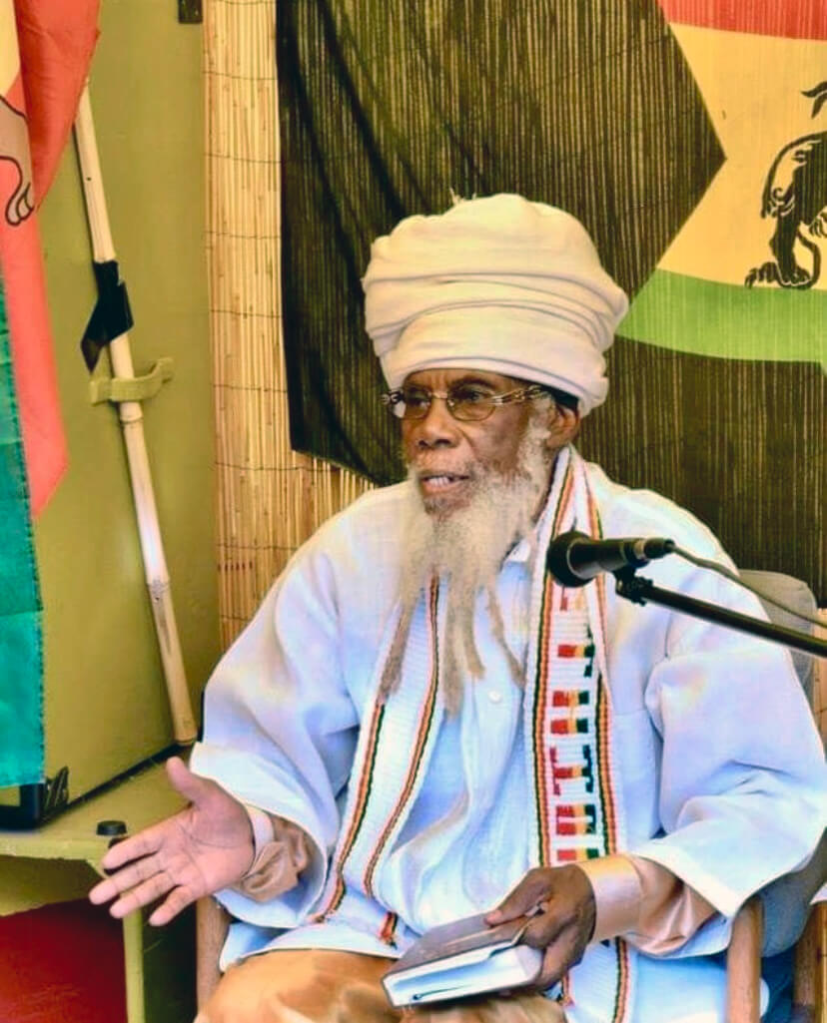
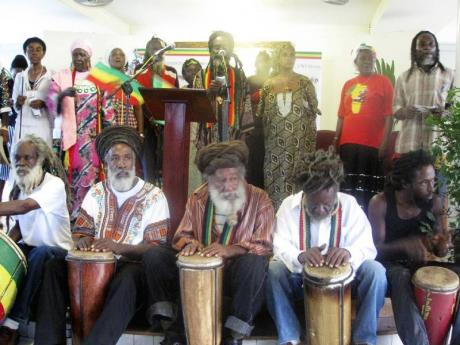
Structural versatility is also manifest in the religious dimension of the movement. The Rastafari is what a sociologist of religion calls an emergent religion. The absence of formal organizations, leadership, and official creeds is what differentiates emergent religions from traditional ones. Hence, the Rastafari as an emergent religion differs from traditional religions such as Christianity. The absence of churches and leaders, and the perspective of movement participants about the Bible, is what makes the Rastafari unique. Because the Rastafarians consider each member as a church unto him- or herself, the existence of a separate Rastafarian church is considered redundant and superfluous.
Prayers and other religious rituals can be conducted in any place as long as there is a group of Rastafarians. Consequently, among the Rastafari there is no professional staff of ministers who provide leadership and disseminate the doctrines of the movement. Unlike mainstream religions, the Rastafari does not have an established institution that formally trains a set of religious experts whose purpose is to disseminate the message of the movement. Even the Rastafarians do not refer to the teaching of Haile Selassie as do Christians and Muslims to the teachings of Christ and Mohammed. This is simply because Haile Selassie did not have a set of religious principles that he set out for his followers, nor did he at any time declare himself leader of the movement. This is one of the reasons why the Rastafari are at liberty in interpreting the messages of the Bible.
Title: DECENTERED MOVEMENTS: THE CASE OF THE STRUCTURAL AND PRECEPTUAL VERSATILITY OF THE RASTAFARI Author: Alemseghed Kebede Published: Sociological Spectrum. 2001. https://doi.org/10.1080/02732170118234
Marshall Neeko been rocking riddim remakes for a while now. Check out Night Nurse featuring classic cuts from Anthony B, Gregory Isaacs, Lady Saw and more…
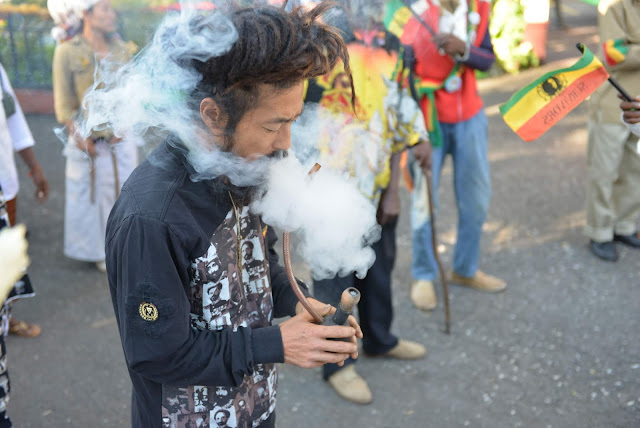
“Regarding the body as a temple, which must be loved, respected and well looked after, is another Rastafarian mantra. And contrary to popular belief, not all Rastafarians smoke marijuana, and if they do, they don’t simply smoke to get high.
However, this happens today within the context of an ever-increasing amount of anti-smoking campaigns highlighting the negative effects smoking has on the body, which are being taken more seriously now and are much more chronicled and echoed from the rooftops.
The reasons Rastas give up smoking marijuana are the same reasons why tobacco users kick the habit. Although there are many Rastafarians who still smoke, others, especially those who follow a stringent orthodox lifestyle, advise smokers to respect their body.
“Most people think all Rastafarians smoke marijuana, but I don’t smoke because I view my body as a temple,” says Zephaniah, who lectures at Brunel University.
“I came to the conclusion that I didn’t need ganja to get high and I didn’t like the habit I developed. So I have been getting high from not being high for the last 30 years.
Agreeing, Priest adds: “You get one chance to live and you must learn to preserve it so that you can live a longer life with meaning, caring and understanding.
“I had a heart attack, and even before the heart attack, I wanted to stop smoking. But when I had the heart attack – that made me realise how precious and delicate my temple is.
“The biggest myth about Rastafarians in terms of stereotypes is weed, but you don’t have to smoke weed. There is more to the understanding and the faith of being a Rastafarian than just weed.”
The term ‘dub’ is now used widely and indiscriminately by producers of dance and ambient music. More particularly, as the British post-punk producer Adrian Sherwood has commented, ‘everything from hiphop to techno and every other form of music right now has stolen ideas off dub, or incorporated those ideas’.
While there is obvious hyperbole here, the point is nevertheless an important one. The influence of dub permeates much contemporary electronica, dance, and urban music. Indeed, there is an increasingly wide range of contemporary music that is explicitly and conspicuously indebted to dub, from the dance-oriented rock of a band like Death in Vegas to the indigenous Moroccan music of Aisha Kandisha’s Jarring Effects, and from the relatively recent work of Primal Scream back to the punk and post-punk music of bands such as The Clash, PIL, Terrorists, Killing Joke, Bad Brains, and even the Welsh-speaking Anhrefn, some of whose album BWRW CWRW (1989) was mixed by the British dub pioneer the Mad Professor.
The term ‘dub’ evolved out of earlier terminology used in the recording industry in the United States.
This is significant because we will see that the genre has remained fundamentally related to recording technology. Traditionally known as ‘black wax’, ‘soft wax’, ‘slate’ or ‘reference disc’—and in the manufacturing sector as an ‘acetate’—the dub plate was a metal plate with a fine coating of vinyl.
Recorded music would be pressed on to the dub plate, following which a ‘stamper’ or metal master disc would be created in order to produce quantities of vinyl records. The process of transferring the music on to the vinyl-coated metal plate was known as ‘dubbing’—just as adding sound to a film is also known as dubbing. Hence, the terms ‘dub’ and ‘dub plate’ are not solely allied to the genre of ‘dub’. However, the point is that, with the demand for exclusive, unreleased music in Jamaican sound system culture (in which sound systems competed for audiences by, amongst other things, playing new music), the trade in ‘pre-release’ dub plates grew. And it is within this culture, hungry for new sounds and ideas, that the genre of ‘dub’ emerged.
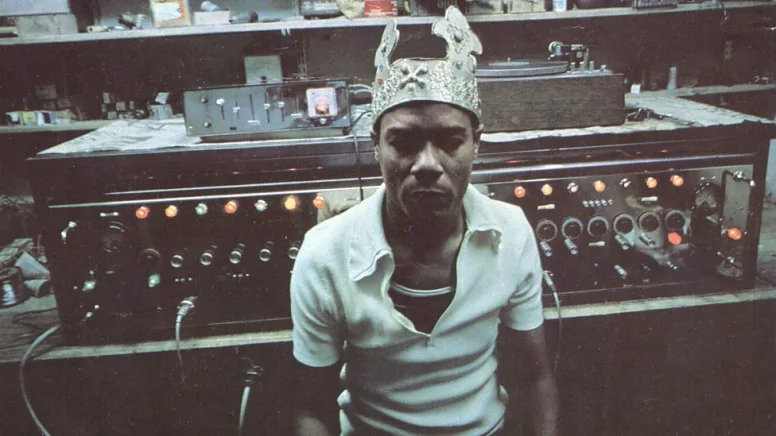
The term dub, in the sense of a musical genre, was, therefore, originally applied to a remixing technique pioneered by Jamaican engineers and producers who were seeking novel and exclusive music (i.e. ‘specials’) for sound system use. So successful was the technique that it quickly evolved as a relatively inexpensive and creative way of reusing rhythm tracks. Essentially, recording engineers produced tracks on which their efforts were often more evident than those of the original musicians.
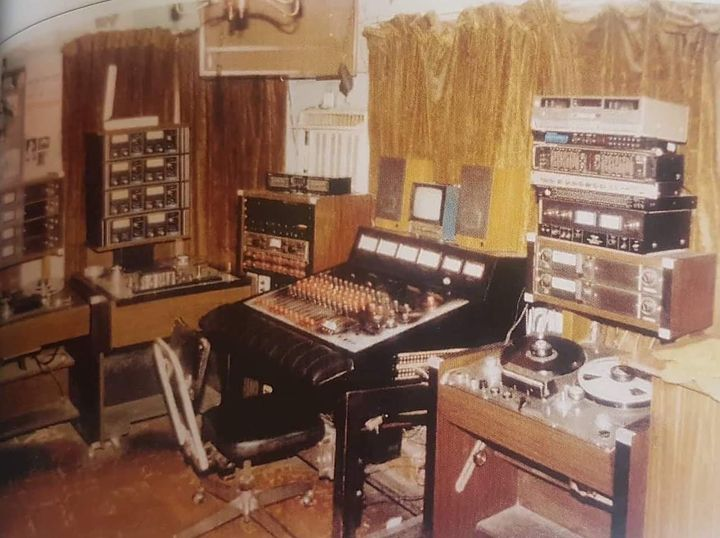
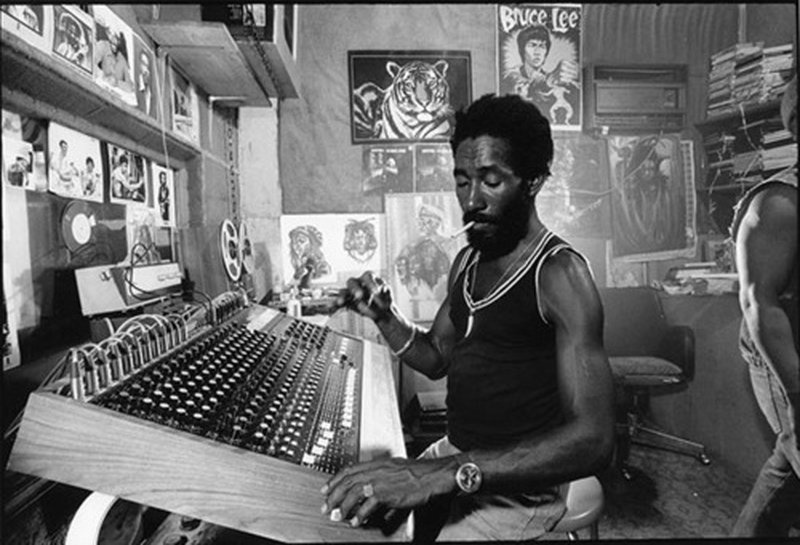
Indeed, the mixing desk and even the recording studio itself came to be understood as a musical instrument in that, in a similar way to a jazz musician’s improvisation on a standard tune, the engineer is involved in the reconceptualization of a piece of music. However, this is a very different type of instrument, in that, as a remixing technique, it is alchemical in its effects. As Jonathon Tankel puts it, ‘remixing is recoding, the reanimation of familiar music by the creation of new sonic textures for different sonic contexts… The remix recording creates a new artefact from the schemata of previously recorded music.
It is prima facie evidence of [Walter] Benjamin’s contention that “to an ever greater degree the work of art reproduced becomes the work of art designed for reproducibility” .“
Doctor Heba outa Dub & Roll records crew teams up with legendary underground rapper General Two to produce original dub rap albumBosanski Lonac. Yes you hear that right. This is not dub-hop or mashup remix style music but original dubwise riddims produced specially for General Two lyrics and mixed live in session.
Entire album mix is filmed and live dubwise action shown without any cuts or edits documenting this unique release.
Verses, names, symbols, and concepts from ancient Judah can come to figure centrally in a religious movement of modern Jamaica only through an unusually varied and extensive series of religious and cultural transmissions. This process of conceptual transformation and confluence has been the object of interest and inquiry in its own right, as scholars have attempted to trace “the twisted path to a Rastafari hermeneutics as the movement ‘hijacked’ Judeo-Christian Scriptures and converted them into vehicles for identity, ‘ideation,’ and liberation”. Rastafari reggae involves orders of intertextuality, multiple reconfigurations of language, meaning, names, and symbols, and the continual development and accrual of layers of additional semantic content and commentary. At one time literally grounded in concrete geopolitical and historical actualities, “Babylon” and “Zion” go on to become abstract concepts that pass themselves on like “memes” through modulating traditions, practices, and translations, eventually to occupy a crucial position in the religious art form of an Afro-Caribbean heterodoxy. The complex path of influences and inheritances by which the Psalms become Rastafari reggae songs goes back, according to tradition, all the way to the time of David, to whom some of the original psalms are ascribed. Evidence to place and date the Psalms historically is almost completely lacking, however, and thus there is room for considerable disagreement about these texts especially, as compared for example to many of the prophetic writings. Still, in broad terms, the path of migration may be said to extend from pre-exile Israel and Judah, to the first waves of Assyrian deportations of the northern kingdom in the eighth century BCE; to the sixth century Babylonian captivity and destruction of the Temple, and then the return and restoration; to the flourishing and fixation of the Hebrew scriptural tradition in the Persian or Second Temple period; to the Roman occupation, the watershed destruction of the Second Temple in 70 CE, and the diaspora. Meanwhile the Septuagint, already in Koiné Greek for centuries, is taken up in the rise and spread of early Christianity in the Hellenized Roman Empire, to be Latinized, Europeanized, handed down through a thousand years of medieval, Renaissance, and Reformation developments in the West, ultimately to become the “Old Testament” of the 1611 “Authorized” or King James version (KJV) of the Bible, making its way to the “New World.”
It was thus in the classic English translation of the Bible that Jamaicans discovered the Judaic texts, but even then the reception was further modulated, mediated by resistance and interference. One may have expected missionary efforts to have been undertaken on the part of eighteenth-century British colonialists to convert indigenous and slave populations and spread Anglican Christianity, as had been done with Catholicism in Haiti and elsewhere in the Caribbean. Instead, according to Barrett, “the English planters in Jamaica adamantly refused to share their religion with the slave population”; for the Africans of Jamaica, “the Church of England and its high liturgy was considered too sophisticated”.
“After England took over Jamaica and established the slave trade, no attempt had been made to Christianize the slaves” for nearly two centuries. It was only through later “nonconformist” denominations like Methodists, Baptists, and Presbyterians that black Jamaicans were introduced to Judeo-Christian religion and the King James Bible. It is plainly the King James version that reggae psalmists take up and adapt to their own revolutionary purposes, as a number of characteristic examples will show. The language of the “Old Testament,” and especially of the Psalms, appears frequently in Bob Marley’s lyrics and in other reggae songs, notably the classic anthem “Rivers of Babylon,” which is an extended quotation of KJV Psalm 137 (and some of Psalm 19). This song deserves close analysis, as it is emblematic of the Rastafari reggae tradition, and both song and psalm have been the subject of singular attention in the scholarship. Rastafari identify especially with the ancient symbolism of “Zion”—under- stood not to be in contemporary Israel or the Middle East, but in Africa, and particularly Ethiopia—and they live in “Babylon,” which refers to realities of oppression far from Mesopotamia, which is (as Peter Tosh says) “everywhere”. For Rastafari, “two systems exist: Zion and Babylon, the good and the evil.” Babylon is both “the embodiment of evil in biblical literature” and also “a symbol of bondage, not only for ancient Israelites but for all people held in slavery and oppression, especially black people”.
Through an imaginative and highly subversive reinterpretation, Rastafari read themselves as portrayed in the texts and symbols of the Babylonian exile and the pre- and postexilic periods. In their “free-style approach” to the texts, making such an identification is not difficult: Rastafari are said to “hijack biblical materials and concepts and relate them to any situation or problem when their language and imagery fit the categories and ideology of the interpreter or movement”. Judaic biblical verses thus provide many lyrical and conceptual points of departure for religious reggae songs, just as they offer symbols (like the Lion of Judah) that become badges of Rastafari cultural and religious identity. The core religious vocabulary of Rastafari reggae originates in the King James version, but nearly all the names, places, and words have undergone extensive and creative deformation of language into Jamaicans’ own distinctive idiom. Key words and phrases are retained, but almost never strictly verbatim; reggae songs freely adapt and inflect the anglicized texts in a highly stylized vernacular that is unique to Jamaican and reggae culture. “I-an-I,” for example, is a preferred pronominal form; according to Stefffens, the expression “means ‘you and I’ or ‘I and the Creator who lives within I,’ indicating that there is no separation, that disunity is an illusion” , and affirming Rastafari union and identity with “the Divine, who indwells ‘I-an-I’ ”. These innovations notwithstanding, the overarching religious themes of Rastafari reggae are recognizably, indeed unmistakably Judaic: captivity, oppression, exile, diaspora, longing for freedom and return. “Rastafari reggae” thus designates a specific subset: reggae music is only one form of Rastafari religious expression—i.e. not all Rastafari is reggae— and certainly not all reggae is Rastafari.
Representing far more than mere entertainment, this now classic form of reggae is not, as it were, “just music”—any more than the original psalms were; whether at the First or Second Temple, or by the rivers of Babylon. Insofar as they are derived from particular biblical verses set to music, many Rastafari songs—at least in what has been called reggae’s “churchical” mode —may be considered distant but direct descendants of the psalm form itself. Reggae songs and themes have resonated even with indigenous peoples who have been colonized on their own land (“Reggae on the Rez”) rather than being carried away into captivity or driven into exile.
Text from:
From Judah to Jamaica: The Psalms in Rastafari Reggae Thompson, J. (2012). Religion and the Arts
By 1960, several Jamaican institutions had begun to show an interest in the counterculture, and to contribute to the demarginalisation of the Rastafari movement which had previously been repressed. One such institution was the University of the West Indies, which put the Rastafari on its agenda. In the course of these trajectories, Jamaican public opinion, which had predominantly perceived the Rastafari movement to be a crowd of violent criminals, fools and outcasts, changed successfully.
Particularly, reggae music (as the emancipation of Jamaican popular music) was co-opted. The result of the blending of Afro-Jamaican Burru and Kumina drum techniques and folk traditions with Afro-American musical styles (including jazz, gospel, rhythm and blues, soul and swing) led to the creation of mento, ska, rocksteady and reggae styles like dancehall, dub, lovers, raggamuffin, rockers and roots, which ‘exerted a tremendous influence on the development of post- World War II popular music globally’. The musical film The harder they come (1972), starring Jimmy Cliff, contributed enormously to the transnationalisation, popularisation and commercialisation of roots reggae. Not until this style developed, did reggae lyrics exhibit the spirituality and socio-political engagement that came to be seen as the hallmark of roots reggae. And, clearly no one represented the Rastafari rhetoric and feelings of this genre to the world more ably and persuasively than Bob Marley.
In fact, conscious reggae music, with its recreational, critical and inspirational dimensions, would soon transcend the Rastafari milieu and succeed in conquering a global audience. Today, Rastafari not only has observer status in the United Nations, but even more importantly it has become part of everyday culture in Jamaica, and even abroad. However, the various Rastafari mansions relate differently to reggae music: whereas Boboshanti reject reggae as part of their culture and only consider drumming and chanting as true Rastafari music, the Theocracy Reign Order of the Nyahbinghi describes its relationship to reggae through the metaphor:
ODGProd label releases one after another future dub albums. Check out Ob.dub coming in with enough ethereal melodies, breakbeats, rootical vocals, hot bass and proper skanks.
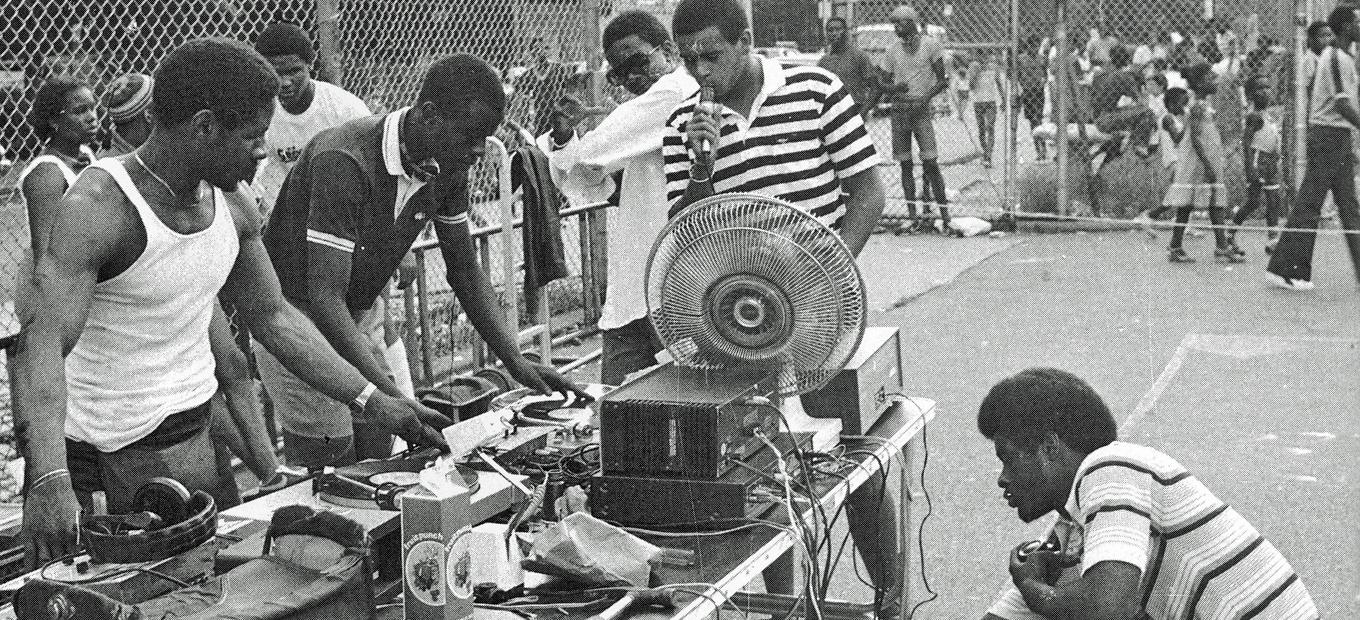
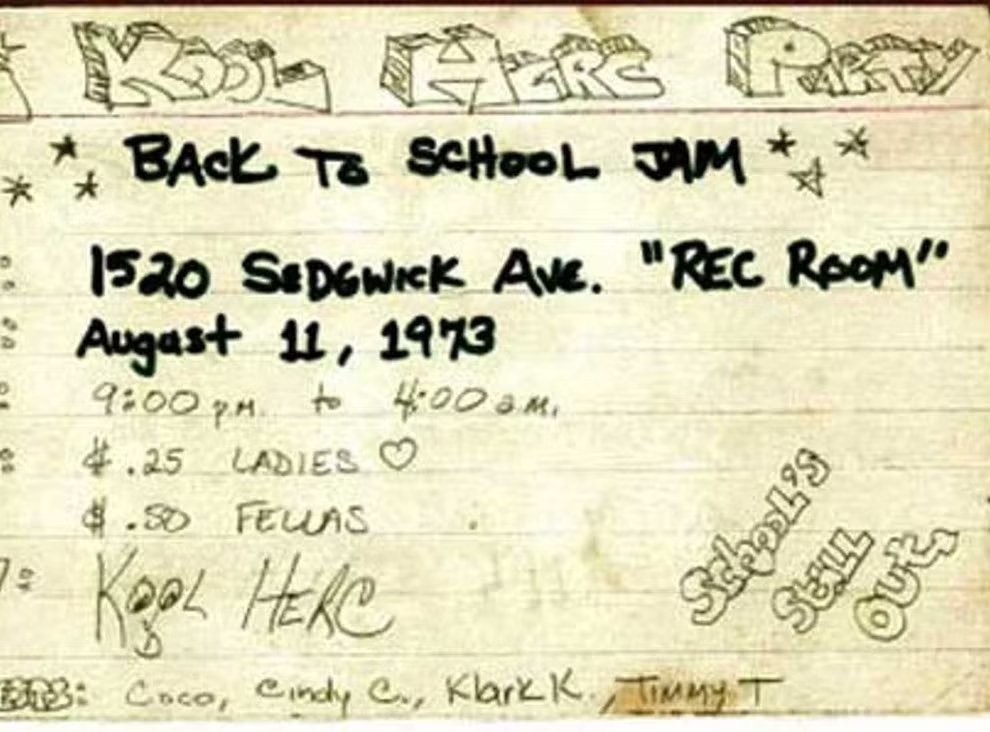
DJ Kool Herc, the chief architect of hip-hop, was born Clive Campbell in Kingston, Jamaica. At the age of twelve, in the winter of 1967, Campbell moved to Bronx, New York. The year he migrated to America, sound-system culture in Jamaica had a ubiquitous presence in Kingston’s lower-class neighbourhoods. As a twelve-year-old preteen now living in the Bronx, Campbell already possessed a persistent reggae and sound-system consciousness having experienced the innovative music of Prince Buster, the Skatalites, Don Drummond, and dancehall deejay U-Roy.
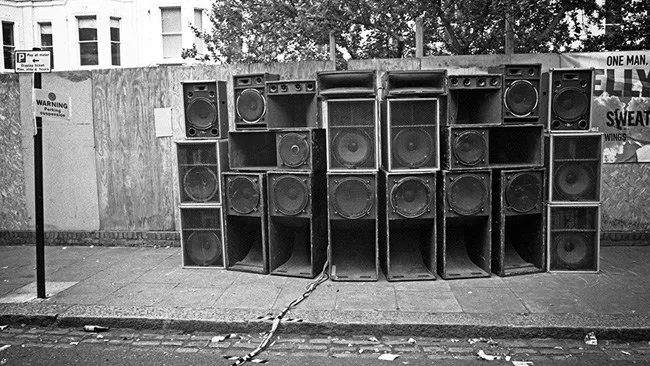
At eighteen, Campbell attempted to recreate the Jamaican dancehall experience in the Bronx by spinning the latest Jamaican reggae records at neighbourhood parties, but his young African-American audience was not feeling the reggae beat and did not comprehend the Jamaican patois rhymes of sound-system MCs known as toasters. As DJ Kool Herc, Campbell shifted to playing funk records, but his reggae background caused him to favour funk with heavy-weight bass lines and lively percussive drumming. Kool Herc’s record selections were transmitted through hi-fi stereo equipment that spoke with the same awesome power and sonic quality of a roots Jamaican sound system. The selector, as a deejay is called on a reggae sound system, though using one turntable-the norm during the ’60s and ’70s- was still capable of altering the arrangement of a tune spinning off a record on the turntable platter. The selector skillfully inflicted a completely different sound context on a roots reggae recording by manipulating the controls on the sound system’s amplifier to briefly remove the bass on a tune, accentuate the singing of the song’s vocalist, and highlight the harmony of trumpet, saxophone, and trombone. The selector would create tension in a live remix by bringing back the bass booming like a compact implosion. By the ’70s, the selector had the ability to vary the sonic texture of the recording by creatively deploying reverb and echo chamber to repeat the sweetest elements of a vocal or horn solo and as a special sound effect that dramatized certain aspects of the recording with a live feel.
Kool Herc’s approach to creating something fresh from pre recorded funk on vinyl was different because he used two turntables. But his approach was similar in that he shared the same objective as the selector, which was to do a live remix of the record to heighten the entertainment of his audience. He extended the intoxicating rhythmic feel of percussive conga, bongo, or trap drums sizzling the break of records like Mandrill’s“Fencewalk,” the Incredible Bongo Band’s“Apache,” and the live version of James Brown’s“Give It Up, Turn It Loose” by playing the same record on two turntables using a sound mixer to seamlessly prolong the percussive breakbeats.
Herc pioneered the innovative use of two turntables and a sound mixer as active instruments that became more than passive facilitators, more than just pieces of electronic equipment that merely played what was recorded on vinyl.
These electronic instruments were now used to rearrange prerecorded music to suit the immediate needs of the disco and the dance floor. When DJ Kool Herc rocked a block party, dispatching African American funk with the overwhelming sonic power of a reggae sound system, no other deejay dared to compete.




 OUT OF MANY COME DUB AND OUT OF DUB COME ONE