On online collaborations

#HajiMike

Snyclavier II

Writing music online is nothing new. In 1994 ResRocket was the first online ‘band’ project with over 1,000 participants who exchanged ideas and files via a mailing list and ftp server.
By 1999 this had developed into one of the first live online music collaborations, screened on BBC TV in front of 55 million viewers. Bob Marley’s ‘Them Belly Full (but we hungry)’ was recorded live involving Sinead O’Connor, and Brinsley Forde in London, Thomas Dolby in San Francisco and Lucky Dube in South Africa.
While this marked a radical change in online music production it would take another few years before such creative collaborations would have more mass appeal from a production standpoint.

An obvious change came in radical developments in music production itself. The advent of more accessible and affordable Digital Audio Workstations (DAWs) which evolved from early pricey microprocessor based non-analogue tapeless systems, such as the Synclavier and Fairlight CMI to software such as DigiDesign’s Pro Tools, Logic Audio and Cubase ( the latter via the earlier pioneering Atari ST). Digitisation in more recent years has resulted in even cheaper or freeware options.
A PreSonus soundcard for example comes with a free version of the company’s own DAW software called Studio One (Presonus, 2010). Reaper from Cockos calls itself ‘Audio Production without limits’ and while it can be purchased the free evaluation copy functions in exactly the same manner (Reaper, 2010).

Simultaneously, The Internet itself has changed dramatically in terms of bandwidth, speed and accessibility. We have moved from archaic (by today’s standards) brick sized modems for the few who knew how to use binary computer code in the mid-1980’s to more compact modems with increased bandwidth and more recently DSL and fibre optic connections. Ten years ago it was possible to send a wav or aiff file online, it may have taken a few hours but now, it is much faster and easier, taking perhaps 10-15 minutes for say a 54 megabyte wav file. This is usually done through file transfer web sites such as ‘Sendspace’ and ‘Yousendit’. Many musicians now work together through their own ftp sites accessible with a username and password through their own web sites.

These advances have made a-synchronous music collaboration much more accessible to more people online in different locations around the world.

Fully synchronised collaboration exists as well, although this is usually subscriber based with a fee and requires substantial outbound bandwidth, often not accessible to as many people.

Examples of this include RiffWorks ( http://www.riffworld.com/) and NinJamm (http://ninjam.com/) although at times there are latency issues with both.

So although it is possible to link up studios in real time by using a service such as ‘source direct’ or an Avid Satellite link the cost of these options would be substantially high.
Synchronised music production online in different studios is still an emerging form of technology at least in terms of mass usage. It is likely, given rapid changes in technology that this may change through existing online communication tools, such as say Skype.

It is tempting at this point to view all these developments simply from a technologically deterministic standpoint, a view which one often finds in professional music production magazines which can be interpreted like a bunch of reviews on products, software and releases which exist in a kind of non-social world. I find such approaches based on technological determinism to be flawed from the outset as for me it is more important to understand how we can utilise various tools to create and make music through social engagement. The bottom line is not so much how the tools use us but how we use the tools and how these changes have had a sociological impact in interactive creative processes from symbolic and symbiotic points of view.

We have moved from a ‘sit-back-and-be-told culture’ to a ‘making-and-doing culture’. There are many social media web sites now which allow us to upload, share and exchange music, such as FaceBook, YouTube, Twitter, ReverbNation, Myspace, Soundcloud and Soundclick to name just a few. More niche oriented social media sites and web portals that specialize in particular forms of music and music scenes also exist. So people work within specific genres and across them. For example, Dubstep, The Dub Scrolls, BeatPort, and HipHop Makers. Through such sites, generic and niche, I found myself working online with people in Greece, Malta, Portugal, Sweden, UK, USA, and Cyprus.

The main reasons why I engaged in online musical collaboration was partly a frustration I had with studio based work, particularly being a spoken word based artist based in Cyprus making reggae, where many local studios and producers lack experience in these genres. I also entered into online collaborations by being approached by various people, who were more grounded in the kinds of music I engage in, to work with them online.

What appealed most to me was the openness of the Internet and the fact that it allowed users to explore so many different avenues in an accessible and democratic manner. Immediacy was also a major bonus. A song as I found out could be created, recorded, edited, mixed and mastered in different
places in say 24 hours. Additionally, various aspects of music production, distribution, promotion, and management became demystified. It became that much easier to make and share music with specific audiences via free social media web sites.
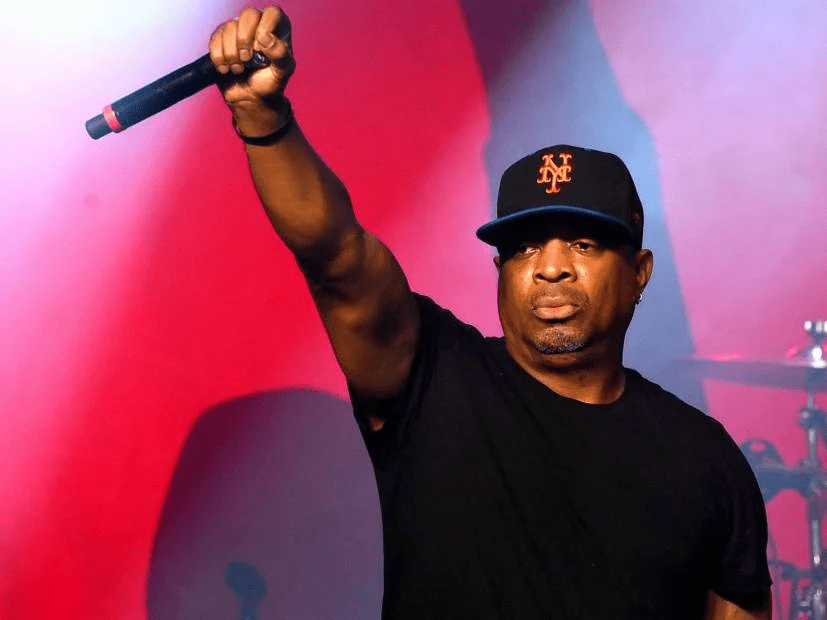
Chuck D from Public Enemy


So independent net based labels, which Chuck D from Public Enemy dubbed as ‘Winties’ (web based independent labels) sprouted up in many countries around the world. The traditional filtering role played by radio and TV in the music industry in some ways became obsolete, after all much of the time they played only material that was signed to major labels and artists that had spent substantial amounts of money on their video clips. Now it is much easier to set up say a myspace account, upload some songs, live band footage, and gets known. Guerilla music making and self-marketing techniques are nothing new. They were deeply embedded in so many popular music scenes from punk rock to reggae. But the Internet suddenly gave that much more power to musicians to simply make, share and raise awareness of their existence. It is for example pointless and many people could also argue that it was from time, to send hundreds of cassettes or CD’s or vinyl demos out to record companies for consideration. Now an electronic press kit (EPK) could be assembled for free and sent to hundreds of targeted people with the click of a mouse.

Parts from Background – The Revolution has many interfaces! found in

Virtual Oasisthoughts and experiences about online based music production and collaborative writing techniques

By Mike Hajimichael aka Haji Mike, 2010.
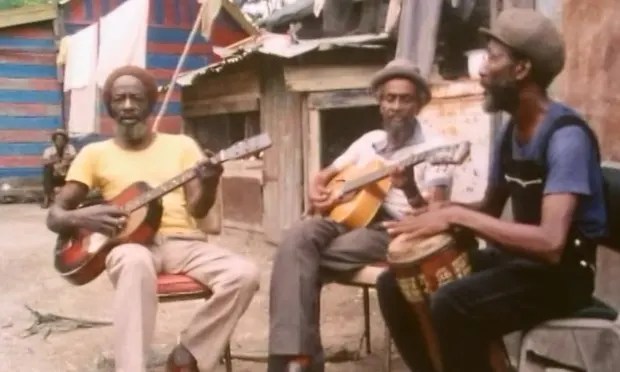
On distant drums

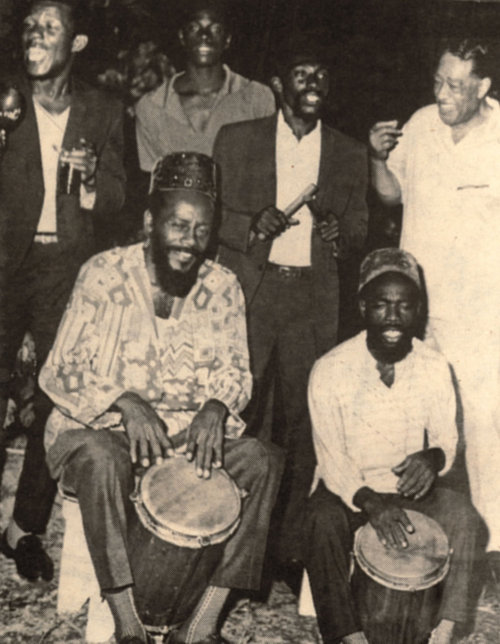
The Drums of Count Ossie

We need to give proper consideration specifically to the Buru (or Burru) tradition as well.

Among the Buru drummers of the first half of the twentieth century was one outstanding and very influential musician who, like Babu Bryan, remains unknown to most Jamaicans, not to mention the rest of the world. The man I am referring to is Watta King. Not to be confused with the notorious West Kingston bad man Woppy King, nor with the Rastafarian patriarch known as Bongo Watto, who were two entirely different individuals, Watta King was a Buru master drummer of Kongo descent who migrated to West Kingston from Clarendon parish.

Although he made his living as a barber, and was not himself a Rasta, Watta gained renown as a drum-builder during the 1940s and 1950s – the very time that Rasta consciousness was beginning to gather force in West Kingston. During these formative years of the Rasta faith, Watta King was the owner of the most sought-after set of African-style drums in the area, and he and his fellow Buru players became the main drummers for the earliest grounations, or ceremonial gatherings, in the Rasta hotbeds of Salt Lane and Back-o-Wall.


It appears that Watta King represents the crucial link between the rural Buru tradition of St Catherine and Clarendon, and the nascent Nyabinghi tradition of West Kingston. His playing appears to have served as a model for many in the first generation of Rasta drummers, and his great influence can be traced through at least four important drummers of later years (and likely several others).
Baba Job (also known as Brother Job), who was to become Count Ossie‘s mentor, and Seeco Patterson, Bob Marley‘s percussionist who I mentioned earlier, both spoke to me of Watta King as their “teacher” – the man most responsible for their early development as drummers.
And Skully Simms, one of the most important session hand drummers from the 1970s on, told me in considerable detail about the influence Watta King had on him.

NOEL “ZOOT” SIMMS aka SCULLY(1935-2017). Here with LEE “MILO” SPENCE at Jack Ruby’s in Ocho Rios, Kingston, Jamaica, March ’76 © David Burnett

Excerpt from:

Distant Drums: The Unsung Contribution of African-Jamaican Percussion to Popular Music at Home and Abroad
Author: KENNETH BILBY
Source: Caribbean Quarterly, Vol. 56, No. 4, Pioneering Icons of Jamaican Popular Music, Part II (December 2010)

On Music as Space


Because of its significance to social action and relations, space is theoretical tool in understanding power. Much power is spatialized, as the use and control of space are continuously negotiated.
Those in power specifically, the state attempt to maintain their position through division and control of space, what Foucault calls spatial ‘techniques’ of domination: maps, censuses, quarantines, surveillance; all facilitate control through the segmentation of space and separation of groups or individuals by those in positions to produce knowledge.

Part of the power in space lies in the possibility of creating and maintaining difference and hierarchy through it. The most practical Marxist example is the skewed distribution of resources through space and the associated uneven development, but difference is also created symbolically through the naming and ‘knowing’ of spaces: the differentiation between ‘good’ and ‘bad’ neighbourhoods, ‘developed’ and ‘developing’ nations. Factories, prisons, public housing projects, gated communities, shopping malls and coffee shops are all examples of urban spaces through which social difference is constructed and sometimes challenged. ‘Othering’, then, is also done by delineating belonging and otherness in spatial terms: place of birth, area of residence, workplace, spaces of leisure and consumption. In the process, meaning is created not just in but through space.


Music is a spatial phenomenon, as it is tied to specific places, is implicated in how sites or spaces are perceived, and is intimately connected to the travel of people, goods and ideas through space.
Music and musical cultures are integral in shaping discursive, textual spaces or spatial narratives that are not necessarily pinned to one physical location but rather can be applied to various ‘real’ material sites, giving meaning to a range of spatial experiences and practices.
Part of this discursive spacemaking involves narrating new contexts for struggle or contestation.

Gibson, for instance, discusses Aboriginal popular music in Australia and how the musicians are involved in the construction of differently scaled ‘arenas of empowerment’ that offer space for indigenous self-determination. The production and consumption of music take place in specific spaces that gain meaning through these locations, just as they imbue the music itself with meaning. Stanley Niaah shows how the dancehall in Jamaica, with its inner-city core, is a liminal space, both marginal and central, in which celebration, conflict and memory are musically inscribed.
The spatial importance of music is also evident in crossing global distances and divides, more easily even than visual or purely textual media, connecting like-minded groups across the globe by forming what Carolyn Cooper, after the poet Kamau Brathwaite, calls

‘bridges of sound’.

Found in chapter Music, space and power from:

Surinamese Maroons as reggae artistes: music, marginality and urban space
By Rivke Jaffe and Jolien Sanderse, 2009.

Ethnic and Racial Studies Vol. 33 No. 9 October 2010

Image source:
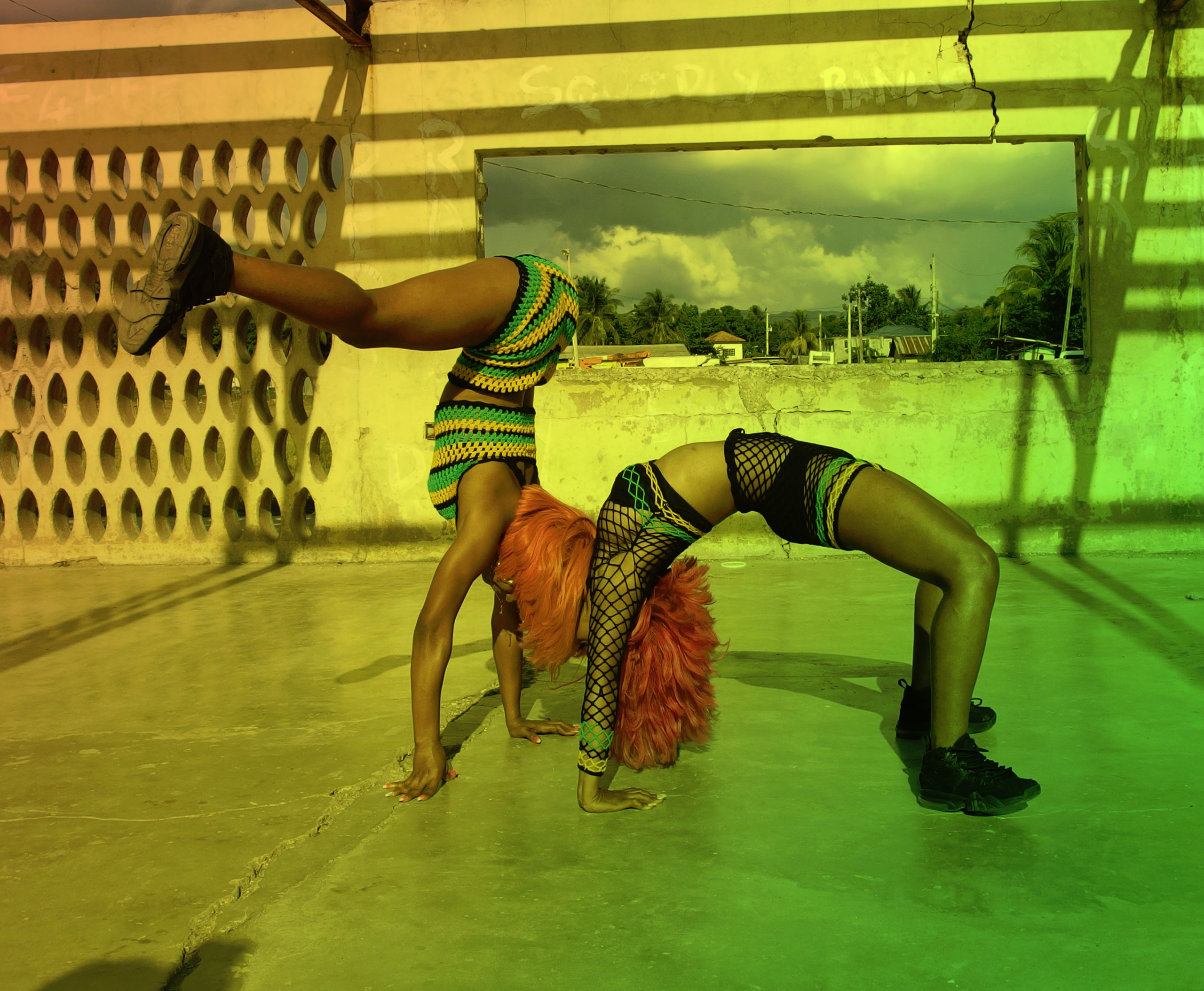
dancecourseja.com

The Women’s Meditation Tradition in Tibet

On sound and fear

Sound is often understood as generally having a privileged role in the production and modulation of fear, activating instinctive responses, triggering an evolutionary functional nervousness.
The power of sound to instill dread was well known to the heavily outnumbered Maroons, the tribal nation turned guerrilla fighters who claimed a number of astounding victories in their asymmetric conflict with the English colonialists in Jamaica during the
late eighteenth century.
The abeng, a fashioned cow horn, had two uses: by slave holders to call the slaves to the cane fields and a “traditional form of communication among the communities, warning them and sending messages across difficult terrain.”

The Maroons used the  abeng in tandem with their other special techniques—drum communication, the ambush, and camouflage—in order to outwit the British: “They embedded themselves in leaves and vines and melted into the surrounding bushes. The
British repeatedly walked into clearings where their surroundings would suddenly come
alive and close in on them.”

The abeng, as a system of communication, produced signals “reproducing the pitch and rhythmic patterns of a fairly small vocabulary of Twi words, from their mother language, in most cases called Kromantin (Maroon spelling) after the Ghanaian port from which many slave ancestors were shipped.”

Sentries stationed outside the villages would  use the different pitches to communicate the British approach, the extent of the weapons they carried, and their path. But the abeng also had another affective function: to scare the British with its “hideous and terrible” dislocated tones, sometimes managing to repel the invaders with sound itself. Gradually, as the British learned to assign a cause to its shrieking, high- pitched sound, their terror of Maroon ambush only intensified.

Found in 1738: Bad Vibrations, from:
SONIC WARFARE Sound, Affect, and the Ecology of Fear, by Steve Goodman.
Massachusetts Institute of Technology. 2010.

Thomas Roebers and Floris Leeuwenberg – FOLI

This reminds me of one time Bob Marley saying that reggae music comes from the rhythm of man chopping woods. This film is a “extraordinary blend of image and sound that feeds the senses and reminds us all how essential it is.”

DUBUMENTARIES SELECTION VOL 1.

DUB STORIES (2006)

DUB ECHOES (2009)
https://youtu.be/wPVDrKiNVg4

MUSICALLY MAD (2010)

https://youtu.be/NK0vBKsK7fI

THE BUG ON MUSIC INDUSTRY CARICATURES

The music industry in general seems obsessed with making one-dimensional
caricatures out of musicians. In any case, we were trying to decide how we’d do this live. I went back to how I used to begin with The Bug, and how I worked with Techno Animal-I’d break everything down into its component parts and then dub everything out, to the max. It wasn’t an easy thing to do. We weren’t getting much out of the first few shows.

By nature of the construction of the songs, the relatively deep, melancholy sound would be reduced to being background material to idle chatter, our input becoming an accessory to a night out, which is the opposite of what I love in music: its emotional or artistic content leaving you devastated.

By The Bug, from THE BUG by Jace Clayton.

BOMB, No. 114 (Winter 2010)

CELT ISLAM – GENERATION BASS

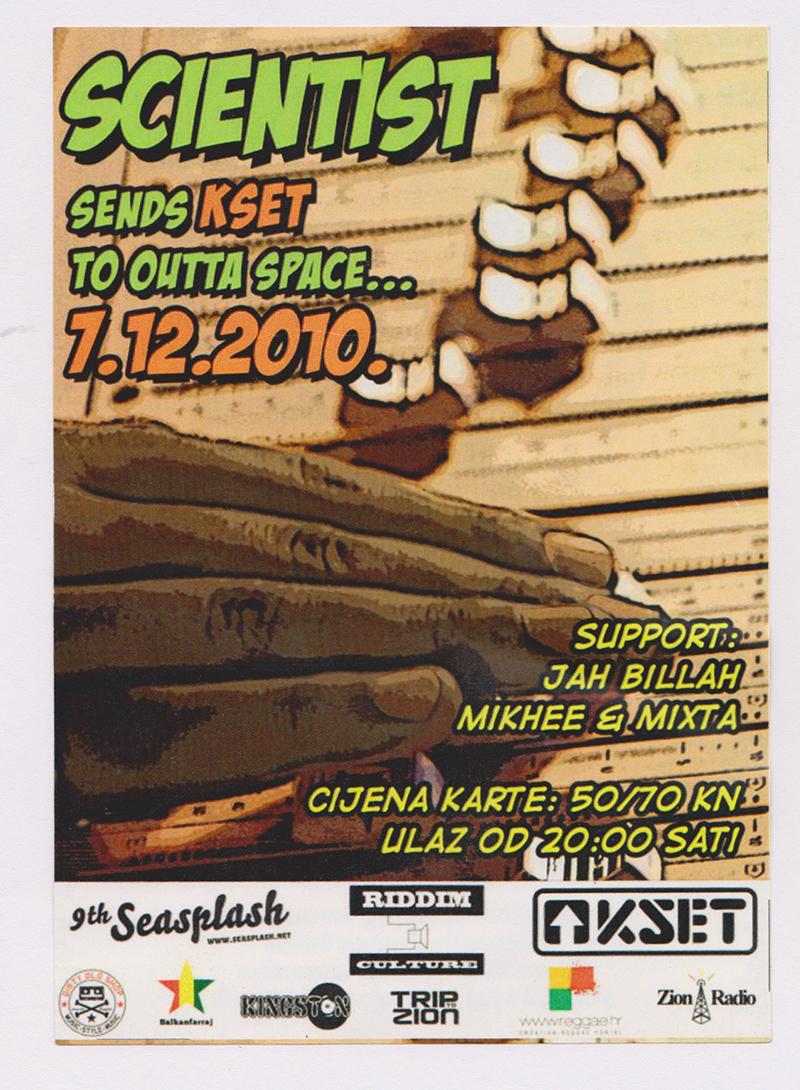
SCIENTIST @ ZAGREB 2010

SCIENTIST DUBS KSET SCIENTIST SENDS KSET TO OUTTA SPACE..Man was there doing soundcheck for 4 hours straight, running cables, hooking up this and that until the sound was PERFECT! Billah soundchecking and first tune played Scientist gwan “That’s nice!” Jah Billah playing opening set of 140 BPM mix in lock dub to dubstep with digital soundsystem setup running dub sirens & lasers in endless tape delays. Dub chemist dubbing was top a toppa champion dub play live experience.
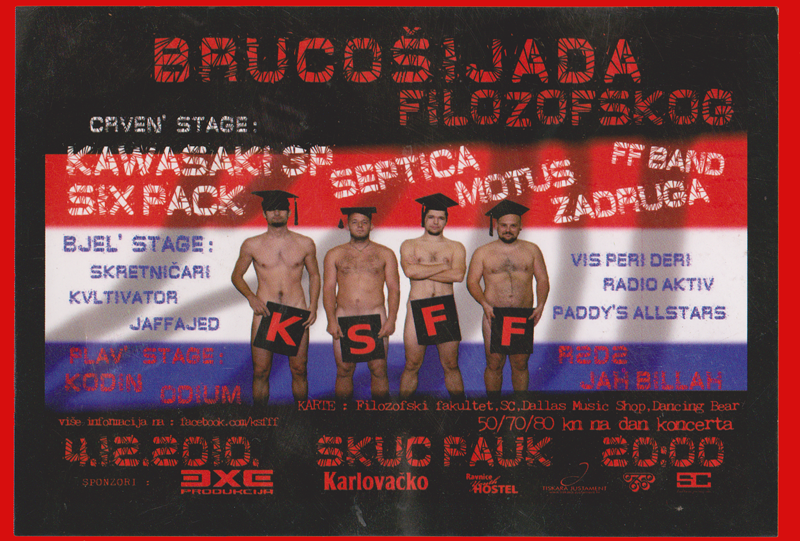
BRUCOŠIJADA FILOZOFSKOG 2010

BRUCKA FF Big Oz & Jah Billah runing that place red playing a set of electro bashment moomba tunes. Should point we nah support male nudity art as such but college boys find it funny!