Although Seaga‘s Jamaica, Thatcher‘s England, and Reagan‘s America gave ragga the kind of painful birth necessary for their mythic function, they really were always there. They were overshadowed by the spectacle of Rasta and its pious moralisms, but they were there nonetheless, stalking Jamaica’s neocolonial streets and consuming American cowboy and gangster films as well as the Old Testament and Pentecostalism. They existed within Rasta from the moment it defined itself as an urban phenomenon and as a place for those suppressed by the hierarchical and color-stratified social structure of Jamaica.
Design Legacy: A Social History Of Jamaican Album Covers
During the sixties, before the hegemony of Rasta in the consciousness of ghetto sound, the earliest manifestation of the ragga can be located in the rude-boy phenomenon which swept the tiny island. The rudies, like today’s “gangbangers” in America, were young males who had little access to education and were victims of the incredible unemployment endemic to Third World urban centers. Their political consciousness was as developed as the Rastafari, but where the Rasta solution was one which often refused to engage directly with the harsh realities of ghetto and Third World life and frequently got lost in cloudy moments of rhetoric and myth (“roots and culture“), the rudies clung fiercely to “reality“-that trope central to today’s ragga/dancehall culture. They terrorized the island, modeling themselves after their heroes from American films and glorying in their outlaw status. They killed, robbed, and looted, celebrating their very stylish nihilism. And ska and reggae – especially DJ-reggae, the beginning of rap/hip hop – were their musics.
Today the dreadlocks vision has been superseded-at least in the realm of sound and culture-by the rudie vision. The crucial differences between them can be seen quite vividly in their relationship to Babylon. Where in Rasta and other forms of popular Negritude there has always been some degree of nostalgia for a precolonial/preindustrial/precapitalist Africa, raggamuffin culture is very forward looking and capitalist oriented-as are most black people, despite the fantasies of many self-appointed nationalist leaders. These rudies focus their gaze, instead, on America, absorbing commodity culture from the fringes of the global marketplace, responding to it positively.
This means that in the context of a Third World ghetto where there are more guns per capita than anywhere else in the world, where legitimate employment is often a fantasy, where the drug trade and music provide the only available options for success, these young men find affirmation in the various messages that radiate out from America, an America that is not the “center” but rather an imagined source of transmission. Messages like The Godfather get picked up and translated into island style.
For example, one of the titles of utmost dancehall respect is “don.”
Shabba Ranks “Shine & Criss”
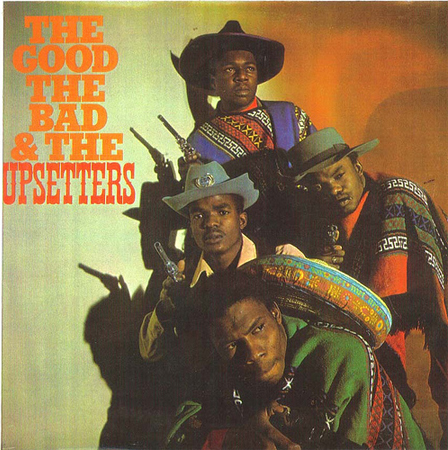
The raggamuffin pantheon is full of DJs with names like Clint Eastwood, Johnny Ringo, Al Capone, Josey Wales, and Dillinger; and today’s dons boast names like Bounty Killer, Shabba Ranks (named after a famous Jamaican gunman), and John Wayne. Also, the Jamaican underworld has always been full of characters who inscribed themselves into ghetto myth by renaming themselves in much the same way.
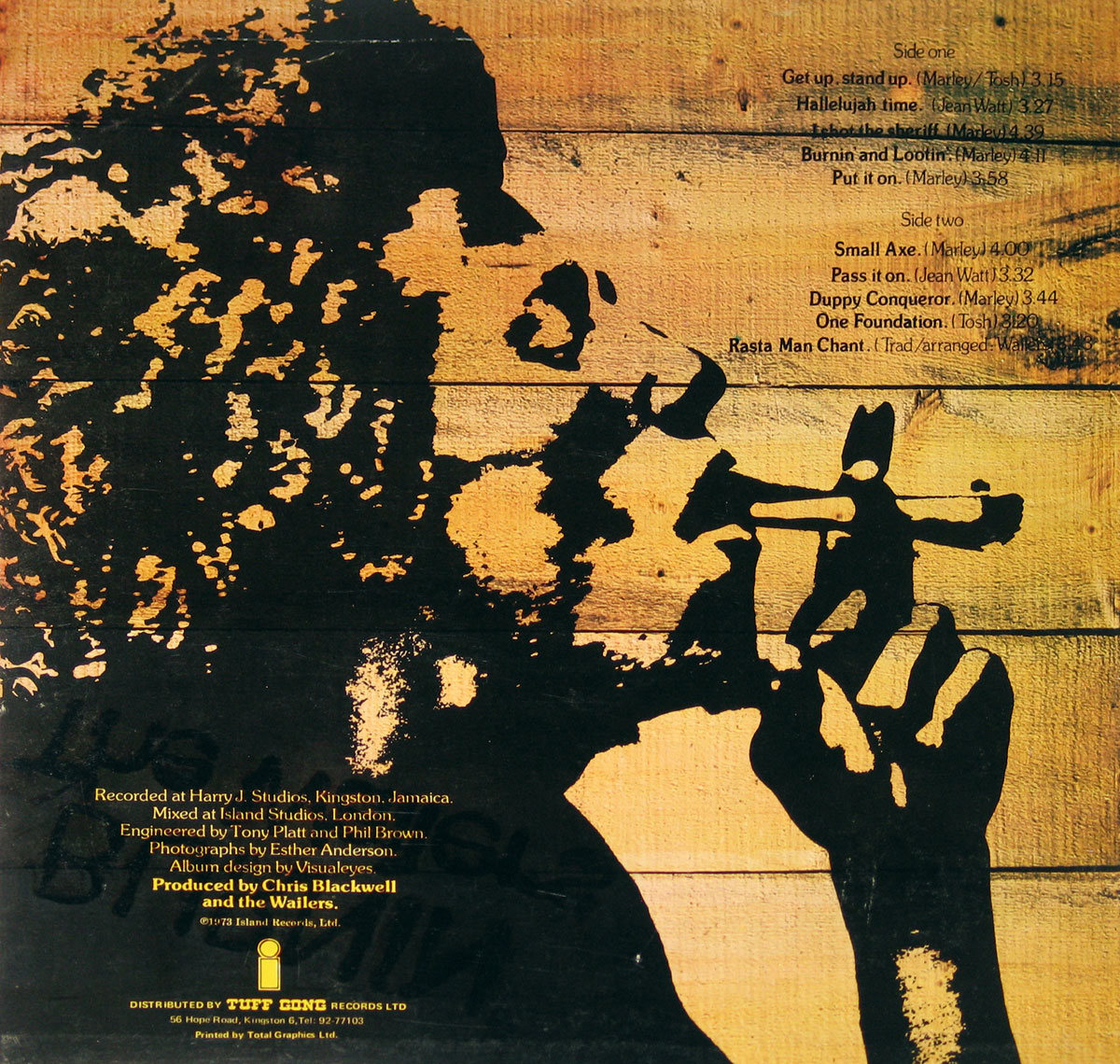
Male identity in this context is a necessary pastiche, and the allegorical representations of America’s dreams of itself become rewritten with a pen soaked in the blood of colonialism, slavery, and black ghet-to style. The gunfighter/outlaw image has always been there in reggae; it is now, however, without overt references to the Western world as the “Sheriff,” as in Bob Marley andthe Wailers‘ classic “I Shot the Sheriff.”
For the ragga, this metaphor is no longer apt, for now they shoot each other in a lawless postcolonial terrain. Indeed, Ninjaman has described Jamaica as a “Cowboy Town.”
Sting 2012, Jamaica Gleaner
These names-and the notion of crime as political/cultural resistance that they signify – were there during Rasta‘s moment, but where the more Afrocentric embraced the Marley vision, the ghetto youth, the “bad-bwoys,” were smuggling in specialized weaponry like M16s, Glocks, and Bush-masters, killing each other and following their favorite sound systems around the island.
And, of course, the cocaine and marijuana trade was booming. In fact, it was booming in such a way that in the 1980s a few of the more enterprising Yardies invested some of this money which came to the ghetto in -believe it or not- state-of-the-artdigital computer technology. Thus began what Jah Fish (Murray Elias), an avid follower of Jamaican music, has called the “the modem era” of Afro-Caribbean sound and culture.
Found in:
Post-Nationalist Geographies: Rasta, Ragga, and Reinventing Africa Author: Louis Chude-Sokei Source: African Arts, Vol. 27, No. 4 (Autumn, 1994), Published by: UCLA James S. Coleman African Studies Center Stable URL: http://www.jstor.org/stable/3337324
#rebelmusic #reggae #rasta Ultimately, however, international reggae‘s appeal to international audiences may have had more to do with changes in the image of reggae artists, the packaging of the albums, and the sound of the music itself.
In his efforts to market the Wailers, for example, Blackwell first molded the Waiters‘ image into that of a rock-and-roll group. While reggae “groups” typically had consisted of a loose collection of singers and hired studio musicians, Blackwell promoted the Wailers as a stable, self-contained “band”—much like the Rolling Stones or Led Zeppelin.
Second, Blackwell led a new trend among Jamaica’s record producers toward original, thematic, and full-length LP (long-play) albums, again following the lead of rock-and-roll groups. Previously Jamaica’s record producers had distributed mostly singles or cheaply produced compilations of “greatest hits”.
Finally, those albums came packaged in glossy, well-produced jackets promoting the image of the rebellious, ganja-smokingRastafarian. On the back cover of the Waiters‘ 1973 album Burnin‘, for example, Marley was pictured smoking a 12-inch spliff, or marijuana cigarette. On Peter Tosh‘s 1976 album, Legalize It, the singer was photographed crouched down in a ganja field. Reggae album covers also emphasized the Rastafarian’s symbol of black defiance, the dreadlocks, or displayed the Ethiopian colors of red, green, and gold. The cover of the Wailers‘ 1980 album Uprising, for example, featured a drawing of Bob Marley, along with the album’s title in red, and a background of green mountains and a gold sun.
While most of the major instrumental innovations of international reggae were established during the early reggae period, international reggae was marked by a more sophisticated and polished studio sound. Most early reggae songs were recorded in primitive studios in Jamaica. International reggae, however, generally was recorded in state-of-the-art studios in the United States or Great Britain.
According to Jones, this helped to undermine “the common accusation made by rock fans that reggae was a music of ‘inferior’ quality”. In the first attempt to reverse this trend, Chris Blackwell took the Wailers‘ instrumental tracks for Catch a Fire, previously recorded in Jamaica, and remixed, edited, and mastered the tracks in a London studio.
Rock critics Ed Ward, Geoffrey Stokes, and Ken Tucker highlighted the dramatic change in reggae’s new sound: “Catch a Fire” was a “revolutionary example of reggae recording, far superior in its technology than most other reggae records”.
U.S. and British record producers also manipulated the instrumentation in reggae arrangements to create a lighter, “softer” reggae. Some U.S. record producers would deemphasize reggae’s dominant instruments, the electric bass guitar and drums, and push the keyboard and electric guitar to the front of the mix. In 1980, Jamaican dub poetLinton Kwesi Johnson provided a clear rationale for the systematic manipulation of the reggae sound: “[there was the] belief that the hard Jamaican sound, with the emphasis on the drum and the bass, would not be as accessible to the non-Jamaican listener as a lighter sounding production would be”.
To appeal to international audiences, reggae musicians also incorporated familiar genres of American music into the reggae arrangement.
During the remixing of the Wailers‘ Catch a Fire, for example, Blackwell dubbed traditional rock-and-roll instruments, including rock guitar and synthesizer, over the reggae beat. During the recording of the same album, a session guitarist, Wayne Perkins, also added guitar solos. Throughout their career, the Wailers dabbled in blues (“Talkin’ Blues” [Natty Dread]), funk (“Is This Love?” [Kaya]), and folk music (“Redemption Song” [Uprising]). Similarly, Toots and the Maytals, in their 1973 Funky Kingston, fused R&B and reggae into the album’s title song.
In sum, the new international success of reggae music in the 1970s may have been more the result of marketing and changes in its sound than changes in its “message.” Reggae was still a “rebel music.” Growing up in some of Jamaica’s worst slums, reggae musicians still critiqued Jamaica’s neocolonial society. Reggae musicians also expressed concern about international affairs, specifically political problems on the African continent. While still sensitive to the problems at home, they also began to identify themselves more as Africans than Jamaicans. In the final analysis, however, reggae’s international success probably was more the result of changes in its sound. Record producers improved and “softened” the reggae sound and incorporated new instruments, such as synthesizers and rock guitars, into the reggae arrangement. Reggae musicians also borrowed freely from musical genres including rhythm and blues and funk. Yet whatever the explanation, reggae’s sudden status as an international musical sensation focused unprecedented attention on the Rastafarian movement and exacerbated tensions within the move-ment. Indeed, the music created whole new groups of supposed Rastafarians apparently attracted to the movement by little more than the image of the “Rastaman” and the music itself. These “pseudo” Rastafarians had little in common with traditional Rastafarian principles and beliefs.
Parts of Chapter Reggae Music in the 1970s: “Bubbling on the Top 100” from:
Stephen A. King (1998) International reggae, democratic socialism, and the secularization of the Rastafarian movement, 1972–1980, Popular Music and Society, 22:3, 39-60, DOI: 10.1080/03007769808591713
Reggae is not unlike “highlife,” the most popular form of Ghanaian music, which mixes both African and Caribbean influences and can be traced to the 1920s and 1930s.
While the South African singer Lucky Dube pioneered reggae in places like Ghana during the 1970s, and still ranks as one of the most sought-after performers throughout contemporary Africa, other “imports,” such as Don Carlos, Jimmy Cliff, and Bob Marley, not forgetting more recent acts such as Black Uhuru, Steel Pulse, and Buju Banton, have emerged to create and define a certain ethos that, at least from one perspective, may be seen as “Rasta.”
In all likelihood, “Rasta” as a religious-cultural import influenced a few Ghanaian youth to practice Rastafarianism in the 1970s and 1980s. Its social message, often wrapped in musical garb, would have been appealing, for instance, to disenfranchised youth during those long years of economic mismanagement and domestic privation.
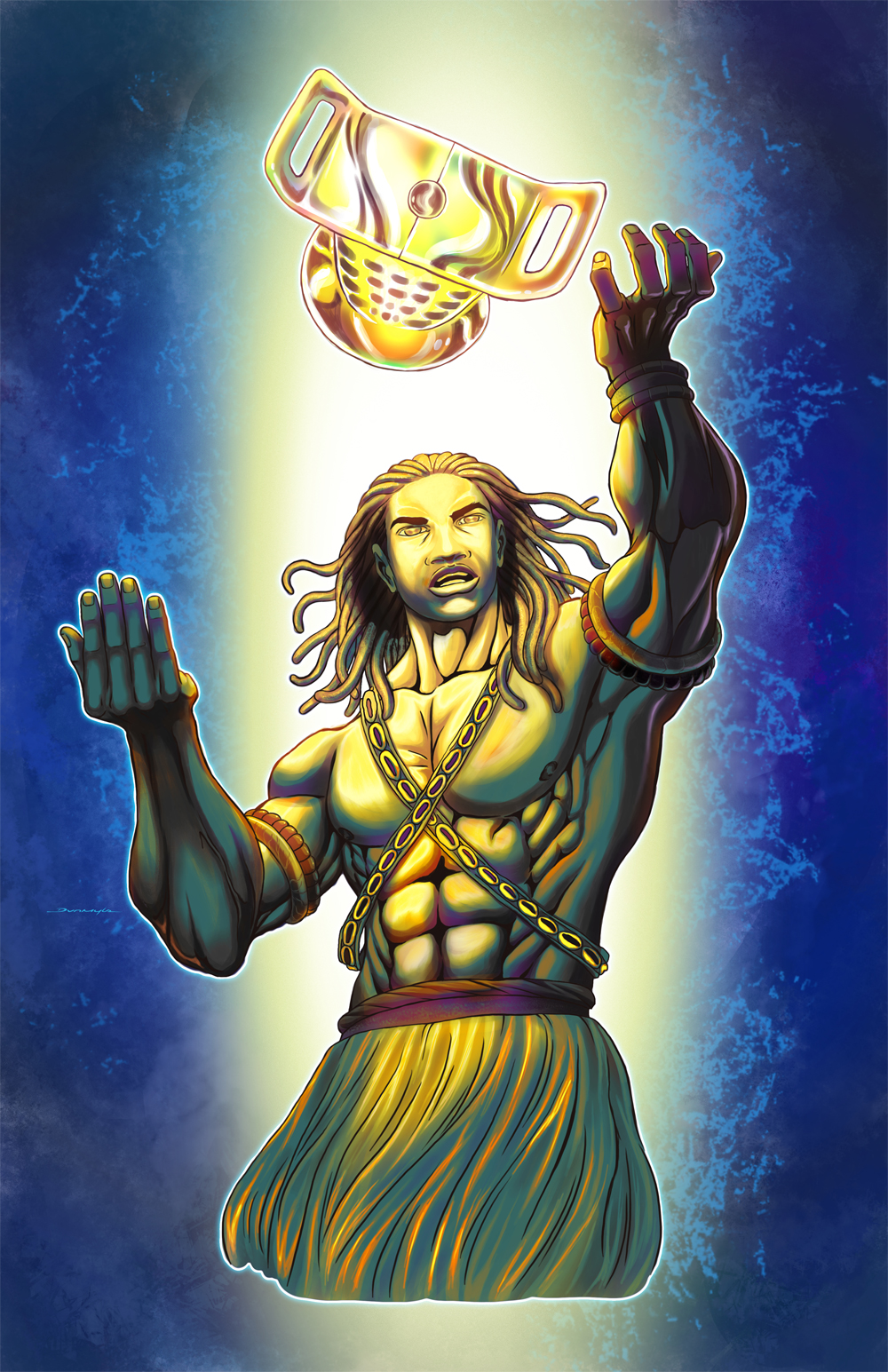
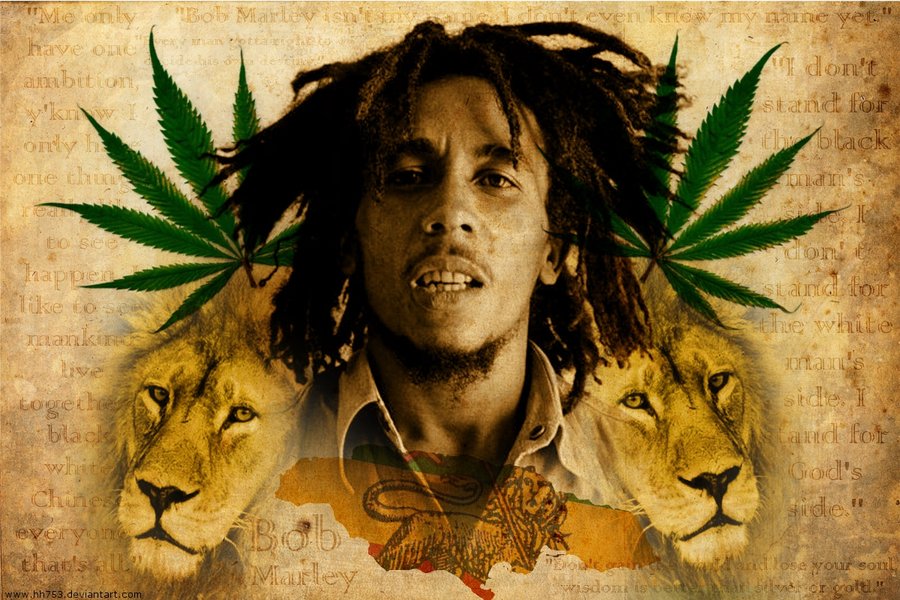
Reggae was, and remains, an important “Rasta fashion,” and so too is the general appearance of “the Rastaman,” particularly the dreadlocks, which seem to carry enormous appeal in Ghana. It seems highly likely that some of these early Rastas noted the similarity between the appearance of Rasta celebrities like Bob Marley, with his long matted hair, and traditional African fetish priests and, therefore, perceived Rastafarianism as an authentically African way of life. Okomfo Anokye is worth noting here, as a truly legendary figure in Ghanaian religion and culture. According to Ashanti mythology, he established the Ashanti Kingdom by calling forth its sacred Golden Stool from the sky. In addition, Ashantis claim that one of the three palm nuts Anokye threw on the ground marks the spot that would later become Kumasi, the capital of the Ashanti kingdom.
Furthermore, they link him to a legendary sword, observable today in a small room behind Kumasi’s Okomfo Anokye Hospital. According to Ashanti tradition, this sword was mysteriously placed at the exact spot where Okomfo Anoyke called forth the Golden Stool. Royal lore claims that the Ashanti dynasty will suffer unspeakable tragedies should the sword ever be removed.
Not only do Ashantis treat Okomfo Anoyke as their founder and protector, they hold him as one of their highest fetish priests, mysteriously born as a locksman with fully-grown, matted hair. This arresting detail is not lost on current Ghanaian Rastafarians. While it is difficult to prove that early Ghanaian Rastafarians made any kind of solid connection between their faith and the figure of Okomfo Anokye, from my perspective, the link seems obvious. More than a few non-Rastafarian Ghanaians remarked to me that with the emergence of Rastafarianism among Ghanaian youth in the mid-to-late 1970s, fetish priests found a wider audience for their words and deeds.
Excerpt from: AS IT IS IN ZION:SEEKING THE RASTAFARI IN GHANA,WEST AFRICA Darren J. N. Middleton, Black Theology: An International Journal, 2006.
Scotch Bonnet Records spice up tings with something completely different from Stalawa’s kitchen. A nice soul food meal well steamed for over 3 years. Take heed and listen!
Reggae, the music synonymous with Rastafari and its icon. Bob Marley, was created from the blending of African, neo-African, and African-American musical styles. The Rastafaris were chiefly responsible for introducing the African and neo-African elements into reggae music. Linking reggae and the culture of Rastafari to Africa, Mervyn Alleyne argues that reggae, because of its strong connections to Rastafari and its socially and politically conscious lyrics, is representative of the “traditional African fusion of the secular and religious and the symbiotic interaction of religion (including music and dance) and politics.” Janet DeCosmo also contends that reggae can be seen as a modern continuation of social commentary that is expressed in the oral traditions of African culture.
These African elements tend to underscore the fact that some of the Caribbean musical styles have strong links to an African musical past. As Neil Savishinsky put it, “reggae, along with other forms of African-American and Caribbean music, may in fact, represent a kind of ‘re-Africanisation’ process….”
More importantly, however, is the fact that reggae music, in addition to being a powerful medium of communicating the message and spirit of Rastafari, has also provided Rastafaris with a distinct identity. It [reggae] is now regarded as “one of the most essential elements of religious expression and shared group identity”.
Found in Reafricanizing the Caribbean: Black Power and Rastafari Styles.
From: Resistance, Essentialism, and Empowerment in Black Nationalist Discourse in the African Diaspora: A Comparison of the Back to Africa, Black Power, and Rastafari Movements.
By: Simboonath Singh in Journal of African American Studies, Winter 2004, Vol. 8, No. 3, pp. 18-36.
Rastafarians apply the theory of Babylon to Jamaican society as well as to the rest of the world. In Jamaica Babylon encompasses the concerted efforts of various agencies representing the power structure, those who have a stronghold on available resources. One of the most important characteristics of this group is that it excessively emulates Western culture. The culture of the oppressed, consequently, is relegated to a second-class status. Western culture is seen as the measuring rod to demarcate that which is superior. Babylon in this sense entails “part of a world view and cultural perceptions” which degrades anything African. Transcending such perceptions, the Rastafari idealize Africa.
The Rastafarian critique of Babylon transcends Jamaican society and includes denouncing capitalistic systems as well as certain communistic regimes.
Rastafarians refer to these systems as “anancy regimes”, oppressive systems based on shrewdness. International Babylon is represented by the industrialized nations of the world, spearheaded by the United States, as well as key religious institutions such as the Vatican. According to the Rastafari, international Babylon has a long history with a succession of oppressive eras. They note that oppressive regimes such as those of the Persians, Greeks, Romans, British, and Americans have dominated world history. From the Rastafarian perspective, all of these regimes were inspired by the activities of “Nebuchadnezzar, the infamous king of the Biblical Babylon“. It is within this
overall historical context that the Rastafarians explain their experience and ultimate mission, the overcoming of the oppression of Blacks and humanity at large.
From:
Social Movement Endurance: Collective Identity and the Rastafari
by Alem Seghed Kebede, Thomas E. Shriver, J. David Knottnerus.
in Sociological Inquiry, Vol. 70, No. 3, Summer 2000, 313-37
“Chaskele is a game played with an empty milk can, a stick and a car tire or basket. The objective is for the one player to try to throw the milk can into the tire/basket while the other players objective is to strike the can as its being thrown.”






 OUT OF MANY COME DUB AND OUT OF DUB COME ONE