On Bob Marley’s Lambs Bread

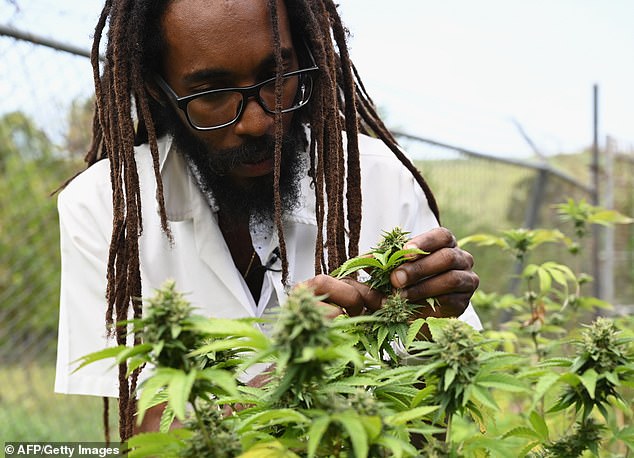
“A Jamaican scientist is recreating a ‘supreme’ marijuana that was smoked by Bob Marley in the 1970s before it was wiped out the following decade during the American war on drugs.

Amid mangos, lychees and other jackfruit, Dr Machel Emanuel has planted a field of cannabis plants measuring dozens of square meters in his lab in the botanical garden of the Biology Department at the University of the West Indies in Kingston.

His specialty: landrace cannabis, which grew naturally in Jamaica before it disappeared as a result of human intervention.”

From: Lost variety of ganja smoked by Bob Marley before it was wiped out during war on drugs is being recreated by expert who wants Jamaica to market marijuana ‘like Champagne in France 
Image source: AFP/Getty Images

On Lalibela pipe and coffee

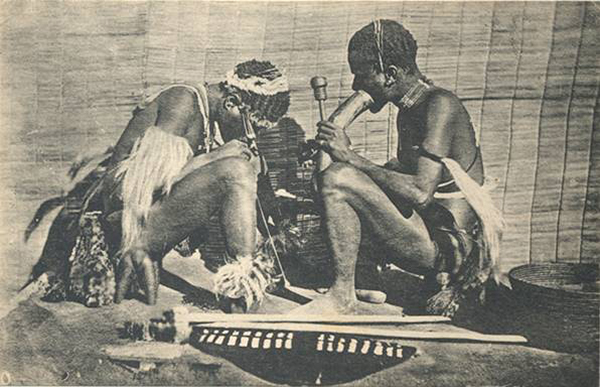
Two of the pipes from Lalibela cave were subsequently tested for cannabis residue on the inside of the bowls. These tests showed conclusively that the two pipes in question were definitely used for the smoking of cannabis. This, together with the fact that no evidence of elbow-bend pipes was found, has been taken as evidence that cannabis was smoked in water pipes in thirteenth-or fourteenth-century Ethiopia. However, caution must be exercised in drawing this conclusion. There was no direct correlation between the pipes and any dates. Rather there was a general correlation between the pipes and the dates, since both were from the same levels. The sites were rather disturbed, and there was evidence that levels may have been contaminated by the extensive digging of pits. In addition, the culture of level II in both sites was similar to that of the people of the area today. Dombrowski postulated only that the excavation showed that Semitic-speaking Ethiopians had reached the Lake Tana area by c. I I00.

There is thus no compelling reason to assume that the pipes in question were deposited before the arrival of tobacco, although that is the most likely hypothesis, and it is known that these pipes were used for smoking something other than tobacco. Our best guess would be that these pipes were used before the introduction of tobacco from the New World, but this is far from proven. Perhaps advances in radiocarbon technology will allow us to obtain reliable dates from the residue in the pipes which would settle the issue of their dates. In the meantime Ethiopia, rather than Persia or southern Africa, has become the most likely place of origin of the water pipe, which may have spread during medieval times on routes similar to those used by coffee, another Ethiopian innovation.

From: ARCHAEOLOGICAL DATA, found in:

African Smoking and Pipes

Author: John Edward Philips

Source: The Journal of African History, Vol. 24, No. 3 (1983)

Image source: Cannabis and Tobacco in Precolonial and Colonial Africa 

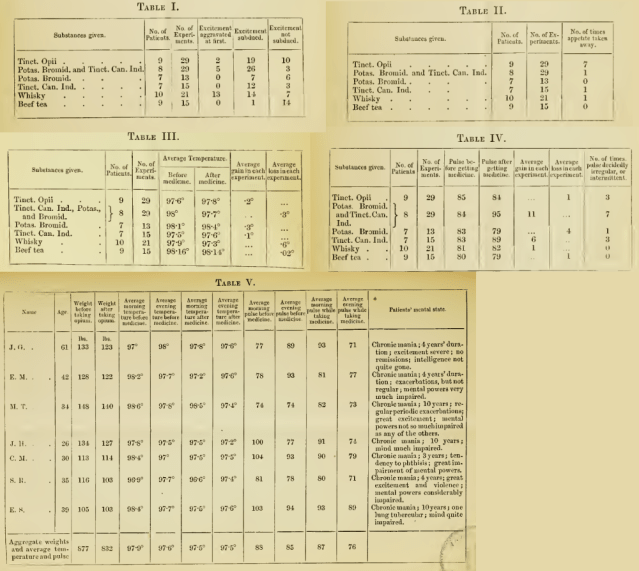
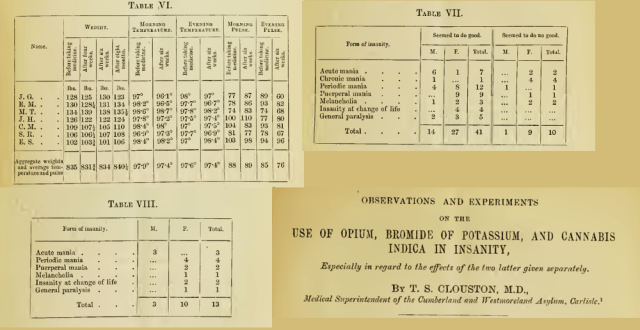
8 tables on neurotic medicines

Tables from THE ACTION OF NEUROTIC MEDICINES measuring effects of opium, cannabis, potassium bromide, whiskey, and a ting called Beef tea. From year 1870.
table1table2

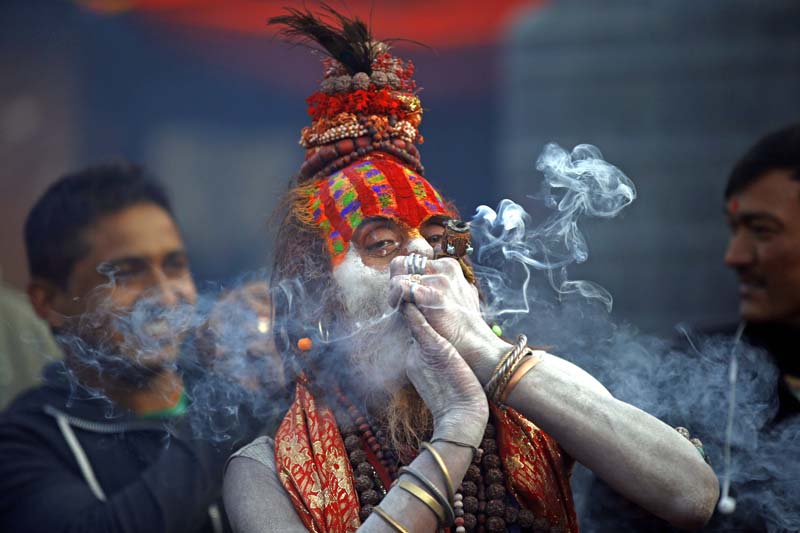
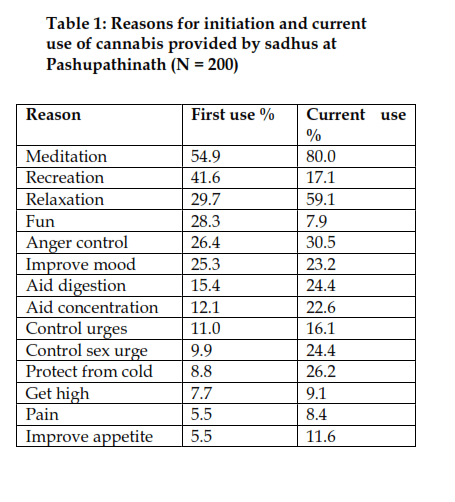
Sadhu reasoning on cannabis use

sadhus.png

Found in: Cannabis, Lord Shiva and Holy Men: Cannabis Use Among Sadhus in Nepal

by Acharya SL, Howard J, Pant SB, Mahatma SS, Copeland J

(J Psychiatric Association of Nepal Vol .3, No.2, 2014 )
Photo source: Skanda Gautam/ THT

Sacred Buddha Cannabis Medicine

Ivan Vuković Magellano – Weed Code

Magellano taking on an original twist for the infamous 4/20 occasion,  on how to STOP smoking weed and start RESPECTING the herb.  Croatian language.

On Baba Ku

Baba Ku 

Meanwhile, across the border from Persia in neighbouring Afghanistan, hashish aficionados have their own version of Sheik Haidar in the shape of a character called Baba Ku. So striking are the similarities between the stories of Sheikh Haidar and Baba Ku that they probably originate from the same source. Like Haidar, Baba Ku is characterised as a devout Sufi. He is celebrated for first bringing hashish to Afghanistan; he and his followers consumed the drug in prodigious quantities, regarding it as both a divine sacrament and a medicine. Baba Ku is generally acknowledged to be the founding father of cannabis culture in Afghanistan, and he is traditionally depicted as puffing on a giant hubble-bubble pipe. Again paralleling the Haidar legend, on the death of Baba Ku his disciples set up a shrine to him in the town of Balk in northern Afghanistan where they continued to cultivate a plot of cannabis in his memory. Pilgrims to the site were encouraged to smoke it up big time. Indeed, to this day in Afghanistan there are still hashish babas who venerate Baba Ku. Like the sadhus of India, they generally shun possessions other than their stash of hash and lead nomadic lives. However, from time to time they will gather together in smoking fraternities – summoned by a single mournful note blown through a giant conch shell – to fire it up in remembrance of the great Baba Ku. These Afghani hashish babas are some of the most serious smokers on earth and have been known to get through as much as an ounce (28g) per head at a single sitting. Another Islamic country strong on cannabis folklore is Morocco. Although a relative infant in terms of hashish production, the Moroccans have long been renowned for their love of kif – a marijuana and tobacco blend traditionally smoked in pipes. And they too have their patron saint of pot in the form of Sidi Hiri. Yet another Sufi Muslim, Sidi Hiri is said to have originally come to Morocco from Algeria bringing the sacred herb with him. Legend has it that he led a nomadic existence, sleeping rough in caves, wandering round the country, reciting the Koran, getting righteously ripped and turning on the locals to the joys of ganga. 

Found in: Spliffs – Celebration of cannabis culture by Nick Jones. 2003. 

ON ISHTAR

In ancient Sumeria, “Ishtar was held in high esteem as a heavenly monarch,” writes Jeanne Achterberg in Woman as Healer. “Her temples have been found at virtually every level of excavation.” The Ishtar Gate to the inner city of Babylon was one of the ancient wonders of the world. Also called the Queen of Heaven, Ishtar was a compassionate, healing deity. Her medicine kit likely included plant allies: a clay pot likely used for distillation of plant essences into medicines was found at a Sumerian grave site circa 5500 BC. The herb called Sim.Ishara, meaning “aromatic of the Goddess Ishtar,” is equated with the Akkadian qunnabu, or “cannabis,” writes Assyriologist Erica Reiner.
As the land of Sumer became a perpetual battlefield, Ishtar became the goddess of war and destiny, and became more sexualized, even as women were restricted from education and the healing arts.
In mankind’s first written story The Epic of Gilgamesh (circa 2000 BC), the cruel king Gilgamesh calls Ishtar a predatory and promiscuous woman, and rebukes her advances, just before taking off with his buddy Enkidu to chop down the great cedar forest. Gilgamesh’s repudiation of Ishtar, some scholars say, signifies a rejection of goddess worship in favor of patriarchy in ancient times. In ancient Babylon, around the spring solstice, people celebrated the resurrection of their god Tammuz, who was brought back from the underworld by his mother/wife Ishtar (pronounced “Easter” in most Semitic dialects). Flowers, painted eggs, and rabbits were the symbols of the holiday then, as now. Thus the goddess Ishtar resurrects every spring at Easter time, by way of the German goddess Ostara, “the divinity of the radiant dawn,” doubtlessly a reincarnation of Ishtar, who the Babylonians called “the morning star” and “the perfect light.” The biblical heroine Esther is also a descendant of Ishtar.

From: Tokin’ Women A 4000-Year Herstory
by Nola Evangelista (2015)

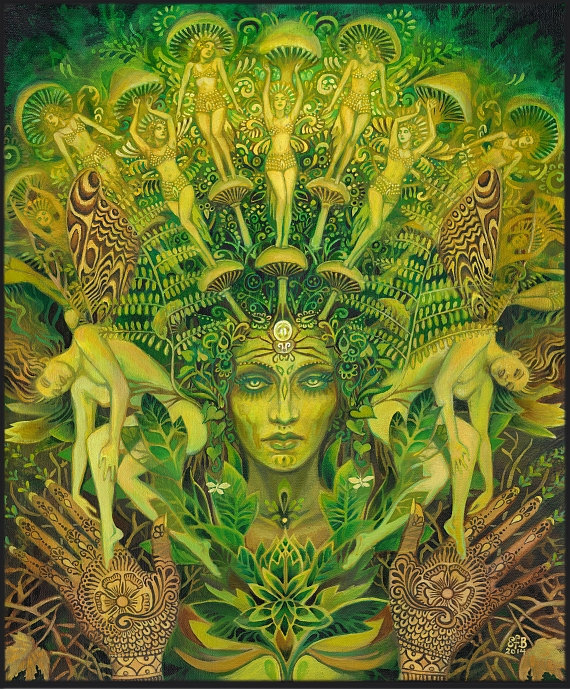
Image source: The Dryad Forest Nymph Goddess by Emily Balivet

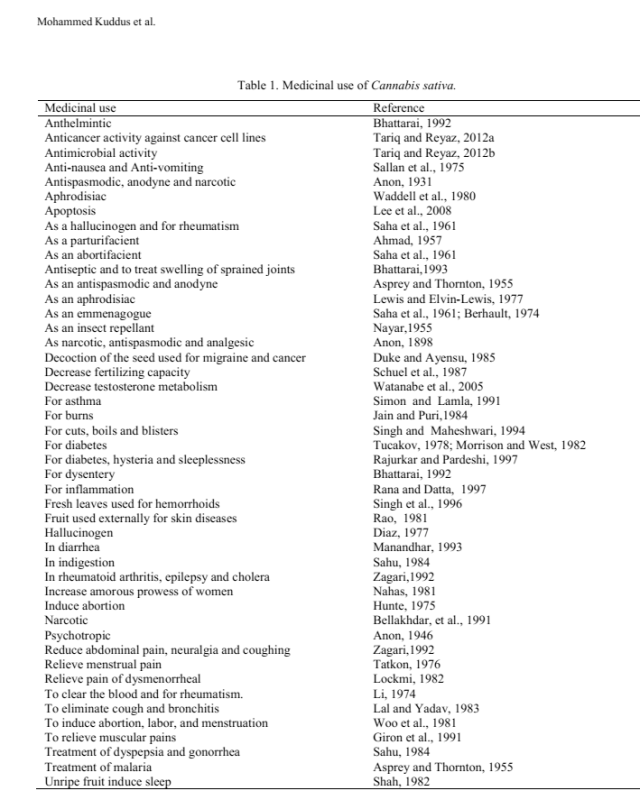
ON EDIBLE AND MEDICINAL PLANTS

kuduss

From Cannabis sativa: An ancient wild edible plant of India
By Mohammed Kuddus, Ibrahim A. M. Ginawi and Awdah Al-Hazimi in Emir. J. Food Agric. 2013.

ON ASTERION/LITTLE STAR/CANNABIS, DIVINE BIRTH, PLEIADES & DOVES

ASTERION.png

CANNABIS MAGICK

JOSEPH W.JACOB ON CHRIST & CANNABIS

1

2

From :Medical Uses of Marijuana by Joseph W. Jacob (2009.)