On role of the Deejay

Dominant and subversive versions of Africa and African history reproduced the dynamic outlined above but on an international scale.
In Britain in the 1980s imperial relations were being re-imagined in the context of humanitarian aid. Black youths in Britain wielded their African heritage as a tool to build their communities and give voice to their analysis.
Meanwhile the mainstream press, and charitable structures,were also building a version of Africa; one of helpless victims of natural disasters.

Given such a context, the ‘performance’ that is being considered here contains dialogues that traverse the African diaspora and are based on the acquisition of‘oral skills’ in Creolised language, which acted as a mode of response to the imposition of European culture on non-European peoples. Resistance became most evident in the contested spaces constructed around specific types of language-use that expressed an alternative black subjectivity that bridged intergenerational gaps within black communities.

The use of particular linguistic forms, both oral and scribal, continued the type of ‘pan Caribbean consciousness‘ that was necessary for the Windrush Generation’s survival and was passed down to the generations born in Britain thereafter.
For many deejays, therefore, the world view expressed through the usage of Standard English reduced them to the voiceless, passive victims of a Eurocentric historical bias.
By blending several aspects of Jamaican oral culture with their own local argot, deejays verbally presented critiques of certain entrenched ideas, for instance, poetry as an exclusively white domain.


This type of engagement was exemplifed in a lyric performed on Diamonds Sound System by the British deejay Papa Benji, which suggested that
‘poetry me better than Shakespeare, and me voice gone clear everywhere’.

The deejay thus became the veritable keeper of memories, for once the word was performed, recorded and disseminated, it became an artefact; a historical document.
It also enabled the performers to present their own arguments, in their own words and on their own terms in a ‘commonly agreed language’ that countered their ‘social problem’ status.
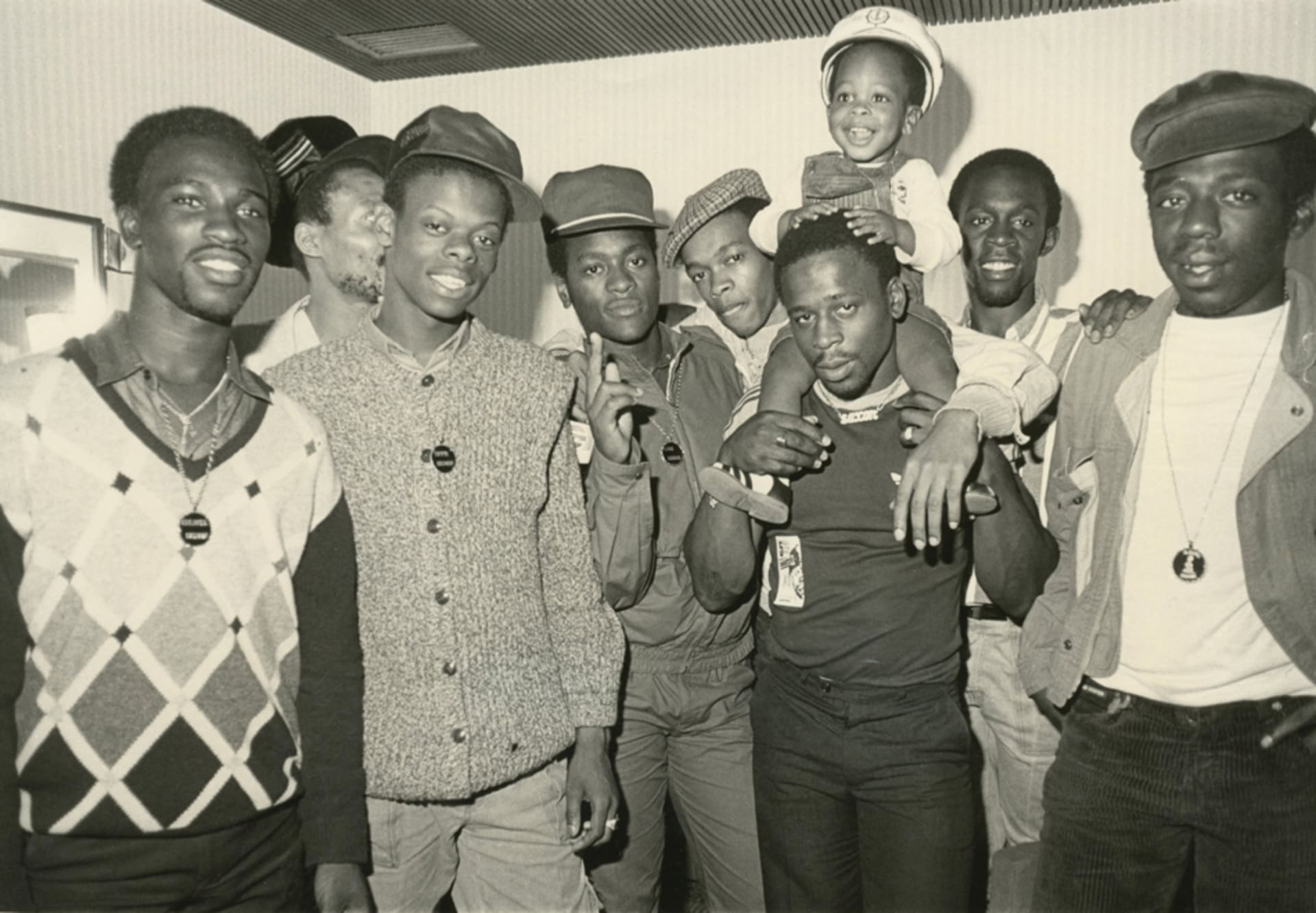
Photo from:

Without The Windrush Generation, British MC Culture Would Be Non-Existent

Excerpt from:

William ‘Lez’ Henry (2012) Reggae, Rasta and the Role of the Deejay
in the Black British Experience, Contemporary British History, 26:3, 355-373,
DOI:10.1080/13619462.2012.703024
On reggae and hip-hop

DJ Kool Herc: ‘When I extended the break, people were ecstatic, because that was the best part of the record to dance to.’

DJ Kool Herc, the chief architect of hip-hop, was born Clive Campbell in Kingston, Jamaica. At the age of twelve, in the winter of 1967, Campbell moved to Bronx, New York. The year he migrated to America, sound-system culture in Jamaica had a ubiquitous presence in Kingston’s lower-class neighbourhoods.
As a twelve-year-old preteen now living in the Bronx, Campbell already possessed a persistent reggae and sound-system consciousness having experienced the innovative music of
Prince Buster, the Skatalites, Don Drummond, and dancehall deejay U-Roy.

At eighteen, Campbell attempted to recreate the Jamaican dancehall experience in the Bronx by spinning the latest Jamaican reggae records at neighbourhood parties, but his young African-American audience was not feeling the reggae beat and did not comprehend the Jamaican patois rhymes of sound-system MCs known as toasters.
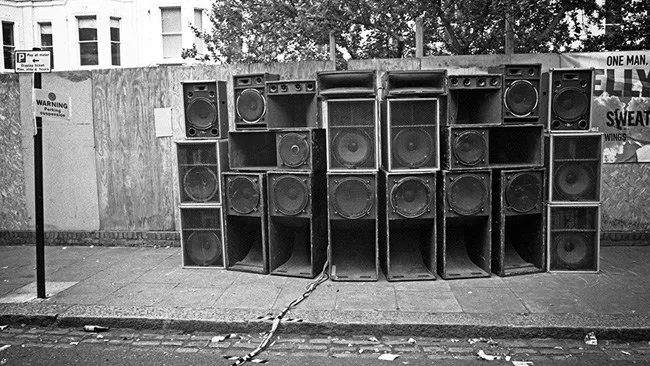
As DJ Kool Herc, Campbell shifted to playing funk records, but his reggae background caused him to favour funk with heavy-weight bass lines and lively percussive drumming. Kool Herc’s record selections were transmitted through hi-fi stereo equipment that spoke with the same awesome power and sonic quality of a roots Jamaican sound system.
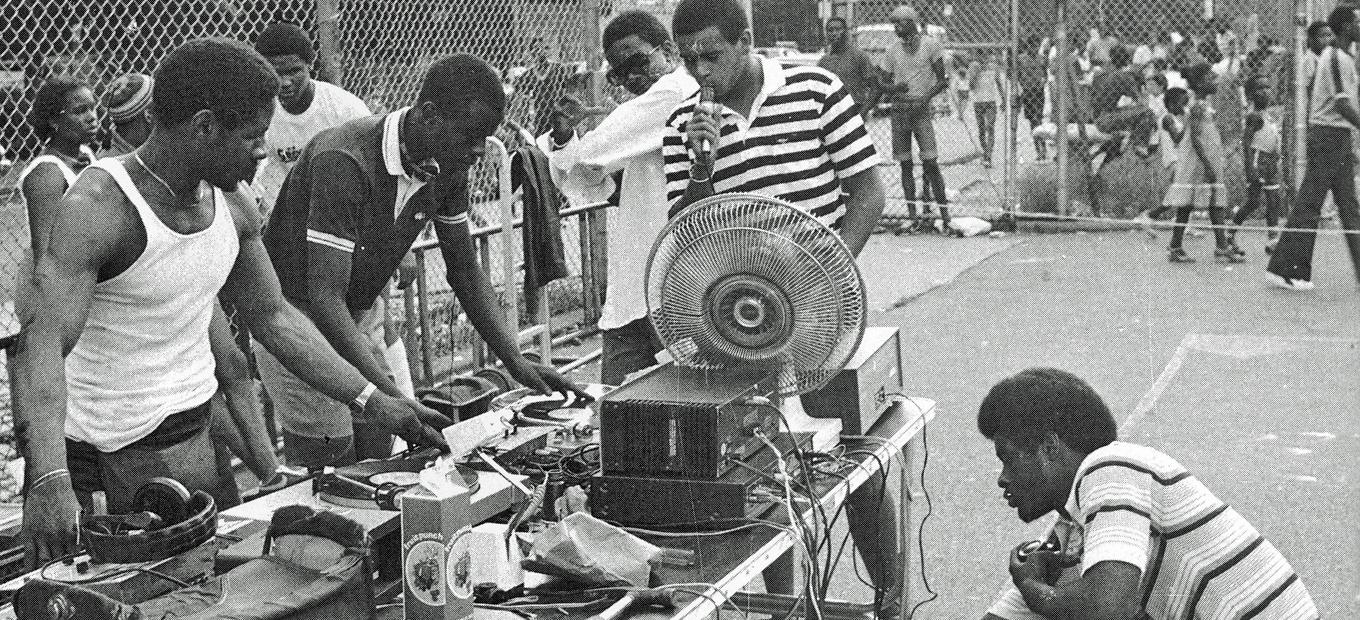
The selector, as a deejay is called on a reggae sound system, though using one turntable-the norm during the ’60s and ’70s- was still capable of altering the arrangement of a tune spinning off a record on the turntable platter. The selector skillfully inflicted a completely different sound context on a roots reggae recording by manipulating the controls on the sound system’s amplifier to briefly remove the bass on a tune, accentuate the singing of the song’s vocalist, and highlight the harmony of trumpet, saxophone, and trombone. The selector would create tension in a live remix by bringing back the bass booming like a compact implosion.
By the ’70s, the selector had the ability to vary the sonic texture of the recording by creatively deploying reverb and echo chamber to repeat the sweetest elements of a vocal or horn solo and as a special sound effect that dramatized certain aspects of the recording with a live feel.

American Electronic Music Owes It All to People of Color


Kool Herc’s approach to creating something fresh from pre ­recorded funk on vinyl was different because he used two turnta­bles. But his approach was similar in that he shared the same objec­tive as the selector, which was to do a live remix of the record to heighten the entertainment of his audience. He extended the intox­icating rhythmic feel of percussive conga, bongo, or trap drums sizzling the break of records like Mandrill’s “Fencewalk,” the Incredible Bongo Band’s “Apache,” and the live version of James Brown’s “Give It Up, Turn It Loose” by playing the same record on two turntables using a sound mixer to seamlessly prolong the per­cussive breakbeats.

Herc pioneered the innovative use of two turntables and a sound mixer as active instruments that became more than passive facilitators, more than just pieces of electronic equipment that merely played what was recorded on vinyl.

Invention Hot Spot: Birth of Hip-Hop in the Bronx, New York, in the 1970s


These electronic instruments were now used to rearrange pre­recorded music to suit the immediate needs of the disco and the dance floor. When DJ Kool Herc rocked a block party, dispatching African­ American funk with the overwhelming sonic power of a reggae sound system, no other deejay dared to compete.

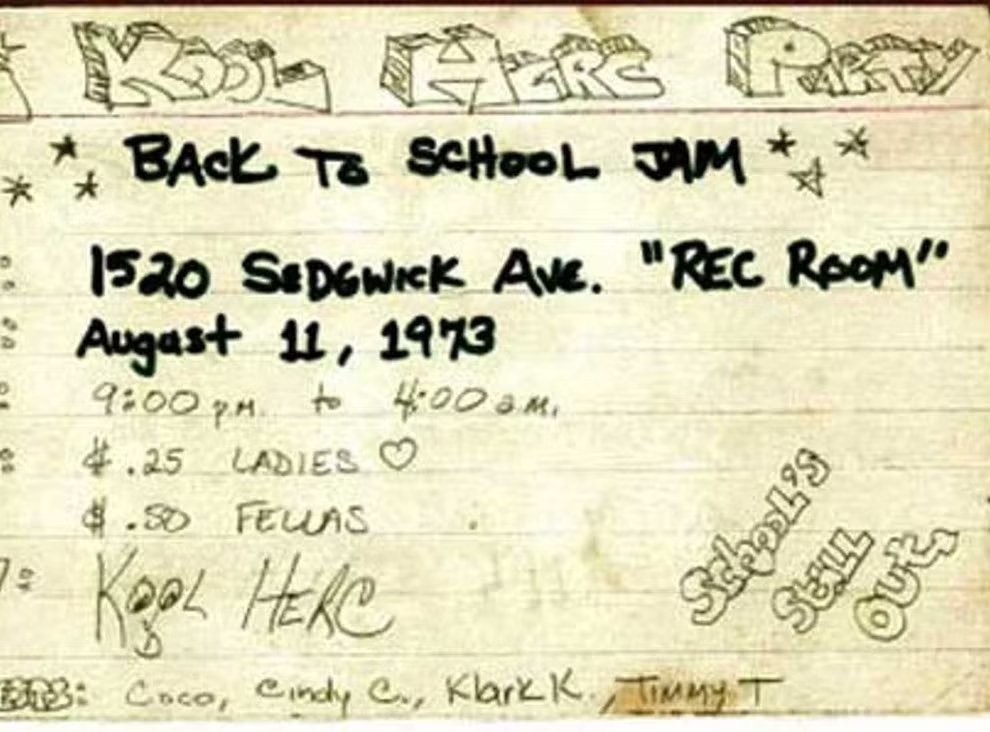
Kool Herc’s party flyer


Text from:
Dubwise : reasoning from the reggae underground
Chapter: Raggamuffin Rap: The Interconnections of Reggae and Hip-Hop
Author:
Klive Walker, 2005.