On influence and term DUB

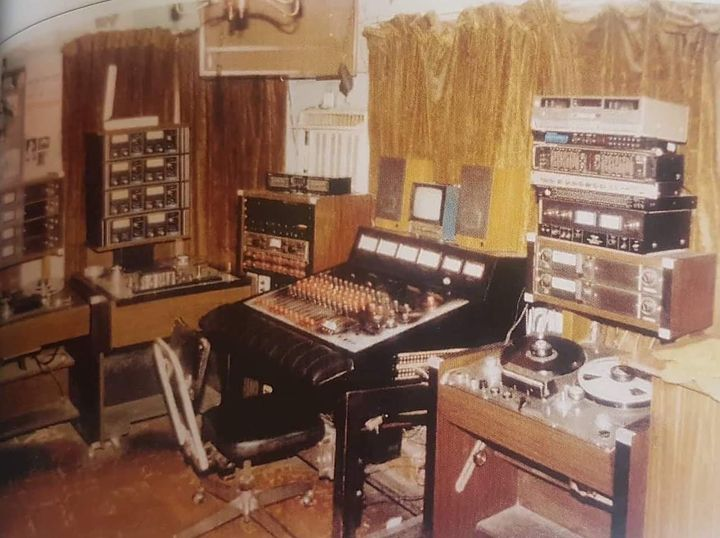
King Tubby’s studio

The term ‘dub’ is now used widely and indiscriminately by producers of dance and ambient music.
More particularly, as the British post-punk producer Adrian Sherwood has commented, ‘everything from hiphop to techno and every other form of music right now has stolen ideas off dub, or incorporated those ideas’.

While there is obvious hyperbole here, the point is nevertheless an important one.
The influence of dub permeates much contemporary electronica, dance, and urban music.
Indeed, there is an increasingly wide range of contemporary music that is explicitly and conspicuously indebted to dub, from the dance-oriented rock of a band like Death in Vegas to the indigenous Moroccan music of Aisha Kandisha’s Jarring Effects, and from the relatively recent work of Primal Scream back to the punk and post-punk music of bands such as The Clash, PIL, Terrorists, Killing Joke, Bad Brains, and even the Welsh-speaking Anhrefn, some of whose album BWRW CWRW (1989) was mixed by the British dub pioneer the Mad Professor.
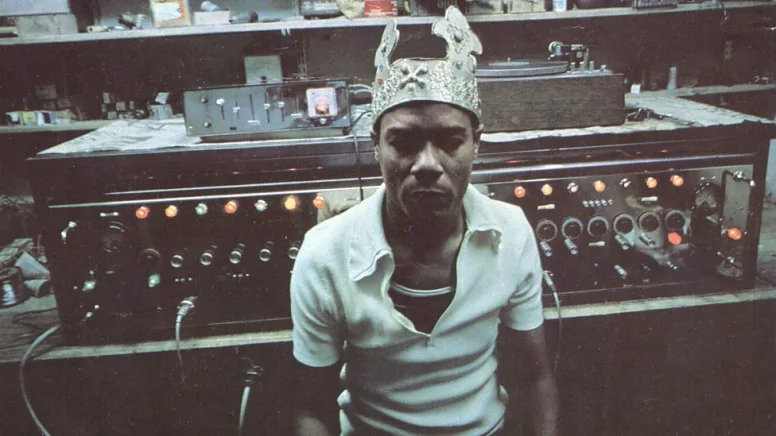
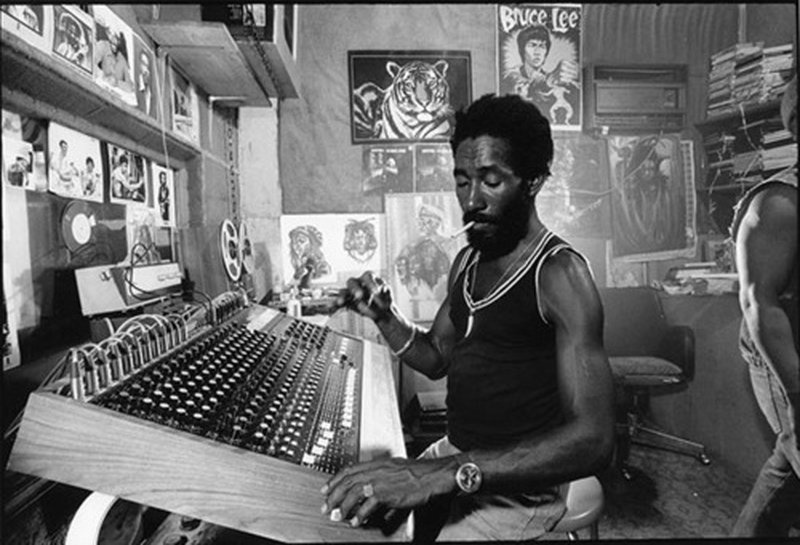
King Tubby – Playing the mixing desk

The term ‘dub’ evolved out of earlier terminology used in the recording industry in the United States.

This is significant because we will see that the genre has remained fundamentally related to recording technology. Traditionally known as ‘black wax’, ‘soft wax’, ‘slate’ or ‘reference disc’—and in the manufacturing sector as an ‘acetate’—the dub plate was a metal plate with a fine coating of vinyl.

Recorded music would be pressed on to the dub plate, following which a ‘stamper’ or metal master disc would be created in order to produce quantities of vinyl records. The process of transferring the music on to the vinyl-coated metal plate was known as ‘dubbing’—just as adding sound to a film is also known as dubbing. Hence, the terms ‘dub’ and ‘dub plate’ are not solely allied to the genre of ‘dub’.
However, the point is that, with the demand for exclusive, unreleased music in Jamaican sound system culture (in which sound systems competed for audiences by, amongst other things, playing new music), the trade in ‘pre-release’ dub plates grew.
And it is within this culture, hungry for new sounds and ideas, that the genre of ‘dub’ emerged.
The Untamed Imagination of Lee “Scratch” Perry
A Brief History of The Studio As An Instrument: Part 3 – Echoes From The Future


The term dub, in the sense of a musical genre, was, therefore, originally applied to a remixing technique pioneered by Jamaican engineers and producers who were seeking novel and exclusive music (i.e. ‘specials’) for sound system use.
So successful was the technique that it quickly evolved as a relatively inexpensive and creative way of reusing rhythm tracks. Essentially, recording engineers produced tracks on which their efforts were often more evident than those of the original musicians.

Indeed, the mixing desk and even the recording studio itself came to be understood as a musical instrument in that, in a similar way to a jazz musician’s improvisation on a standard tune, the engineer is involved in the reconceptualization of a piece of music.
However, this is a very different type of instrument, in that, as a remixing technique, it is alchemical in its effects. As Jonathon Tankel puts it, ‘remixing is recoding, the reanimation of familiar music by the creation of new sonic textures for different sonic contexts…
The remix recording creates a new artefact from the schemata of previously recorded music.

It is prima facie evidence of [Walter] Benjamin’s contention that
“to an ever greater degree the work of art reproduced becomes the work of art designed for reproducibility” .

Text from:

King Tubby meets the Upsetter at the grass roots of dub: Some thoughts on the early history and influence of dub reggae

Christopher Partridge, 2008.
Popular Music History
On art of mixing 12″ single

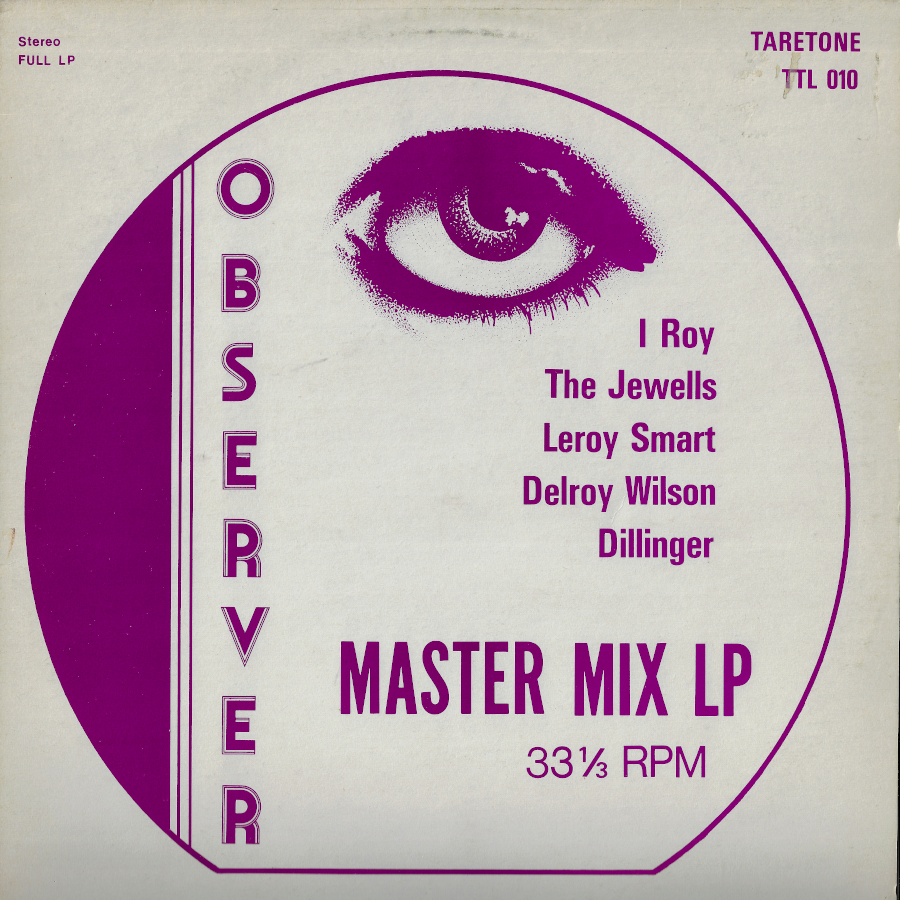
Various – Observer Master Mix LP

The early 1980s were a period in which the lines between studio producers, engineers, songwriters and disc-jockeys became increasingly fuzzy. Many dj’s, in addition to spinning records at clubs, ventured into dance music production, bringing many of the workplace concepts and techniques into the recording studio. In the process, the art of mixing using a multitrack console and recorder, and of mixing at a dance venue, using two or more turntables and a comparatively unsophisticated audio mixer, moved closer to each other. The more savvy djs were the first to feed the know how thus acquired back to the dance venue.
As a result, the number of versions found on a 12-inch single has increased from two (A-and B-side) to about four to six. To account for this new flexibility, different categories of versions or mixes were developed during this period, as djs became increasingly involved in the songwriting, producing and engineering of dance music. The oldest of these now more or less standard categories is the dub .
In addition to containing one extended, one instrumental and one or more dub mixes, contemporary 12-inch dance singles often feature at least one of the following:

-a Club Mix which refers to the location the music is geared for, often specific:
Both the “Paradise Ballroom Mix” on Arnold Jarvis’ “Take some time out” and the “1018 Mega Mix” on Nia Peeples’ “High Time” refer to renowned da& venues in New York City.

-a mix named after one of the current dance music styles: examples are “House Mix.”
“Hip-Hop Mix” or “Hurlev’s Hia House Mix” (the latter refers to the author of the mix as well as

the style).

-a mix bearing the name of the author of the version in question, in almost all cases a dj.
(e,g. “Lam Levan 12″ MegaMix” of Gwen Guthrie’s “Outside in the Rain,” “Shep Pettibone Mix” of Janet Jackson’s “The pleasure principle,” “Duane Bradlev Mix” of Inner City’s “Big Fun”).

This underscores the high social status dj’s may achieve by issuing his own remix.

-one of either an Acapella, or Percapella mix.

-a Bonus track (track here refers to one cut on a vinyl record), either called Bonus Beats, a version stripped of all instrumentation except the percussion and, perhaps, a bassline.
The less frequent alternative is to include a bonus track consisting of an entirely different song, in the way that some CD’s feature songs that are not included on albums featuring otherwise identical music and packaging.

-a radio edit, also called 7-inch edit, featuring a mix whose duration and arrangement conforms with standards used in radio programming, and is most often identical with the album and/or 7-inch single version.


Sizzla
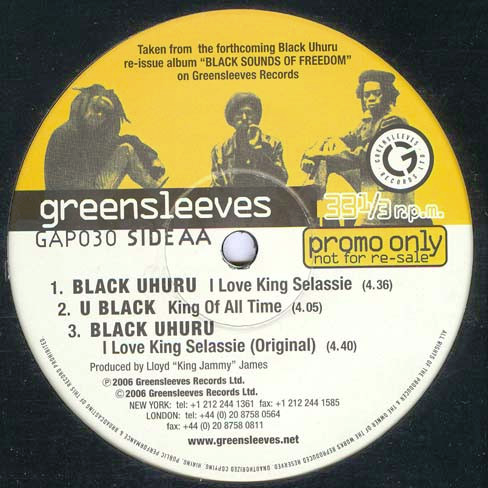
 / Black Uhuru – One Love / I Love King Selassie


The interaction or overlap between the technological approaches characteristic of the recording studio on one side and the dj booth at a dance venue on the other is exemplified by the way the aesthetic domain of the latter former has affected that of the former. When moving from record to the next, the dj bases his choice of sequence on his assessment of the compatibility between the two songs, in order to make as “good” transition as possible.

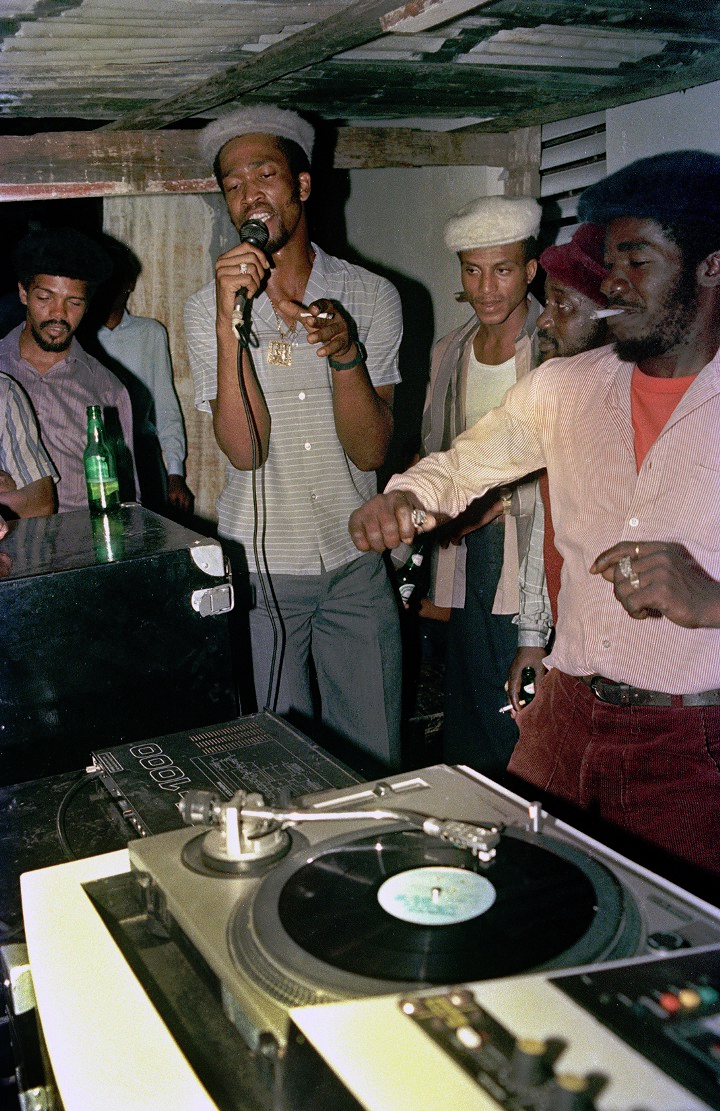
Stur-Mars session with deejay U Brown. © Beth Lesser

Text from:
“Supremely clubbed, devastatingly dub bed” : Some observations on the nature of mixes on 12inch dance singles.
Author:
Kai Fikentscher.
Versions of this paper were presented at the 1990 meetings of the Mid Atlantic Chapter of the Society for Ethnomusicology (MACSEM) in Newark, Delaware, and of the International Association for the Study of Popular Music (IASPM) in New Orleans, Louisiana.