On International Reggae and secularization of Rastafari 1972-1980

#rebelmusic #reggae #rasta
Ultimately, however, international reggae‘s appeal to international audiences may have had more to do with changes in the image of reggae artists, the packaging of the albums, and the sound of the music itself.

In his efforts to market the Wailers, for example, Blackwell first molded the Waiters‘ image into that of a rock-and-roll group. While reggae “groups” typically had consisted of a loose collection of singers and hired studio musicians, Blackwell promoted the Wailers as a stable, self-contained “band”—much like the Rolling Stones or Led Zeppelin.
Second, Blackwell led a new trend among Jamaica’s record producers toward original, thematic, and full-length LP (long-play) albums, again following the lead of rock-and-roll groups. Previously Jamaica’s
record producers had distributed mostly singles or cheaply produced compilations of “greatest hits”.

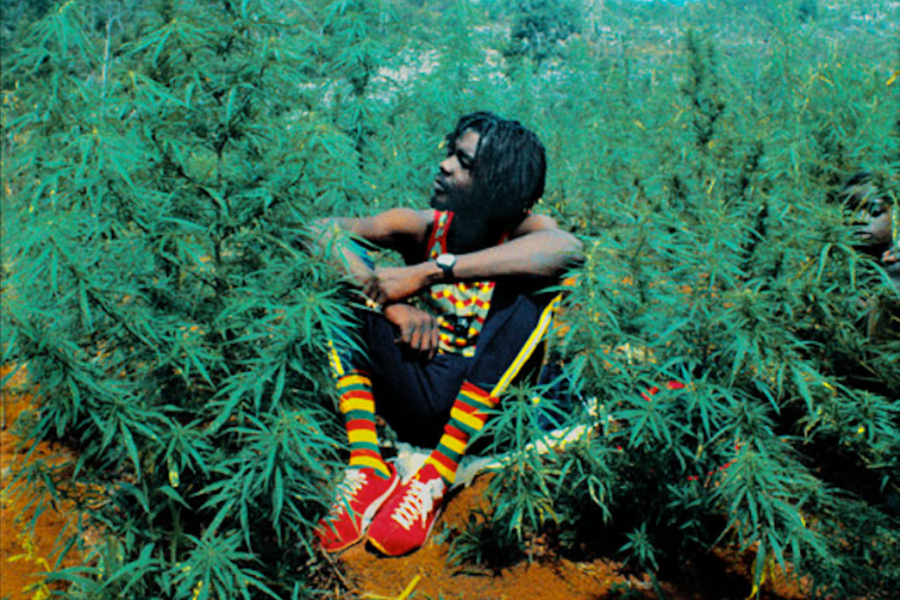
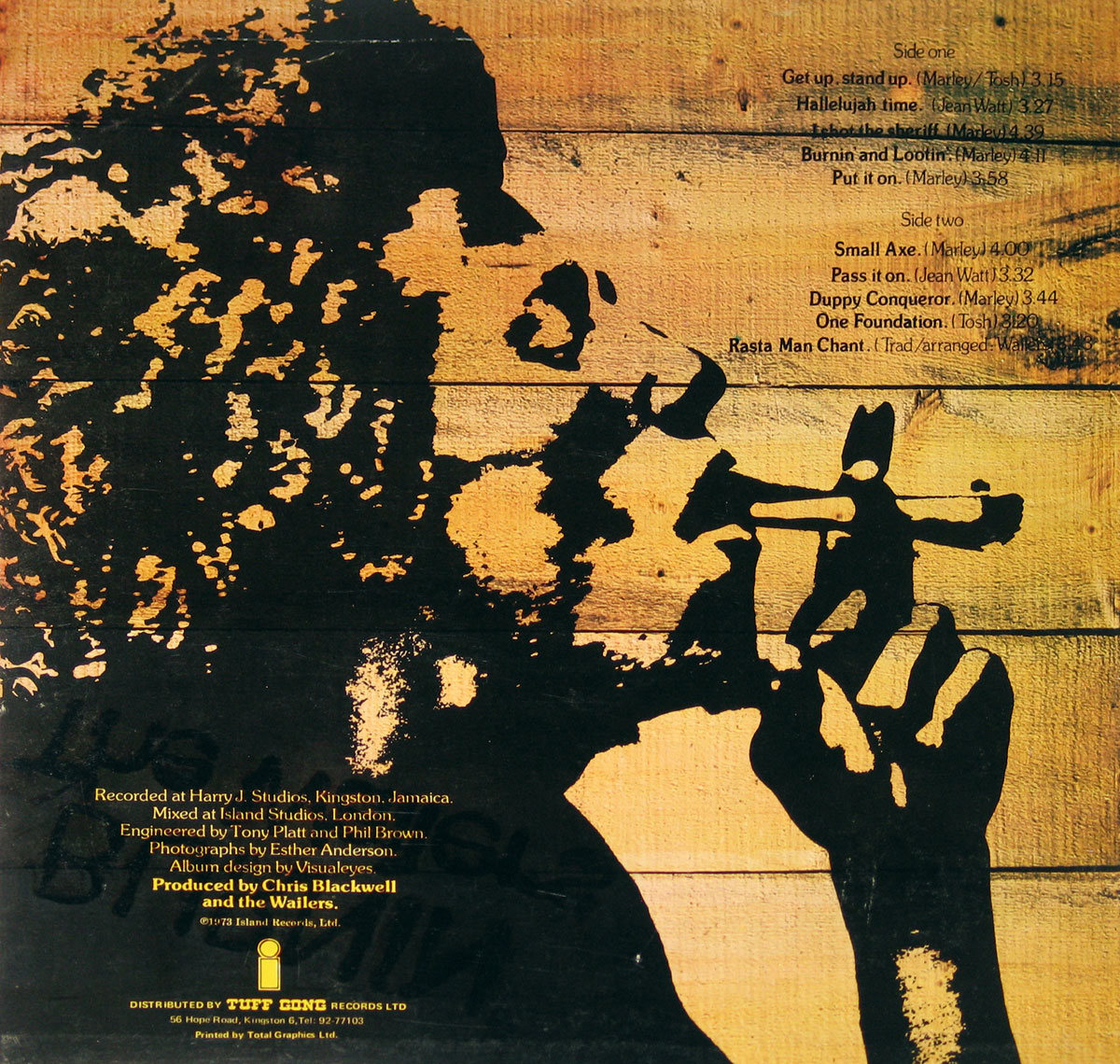
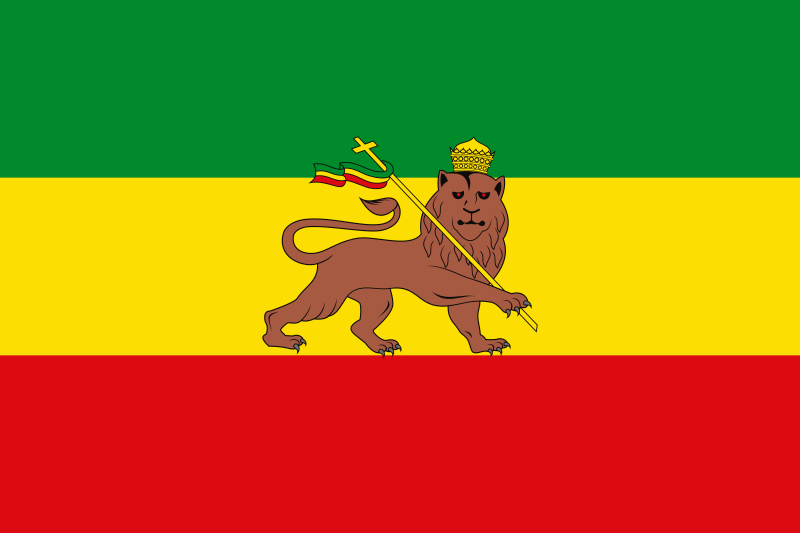
Finally, those albums came packaged in glossy, well-produced jackets promoting the image of the rebellious, ganja-smoking Rastafarian. On the back cover of the Waiters‘ 1973 album Burnin‘, for example, Marley was pictured smoking a 12-inch spliff, or marijuana cigarette. On Peter Tosh‘s 1976 album, Legalize It, the singer was photographed crouched down in a ganja field. Reggae album covers also emphasized the Rastafarian’s symbol of black defiance, the dreadlocks, or displayed the Ethiopian colors of red, green, and gold. The cover of the Wailers‘ 1980 album Uprising, for example, featured a drawing of Bob Marley, along with the album’s title in red, and a background of green mountains
and a gold sun.

While most of the major instrumental innovations of international reggae were established during the early reggae period, international reggae was marked by a more sophisticated and polished studio sound. Most early reggae songs were recorded in primitive studios in Jamaica. International reggae, however, generally was recorded in state-of-the-art studios in the United States or Great Britain.

According to Jones, this helped to undermine “the common accusation made by rock fans that reggae was a music of ‘inferior’ quality”. In the first attempt to reverse this trend, Chris Blackwell took the Wailers‘ instrumental tracks for Catch a Fire, previously recorded in Jamaica, and remixed, edited, and mastered the tracks in a London studio.

Rock critics Ed Ward, Geoffrey Stokes, and Ken Tucker highlighted the dramatic change in reggae’s new sound: “Catch a Fire” was a “revolutionary example of reggae recording, far superior in its technology than most other reggae records”.

U.S. and British record producers also manipulated the instrumentation in reggae arrangements to create a lighter, “softerreggae. Some U.S. record producers would deemphasize reggae’s dominant instruments, the electric bass guitar and drums, and push the keyboard and electric guitar to the front of the mix. In 1980, Jamaican dub poet Linton Kwesi Johnson provided a clear rationale for the systematic manipulation of the reggae sound:
“[there was the] belief that the hard Jamaican sound, with the emphasis on the drum and the bass, would not be as accessible to the non-Jamaican listener as a lighter sounding production would be”.
To appeal to international audiences, reggae musicians also incorporated familiar genres of American music into the reggae arrangement.

During the remixing of the WailersCatch a Fire, for example, Blackwell dubbed traditional rock-and-roll instruments, including rock guitar and synthesizer, over the reggae beat. During the recording of
the same album, a session guitarist, Wayne Perkins, also added guitar solos. Throughout their career, the Wailers dabbled in blues (“Talkin’ Blues” [Natty Dread]), funk (“Is This Love?” [Kaya]), and folk music
(“Redemption Song” [Uprising]). Similarly, Toots and the Maytals, in their 1973 Funky Kingston, fused R&B and reggae into the album’s title song.

In sum, the new international success of reggae music in the 1970s may have been more the result of marketing and changes in its sound than changes in its “message.” Reggae was still a “rebel music.” Growing up in some of Jamaica’s worst slums, reggae musicians still critiqued Jamaica’s neocolonial society. Reggae musicians also expressed concern about international affairs, specifically political problems on the African continent. While still sensitive to the problems at home, they also began
to identify themselves more as Africans than Jamaicans. In the final analysis, however, reggae’s international success probably was more the result of changes in its sound. Record producers improved and “softened” the reggae sound and incorporated new instruments, such as synthesizers and rock guitars, into the reggae arrangement.
Reggae musicians also borrowed freely from musical genres including rhythm and blues and funk. Yet whatever the explanation, reggae’s sudden status as an international musical sensation focused unprecedented attention on the Rastafarian movement and exacerbated tensions within the move-ment. Indeed, the music created whole new groups of supposed Rastafarians apparently attracted to the movement by little more than the image of the “Rastaman” and the music itself. These “pseudoRastafarians had little in common with traditional Rastafarian principles and beliefs.

Parts of Chapter Reggae Music in the 1970s: “Bubbling on the Top 100” from:

Stephen A. King (1998) International reggae, democratic socialism, and the secularization of the Rastafarian movement, 1972–1980, Popular Music and Society, 22:3, 39-60,
DOI: 10.1080/03007769808591713
Max RubaDub & Natty Campbell – Good Ses

Remix machine Max RubaDub comes with original tune featuring Natty Campbell praising the real highgrade. Version on the flip. Nah miss!

On world turning Rasta and getting high without getting high

Jah Bilah intro:

This examination of the rise of Rastafari in mainstream following popular conversion of Snoop Dogg to Snoop Lion back in 2013 contains some reasoning by UK bredrin Benjamin Zephaniah and Maxi Priest.

“Regarding the body as a temple, which must be loved, respected and well looked after, is another Rastafarian mantra. And contrary to popular belief, not all Rastafarians smoke marijuana, and if they do, they don’t simply smoke to get high.

However, this happens today within the context of an ever-increasing amount of anti-smoking campaigns highlighting the negative effects smoking has on the body, which are being taken more seriously now and are much more chronicled and echoed from the rooftops.


The reasons Rastas give up smoking marijuana are the same reasons why tobacco users kick the habit. Although there are many Rastafarians who still smoke, others, especially those who follow a stringent orthodox lifestyle, advise smokers to respect their body.

Most people think all Rastafarians smoke marijuana, but I don’t smoke because I view my body as a temple,” says Zephaniah, who lectures at Brunel University.

I came to the conclusion that I didn’t need ganja to get high and I didn’t like the habit I developed. So I have been getting high from not being high for the last 30 years.

Agreeing, Priest adds: “You get one chance to live and you must learn to preserve it so that you can live a longer life with meaning, caring and understanding. 

“I had a heart attack, and even before the heart attack, I wanted to stop smoking. But when I had the heart attack – that made me realise how precious and delicate my temple is.

“The biggest myth about Rastafarians in terms of stereotypes is weed, but you don’t have to smoke weed. There is more to the understanding and the faith of being a Rastafarian than just weed.”

On Rasta reasoning


Excerpt from:

THE SOCIAL DRAMA OF RASTAFARI
William F. Lewis
1994. Dialectical Anthropology.

Terrence & Phillip – Rasta Roller

THE UFOSLAVIANS FEAT. TAIWAN MC – WEED GET ME HIGH

ON GANJA BOMBING

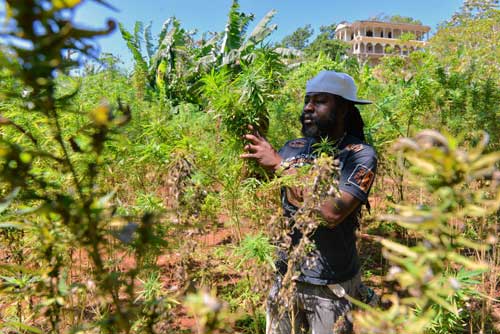
Despite the initiative by the Rastas those forces which harangued Bishop on the question of elections but turned a blind eye to the elections in Guyana still hoped to foment discontent from within. The elementary initiatives towards solving the needs of the working people were affected by the deteriorating security situation as the incidents of bombings and shootings increased, culminating in the June 19, 1980 bombing attack at Queens Park, St George. The Prime Ministers and the officials of the State had gathered to celebrate Labour Day when the bomb exploded. But no one on the platform was hurt; the force of the bomb killed three children and injured others. Some of the elements involved in this bombing campaign were involved in the large scale planting of ganja. This ganja was not for local consumption but for the international capitalist market and the big planters attempted to use the centrality of the weed in the lives of many youths as a leverage to move the Rastas after the previous attempt at demonstrations had failed. Ganja and its use pose a serious problem throughout the Caribbean for the way in which the trade is now linked to international gangsterism. Those imported psychologists and doctors who describe ganja as a dangerous narcotic forget that the British State imported ganja into the Caribbean up until 1907 to sell to the Indian indentured workers. The use of ganja by youths in the sixties and seventies was a principal method of social control and as soon as a youth was perceived by the state as rebellious the charge of – possession of ganja was always a useful weapon in the hands of the coercive apparatus of the state.

Found in Rasta, Ganja and Capitalism, from: THE RASTAFARIANS IN THE EASTERN CARIBBEAN by HORACE CAMPBELL. Source: Caribbean Quarterly, Vol. 26, No. 4, RASTAFARI (December 1980)

Image source: AP Photo/David McFadden

ON GANJA MUSIC

As the central sacrament to Rastafarians, the importance of ganja (marijuana) has been well documented and this importance extends into the sphere of Rasta-influenced Jamaican music. Rasta-influenced musicians were often outspoken advocates of ganja smoking, with songs full of exhortations to “smoke the herb”: Peter Tosh’s “Legalize It,” Bob Marley’s “Kaya” and “Easy Skanking,” Culture’s “International Herb,” Horace Andy’s “Better Collie,” Lee Perry’s “Free Up the Weed” and “Roast Fish, Cornbread and Collie Weed,” and Leroy Horsemouth Wallace’s “Herb Vendor” are a mere few of hundreds of such songs. Yet while it would probably be difficult to find a Jamaican musician of the roots era who was avowedly anti-ganja, some Jamaican musicians nevertheless felt that the prominence of this theme led to a distorted view of reggae in the world at large, as musicians played to the expectations of their international audiences. Paul Henton voiced a sentiment common among some Jamaican musicians, who felt that their colleagues sung about ganja at least in part “just because they know that the white people love it. If tomorrow morning the people or the fans say ‘Okay, we don’t want to hear anymore of this ganja stuff,’ they’ll stop singing about it and stop promoting it!”
Inside Jamaica, where ganja songs have flourished within several genres of Jamaican popular music (such as roots reggae and ragga), the situation has been more complex. Ganja was declared illegal in Jamaica in 1913 and for the decades since, its illegality has been a primary tool used by the ruling class in the social control of working-class Jamaicans. Correspondingly, it became a combustible element in the constellation of factors (including music, Rastafari, class conflict) that factor into Jamaica’s social tensions. As such, it is not surprising that ganja played a central role in the blended class, cultural, and political content that exploded in Jamaica in the 1970s and that arguably found its most powerful and passionate articulation in roots reggae. This centrality can be felt in the comments of legendary drummer Leroy “Horsemouth” Wallace: “The people respect you in Jamaica when you can put forty and fifty bag a ganja on a plane! We don’t call that drugs. That is ganja business. . . . We do those things like we are revolutionary. We put forty bag on a plane and feel good. . . . We send those so people in America could smoke the good ganja, not just for money alone.”

Found in: The Ganja Factor,  from:  DUB Soundscapes and shattered songs in Jamaican reggae by Michael E. Veal.  Wesleyan University Press 2007.

Image source: Peter Tosh

ON MUSLIM RASTA

While conducting research in Senegal I was very fortunate to develop a close relationship with a 38 year old Gambian Baye Faal named Moussa N’Gom, who also happens to be one of the best known and most highly respected pop musicians in the region. A founding member of the Gambian group Guelewar back in the late 1970s, Moussa went on to become a lead vocalist and songwriter with the popular Senegalese band Super Diamono. Possessing a keen awareness of the world outside West Africa-as he has travelled and
performed throughout Europe and North America-it was Moussa who convinced me of the very close connections that exist between the Baye Faal and the Rastafari.
During the various trips he made to New York, London and Toronto, Moussa often found himself in the company of local West Indian Rastas. Bonds of friendship quickly developed between the two as they discovered how much they shared in common, e.g. a love of music and ganja, a deeprooted spirituality and a strong commitment to African unity and black solidarity. And it was from direct contacts such as these that Moussa gained his knowledge, appreciation of and respect for the Rastafari and the more universal aspects associated with their movement (although, like most Baye Faal, he finds the Rastafarians’ deification of Haile Selassie and reliance on Judaeo/Christian-based religious teachings thoroughly misguided). As Moussa, always one to emphasise the inherent unity rather than divisions, was in the habit of pointing out:
Like Rastas, the Baye Faal are totally free and flexible, and this is what is most
important-the true Rasta man and Baye Faal is a free man and not a slave to
anyone or anything. We make our own rules, and we are accountable only to God
and his prophets. Some Baye Faal smoke, some don’t, some drink alcohol, some
don’t, some pray, some don’t. You see, it is up to us what we do. And, like Rastas, we try to set an example to the world of how a good man should live-that is, not offending God and not offending one’s fellow man.

From The Baye Faal of Senegambia: Muslim Rastas in the Promised Land by Neil J. Savishinsky.

Published in: Africa: Journal of the International African Institute, Vol. 64, No. 2 (1994)

DUB UNIT FT SPENG BOND – GANJAMAN – CRITICAL HI-FI RMX

DR. MELANIE DREHER ON GANJA BABIES

“After nearly two years of study in Jamaica, I’d found ganja was used to stimulate work.”
Dr. Melanie Dreher, reefer researcher

JA FLAG

LEAH ROSIER – FREE IT UP