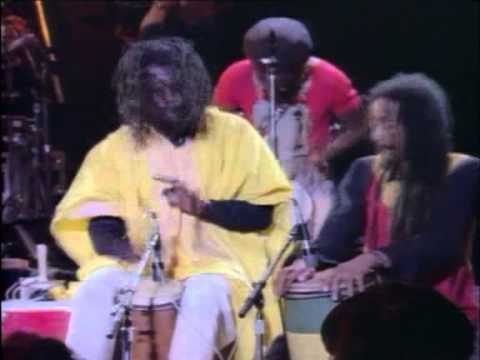
On Rastafari branch and roots

Peter Tosh – Live @ The Greek Theater, Los Angeles, CA, – August 23.1983


By 1960, several Jamaican institutions had begun to show an interest in the counterculture, and to contribute to the demarginalisation of the Rastafari movement which had previously been repressed.
One such institution was the University of the West Indies, which put the Rastafari on its agenda.
In the course of these trajectories, Jamaican public opinion, which had predominantly perceived the Rastafari movement to be a crowd of violent criminals, fools and outcasts, changed successfully.

Particularly, reggae music (as the emancipation of Jamaican popular music) was co-opted.
The result of the blending of Afro-Jamaican Burru and Kumina drum techniques and folk traditions with Afro-American musical styles (including jazz, gospel, rhythm and blues, soul and swing) led to the creation of mento, ska, rocksteady and reggae styles like dancehall, dub, lovers, raggamuffin, rockers and roots, which ‘exerted a tremendous influence on the development of post- World War II popular music globally’.
The musical film The harder they come (1972), starring Jimmy Cliff, contributed enormously to the transnationalisation, popularisation and commercialisation of roots reggae. Not until this style developed, did reggae lyrics exhibit the spirituality and socio-political engagement that came to be seen as the hallmark of roots reggae. And, clearly no one represented the Rastafari rhetoric and feelings of this genre to the world more ably and persuasively than Bob Marley.
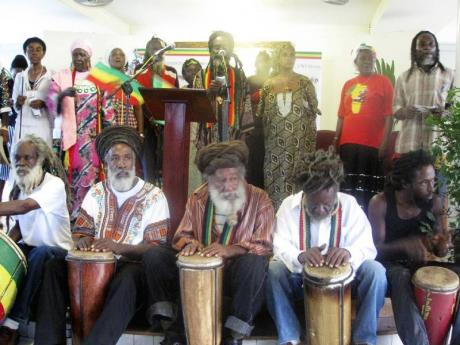
Augier urges Rastafari to accept Jamaica as home


In fact, conscious reggae music, with its recreational, critical and inspirational dimensions, would soon transcend the Rastafari milieu and succeed in conquering a global audience. Today, Rastafari not only has observer status in the United Nations, but even more importantly it has become part of everyday culture in Jamaica, and even abroad.
However, the various Rastafari mansions relate differently to reggae music: whereas Boboshanti reject reggae as part of their culture and only consider drumming and chanting as true Rastafari music, the Theocracy Reign Order of the Nyahbinghi describes its relationship to reggae through the metaphor:

‘Reggae is the branch, Nyahbinghi is the root.’


Text from:
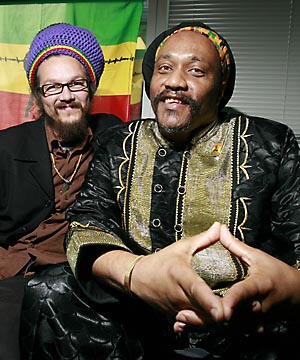
The global–local nexus: popular music studies and the case of Rastafari culture in West Africa
Frank Wittmann, 2011.
Critical Arts: South-North Cultural and Media Studies


GLOBAL SHOWCASE MIXTAPE ONE

Studio mix of all the tracks from Jah Billah ft. Iyano Iyanti “Global Showcase Volume One”. Listen as Monodread, Bademah, Buds Kru, Dr. Obi, Seed Organization, Tony Dubshot, The Dubsmith and Process Rebel vibe out!

ON GLOBAL APPEAL AND SPREAD

It is my belief that the global appeal and spread of the Jamaican Rastafarian movement can be linked to a number of elements or factors.

The first is the pre-eminent position the Bible holds in Rastafarian ritual and ideology. Second, the stress Rastas place on healthy, natural living and their sub sequent rejection of Western artificiality in the realms of food, medicine, social relationships, etc.

Third, Rastas’ outspoken condemnation of the hypocrisy, corruption, injustice, and white biases inherent in colonial and neocolonial societies and institutions.

Fourth, Rastas’ exhortation to the colonized and subjugated peoples of the world to take pride in their ancestral heritage and culture and to look to their own indigenous traditions for guidance and support.

Fifth, the amorphous and decentralized nature of the movement, which gives adherents everywhere the freedom and flexibility to select and interpret specific aspects of Rastafarian religion and culture in a way that is best suited to their own needs and situations. And finally, but perhaps most importantly, the powerful links that exist between the movement and various aspects of contemporary transnational popular culture – namely music, drugs, and fashion.

Found in Conclusion, from:  TRANSNATIONAL POPULAR CULTURE AND THE GLOBAL SPREAD OF THE JAMAICAN RASTAFARIAN MOVEMENT, by  Neil J. Savishinsky.

Source: NWIG: New West Indian Guide / Nieuwe West-Indische Gids, Vol. 68, No. 3/4 (1994)

Image credit: ROBERT KITCHIN/The Dominion Post

MSDT 013 JAH BILLAH FT IYANO IYANTI – CHASE BABYLON – CABALLO REMIXES

MSDT 013 CHASE BABYLON (CABALLO REMIXES)

1.CHASE BABYLON (CABALLO ZOUK BASS REMIX) 02:21
2.CHASE BABYLON (CABALLO REMIX) 03:28

http://www.junodownload.com/products/jah-b…es/2650598-02/

MSDT 013

Brand new Magu Shan Dub Tong release featuring tropical bass specialist and latino resiste founder Caballo.
Caballo remixes Chase Babylon in hardcore future dancehall versions: short but sweet zouk bass remix and a bit heavier 3014 style remix.
Caballo is a producer, MC, and an editor for Mad Decent and Tropical Bass.

Caballo SoundCloud