SANYASI

https://youtu.be/sfOYBrxW6jE

On Reggae as true world music

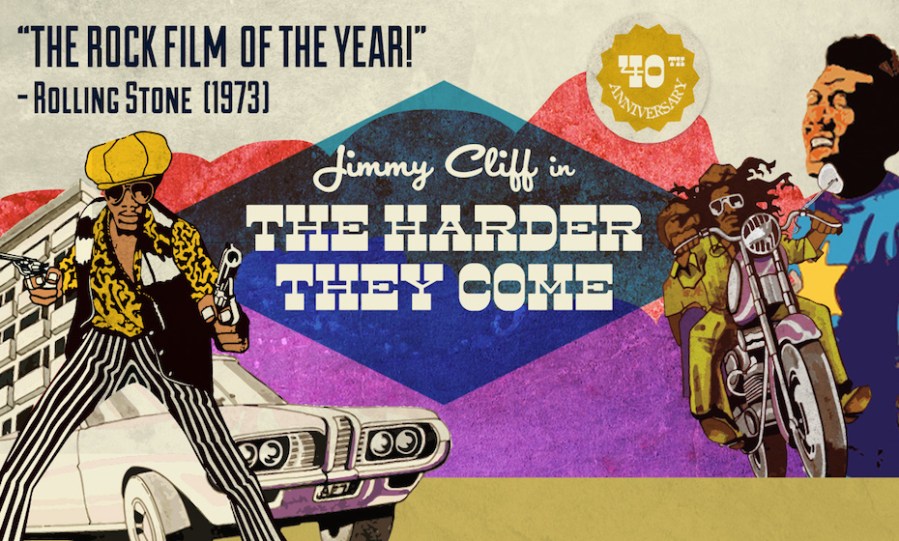
Thirty years after the release of The Harder they Come, the narratives and the images that the movie presented in 1972 remain a central aspect of a broader Jamaican narrative. In the interim, the political scene in Jamaica has experienced volatile and often violent changes.

Large multinational corporations like Sony and MCA have replaced the Mr. Hiltons of the early 1970s, Jamaica has become a bridge for transporting cocaine between South America and the U.S., and “Uzis have replaced hand guns.”

The tourist industry continues to thrive, achieving more and more isolation from the daily lives of most Jamaicans, and Jamaicans continue to migrate to Britain and the U.S. As reggae has spread through the world, like most music of “the black atlantic,” it has undergone tremendous transformations and mixed with rap and other forms of music.

As Maureen Sheridan reports, “reggae today is a true world music. From Siberia to the Seychelle Islands, from Agadir to Tokyo, the talking drum and bass of Jamaica have spread their seductive message, and there are no signs of its movement slowing down.”

Some social theorists and arts intellectuals speculate on the power of popular music style like reggae and rap to trigger social consciousness and radical change.

However, this analysis of The Harder They Come illustrates the precarious balance between music as a revolutionary force and the cooptation of cultural products for “producing, reproducing or destroying the representations that make groups visible for themselves and for others.”

Ultimately, the effectiveness of a cultural product like reggae does not rely in itself as an artistic form, as Herbert Marcuse would argue.

Instead, the subversive potential of the arts lies in the practices and the struggles over meaning around which they are produced and consumed. When new cultures encounter each other and when political processes force different cultural practices, symbols, and values to intersect and interact with each, as in the case of India or Jamaica, interstices
that emerge are the true “location of culture,” defined as an active process of negotiation, redefinition, and re-presentation.

Found in THE LAST “REDEMPTION SONG,” SELLING JAMAICA, from:
Reggae, Ganja, and Black Bodies: Power, Meaning, and the Markings of Postcolonial Jamaica in Perry Henzell s The Harder They Come
by Rubn A. Gaztambide-Fern ndez (2002.), Review of Education, Pedagogy, and Cultural Studies.
Art source: Words in the Bucket.

 

ON MODAL MUSIC

In India, musical modes are called “ragas,” or “states of mind.” A raga can also be defined as a theoretical scale, as a set of proportional  intervals, or as a complex of sounds, each of which has a psychological impact or precise significance. Taken as a whole, they create an emotive atmosphere or state of mind.
Indian psychology envisages nine different sorts of mood or affec­tive states, which are called rasas, “flavors.” They are thus linked to numerical factors, giving us an interesting glimpse into the workings of the brain’s mechanisms and the nature of our aesthetic and emotional reactions. The emotive atmosphere of the ragas is often associated with those that prevail at different times of day and night, or else of the sea­ sons that punctuate the year’s cycle. Like the vegetal world, we react differently in the morning or the evening, in the spring or autumn.
Modal music can only be improvised, since preset forms of melody adversely affect modal consciousness, its internal vision centered on the scale of the mode and the atmosphere it creates. The musician should therefore cruise freely in the inner ambiance created by the mood without ever coming out of it. It is a very intense and a very extraordinary experi­ence, which requires total abstraction from the outer world. In fact, it is a form of meditation that can easily become mystical in character.

The listener is also gradually influenced by the nature of the mode, becoming immersed in a sort of sound bath, which evokes a well-defined feeling. The listener gradually identifies with the emotional scenario evoked. This is why a good performance of modal music can have a profound effect on the audience, making them melancholic, wary, calm, enterprising, aggressive, or tender, according to the atmosphere created by the performer.

In actual fact, any music that seeks to move us – such as what we know as romantic music – requires us to abandon ourselves to the feeling evoked, which takes precedence over technical format. That is why Greek warriors were advised not to listen to certain modes, which stimulate a kind of erotic languor. The Dorian mode was recommended, since it stim­ulates courage and energy. During the Middle Ages, modes deemed to be sensual were forbidden by the church, always sexophobic, not to speak of the augmented fourth, which does in fact open horizons onto the invisible, and was considered to be diabolical, the diabolus in musica.

From Music. The language of the Gods, found in:

Shiva and the Primordial Tradition FROM THE TANTRAS TO THE SCIENCE OF DREAMS  by Alain Danielou (2003.)