On reggae and hip-hop

DJ Kool Herc: ‘When I extended the break, people were ecstatic, because that was the best part of the record to dance to.’

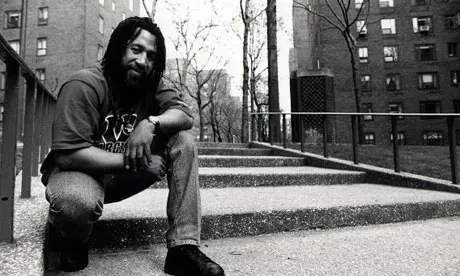
DJ Kool Herc, the chief architect of hip-hop, was born Clive Campbell in Kingston, Jamaica. At the age of twelve, in the winter of 1967, Campbell moved to Bronx, New York. The year he migrated to America, sound-system culture in Jamaica had a ubiquitous presence in Kingston’s lower-class neighbourhoods.
As a twelve-year-old preteen now living in the Bronx, Campbell already possessed a persistent reggae and sound-system consciousness having experienced the innovative music of
Prince Buster, the Skatalites, Don Drummond, and dancehall deejay U-Roy.

At eighteen, Campbell attempted to recreate the Jamaican dancehall experience in the Bronx by spinning the latest Jamaican reggae records at neighbourhood parties, but his young African-American audience was not feeling the reggae beat and did not comprehend the Jamaican patois rhymes of sound-system MCs known as toasters.
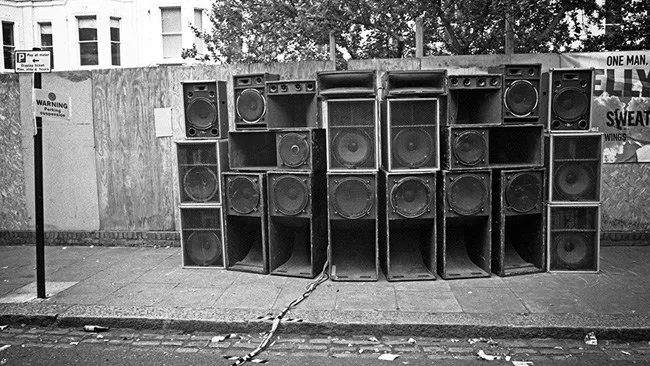
As DJ Kool Herc, Campbell shifted to playing funk records, but his reggae background caused him to favour funk with heavy-weight bass lines and lively percussive drumming. Kool Herc’s record selections were transmitted through hi-fi stereo equipment that spoke with the same awesome power and sonic quality of a roots Jamaican sound system.
The selector, as a deejay is called on a reggae sound system, though using one turntable-the norm during the ’60s and ’70s- was still capable of altering the arrangement of a tune spinning off a record on the turntable platter. The selector skillfully inflicted a completely different sound context on a roots reggae recording by manipulating the controls on the sound system’s amplifier to briefly remove the bass on a tune, accentuate the singing of the song’s vocalist, and highlight the harmony of trumpet, saxophone, and trombone. The selector would create tension in a live remix by bringing back the bass booming like a compact implosion.
By the ’70s, the selector had the ability to vary the sonic texture of the recording by creatively deploying reverb and echo chamber to repeat the sweetest elements of a vocal or horn solo and as a special sound effect that dramatized certain aspects of the recording with a live feel.
American Electronic Music Owes It All to People of Color


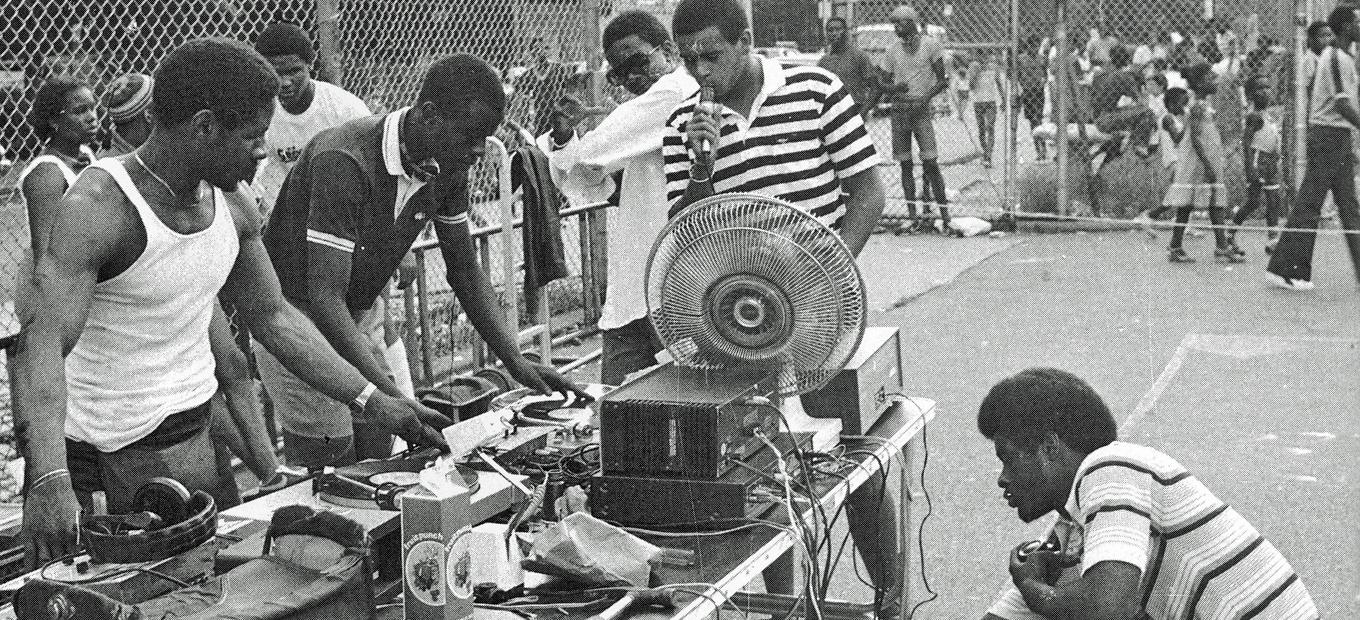
Kool Herc’s approach to creating something fresh from pre ­recorded funk on vinyl was different because he used two turnta­bles. But his approach was similar in that he shared the same objec­tive as the selector, which was to do a live remix of the record to heighten the entertainment of his audience. He extended the intox­icating rhythmic feel of percussive conga, bongo, or trap drums sizzling the break of records like Mandrill’s “Fencewalk,” the Incredible Bongo Band’s “Apache,” and the live version of James Brown’s “Give It Up, Turn It Loose” by playing the same record on two turntables using a sound mixer to seamlessly prolong the per­cussive breakbeats.

Herc pioneered the innovative use of two turntables and a sound mixer as active instruments that became more than passive facilitators, more than just pieces of electronic equipment that merely played what was recorded on vinyl.
Invention Hot Spot: Birth of Hip-Hop in the Bronx, New York, in the 1970s


These electronic instruments were now used to rearrange pre­recorded music to suit the immediate needs of the disco and the dance floor. When DJ Kool Herc rocked a block party, dispatching African­ American funk with the overwhelming sonic power of a reggae sound system, no other deejay dared to compete.
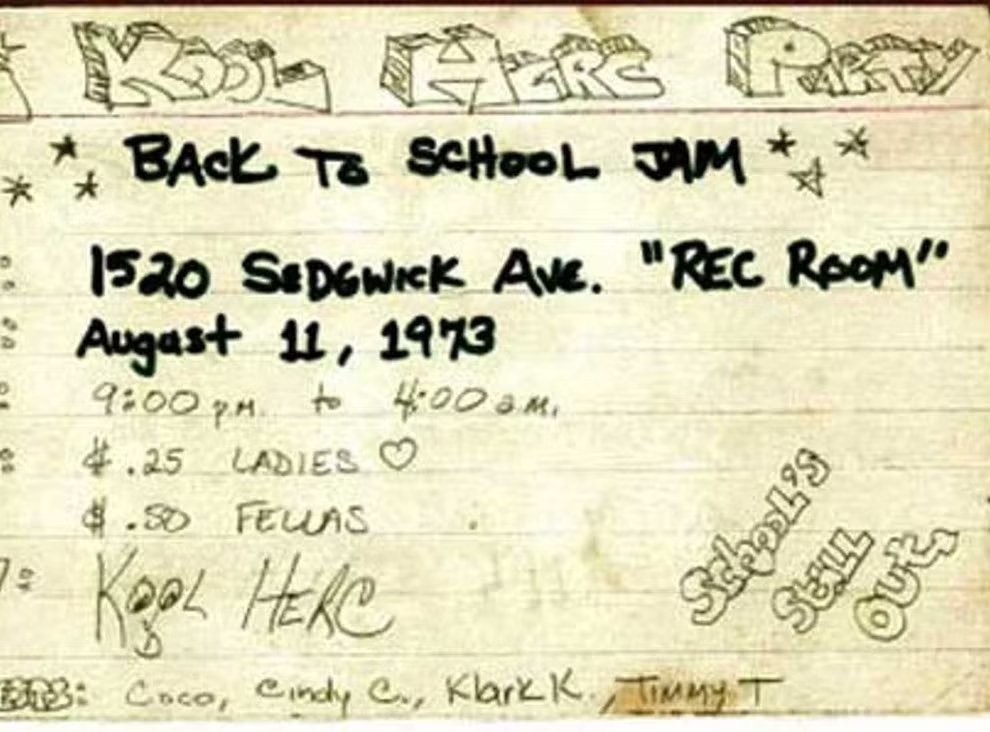
Kool Herc’s party flyer


Text from:
Dubwise : reasoning from the reggae underground
Chapter: Raggamuffin Rap: The Interconnections of Reggae and Hip-Hop
Author:
Klive Walker, 2005.
On Bob Marley’s Lambs Bread

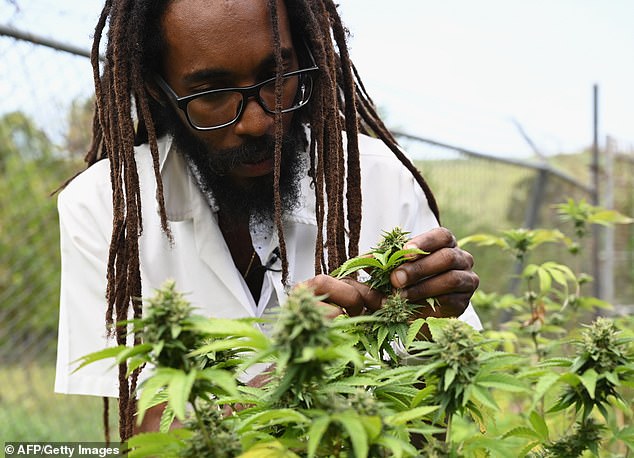
“A Jamaican scientist is recreating a ‘supreme’ marijuana that was smoked by Bob Marley in the 1970s before it was wiped out the following decade during the American war on drugs.

Amid mangos, lychees and other jackfruit, Dr Machel Emanuel has planted a field of cannabis plants measuring dozens of square meters in his lab in the botanical garden of the Biology Department at the University of the West Indies in Kingston.

His specialty: landrace cannabis, which grew naturally in Jamaica before it disappeared as a result of human intervention.”

From: Lost variety of ganja smoked by Bob Marley before it was wiped out during war on drugs is being recreated by expert who wants Jamaica to market marijuana ‘like Champagne in France 
Image source: AFP/Getty Images

On Emperor Haile Sellassie I as the Living God

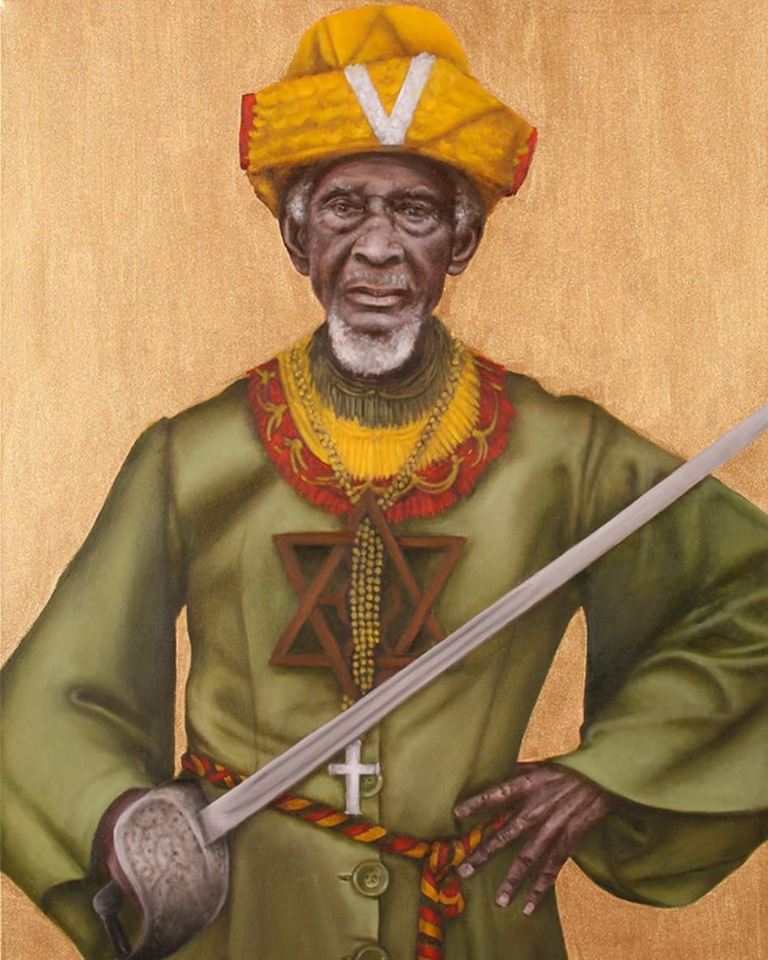
The doctrine that Ras Tafari known to the world as the Emperor Haile Sellassie I of Ethiopia, is the Living God, was developed by several persons independently.

Of these Mr. Leonard P. Howell is genuinely regarded as being the first to preach the divinity of Ras Tafari in Kingston. Howell is said to have fought against King Prempeh of Ashanti (1896), and claimed to speak an African language.

‘The Promised Key’, a basic Ras Tafari text, published in Accra, Ghana around 1930, shows clear evidence of Jamaican authorship. (Jamaica Times 28th May 1938).

Howell also spent several years in the north-eastern U.S., where he came into contact with black and white racism.

Another early preacher was Mr. Joseph Nathaniel Hibbert. Mr. Hibbert was born in Jamaica in 1894, but went with his adopted father to Costa Rica in 1911, returning to Jamaica in 1931. In Costa Rica Mr. Hibbert had leased 28 acres, which he put in bananas. In 1924 he had joined the Ancient Mystic Order of Ethiopia, a Masonic society the constitution of which was revised in 1888, and which became incorporated in 1928 in Panama. Mr. Hibbert became a Master Mason of this Order, and, returning to Jamaica, began to preach Haile Sellassie as the King of Kings, the returned Messiah and the Redeemer of Israel.

This was at Benoah District, St. Andrew, from whence he moved to Kingston to find Howell already preaching Ras Tafari as God at the Redemption Market.  Mr. H. Archibald Dunkley is another man who may claim to have brought the doctrine to Jamaica. Mr. Dunkley was a Jamaican seaman on the Atlantic Fruit Company’s boats, and finally quit the sea on the 8th December 1930, when he landed at Port Antonio off the s.S. St. Mary. Coining to Kingston, Dunkley studied the Bible for two-and-a half years on his own, to determine whether Haile Sellassie was the Messiah whom Garvey had prophesied. Ezekiel 30, I Timothy 6, Revelation 17 and 19 and Isaiah 43 finally convinced him.

In 1933 Dunkley opened his Mission, preaching Ras Tafari as the King of Kings, the Root of David, the Son of the Living God, but not the Father Himself. Other early preachers include Robert Hinds, who joined Howell, and Altamont Read who turned his following over to one Mr. Johnson when he became Mr. N. W. Manley’s bodyguard about 1940.

Found in: HISTORY OF THE MOVEMENT, from:
The Rastafari Movement In Kingston, Jamaica. PART 1
Authors: M. G. SMITH, ROY AUGIER and REX NETTLEFORD
Source: Caribbean Quarterly, Vol. 13, No. 3 (September 1967)

Image source: Colin Edward Murray Art

The Mighty Ginsu, Merk Sicksteen ft. DJ Dont Stop – Step (Babylon Fall Mix)

Watch how di Yardman step! This is straight personal anthem for last month or so haffi be featured right here. Original ragga hip hop vibes is a mus so everyone betta check out this crucial global Kingston – Torino connection. Bigup all anti-badmind friend!
“It is a Movement in Revolutionary Sound, a Movement of a People.”

ON GHETTO NYABINGHI

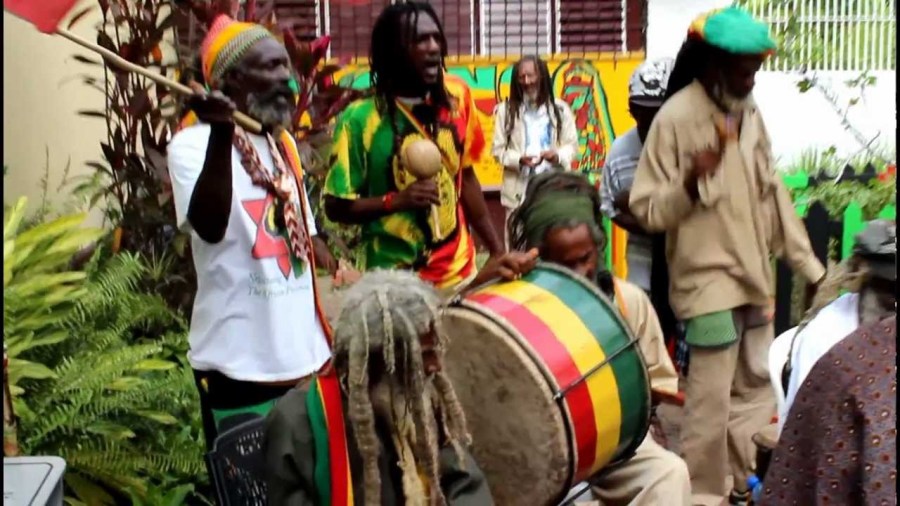
It was in the late 1930s that the Rastafarians began to gain a significant presence in Kingston, and by this time the pre-Rasta Burru peoples (a culture of people in rural Jamaica who were known for their drumming rituals a century ago) had fully settled in the slums.
Unlike the scenario in America, drumming in the Jamaican plantation system was officially tolerated, and the Burru-men, in addition to their role as timekeepers for slave labor, were keepers of African sound. In their search for “anciency” and cultural roots, the Rastafari knelt at the feet of the Burrus, appropriated their looks, style, and musics and, in return, imparted to them a political theology of race. But what was most important to this union of the Burrus and the early Rastafari were the rituals of sound that both communities instituted in the colonial ghettos of Kingston.
Saakana has traced the Burru drumming ritual back to a Ghanaian ceremony that took place around Christmastime. In the 1930s, the ritual of drumming was a customary way of welcoming discharged prisoners back into the folds of the ghetto community.

When the Rastafarians took over the ritual, they modified it, adding their own thematic obsessions to the African songs of insult and praise. From this came the ritual of the nyabinghi, which was said to mean “death to black and white oppressors” and became a term also used to describe the most orthodox members of the Rastafarian creed. In the sacred space of ritual, members of the faith meditated, reasoned with each other, debated Old Testament doctrine, and soundly criticized the exploitative and racist system they were living in. And they beat the drums, chanting down Babylon and conjuring up an alternate space of black community called “Africa.

They did this in the yards of West Kingston, the same spaces that decades later would provide the genesis of the Jamaican sound systems.

Found in Bass History from 

The Sound of Culture: Dread Discourse and Jamaican Sound Systems by LOUIS CHUDE-SOKEI 

(Language, Rhythm, and Sound: Black Popular Cultures into the Twenty-first Century, 1997)