
Second release on brand new AmpliFyah respresenting Sheco madman junglist outa Pula and yours unruly Jah Billah each coming in with vocal and instrumental. Gwan show your support!
Tag: music
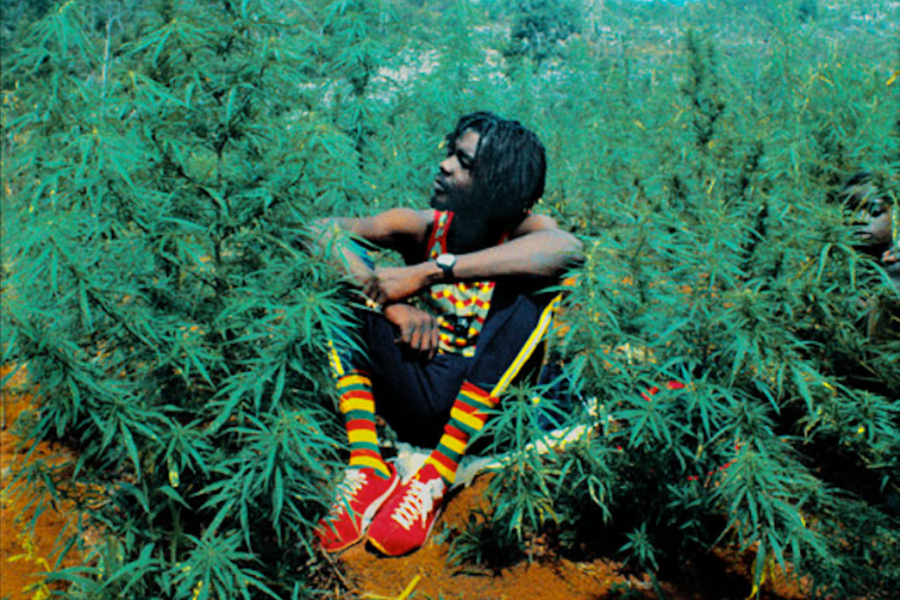
ON GANJA MUSIC
As the central sacrament to Rastafarians, the importance of ganja (marijuana) has been well documented and this importance extends into the sphere of Rasta-influenced Jamaican music. Rasta-influenced musicians were often outspoken advocates of ganja smoking, with songs full of exhortations to “smoke the herb”: Peter Tosh’s “Legalize It,” Bob Marley’s “Kaya” and “Easy Skanking,” Culture’s “International Herb,” Horace Andy’s “Better Collie,” Lee Perry’s “Free Up the Weed” and “Roast Fish, Cornbread and Collie Weed,” and Leroy Horsemouth Wallace’s “Herb Vendor” are a mere few of hundreds of such songs. Yet while it would probably be difficult to find a Jamaican musician of the roots era who was avowedly anti-ganja, some Jamaican musicians nevertheless felt that the prominence of this theme led to a distorted view of reggae in the world at large, as musicians played to the expectations of their international audiences. Paul Henton voiced a sentiment common among some Jamaican musicians, who felt that their colleagues sung about ganja at least in part “just because they know that the white people love it. If tomorrow morning the people or the fans say ‘Okay, we don’t want to hear anymore of this ganja stuff,’ they’ll stop singing about it and stop promoting it!”
Inside Jamaica, where ganja songs have flourished within several genres of Jamaican popular music (such as roots reggae and ragga), the situation has been more complex. Ganja was declared illegal in Jamaica in 1913 and for the decades since, its illegality has been a primary tool used by the ruling class in the social control of working-class Jamaicans. Correspondingly, it became a combustible element in the constellation of factors (including music, Rastafari, class conflict) that factor into Jamaica’s social tensions. As such, it is not surprising that ganja played a central role in the blended class, cultural, and political content that exploded in Jamaica in the 1970s and that arguably found its most powerful and passionate articulation in roots reggae. This centrality can be felt in the comments of legendary drummer Leroy “Horsemouth” Wallace: “The people respect you in Jamaica when you can put forty and fifty bag a ganja on a plane! We don’t call that drugs. That is ganja business. . . . We do those things like we are revolutionary. We put forty bag on a plane and feel good. . . . We send those so people in America could smoke the good ganja, not just for money alone.”
Found in: The Ganja Factor, from: DUB Soundscapes and shattered songs in Jamaican reggae by Michael E. Veal. Wesleyan University Press 2007.
Image source: Peter Tosh
ON COMPUTER MUSIC
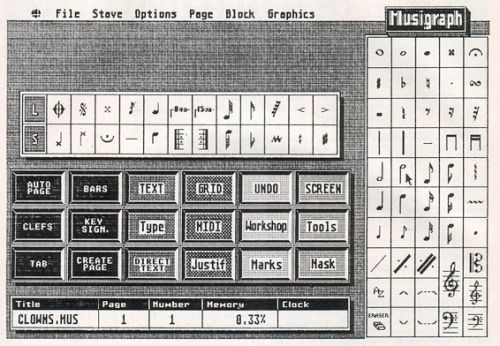
Consider this. Arriving at your studio, a young student sits down at a computer with a synthesizer keyboard in front of it. Putting on the headphones, he begins his ritualistic playing of the Minuet in G using a harpsichord setting on the synthesizer. After yielding to the temptation to punch all of the buttons on the synthesizer (which is always amusing), he puts a disk into the computer and does rhythm drills. (He’ll tell you that doing rhythm drills with the drum sounds of the synthesizer is much better than hand clapping.) At the end of his private lesson, you suggest that he drill his IV chords using the harmony program. Meanwhile a high school student, at the computer and synthesizer of course, is
putting the finishing touches on his original composition. It’s a piece for piano, violin and synthesizer. He was able to enter all of the parts from keyboard and is now editing the notated score that appears on the computer screen. After his lesson he’ll have the computer print out the violin part. Rehearsal is tomorrow and he wants to get feedback from the violinist . . .This is not a scenario from the twenty-first century. It’s happening today.
Found in Computer Applications in Music: A quick lesson in basic technology and terminology by Randall Faber.
Source: American Music Teacher, Vol. 37, No. 6 (June/July 1988), pp. 22-23, 54
Image source: http://www.muzines.co.uk
ON GLOBAL APPEAL AND SPREAD
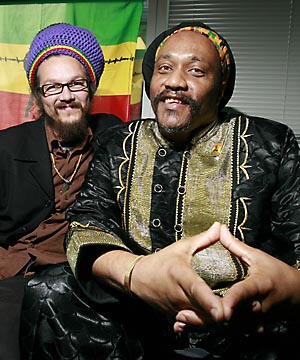
It is my belief that the global appeal and spread of the Jamaican Rastafarian movement can be linked to a number of elements or factors.
The first is the pre-eminent position the Bible holds in Rastafarian ritual and ideology. Second, the stress Rastas place on healthy, natural living and their sub sequent rejection of Western artificiality in the realms of food, medicine, social relationships, etc.
Third, Rastas’ outspoken condemnation of the hypocrisy, corruption, injustice, and white biases inherent in colonial and neocolonial societies and institutions.
Fourth, Rastas’ exhortation to the colonized and subjugated peoples of the world to take pride in their ancestral heritage and culture and to look to their own indigenous traditions for guidance and support.
Fifth, the amorphous and decentralized nature of the movement, which gives adherents everywhere the freedom and flexibility to select and interpret specific aspects of Rastafarian religion and culture in a way that is best suited to their own needs and situations. And finally, but perhaps most importantly, the powerful links that exist between the movement and various aspects of contemporary transnational popular culture – namely music, drugs, and fashion.
Found in Conclusion, from: TRANSNATIONAL POPULAR CULTURE AND THE GLOBAL SPREAD OF THE JAMAICAN RASTAFARIAN MOVEMENT, by Neil J. Savishinsky.
Source: NWIG: New West Indian Guide / Nieuwe West-Indische Gids, Vol. 68, No. 3/4 (1994)
Image credit: ROBERT KITCHIN/The Dominion Post
ON REGGAE RASTA
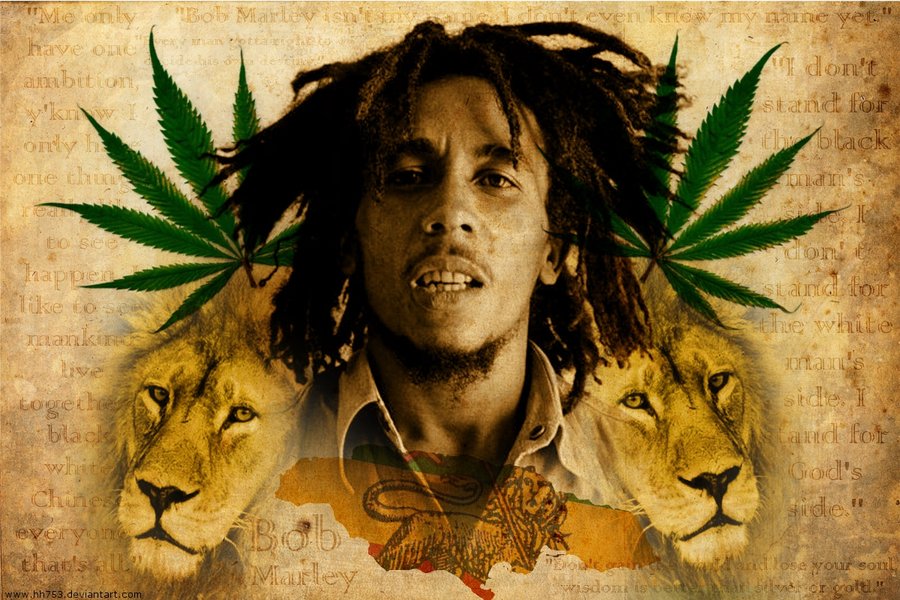
Reggae, the music synonymous with Rastafari and its icon. Bob Marley, was created from the blending of African, neo-African, and African-American musical styles. The Rastafaris were chiefly responsible for introducing the African and neo-African elements into reggae music. Linking reggae and the culture of Rastafari to Africa, Mervyn Alleyne argues that reggae, because of its strong connections to Rastafari and its socially and politically conscious lyrics, is representative of the “traditional African fusion of the secular and religious and the symbiotic interaction of religion (including music and dance) and politics.” Janet DeCosmo also contends that reggae can be seen as a modern continuation of social commentary that is expressed in the oral traditions of African culture.
These African elements tend to underscore the fact that some of the Caribbean musical styles have strong links to an African musical past. As Neil Savishinsky put it, “reggae, along with other forms of African-American and Caribbean music, may in fact, represent a kind of ‘re-Africanisation’ process….”
More importantly, however, is the fact that reggae music, in addition to being a powerful medium of communicating the message and spirit of Rastafari, has also provided Rastafaris with a distinct identity. It [reggae] is now regarded as “one of the most essential elements of religious expression and shared group identity”.
Found in Reafricanizing the Caribbean: Black Power and Rastafari Styles.
From: Resistance, Essentialism, and Empowerment in Black Nationalist Discourse in the African Diaspora: A Comparison of the Back to Africa, Black Power, and Rastafari Movements.
By: Simboonath Singh in Journal of African American Studies, Winter 2004, Vol. 8, No. 3, pp. 18-36.
Bob Marley Wallpapeer by HH735
ON GHETTO NYABINGHI
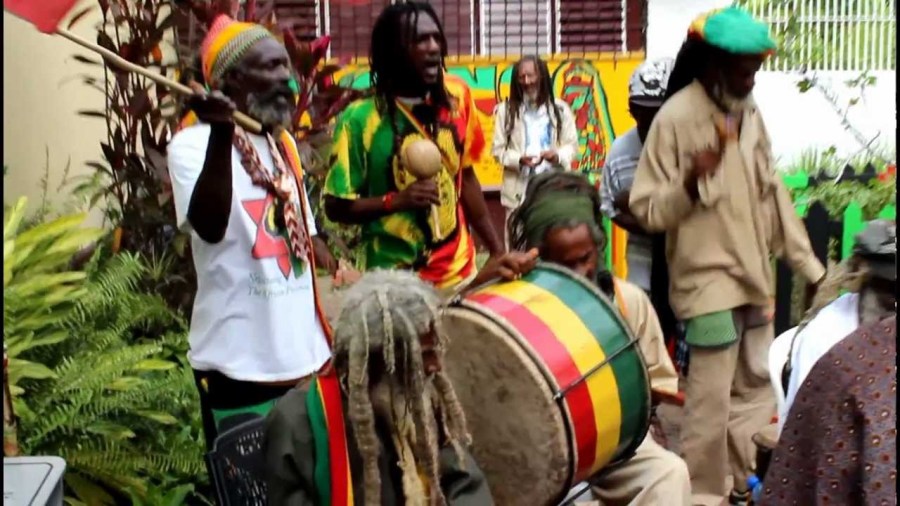
It was in the late 1930s that the Rastafarians began to gain a significant presence in Kingston, and by this time the pre-Rasta Burru peoples (a culture of people in rural Jamaica who were known for their drumming rituals a century ago) had fully settled in the slums.
Unlike the scenario in America, drumming in the Jamaican plantation system was officially tolerated, and the Burru-men, in addition to their role as timekeepers for slave labor, were keepers of African sound. In their search for “anciency” and cultural roots, the Rastafari knelt at the feet of the Burrus, appropriated their looks, style, and musics and, in return, imparted to them a political theology of race. But what was most important to this union of the Burrus and the early Rastafari were the rituals of sound that both communities instituted in the colonial ghettos of Kingston.
Saakana has traced the Burru drumming ritual back to a Ghanaian ceremony that took place around Christmastime. In the 1930s, the ritual of drumming was a customary way of welcoming discharged prisoners back into the folds of the ghetto community.
When the Rastafarians took over the ritual, they modified it, adding their own thematic obsessions to the African songs of insult and praise. From this came the ritual of the nyabinghi, which was said to mean “death to black and white oppressors” and became a term also used to describe the most orthodox members of the Rastafarian creed. In the sacred space of ritual, members of the faith meditated, reasoned with each other, debated Old Testament doctrine, and soundly criticized the exploitative and racist system they were living in. And they beat the drums, chanting down Babylon and conjuring up an alternate space of black community called “Africa.“
They did this in the yards of West Kingston, the same spaces that decades later would provide the genesis of the Jamaican sound systems.
Found in Bass History from
The Sound of Culture: Dread Discourse and Jamaican Sound Systems by LOUIS CHUDE-SOKEI
(Language, Rhythm, and Sound: Black Popular Cultures into the Twenty-first Century, 1997)
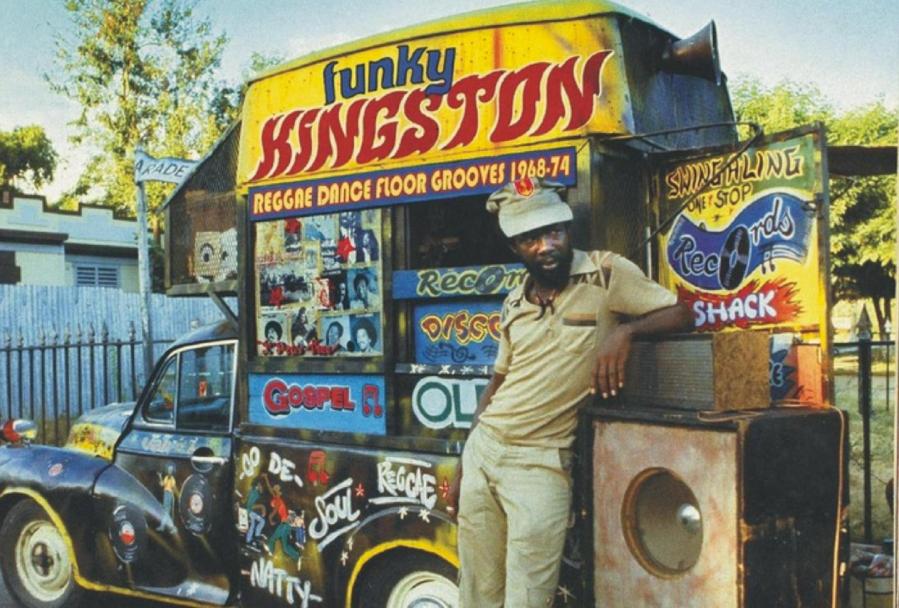
From Kingston to Camden: Britain’s long lasting affinity for Sound system culture.

Since the birth of subcultures, music has played as much of a role in defining them as the clothes and views people have chosen have. Musical influence was diverse and widespread, sounds from Jamaica and the Caribbean fuelled the all night ska and reggae dances of the 1980’s whilst British bands such as The Beatles opened up the hearts and minds of the tie dye, trippy happy hippies of the 1960’s.
Before sound systems or even electricity had been invented, music has been utilised to bring people together, to celebrate and to convey messages. Before subcultures even existed, music played a key role in society and was enjoyed by both the rich and poor.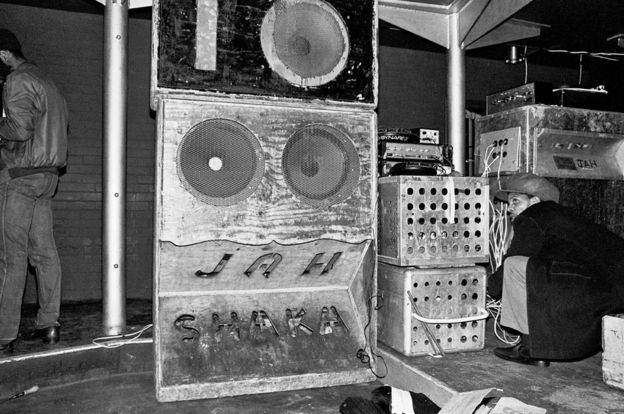
Whilst the era of rock n roll was causing girls to faint and guys to invest in Brylcream, thousands of miles away in the ghettos of Kingston, Sound system culture was starting to cause vibrations. At the…
View original post 1,209 more words
HAZRAT INAYAT KHAN ON NATURE’S MUSIC
Nature’s Music
When we pay attention to nature’s music we find that every thing on the earth contributes to its harmony. The trees joyously wave their branches in rhythm with the wind; the sound of the sea, the murmuring of the breeze, the whistling of the wind through the rocks, hills and mountains, the flash of the lightning, and the crash of the thunder, the harmony of the sun and moon, the movements of the stars and planets, the blooming of the flower, the fading of the leaf, the regular alternation of morning, evening, noon and night – all reveal to the seer the music of nature. The insects have their concerts and ballets, and the choirs of birds chant in unison their hymns of praise. Dogs and cats have their orgies, foxes and wolves have their soirees musicales in the forest, while tigers and lions hold their operas in the wilderness. Music is the only means of understanding among birds and beasts. This may be seen by the gradation of pitch and volume of tone, the manner of tune, the number of repetitions, and the duration of their various sounds. These convey to their fellow-creatures the time for joining the flock, the warning of coming danger, the declaration of war, the feeling of love, and the sense of sympathy, displeasure, passion, anger, fear and jealousy – making a language of itself.
Hazrat Inayat Khan in The Mysticism of Sound Vol. 2
A SPOKEN WORD
A word spoken in a certain tone shows subservience, and the same word spoken in a different tone expresses command; a word spoken in a certain pitch shows kindness, and the same word spoken in a different pitch expresses coldness. Words spoken in a certain rhythm show willingness, and the same words express unwillingness when spoken at a different degree of speed. Up to the present day the ancient languages Sanskrit, Arabic and Hebrew cannot be mastered by simply learning the words, pronunciation and grammar, because a particular rhythmic and tonal expression is needed. The word in itself is frequently insufficient to express the meaning clearly. The student of language by keen study can discover this. Even modern languages are but a simplification of music. No words of any language can be spoken in one and the same way without the distinction of tone, pitch, rhythm, accent, pause and rest. A language however simple cannot exist without music in it; music gives it a concrete expression. For this reason a foreign language is rarely spoken perfectly; the words are learnt, but the music is not mastered.
Language may be called the simplification of music; music is hidden within it as the soul is hidden in the body; at each step toward simplification the language has lost some of its music. A study of ancient traditions reveals that the first divine messages were given in song, as were the Psalms of David, the Song of Solomon, the Gathas of Zoroaster and the Gita of Krishna.
When language became more complex, it closed as it were one wing, the sense of tone; keeping the other wing, the sense of rhythm, outspread. This made poetry a subject distinct and separate from music. In ancient times religions, philosophies, sciences and arts were expressed in poetry. Parts of the Vedas, Puranas, Ramayana, Mahabharata, Zend-Avesta, Kabbala, and Bible are to be found in verse, as well as different arts and sciences in the ancient languages. Among the scriptures only the Quran is entirely in prose, and even this is not devoid of poetry. In the East, even in recent times, not only manuscripts of science, art and literature were written in poetry, but the learned even discoursed in verse. In the next stage, man freed the language from the bond of rhythm and made prose out of poetry. Although man has tried to free language from the trammels of tone and rhythm, yet in spite of this the spirit of music still exists. Man prefers to hear poetry recited and prose well read, which is in itself a proof of the soul seeking music even in the spoken word.
 OUT OF MANY COME DUB AND OUT OF DUB COME ONE