
#vaticaen
19 artists around the world gather around for this unique project out on Vaticaen label.
Versitile versions galore including Jah Billah track featuring Ethiopian chant in a mix.
Dub, trap, jungle and more all available for free download!
#vaticaen
19 artists around the world gather around for this unique project out on Vaticaen label.
Versitile versions galore including Jah Billah track featuring Ethiopian chant in a mix.
Dub, trap, jungle and more all available for free download!
#raggamuffin
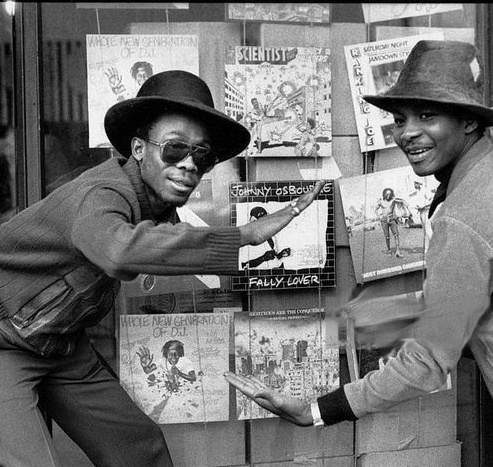
Although Seaga‘s Jamaica, Thatcher‘s England, and Reagan‘s America gave ragga the kind of painful birth necessary for their mythic function, they really were always there. They were overshadowed by the spectacle of Rasta and its pious moralisms, but they were there nonetheless, stalking Jamaica’s neocolonial streets and consuming American cowboy and gangster films as well as the Old Testament and Pentecostalism.
They existed within Rasta from the moment it defined itself as an urban phenomenon and as a place for those suppressed by the hierarchical and color-stratified social structure of Jamaica.
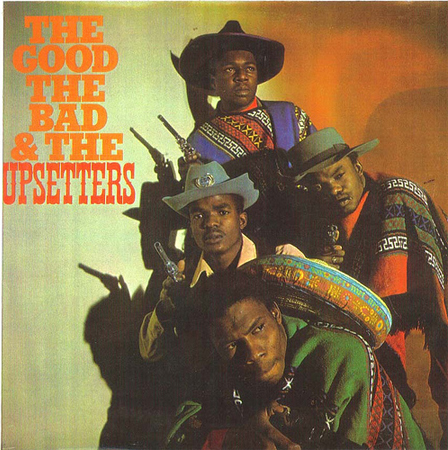
During the sixties, before the hegemony of Rasta in the consciousness of ghetto sound, the earliest manifestation of the ragga can be located in the rude-boy phenomenon which swept the tiny island. The rudies, like today’s “gangbangers” in America, were young males who had little access to education and were victims of the incredible unemployment endemic to Third World urban centers. Their political consciousness was as developed as the Rastafari, but where the Rasta solution was one which often refused to engage directly with the harsh realities of ghetto and Third World life and frequently got lost in cloudy moments of rhetoric and myth (“roots and culture“), the rudies clung fiercely to “reality“-that trope central to today’s ragga/dancehall culture. They terrorized the island, modeling themselves after
their heroes from American films and glorying in their outlaw status. They killed, robbed, and looted, celebrating their very stylish nihilism. And ska and reggae – especially DJ-reggae, the beginning of rap/hip hop – were their musics.
Today the dreadlocks vision has been superseded-at least in the realm of sound and culture-by the rudie vision. The crucial differences between them can be seen quite vividly in their relationship to Babylon. Where in Rasta and other forms of popular Negritude there has always been some degree of nostalgia for a precolonial/preindustrial/precapitalist Africa, raggamuffin culture is very forward looking and capitalist oriented-as are most black people, despite the fantasies of many self-appointed nationalist leaders. These rudies focus their gaze, instead, on America, absorbing commodity culture from the fringes of the global marketplace, responding to it positively.
This means that in the context of a Third World ghetto where there are more guns per capita than anywhere else in the world, where legitimate employment is often a fantasy, where the drug trade and music provide the only available options for success, these young men find affirmation in the various messages that radiate out from America, an America that is not the “center” but rather an imagined source of transmission. Messages like The Godfather get picked up and translated into island style.
For example, one of the titles of utmost dancehall respect is “don.”

The raggamuffin pantheon is full of DJs with names like Clint Eastwood, Johnny Ringo, Al Capone, Josey Wales, and Dillinger; and today’s dons boast names like Bounty Killer, Shabba Ranks (named after a famous Jamaican gunman), and John Wayne. Also, the Jamaican underworld has always been full of characters who inscribed themselves into ghetto myth by renaming themselves in much the same way.
Male identity in this context is a necessary pastiche, and the allegorical representations of America’s dreams of itself become rewritten with a pen soaked in the blood of colonialism, slavery, and black ghet-to style. The gunfighter/outlaw image has always been there in reggae; it is now, however, without overt references to the Western world as the “Sheriff,” as in Bob Marley and the Wailers‘ classic “I Shot the Sheriff.”
For the ragga, this metaphor is no longer apt, for now they shoot each other in a lawless postcolonial terrain. Indeed, Ninjaman has described Jamaica as a “Cowboy Town.”

These names-and the notion of crime as political/cultural resistance that they signify – were there during Rasta‘s moment, but where the more Afrocentric embraced the Marley vision, the ghetto youth, the “bad-bwoys,” were smuggling in specialized weaponry like M16s, Glocks, and Bush-masters, killing each other and following their favorite sound systems around the island.
And, of course, the cocaine and marijuana trade was booming. In fact, it was booming in such a way that in the 1980s a few of the more enterprising Yardies invested some of this money which came to the ghetto in -believe it or not- state-of-the-art digital computer technology. Thus began what Jah Fish (Murray Elias), an avid follower of Jamaican music, has called the “the modem era” of Afro-Caribbean sound and culture.
Found in:
Post-Nationalist Geographies: Rasta, Ragga, and Reinventing Africa
Author: Louis Chude-Sokei
Source: African Arts, Vol. 27, No. 4 (Autumn, 1994),
Published by: UCLA James S. Coleman African Studies Center
Stable URL: http://www.jstor.org/stable/3337324
#sensational
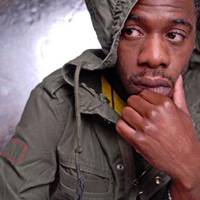
If you don’t know by now step correct and re-frame Sensational of Crooklyn fame: subterranean lyrics over over lo fi dub noise beats, same as it ever was.
Originally grazing with Wordsound label, post apocalyptic illbient stable, alongside Bill Laswell rocking blue light torch of avant-garde hip hop and bass music since 1999, here comes Sensational VS Abu Amu with 2 tracks that don’t disappoint.
Wu Tang Clan acapellas and King Tubby riddims were pioneer champion mashups choice by Macro Dubplates and staple of Jah Billah selection since way back when.
Seems there is Wu Tang everything prophecy coming true. We reported about Wu+Fugazi as Wugazi before, here comes:
Wu-Tang Clan x Led Zeppelin – The Wu-Tang Zeppelin
Wu-Tang Vs. The Beatles – Enter the Magical Mystery Chambers
Wu-Tang Clan vs ATCQ – A Clan Called Wu : Enter the Marauders
Wu-Tang Clan Vs. Pink Floyd – The Dark Side of the Wu
Wu-Tang Clan – Wu-Tang Meets Rhythm and Blues
Wu-Tang Clan – Wu-Tang Meets Jazz
…And many more out there in digital wilderness including Wu Christmas mashups!
BONUS:
Wu-Tang Clan vs B.B. King – C.R.E.A.M
One of the most haunting remixes of all times with 85M views:
Wu-Tang Clan – Back In The Game – Phoniks Remix
Wu-Tang Clan vs Notorious B.I.G. – The Notorious Wu
Doctor Heba outa Dub & Roll records crew teams up with legendary underground rapper General Two to produce original dub rap album Bosanski Lonac.
Yes you hear that right. This is not dub-hop or mashup remix style music but original dubwise riddims produced specially for General Two lyrics and mixed live in session.
Entire album mix is filmed and live dubwise action shown without any cuts or edits documenting this unique release.
Favourite track:
Dole u Bosni
Download and support:
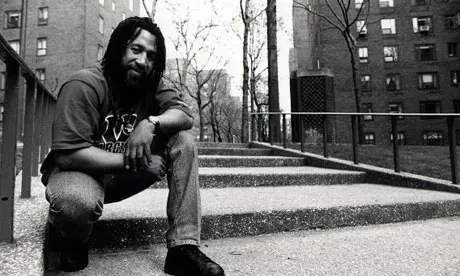
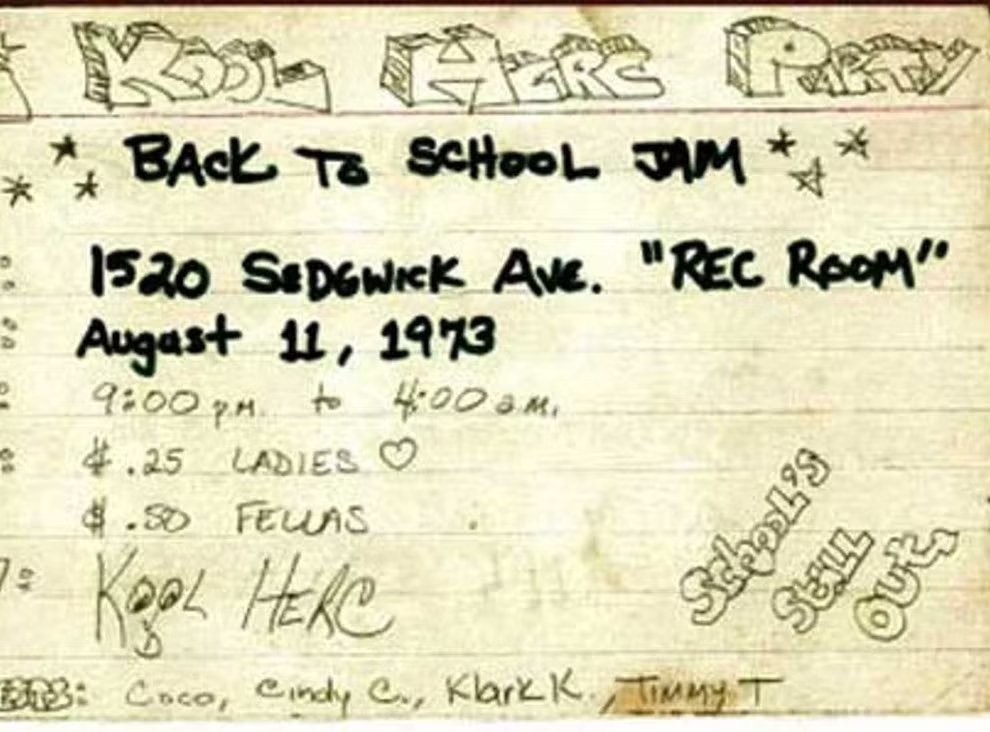
DJ Kool Herc, the chief architect of hip-hop, was born Clive Campbell in Kingston, Jamaica. At the age of twelve, in the winter of 1967, Campbell moved to Bronx, New York. The year he migrated to America, sound-system culture in Jamaica had a ubiquitous presence in Kingston’s lower-class neighbourhoods.
As a twelve-year-old preteen now living in the Bronx, Campbell already possessed a persistent reggae and sound-system consciousness having experienced the innovative music of
Prince Buster, the Skatalites, Don Drummond, and dancehall deejay U-Roy.
At eighteen, Campbell attempted to recreate the Jamaican dancehall experience in the Bronx by spinning the latest Jamaican reggae records at neighbourhood parties, but his young African-American audience was not feeling the reggae beat and did not comprehend the Jamaican patois rhymes of sound-system MCs known as toasters.
As DJ Kool Herc, Campbell shifted to playing funk records, but his reggae background caused him to favour funk with heavy-weight bass lines and lively percussive drumming. Kool Herc’s record selections were transmitted through hi-fi stereo equipment that spoke with the same awesome power and sonic quality of a roots Jamaican sound system.
The selector, as a deejay is called on a reggae sound system, though using one turntable-the norm during the ’60s and ’70s- was still capable of altering the arrangement of a tune spinning off a record on the turntable platter. The selector skillfully inflicted a completely different sound context on a roots reggae recording by manipulating the controls on the sound system’s amplifier to briefly remove the bass on a tune, accentuate the singing of the song’s vocalist, and highlight the harmony of trumpet, saxophone, and trombone. The selector would create tension in a live remix by bringing back the bass booming like a compact implosion.
By the ’70s, the selector had the ability to vary the sonic texture of the recording by creatively deploying reverb and echo chamber to repeat the sweetest elements of a vocal or horn solo and as a special sound effect that dramatized certain aspects of the recording with a live feel.
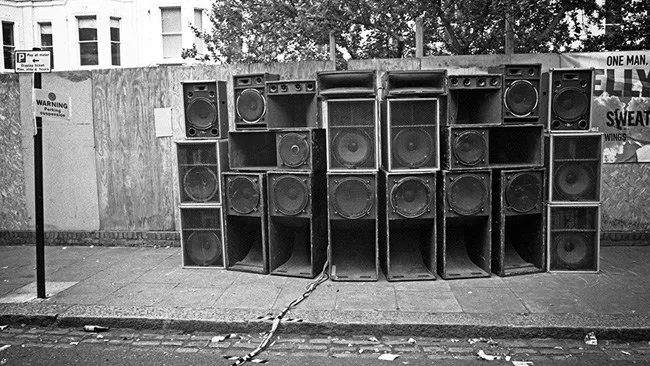
Kool Herc’s approach to creating something fresh from pre recorded funk on vinyl was different because he used two turntables. But his approach was similar in that he shared the same objective as the selector, which was to do a live remix of the record to heighten the entertainment of his audience. He extended the intoxicating rhythmic feel of percussive conga, bongo, or trap drums sizzling the break of records like Mandrill’s “Fencewalk,” the Incredible Bongo Band’s “Apache,” and the live version of James Brown’s “Give It Up, Turn It Loose” by playing the same record on two turntables using a sound mixer to seamlessly prolong the percussive breakbeats.
Herc pioneered the innovative use of two turntables and a sound mixer as active instruments that became more than passive facilitators, more than just pieces of electronic equipment that merely played what was recorded on vinyl.
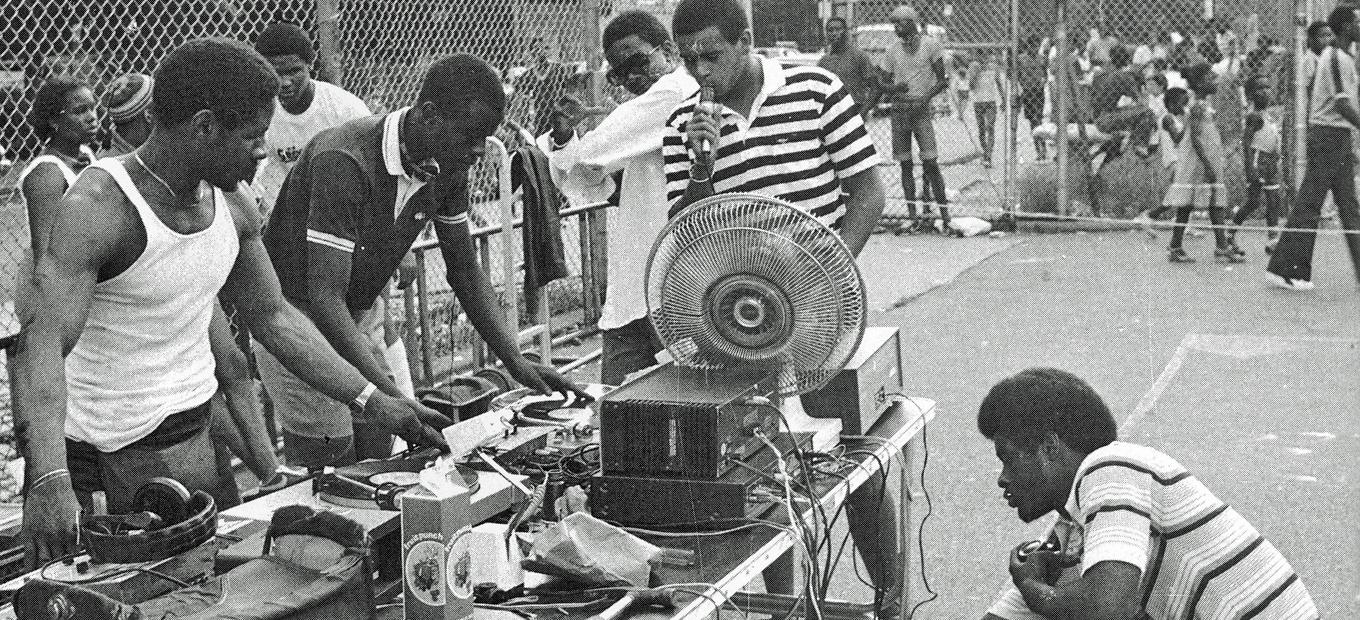
These electronic instruments were now used to rearrange prerecorded music to suit the immediate needs of the disco and the dance floor. When DJ Kool Herc rocked a block party, dispatching African American funk with the overwhelming sonic power of a reggae sound system, no other deejay dared to compete.
Text from:
Dubwise : reasoning from the reggae underground
Chapter: Raggamuffin Rap: The Interconnections of Reggae and Hip-Hop
Author:
Klive Walker, 2005.
Since digital revolution, good music is not lacking, just in need of digital crate diggin.
Back in 2011 Amerigo Gazaway crafted this musical gem:
Check out full album and instrumentals.
If you getting into the art of Koi keeping, Japan pop beats and Wu Tang flips, check out malakai beats:
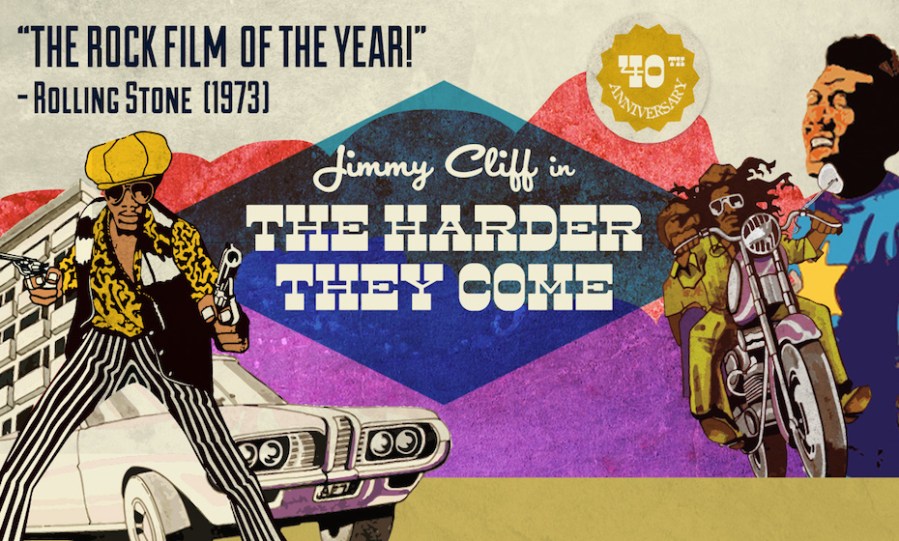
Thirty years after the release of The Harder they Come, the narratives and the images that the movie presented in 1972 remain a central aspect of a broader Jamaican narrative. In the interim, the political scene in Jamaica has experienced volatile and often violent changes.
Large multinational corporations like Sony and MCA have replaced the Mr. Hiltons of the early 1970s, Jamaica has become a bridge for transporting cocaine between South America and the U.S., and “Uzis have replaced hand guns.”
The tourist industry continues to thrive, achieving more and more isolation from the daily lives of most Jamaicans, and Jamaicans continue to migrate to Britain and the U.S. As reggae has spread through the world, like most music of “the black atlantic,” it has undergone tremendous transformations and mixed with rap and other forms of music.
As Maureen Sheridan reports, “reggae today is a true world music. From Siberia to the Seychelle Islands, from Agadir to Tokyo, the talking drum and bass of Jamaica have spread their seductive message, and there are no signs of its movement slowing down.”
Some social theorists and arts intellectuals speculate on the power of popular music style like reggae and rap to trigger social consciousness and radical change.
However, this analysis of The Harder They Come illustrates the precarious balance between music as a revolutionary force and the cooptation of cultural products for “producing, reproducing or destroying the representations that make groups visible for themselves and for others.”
Ultimately, the effectiveness of a cultural product like reggae does not rely in itself as an artistic form, as Herbert Marcuse would argue.
Instead, the subversive potential of the arts lies in the practices and the struggles over meaning around which they are produced and consumed. When new cultures encounter each other and when political processes force different cultural practices, symbols, and values to intersect and interact with each, as in the case of India or Jamaica, interstices
that emerge are the true “location of culture,” defined as an active process of negotiation, redefinition, and re-presentation.
Found in THE LAST “REDEMPTION SONG,” SELLING JAMAICA, from:
Reggae, Ganja, and Black Bodies: Power, Meaning, and the Markings of Postcolonial Jamaica in Perry Henzell s The Harder They Come
by Rubn A. Gaztambide-Fern ndez (2002.), Review of Education, Pedagogy, and Cultural Studies.
Art source: Words in the Bucket.
One For The Haters Incorporated.
4th In The ONI Rmx Series.
Still On That 8Bit Dub Hop Tip.
youtu.be/c6hMm-fw52s
 OUT OF MANY COME DUB AND OUT OF DUB COME ONE