ON GLOBAL APPEAL AND SPREAD

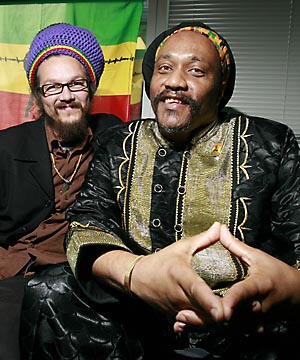
It is my belief that the global appeal and spread of the Jamaican Rastafarian movement can be linked to a number of elements or factors.

The first is the pre-eminent position the Bible holds in Rastafarian ritual and ideology. Second, the stress Rastas place on healthy, natural living and their sub sequent rejection of Western artificiality in the realms of food, medicine, social relationships, etc.

Third, Rastas’ outspoken condemnation of the hypocrisy, corruption, injustice, and white biases inherent in colonial and neocolonial societies and institutions.

Fourth, Rastas’ exhortation to the colonized and subjugated peoples of the world to take pride in their ancestral heritage and culture and to look to their own indigenous traditions for guidance and support.

Fifth, the amorphous and decentralized nature of the movement, which gives adherents everywhere the freedom and flexibility to select and interpret specific aspects of Rastafarian religion and culture in a way that is best suited to their own needs and situations. And finally, but perhaps most importantly, the powerful links that exist between the movement and various aspects of contemporary transnational popular culture – namely music, drugs, and fashion.

Found in Conclusion, from:  TRANSNATIONAL POPULAR CULTURE AND THE GLOBAL SPREAD OF THE JAMAICAN RASTAFARIAN MOVEMENT, by  Neil J. Savishinsky.

Source: NWIG: New West Indian Guide / Nieuwe West-Indische Gids, Vol. 68, No. 3/4 (1994)

Image credit: ROBERT KITCHIN/The Dominion Post
ON REGGAE RASTA


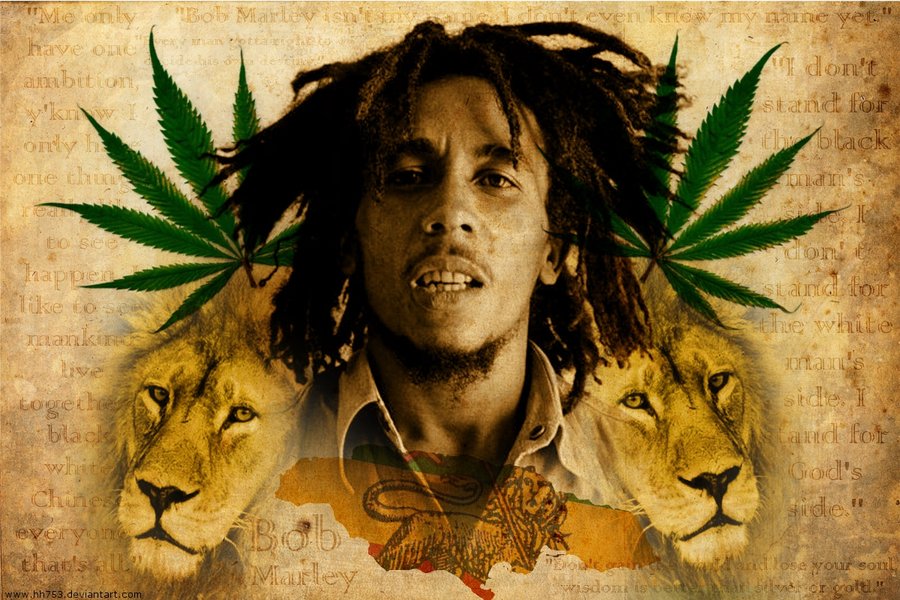
Reggae, the music synonymous with Rastafari and its icon. Bob Marley, was created from the blending of African, neo-African, and African-American musical styles. The Rastafaris were chiefly responsible for introducing the African and neo-African elements into reggae music. Linking reggae and the culture of Rastafari to Africa, Mervyn Alleyne argues that reggae, because of its strong connections to Rastafari and its socially and politically conscious lyrics, is representative of the “traditional African fusion of the secular and religious and the symbiotic interaction of religion (including music and dance) and politics.” Janet DeCosmo also contends that reggae can be seen as a modern continuation of social commentary that is expressed in the oral traditions of African culture.

These African elements tend to underscore the fact that some of the Caribbean musical styles have strong links to an African musical past. As Neil Savishinsky  put it, “reggae, along with other forms of African-American and Caribbean music, may in fact, represent a kind of ‘re-Africanisation’ process….”

More importantly, however, is the fact that reggae music, in addition to being a powerful medium of communicating the message and spirit of Rastafari, has also provided Rastafaris with a distinct identity. It [reggae] is now regarded as “one of the most essential elements of religious expression and shared group identity”.

Found in  Reafricanizing the Caribbean: Black Power and Rastafari Styles.

From:  Resistance, Essentialism, and Empowerment in Black Nationalist Discourse in the African Diaspora: A Comparison of the Back to Africa, Black Power, and Rastafari Movements.

By:  Simboonath Singh in  Journal of African American Studies, Winter 2004, Vol. 8, No. 3, pp. 18-36.

Bob Marley Wallpapeer by HH735

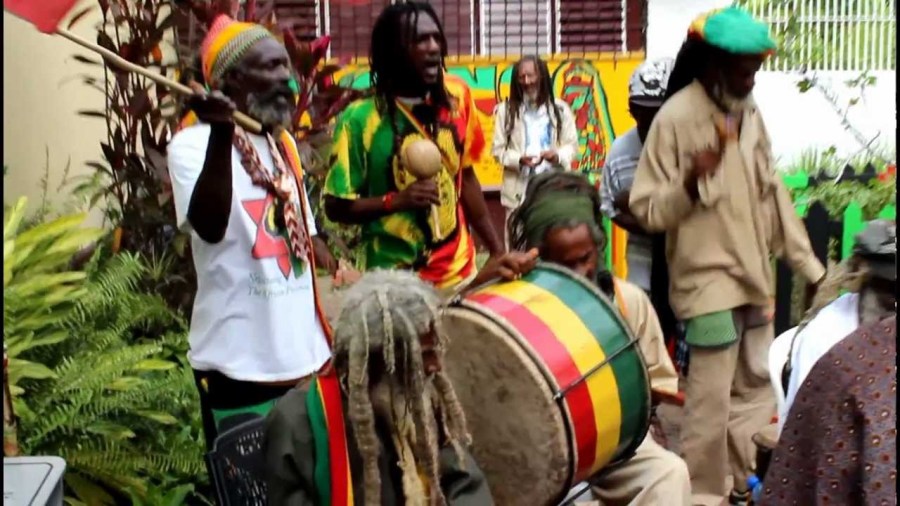
ON GHETTO NYABINGHI

It was in the late 1930s that the Rastafarians began to gain a significant presence in Kingston, and by this time the pre-Rasta Burru peoples (a culture of people in rural Jamaica who were known for their drumming rituals a century ago) had fully settled in the slums.
Unlike the scenario in America, drumming in the Jamaican plantation system was officially tolerated, and the Burru-men, in addition to their role as timekeepers for slave labor, were keepers of African sound. In their search for “anciency” and cultural roots, the Rastafari knelt at the feet of the Burrus, appropriated their looks, style, and musics and, in return, imparted to them a political theology of race. But what was most important to this union of the Burrus and the early Rastafari were the rituals of sound that both communities instituted in the colonial ghettos of Kingston.
Saakana has traced the Burru drumming ritual back to a Ghanaian ceremony that took place around Christmastime. In the 1930s, the ritual of drumming was a customary way of welcoming discharged prisoners back into the folds of the ghetto community.

When the Rastafarians took over the ritual, they modified it, adding their own thematic obsessions to the African songs of insult and praise. From this came the ritual of the nyabinghi, which was said to mean “death to black and white oppressors” and became a term also used to describe the most orthodox members of the Rastafarian creed. In the sacred space of ritual, members of the faith meditated, reasoned with each other, debated Old Testament doctrine, and soundly criticized the exploitative and racist system they were living in. And they beat the drums, chanting down Babylon and conjuring up an alternate space of black community called “Africa.

They did this in the yards of West Kingston, the same spaces that decades later would provide the genesis of the Jamaican sound systems.

Found in Bass History from 

The Sound of Culture: Dread Discourse and Jamaican Sound Systems by LOUIS CHUDE-SOKEI 

(Language, Rhythm, and Sound: Black Popular Cultures into the Twenty-first Century, 1997)

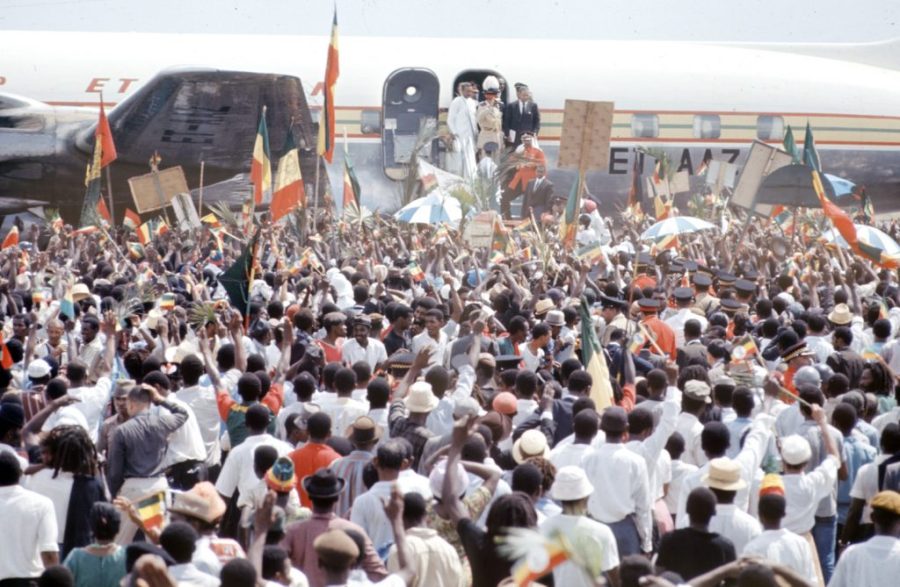
WHAT HAPPENED WHEN HAILE SELASSIE WENT TO JAMAICA?

What happened when Haile Selassie went to Jamaica?

On April 21, 1966, Haile Selassie visited Jamaica. Remember, this was 36-years after his coronation and the enthusiasm of Rasta was undimmed. There was now a new generation of Rastas, many of whom still harboured the vision of an exodus. But by now, many had built an Rastafarian worldview: Babylon was how they described the white-dominated post-colonial system, which directed its efforts to controlling black people and keeping them in a condition Rastas described as “mental slavery,” meaning they were still subservient to whites and accepted their own inferiority. Haile Selassie was overwhelmed by the rapturous reception and clearly liked the lavish praise and worshipful admiration of Rastas.
He did nothing to dispel beliefs in his divine status. By this time, Garvey had died and his criticism of Haile Selassie forgotten. The Emperor himself had been ousted in 1936 after Italy invaded Ethiopia, or Abyssinia, as it was then known. He lived in exile; this, in fact, was one of the principal reasons Garvey attacked him – for leaving his own countrymen at the mercy of Italy. Haile Selassie reinstituted his powers as emperor in 1941, with support from Britain.

We don’t know for sure, but it’s likely that when Haile Selassie visited, a 21-year-old Jamaican who had, the year, before formed a trio called the Wailers, was among the rapturous thousands honouring their redeemer. His name was Robert Nesta Marley.

From HAILE SELASSIE — RASTAFARIAN MESSIAH by Ellis Cashmore.

SPRAGGA BENZ EL BEY

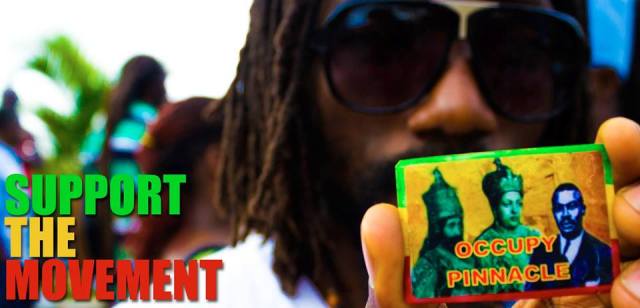
OCCUPY PINNACLE – SUPPORT THE MOVEMENT

Rastafari Youth Initiative Council

COUNCIL
OCCUPPY

YOGIRAJ GURUNATH & DIVINE THEOCRACY OF THE NYAHBINGHI ORDER