On International Reggae and secularization of Rastafari 1972-1980

#rebelmusic #reggae #rasta
Ultimately, however, international reggae‘s appeal to international audiences may have had more to do with changes in the image of reggae artists, the packaging of the albums, and the sound of the music itself.

In his efforts to market the Wailers, for example, Blackwell first molded the Waiters‘ image into that of a rock-and-roll group. While reggae “groups” typically had consisted of a loose collection of singers and hired studio musicians, Blackwell promoted the Wailers as a stable, self-contained “band”—much like the Rolling Stones or Led Zeppelin.
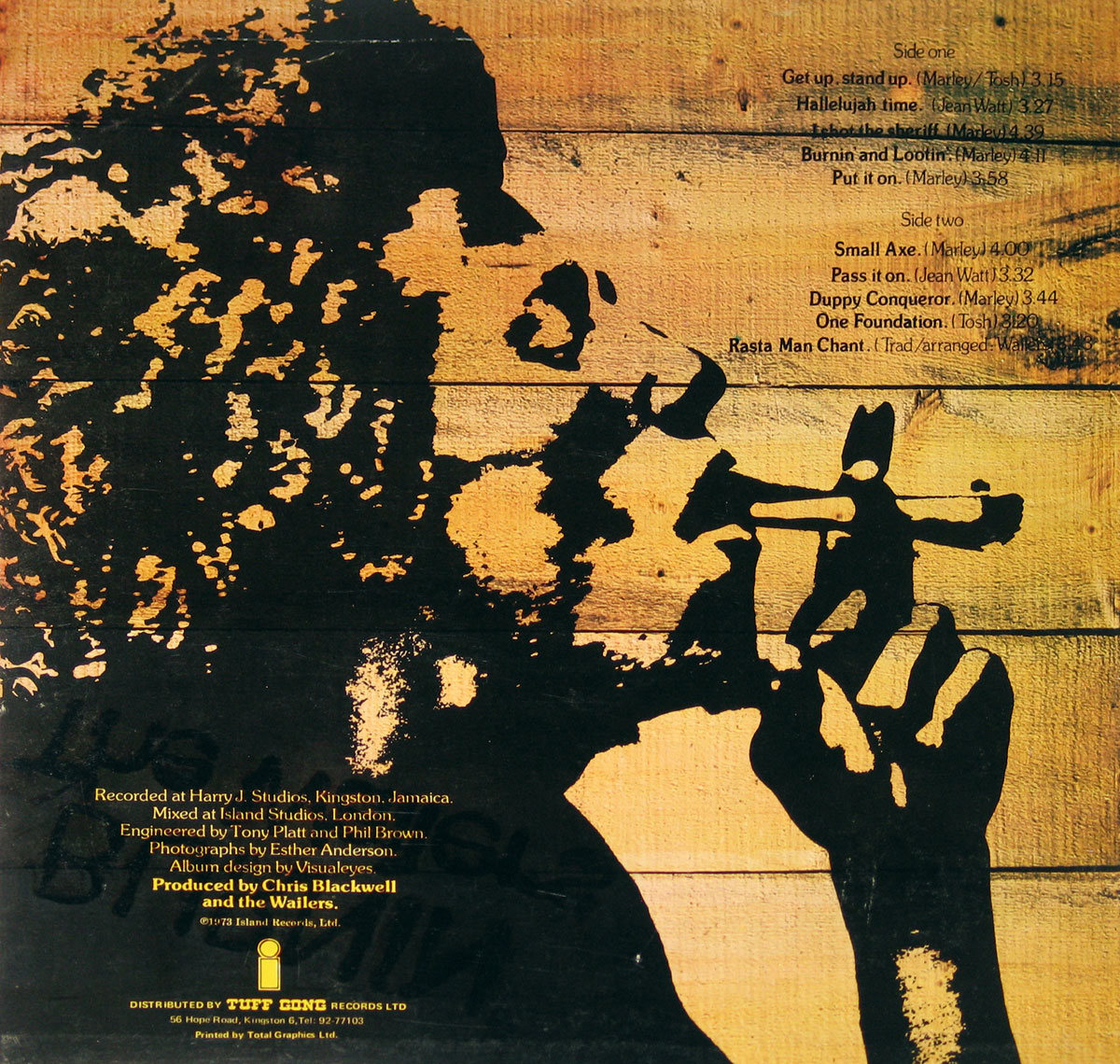
Second, Blackwell led a new trend among Jamaica’s record producers toward original, thematic, and full-length LP (long-play) albums, again following the lead of rock-and-roll groups. Previously Jamaica’s
record producers had distributed mostly singles or cheaply produced compilations of “greatest hits”.

Finally, those albums came packaged in glossy, well-produced jackets promoting the image of the rebellious, ganja-smoking Rastafarian. On the back cover of the Waiters‘ 1973 album Burnin‘, for example, Marley was pictured smoking a 12-inch spliff, or marijuana cigarette. On Peter Tosh‘s 1976 album, Legalize It, the singer was photographed crouched down in a ganja field. Reggae album covers also emphasized the Rastafarian’s symbol of black defiance, the dreadlocks, or displayed the Ethiopian colors of red, green, and gold. The cover of the Wailers‘ 1980 album Uprising, for example, featured a drawing of Bob Marley, along with the album’s title in red, and a background of green mountains
and a gold sun.

While most of the major instrumental innovations of international reggae were established during the early reggae period, international reggae was marked by a more sophisticated and polished studio sound. Most early reggae songs were recorded in primitive studios in Jamaica. International reggae, however, generally was recorded in state-of-the-art studios in the United States or Great Britain.

According to Jones, this helped to undermine “the common accusation made by rock fans that reggae was a music of ‘inferior’ quality”. In the first attempt to reverse this trend, Chris Blackwell took the Wailers‘ instrumental tracks for Catch a Fire, previously recorded in Jamaica, and remixed, edited, and mastered the tracks in a London studio.

Rock critics Ed Ward, Geoffrey Stokes, and Ken Tucker highlighted the dramatic change in reggae’s new sound: “Catch a Fire” was a “revolutionary example of reggae recording, far superior in its technology than most other reggae records”.

U.S. and British record producers also manipulated the instrumentation in reggae arrangements to create a lighter, “softerreggae. Some U.S. record producers would deemphasize reggae’s dominant instruments, the electric bass guitar and drums, and push the keyboard and electric guitar to the front of the mix. In 1980, Jamaican dub poet Linton Kwesi Johnson provided a clear rationale for the systematic manipulation of the reggae sound:
“[there was the] belief that the hard Jamaican sound, with the emphasis on the drum and the bass, would not be as accessible to the non-Jamaican listener as a lighter sounding production would be”.
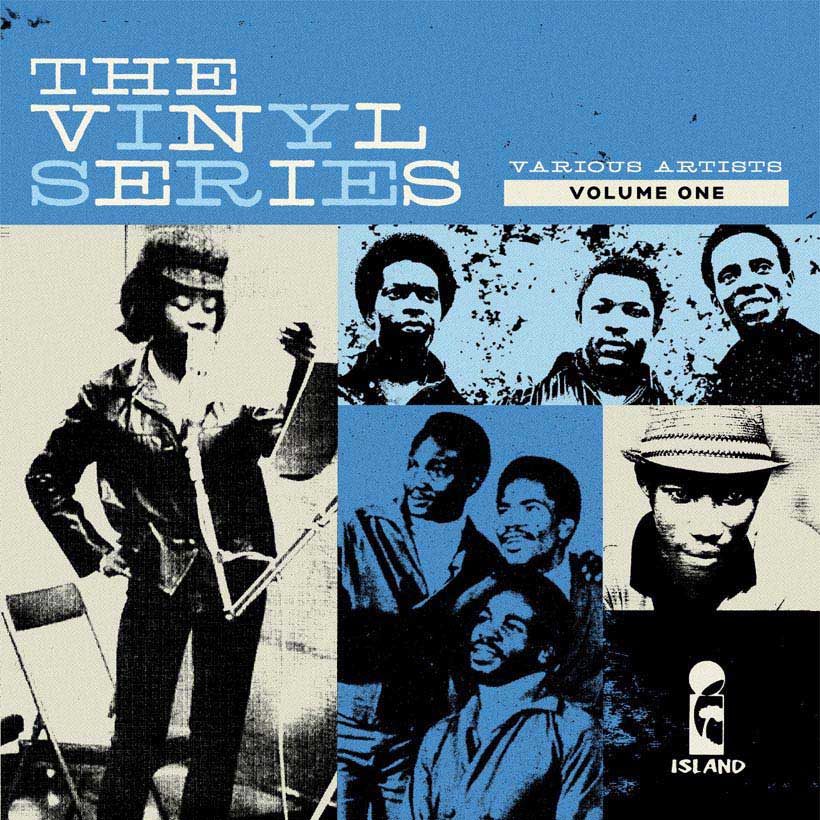
To appeal to international audiences, reggae musicians also incorporated familiar genres of American music into the reggae arrangement.

During the remixing of the WailersCatch a Fire, for example, Blackwell dubbed traditional rock-and-roll instruments, including rock guitar and synthesizer, over the reggae beat. During the recording of
the same album, a session guitarist, Wayne Perkins, also added guitar solos. Throughout their career, the Wailers dabbled in blues (“Talkin’ Blues” [Natty Dread]), funk (“Is This Love?” [Kaya]), and folk music
(“Redemption Song” [Uprising]). Similarly, Toots and the Maytals, in their 1973 Funky Kingston, fused R&B and reggae into the album’s title song.

In sum, the new international success of reggae music in the 1970s may have been more the result of marketing and changes in its sound than changes in its “message.” Reggae was still a “rebel music.” Growing up in some of Jamaica’s worst slums, reggae musicians still critiqued Jamaica’s neocolonial society. Reggae musicians also expressed concern about international affairs, specifically political problems on the African continent. While still sensitive to the problems at home, they also began
to identify themselves more as Africans than Jamaicans. In the final analysis, however, reggae’s international success probably was more the result of changes in its sound. Record producers improved and “softened” the reggae sound and incorporated new instruments, such as synthesizers and rock guitars, into the reggae arrangement.
Reggae musicians also borrowed freely from musical genres including rhythm and blues and funk. Yet whatever the explanation, reggae’s sudden status as an international musical sensation focused unprecedented attention on the Rastafarian movement and exacerbated tensions within the move-ment. Indeed, the music created whole new groups of supposed Rastafarians apparently attracted to the movement by little more than the image of the “Rastaman” and the music itself. These “pseudoRastafarians had little in common with traditional Rastafarian principles and beliefs.

Parts of Chapter Reggae Music in the 1970s: “Bubbling on the Top 100” from:

Stephen A. King (1998) International reggae, democratic socialism, and the secularization of the Rastafarian movement, 1972–1980, Popular Music and Society, 22:3, 39-60,
DOI: 10.1080/03007769808591713

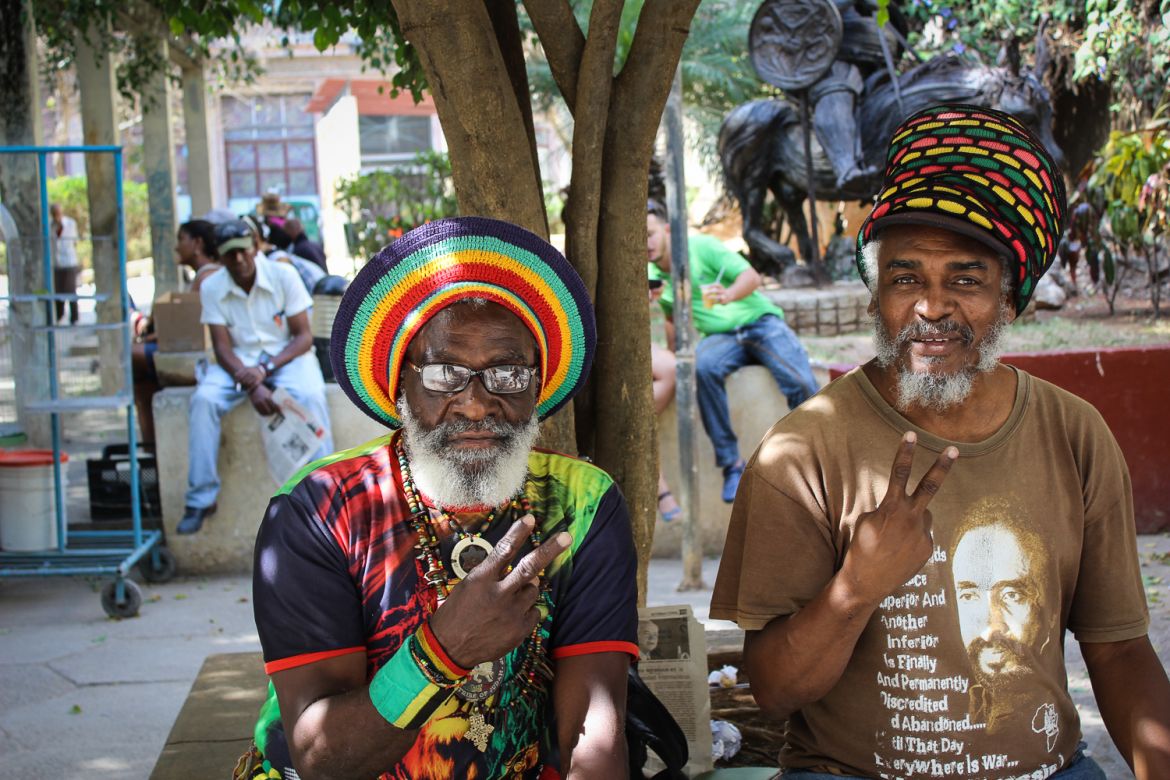
On Rasta continuum in Cuba

#rasta #style #Cuba

Real versus fake Rastas

Not unlike in many other Rasta communities around the world some of the more conservative religious brethren have introduced a view and language of authenticity with regards to what it means to be a Rasta. Framed in a discourse of cultural purity, they speak of so-called "real" and "unreal or “fake" Rastas.
But, given the myriad of ways people in Cuba identify with and express Rastafari, who can be considered a “real” Rasta?
The aim of my research has precisely been to go beyond fixed ideas of what constitutes a Rasta and instead look at how and why people define themselves as such and what processes go into making that
identity. Apart from this all-inclusive approach, the movement’s own fragmented entrance into Cuba and the many ways in which it has been appropriated have led to the wide array of definitions and expressions of the movement.

Although I have grouped certain main characteristics together and created certain "types" of Rastas for analytical purposes, in actuality every individual has his/her own idiosyncratic understanding and way of manifesting Rastafari.
Ulf Hannerz’s views on the social organisation of culture are particularly helpful in understanding Rastafari’s heterogeneous character in Cuba:

The social organisation of culture always depends both on the communicative flow and on the differentiation of experiences and interests in society. In the complex society, the latter differentiation is by definition considerable. It also tends to have a more uneven communicative flow - that is, different messages reach different people. The combined effect of both the uneven flow of communications and the diversity of experiences and interests is a differentiation of perspectives among the members of the society.

Rastafari in Cuba has been localised in just such a fashion. In an almost consumer-like attitude towards culture, individuals have selectively chosen, imitated and modified Rasta elements as well as mixed and matched them with other cultural practices. Whilst some have thus consciously hybridised different cultural elements together, others have kept them consciously apart by way of “cultural crossing” or “milieu-moving". Others yet again have adopted what Swidler (1986) has referred to as a “toolkit” attitude towards culture, in which people engage in their everyday activities by “selecting certain cultural elements (both such tacit culture as attitudes and styles and, sometimes, such explicit cultural materials as rituals and beliefs) and investing them with particular meanings in concrete life circumstances“.
In illustrating their skills at maintaining, mixing and serially selecting facets of different lifeways and styles all Rastas have demonstrated a high degree of multiple cultural competence as well as an attachment to a multiplicity of identities. In addition, all Cuban Rastas, even those who insist on an ideology of purity, have to a greater or lesser extent juxtaposed and fused objects, symbols and signifying practices from different and separate domains and in so doing have produced new, creolised versions of Rastafari.

On the whole, what we thus find is a wide variety of identifications with the movement, which can perhaps best be described as a Rasta continuum, ranging from orthodox religious brethren and sistren to those who identify with Rasta as a style. This same continuum is in addition in constant flux as individuals engage in an ongoing process of learning, adding, copying and reinterpreting Rastafari symbols and doctrine. As a cultural phenomenon Rastafari can be said to be in a constant state of cubanisation.

Chapter from:

Katrin Hansing (2001) Rasta, race and revolution: Transnational
connections in socialist Cuba, Journal of Ethnic and Migration Studies, 27:4, 733-747,
DOI:10.1080/13691830120090476

On word, sound and power!

Mortimo Planno (1929-2006)

Rastafarians have as common parlance the philosophy that word sound is power!
After the 1960s, one can identify the development of a fraternity of Rastafari faithful, taking their message into musical expression. In much the same way perhaps that the Psalms are constructed as sacred records of the ‘livity’ of the Old Testament patriarchs. The philosophy of the Movement moved to some extent (but not entirely) off the street corners, due partly to colonial repression and police brutality, into ‘the mixing lab-Oratory’ to create music that would teach the lessons of Redemption of the African.
Planno, in philosophizing to his students who would congregate in his yard in Trench town, West Kingston (including ones such as Don Drummond, Bob Marley and the Wailers, Ras Michael and the Sons of Negus, Alton Ellis and Jimmy Cliff ) taught them to ‘tell out King Rasta doctrine around the whole world . . . Get your bible and read it, read it with understanding’ as his basic guide and teaching on liberating the individual. He would conduct his class room in the informal gatherings in his yard as together they built verses animating the experiences, ideals and aspirations of the Movement. The King James Bible consisting of its 66 books, the laws, Prophets, wisdom songs into the Revelation provided a source of reading, reasoning – analysis and interpretation. It was from this source that the Knowledge of liberation was to come, in particular from the Revelations in the Bible – revealing the identity of the Ethiopian Emperor, Haile Sellassie I, the Power of the Trinity as the returned Messiah. Planno and a number of other brethren were to develop on the earliest teachings brought by the elders of the 1930s, a multifaceted cultural approach, and a network of over 60 bases in the west Kingston and the surrounding corporate area.

At these bases, the hitherto wayward – brothers in particular – became transformed, they could find hope, a receptive environment to mould and teach themselves about their identity, their history, the politics of the time, self-sufficiency and most importantly in the context of their survival how to develop a habit of industry – mostly focused on the development of self-employment ideas, and especially music that when it hit ‘yu feel no pain’. Music has been the product emanating from what has been described as the business of hardship resulting out of the Poverty Laboratory.


These bases provided vibrant centres for debates on life, philosophy, the politics of Jamaica and the globe especially as far as it affected the people of Africa, some centres even provided training in Amharic, the official language of Ethiopia.
The community bases also provided shelter, humble though this may have been, where warm meals (often a one pot of porridge or ‘a sip’/soup) for all who came, books and newspapers, instruments, recording devices and of course the Wisdom Herb as sacrament to inspire the meditation and reasoning a way forward.

Soon west Kingston was to develop a reputation as a Mecca for musicians and scholars from all across Jamaica and surely enough became a fascination for researchers from around the world, the attraction being the Rastafarians and secondarily their cultural panacea – the emerging institution/industry of reggae music.

Excerpt from:
Jalani Niaah (2003) Poverty (lab) oratory: Rastafari and cultural studies, Cultural Studies.

On Rastas in Ghana

Okomfo Anokye by dvnmyls

Reggae is not unlike “highlife,” the most popular form of Ghanaian music, which mixes both African and Caribbean influences and can be traced to the 1920s and 1930s.

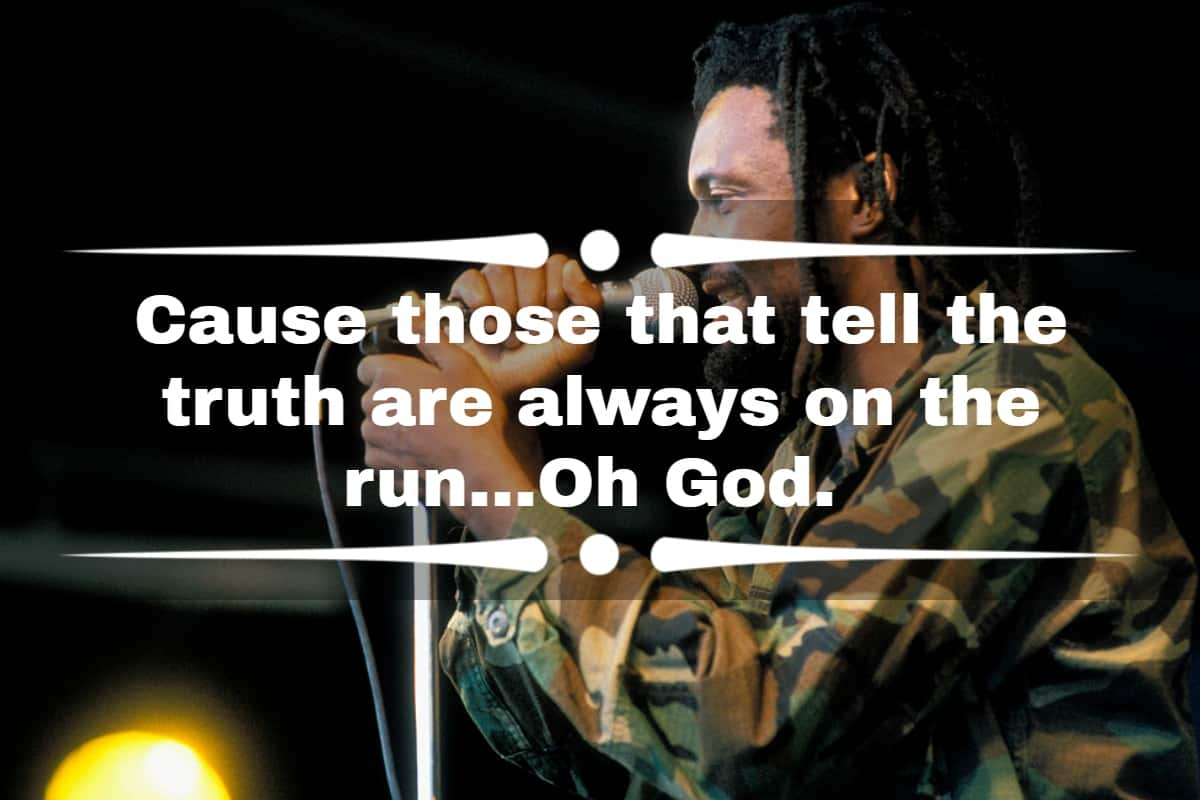
20+ best Lucky Dube quotes about life, love, success, and politics
Read more: https://www.tuko.co.ke/418729-20-lucky-dube-quotes-life-love-success-politics.html


While the South African singer Lucky Dube pioneered reggae in places like Ghana during the 1970s, and still ranks as one of the most sought-after performers throughout contemporary Africa, other “imports,” such as Don Carlos, Jimmy Cliff, and Bob Marley, not forgetting more recent acts such as Black Uhuru, Steel Pulse, and Buju Banton, have emerged to create and define a certain ethos that, at least from one perspective, may be seen as “Rasta.”

In all likelihood, “Rasta” as a religious-cultural import influenced a few Ghanaian youth to practice Rastafarianism in the 1970s and 1980s. Its social message, often wrapped in musical garb, would have been appealing, for instance, to disenfranchised youth during those long years of economic mismanagement and domestic privation.

Reggae was, and remains, an important “Rasta fashion,” and so too is the general appearance of “the Rastaman,” particularly the dreadlocks, which seem to carry enormous appeal in Ghana. It seems highly likely that some of these early Rastas noted the similarity between the appearance of Rasta celebrities like Bob Marley, with his long matted hair, and traditional African fetish priests and, therefore, perceived Rastafarianism as an authentically African way of life.
Okomfo Anokye is worth noting here, as a truly legendary figure in Ghanaian religion and culture. According to Ashanti mythology, he established the Ashanti Kingdom by calling forth its sacred Golden Stool from the sky. In addition, Ashantis claim that one of the three palm nuts Anokye threw on the ground marks the spot that would later become Kumasi, the capital of the Ashanti kingdom.

Furthermore, they link him to a legendary sword, observable today in a small room behind Kumasi’s Okomfo Anokye Hospital. According to Ashanti tradition, this sword was mysteriously placed at the exact spot where Okomfo Anoyke called forth the Golden Stool. Royal lore claims that the Ashanti dynasty will suffer unspeakable tragedies should the sword ever be removed.

Not only do Ashantis treat Okomfo Anoyke as their founder and protector, they hold him as one of their highest fetish priests, mysteriously born as a locksman with fully-grown, matted hair.
This arresting detail is not lost on current Ghanaian Rastafarians. While it is difficult to prove that early Ghanaian Rastafarians made any kind of solid connection between their faith and the figure of Okomfo Anokye, from my perspective, the link seems obvious. More than a few non-Rastafarian Ghanaians remarked to me that with the emergence of Rastafarianism among Ghanaian youth in the mid-to-late 1970s, fetish priests found a wider audience for their words and deeds.


Excerpt from:
AS IT IS IN ZION:SEEKING THE RASTAFARI IN GHANA,WEST AFRICA
Darren J. N. Middleton, Black Theology: An International Journal, 2006.

Ghana’s Rastas and the year of return

On African music and transculturation

African music forms and rhythms that emerged in the Americas constituted a beat that has “always threaded back to Africa.”

In the words of the Caribbean poet, Edward Kamau Brathwaite, the middle passage created “bridges of sound” that carried memories of Africa to the Americas, music that echoed down the generations from “Harlem” to “Havana.”

Individual islands in the Caribbean and the mainland diasporic slave communities in the Americas shared the basic rhythms (and some instruments) derived from Africa. But these were fused with the instruments and rhythms of the cultures with which African slaves interacted, a process that the Cuban ethnomusicologist Frederick Ortiz termed “transculturation.”

Trinidadian calypso and parang, and the samba and son rhythms in Cuba (son was a modified, more refined version of rumba which became popular in the second half of the nine- teenth century) combined the structure and elements of Spanish canción (song) and Spanish guitar with African rhythm and percussion instruments.

Son, samba, rumba, and other Latin and African-Caribbean dances influenced salsa. In the Southern U.S., the European fife and drum convey some of the rural music that has the most authentic African rhythms.

The fife and drum are also the basis of Jonkanoo music in Jamaica (Jonkanoo is a Jamaican Christmas tradition, incorporating African traditions going back to the days of slavery).
This incorporation of European instruments and music forms demonstrates how Africans in the diaspora subverted the dominant culture and asserted positive African identities. Slaves played for their master and learnt European instruments and rhythms but these became syncretized into popular folk music (defined as played with acoustic
instruments). Jamaican mento draws on the fife and drum of Jonkanoo, Pocomania (an African-Christian revivalist cult) and church music, the European quadrille, and slave work songs passed through the generations.

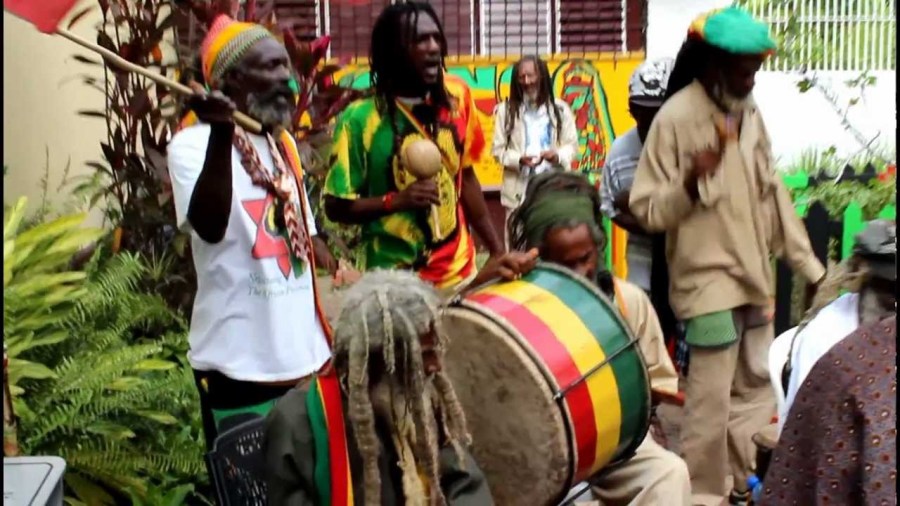
Musical forms in different parts of the diaspora have also retained purer African elements where percussion instruments and call-and-response vocals predominate. Examples here include rumba in Cuba, Rastafarian Nyabhingi in Jamaica, and the Kongo and Yoruba music found in African-derived religious sects such as Kumina in Jamaica,
Shango in Trinidad, Haitian Voodoo, and Cuban Santeria. Such music was performed “beyond the ken” of whites during slavery and continues to be associated with peasant or urban working-class cultures.

From:

Barbara Bush (2006) African Echoes, Modern Fusions: Caribbean Music,
Identity and Resistance in the African Diaspora, Music Reference Services Quarterly.

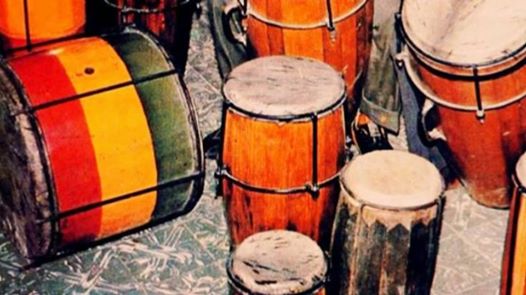
Image source:  Nyabinghi Drum Circle with Wolf

ON GHETTO NYABINGHI

It was in the late 1930s that the Rastafarians began to gain a significant presence in Kingston, and by this time the pre-Rasta Burru peoples (a culture of people in rural Jamaica who were known for their drumming rituals a century ago) had fully settled in the slums.
Unlike the scenario in America, drumming in the Jamaican plantation system was officially tolerated, and the Burru-men, in addition to their role as timekeepers for slave labor, were keepers of African sound. In their search for “anciency” and cultural roots, the Rastafari knelt at the feet of the Burrus, appropriated their looks, style, and musics and, in return, imparted to them a political theology of race. But what was most important to this union of the Burrus and the early Rastafari were the rituals of sound that both communities instituted in the colonial ghettos of Kingston.
Saakana has traced the Burru drumming ritual back to a Ghanaian ceremony that took place around Christmastime. In the 1930s, the ritual of drumming was a customary way of welcoming discharged prisoners back into the folds of the ghetto community.

When the Rastafarians took over the ritual, they modified it, adding their own thematic obsessions to the African songs of insult and praise. From this came the ritual of the nyabinghi, which was said to mean “death to black and white oppressors” and became a term also used to describe the most orthodox members of the Rastafarian creed. In the sacred space of ritual, members of the faith meditated, reasoned with each other, debated Old Testament doctrine, and soundly criticized the exploitative and racist system they were living in. And they beat the drums, chanting down Babylon and conjuring up an alternate space of black community called “Africa.

They did this in the yards of West Kingston, the same spaces that decades later would provide the genesis of the Jamaican sound systems.

Found in Bass History from 

The Sound of Culture: Dread Discourse and Jamaican Sound Systems by LOUIS CHUDE-SOKEI 

(Language, Rhythm, and Sound: Black Popular Cultures into the Twenty-first Century, 1997)