
Strictly vinyl Golden era selection with Danniella Dee of Sisters in Dub (UK) on My Analog Journal.
Tag: REGGAE

On Rastafari branch and roots
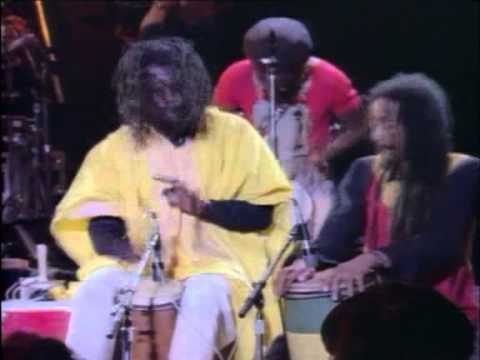
By 1960, several Jamaican institutions had begun to show an interest in the counterculture, and to contribute to the demarginalisation of the Rastafari movement which had previously been repressed.
One such institution was the University of the West Indies, which put the Rastafari on its agenda.
In the course of these trajectories, Jamaican public opinion, which had predominantly perceived the Rastafari movement to be a crowd of violent criminals, fools and outcasts, changed successfully.
Particularly, reggae music (as the emancipation of Jamaican popular music) was co-opted.
The result of the blending of Afro-Jamaican Burru and Kumina drum techniques and folk traditions with Afro-American musical styles (including jazz, gospel, rhythm and blues, soul and swing) led to the creation of mento, ska, rocksteady and reggae styles like dancehall, dub, lovers, raggamuffin, rockers and roots, which ‘exerted a tremendous influence on the development of post- World War II popular music globally’.
The musical film The harder they come (1972), starring Jimmy Cliff, contributed enormously to the transnationalisation, popularisation and commercialisation of roots reggae. Not until this style developed, did reggae lyrics exhibit the spirituality and socio-political engagement that came to be seen as the hallmark of roots reggae. And, clearly no one represented the Rastafari rhetoric and feelings of this genre to the world more ably and persuasively than Bob Marley.
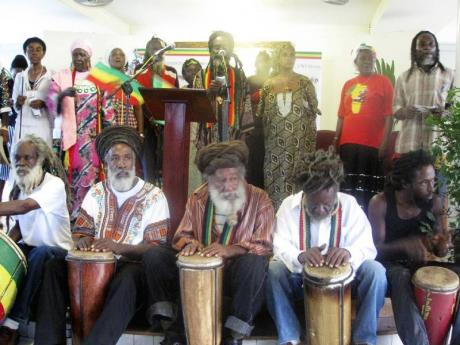
In fact, conscious reggae music, with its recreational, critical and inspirational dimensions, would soon transcend the Rastafari milieu and succeed in conquering a global audience. Today, Rastafari not only has observer status in the United Nations, but even more importantly it has become part of everyday culture in Jamaica, and even abroad.
However, the various Rastafari mansions relate differently to reggae music: whereas Boboshanti reject reggae as part of their culture and only consider drumming and chanting as true Rastafari music, the Theocracy Reign Order of the Nyahbinghi describes its relationship to reggae through the metaphor:
‘Reggae is the branch, Nyahbinghi is the root.’
Text from:
On reggae and hip-hop
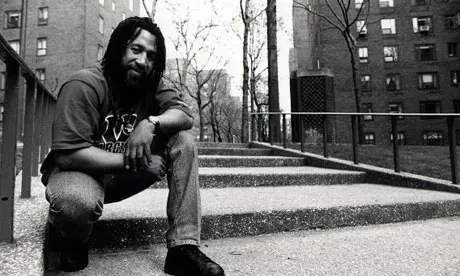
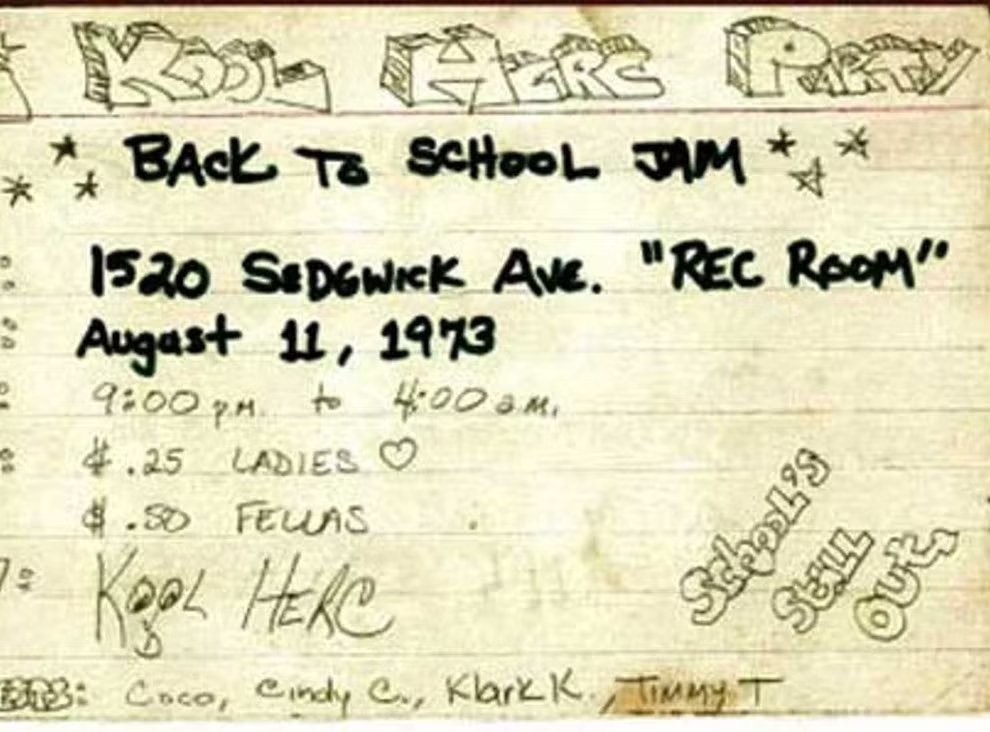
DJ Kool Herc, the chief architect of hip-hop, was born Clive Campbell in Kingston, Jamaica. At the age of twelve, in the winter of 1967, Campbell moved to Bronx, New York. The year he migrated to America, sound-system culture in Jamaica had a ubiquitous presence in Kingston’s lower-class neighbourhoods.
As a twelve-year-old preteen now living in the Bronx, Campbell already possessed a persistent reggae and sound-system consciousness having experienced the innovative music of
Prince Buster, the Skatalites, Don Drummond, and dancehall deejay U-Roy.
At eighteen, Campbell attempted to recreate the Jamaican dancehall experience in the Bronx by spinning the latest Jamaican reggae records at neighbourhood parties, but his young African-American audience was not feeling the reggae beat and did not comprehend the Jamaican patois rhymes of sound-system MCs known as toasters.
As DJ Kool Herc, Campbell shifted to playing funk records, but his reggae background caused him to favour funk with heavy-weight bass lines and lively percussive drumming. Kool Herc’s record selections were transmitted through hi-fi stereo equipment that spoke with the same awesome power and sonic quality of a roots Jamaican sound system.
The selector, as a deejay is called on a reggae sound system, though using one turntable-the norm during the ’60s and ’70s- was still capable of altering the arrangement of a tune spinning off a record on the turntable platter. The selector skillfully inflicted a completely different sound context on a roots reggae recording by manipulating the controls on the sound system’s amplifier to briefly remove the bass on a tune, accentuate the singing of the song’s vocalist, and highlight the harmony of trumpet, saxophone, and trombone. The selector would create tension in a live remix by bringing back the bass booming like a compact implosion.
By the ’70s, the selector had the ability to vary the sonic texture of the recording by creatively deploying reverb and echo chamber to repeat the sweetest elements of a vocal or horn solo and as a special sound effect that dramatized certain aspects of the recording with a live feel.
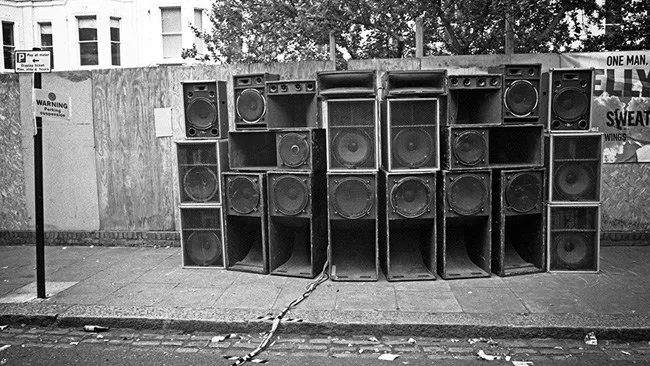
Kool Herc’s approach to creating something fresh from pre recorded funk on vinyl was different because he used two turntables. But his approach was similar in that he shared the same objective as the selector, which was to do a live remix of the record to heighten the entertainment of his audience. He extended the intoxicating rhythmic feel of percussive conga, bongo, or trap drums sizzling the break of records like Mandrill’s “Fencewalk,” the Incredible Bongo Band’s “Apache,” and the live version of James Brown’s “Give It Up, Turn It Loose” by playing the same record on two turntables using a sound mixer to seamlessly prolong the percussive breakbeats.
Herc pioneered the innovative use of two turntables and a sound mixer as active instruments that became more than passive facilitators, more than just pieces of electronic equipment that merely played what was recorded on vinyl.
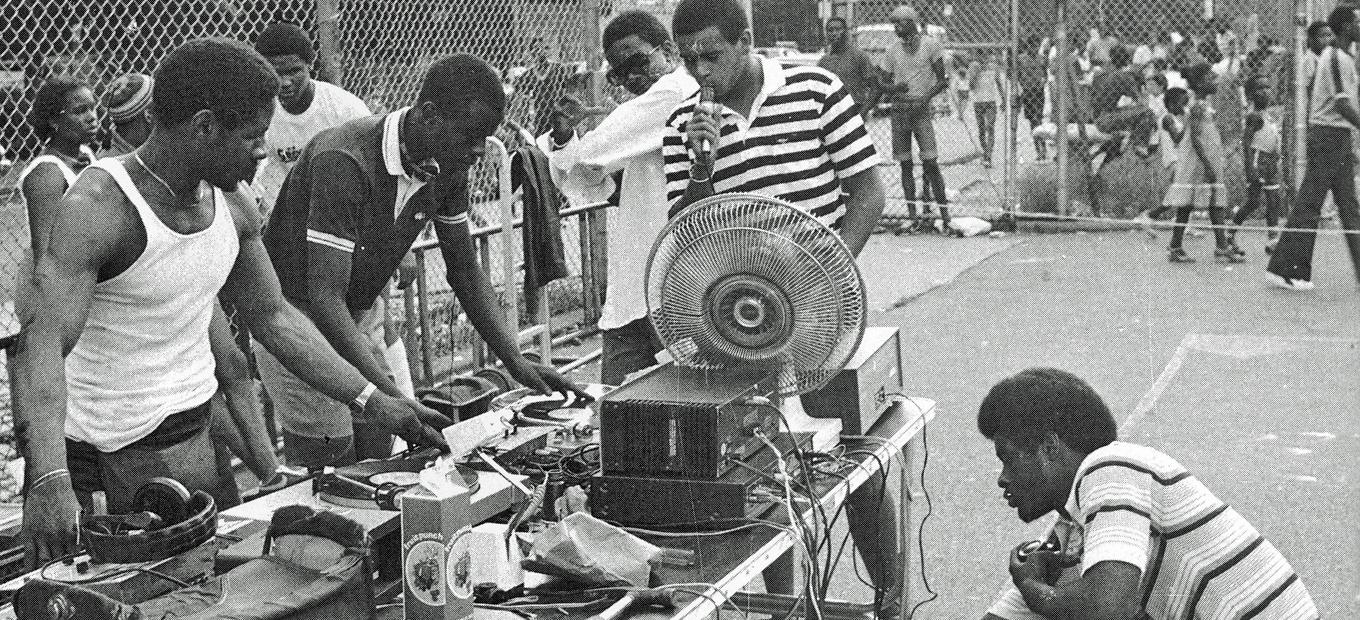
These electronic instruments were now used to rearrange prerecorded music to suit the immediate needs of the disco and the dance floor. When DJ Kool Herc rocked a block party, dispatching African American funk with the overwhelming sonic power of a reggae sound system, no other deejay dared to compete.
Text from:
Dubwise : reasoning from the reggae underground
Chapter: Raggamuffin Rap: The Interconnections of Reggae and Hip-Hop
Author:
Klive Walker, 2005.
Anja G. & Dr. Obi – Moonlight
Another roller from AmpliFyah label – catch the last 7″ dubplate vinyl preorder or bag the digital highgrade from BandCamp.
This one coming with specially heavy dubwise.
Banana Zvuk feat. Popay, Chakka & Žan – Legaliziraj Remixes EP
Gwan over to PDV Bandcamp and pick up Legaliziraj Remixes EP.
Haris Pilton meets Greg Evans – Ting A Ling
Crucial vibes from Haris Pilton and Greg Evans coming up with roots, dub and jungle cuts on Ting A Ling EP for Such A Vibe records.
Nobody sleep on this!
King Shiloh Soundsystem – Healing of the Nations selections
Maestro Neil outta King Shiloh round sound from Netherlands running heartical selection series called Healing of the Nations.
Highest recommendations by Jah Billah!
Mungo’s Hi Fi – Antidote
Back in July, the mighty Mungo’s crew released a perfect antidote to stress: dubs of songs to come.
Inspired by dub pioneers such as King Tubby, Scientist and Errol Thompson, this is no carbon copy style.
More roots than step, proper downtempo DUB vibes to chill out.
Favorite track: Intravenous Dub
LEE SCRATCH PERRY 1936-2021
40 days are gone since the sad news of Lee Scratch Perry leaving this earthly domain.
Lee Scratch Perry was fundamental force in shaping of Ska, Reggae, Dub, Techno, Jungle and essentially every modern genre of music.
His legacy is such that he will never be forgotten.
New York Times:
Rolling Stone:
NBC:
Lee ‘Scratch’ Perry, reggae pioneer who was producer for Bob Marley, dies at 85
Wire:
Scratch and me: Steve Barker remembers Lee Perry
NPR:
Lee ‘Scratch’ Perry, Visionary Reggae Producer, Dies At 85
NME:
Lee ‘Scratch’ Perry, 1936-2021: eccentric, brilliant dub legend who heard what we couldn’t
Lee Perry@discogs
LONG LIVE KING JAH MUZIK!
Making Reggae & Dub – by Dancetech
One of the greatest series of videos breaking down Reggae and Dub production styles, going over various riddim making. Spanning from 2015 to 2020, this comes highly recommended by Jah Billah.
 OUT OF MANY COME DUB AND OUT OF DUB COME ONE