Brain Holidays – System Error (remix side)

Croatia’s largest roots outfit Brain Holidays gather around outernational forces alongside homegrown souljahs for this remix side.

From proper dubwise to drum n bass every kind of reggae flavor is represented.
Jah Billah coming in with “Pleme” and “Tik Tak” remixes straight from “System Error” album.

Crucial tings!

Haris Pilton – Live What You Feel

Haris Pilton – Love is a feeling (extended version)

Sly & Robbie meet Dubmatix – Overdubbed

Straight outa Dubmatix studio comes 17 track album with riddims played but none other than deadliest drum n bass duo ever: Sly & Robbie! Nah miss!

DJ Maars – Free Fyah EP: Vol 6

MAX RUBADUB – 200% EXCLUSIVE MIXTAPE

ZACKY MAN FEAT. ANJA G – LISTEN – DR. OBI SLENG TENG

The art of riddim versioning is at heart of every reggae producer. Here comes Dr. Obi with fresh slengtenging  vocal combination.

ON PSALMS AND REGGAE

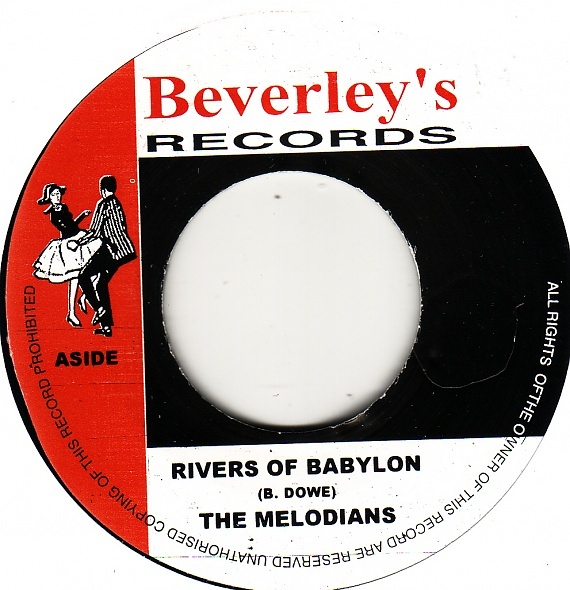
So tuned to the beat of Burru drums, the early Rasta lamentations, comprised of mournful dirges of Christian songs, hymns, and psalms from the Psalter, were social, political, and religious commentary on the unfavorable condition of the black Jamaican masses, and of the Rastafarians in particular. As the movement responded to harassment and persecution from the Jamaican public and the “Babylon police” in the 1950s, these lamentations became increasingly militant with a strong revolution and liberation motif. By the 1960s, Rastas had developed an impressive repertoire of musical lamentations adopted to their peculiar method of black revolutionary protest and call for political, social, and economic change in Jamaica. In 1969, The Melodians, comprising Brent Dowe, Tony Brevette, and Trevor McNaughton, sang Psalm 137 in new Rasta voices under the title “Rivers of Babylon.” The song remained local until “Bonnie Em,” singing under the influence of reggae star Bob Marley and the Wailers, did a Cover Disco Version in 1975, which became an immediate hit internationally.

Found in Why the Hebrew Psalms? from Tuning Hebrew Psalms to Reggae Rhythms: Rastas’ Revolutionary Lamentations for Social Change

Author: NATHANIEL SAMUEL MURRELL.
Source: CrossCurrents, Vol. 50, No. 4, Jewish–Christian Relations (WINTER 2000/2001)

Image source: The Melodians – Rivers of Babylon 7″

DJ CUT LA VIS – THE REAL ROCK MIXTAPE

DUBUMENTARIES SELECTION VOL 1.

DUB STORIES (2006)

DUB ECHOES (2009)
https://youtu.be/wPVDrKiNVg4

MUSICALLY MAD (2010)

https://youtu.be/NK0vBKsK7fI

ANJA G. MEETS DR. OBI – THE MEANING + DUB THE MEANING

Out to Dr. Obi & Anja G. & the whole crew coming in with lovely & heavy digital ting and dub.

https://www.youtube.com/watch?v=5gLxjdjhZHQ

ON REGGAE RASTA


Reggae, the music synonymous with Rastafari and its icon. Bob Marley, was created from the blending of African, neo-African, and African-American musical styles. The Rastafaris were chiefly responsible for introducing the African and neo-African elements into reggae music. Linking reggae and the culture of Rastafari to Africa, Mervyn Alleyne argues that reggae, because of its strong connections to Rastafari and its socially and politically conscious lyrics, is representative of the “traditional African fusion of the secular and religious and the symbiotic interaction of religion (including music and dance) and politics.” Janet DeCosmo also contends that reggae can be seen as a modern continuation of social commentary that is expressed in the oral traditions of African culture.

These African elements tend to underscore the fact that some of the Caribbean musical styles have strong links to an African musical past. As Neil Savishinsky  put it, “reggae, along with other forms of African-American and Caribbean music, may in fact, represent a kind of ‘re-Africanisation’ process….”

More importantly, however, is the fact that reggae music, in addition to being a powerful medium of communicating the message and spirit of Rastafari, has also provided Rastafaris with a distinct identity. It [reggae] is now regarded as “one of the most essential elements of religious expression and shared group identity”.

Found in  Reafricanizing the Caribbean: Black Power and Rastafari Styles.

From:  Resistance, Essentialism, and Empowerment in Black Nationalist Discourse in the African Diaspora: A Comparison of the Back to Africa, Black Power, and Rastafari Movements.

By:  Simboonath Singh in  Journal of African American Studies, Winter 2004, Vol. 8, No. 3, pp. 18-36.

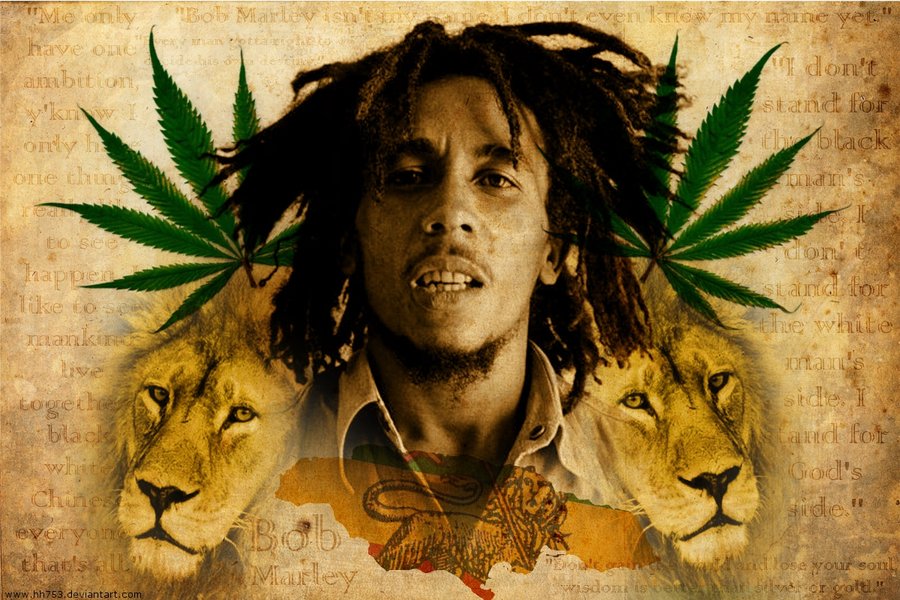
Bob Marley Wallpapeer by HH735