
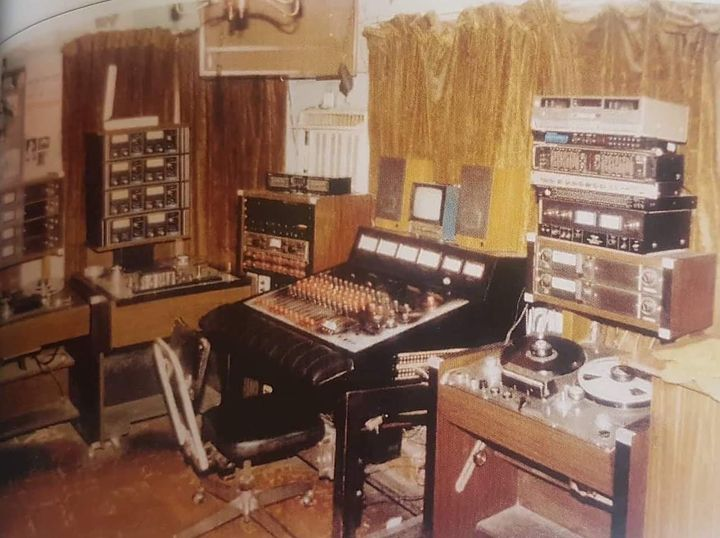
The term ‘dub’ is now used widely and indiscriminately by producers of dance and ambient music.
More particularly, as the British post-punk producer Adrian Sherwood has commented, ‘everything from hiphop to techno and every other form of music right now has stolen ideas off dub, or incorporated those ideas’.
While there is obvious hyperbole here, the point is nevertheless an important one.
The influence of dub permeates much contemporary electronica, dance, and urban music.
Indeed, there is an increasingly wide range of contemporary music that is explicitly and conspicuously indebted to dub, from the dance-oriented rock of a band like Death in Vegas to the indigenous Moroccan music of Aisha Kandisha’s Jarring Effects, and from the relatively recent work of Primal Scream back to the punk and post-punk music of bands such as The Clash, PIL, Terrorists, Killing Joke, Bad Brains, and even the Welsh-speaking Anhrefn, some of whose album BWRW CWRW (1989) was mixed by the British dub pioneer the Mad Professor.
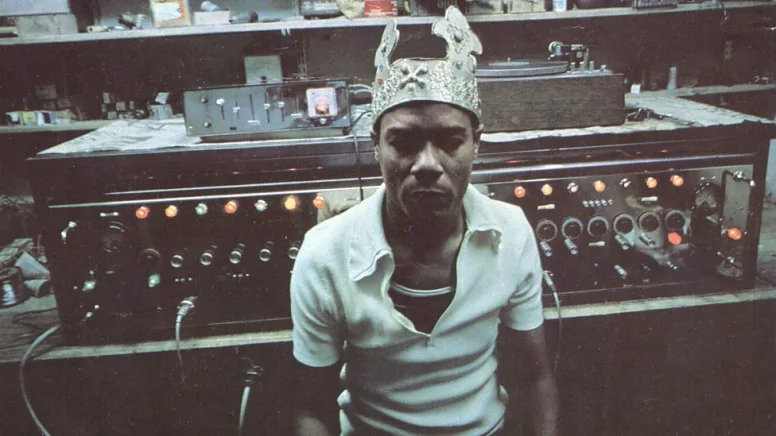
The term ‘dub’ evolved out of earlier terminology used in the recording industry in the United States.
This is significant because we will see that the genre has remained fundamentally related to recording technology. Traditionally known as ‘black wax’, ‘soft wax’, ‘slate’ or ‘reference disc’—and in the manufacturing sector as an ‘acetate’—the dub plate was a metal plate with a fine coating of vinyl.
Recorded music would be pressed on to the dub plate, following which a ‘stamper’ or metal master disc would be created in order to produce quantities of vinyl records. The process of transferring the music on to the vinyl-coated metal plate was known as ‘dubbing’—just as adding sound to a film is also known as dubbing. Hence, the terms ‘dub’ and ‘dub plate’ are not solely allied to the genre of ‘dub’.
However, the point is that, with the demand for exclusive, unreleased music in Jamaican sound system culture (in which sound systems competed for audiences by, amongst other things, playing new music), the trade in ‘pre-release’ dub plates grew.
And it is within this culture, hungry for new sounds and ideas, that the genre of ‘dub’ emerged.
A Brief History of The Studio As An Instrument: Part 3 – Echoes From The Future
The term dub, in the sense of a musical genre, was, therefore, originally applied to a remixing technique pioneered by Jamaican engineers and producers who were seeking novel and exclusive music (i.e. ‘specials’) for sound system use.
So successful was the technique that it quickly evolved as a relatively inexpensive and creative way of reusing rhythm tracks. Essentially, recording engineers produced tracks on which their efforts were often more evident than those of the original musicians.
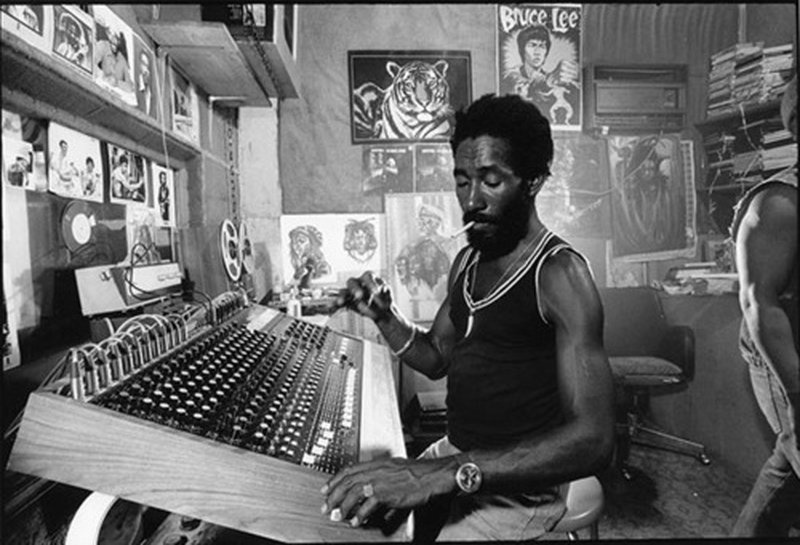
Indeed, the mixing desk and even the recording studio itself came to be understood as a musical instrument in that, in a similar way to a jazz musician’s improvisation on a standard tune, the engineer is involved in the reconceptualization of a piece of music.
However, this is a very different type of instrument, in that, as a remixing technique, it is alchemical in its effects. As Jonathon Tankel puts it, ‘remixing is recoding, the reanimation of familiar music by the creation of new sonic textures for different sonic contexts…
The remix recording creates a new artefact from the schemata of previously recorded music.
It is prima facie evidence of [Walter] Benjamin’s contention that
“to an ever greater degree the work of art reproduced becomes the work of art designed for reproducibility” .“
Text from:
Christopher Partridge, 2008.
Popular Music History


 OUT OF MANY COME DUB AND OUT OF DUB COME ONE