DUB-STUY MEETS BURRRO BANTON – NAH SELL OUT

BENGA & COKI – NIGHT – EGOLESS VERSION

FOKUS – PALMS IN MY BACKYARD EP

https://soundcloud.com/rudebwayfokus/sets/fokus-palms-in-my-backyard-ep

High Grade – Steppaz High Times

Source: High Grade – Steppaz High Times

ON STATUES AND ALTARS

Untitled-3.pngFound in CHAPTER 8: Religious Hot-Boxing.

Image source: ©2017 Encyclopædia Britannica, Inc.

ON JAZZING IT UP

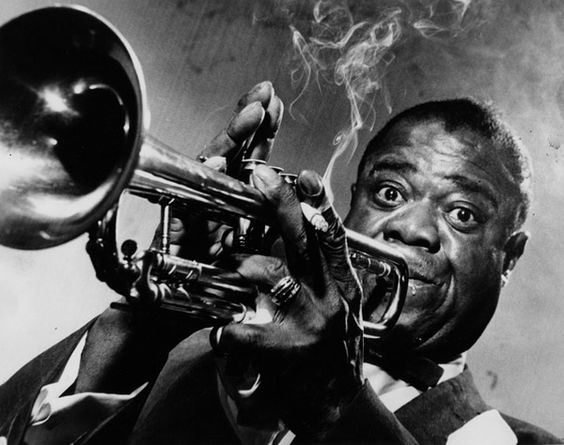
According to James A. Munch, who worked closely with Harry Anslinger for many years, Anslinger worked so diligently to try to arrest leading jazz musicians in the 1940s because he felt that they were “role models” for young people. But beyond that, he didn’t like jazz and considered it degenerate. He once wrote in a memorandum that swing had been invented by a pot-using musician, and he didn’t like swing. In Munch’s words, the effect that the musicians were after from marijuana was a lengthening of their sense of time, so that they would be able to put more grace notes into their music than if they simply followed the written score. Munch complained that a regular musician would just play a piece of music the way it was written, but that a musician ‘who used marijuana would work in about twice as many notes, would “jazz” it up.

Found in Marijuana and Civilization,  from: Pharmako/Poeia: Plant Powers, Poisons, and Herbcraft by Dale Pendell, Gary Snyder. 1995.

FOKUS – SQUARE DUB

ON GANJA MUSIC

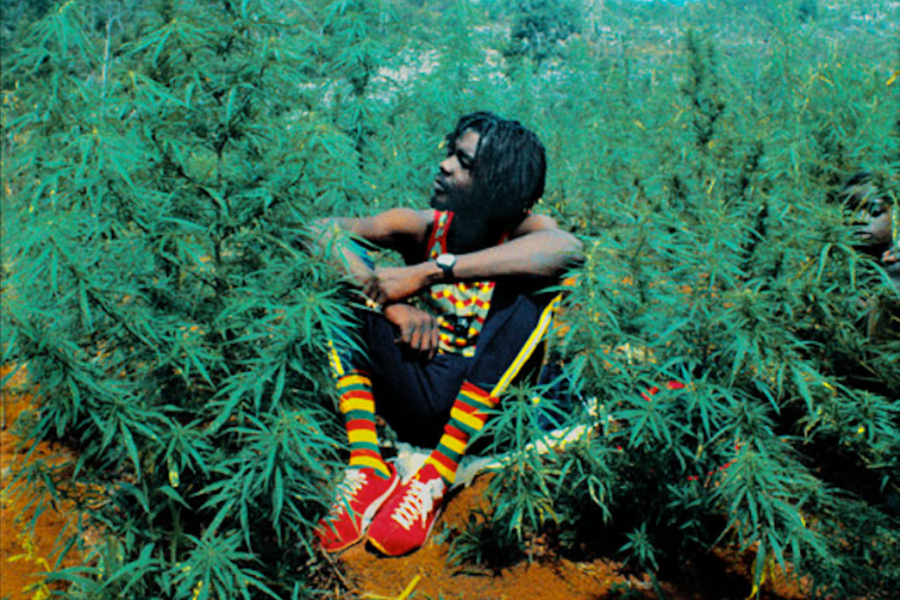
As the central sacrament to Rastafarians, the importance of ganja (marijuana) has been well documented and this importance extends into the sphere of Rasta-influenced Jamaican music. Rasta-influenced musicians were often outspoken advocates of ganja smoking, with songs full of exhortations to “smoke the herb”: Peter Tosh’s “Legalize It,” Bob Marley’s “Kaya” and “Easy Skanking,” Culture’s “International Herb,” Horace Andy’s “Better Collie,” Lee Perry’s “Free Up the Weed” and “Roast Fish, Cornbread and Collie Weed,” and Leroy Horsemouth Wallace’s “Herb Vendor” are a mere few of hundreds of such songs. Yet while it would probably be difficult to find a Jamaican musician of the roots era who was avowedly anti-ganja, some Jamaican musicians nevertheless felt that the prominence of this theme led to a distorted view of reggae in the world at large, as musicians played to the expectations of their international audiences. Paul Henton voiced a sentiment common among some Jamaican musicians, who felt that their colleagues sung about ganja at least in part “just because they know that the white people love it. If tomorrow morning the people or the fans say ‘Okay, we don’t want to hear anymore of this ganja stuff,’ they’ll stop singing about it and stop promoting it!”
Inside Jamaica, where ganja songs have flourished within several genres of Jamaican popular music (such as roots reggae and ragga), the situation has been more complex. Ganja was declared illegal in Jamaica in 1913 and for the decades since, its illegality has been a primary tool used by the ruling class in the social control of working-class Jamaicans. Correspondingly, it became a combustible element in the constellation of factors (including music, Rastafari, class conflict) that factor into Jamaica’s social tensions. As such, it is not surprising that ganja played a central role in the blended class, cultural, and political content that exploded in Jamaica in the 1970s and that arguably found its most powerful and passionate articulation in roots reggae. This centrality can be felt in the comments of legendary drummer Leroy “Horsemouth” Wallace: “The people respect you in Jamaica when you can put forty and fifty bag a ganja on a plane! We don’t call that drugs. That is ganja business. . . . We do those things like we are revolutionary. We put forty bag on a plane and feel good. . . . We send those so people in America could smoke the good ganja, not just for money alone.”

Found in: The Ganja Factor,  from:  DUB Soundscapes and shattered songs in Jamaican reggae by Michael E. Veal.  Wesleyan University Press 2007.

Image source: Peter Tosh

ROOMMATE – MIX FOR JAMAICA VOL.4

TRACKLIST:
01 Roommate ft. General Jah Mikey – Sunup To Sundown
02 Roommate ft. Lutan Fyah – Pon Mi Head
03 Roommate – From The Top
04 Roommate ft. Ras Zacharri – I’m Flying
05 OSC & Dubsworth – Moscow Mule
06 Roommate ft. Robert Dallas – Stir It Dub
07 Roommate, Freytakt & Darkwing Dub – Mt. Zion
08 Roommate & Hellfire Machina – Take Heed
09 Roommate – Montego
10 Roommate ft. Ras Zacharri – Chiwalaleng
11 Roommate ft. Green Fields – Respect Dub
12 Roommate ft. King Mas – Stand
13 OSC vs. DJG – One Mile High
14 Roommate – Summer Dub
15 Roommate & High Kulture – Rosia Montana
16 Roommate – Righteousness
17 Roommate ft. Afrikan Simba – Put Yourself Forward
18 OSC – Hit The Spot
19 Roommate – Judgement Fire
20 Roommate ft. Chezidek – The Place
21 Roommate – Early Dub
22 Roommate Respect Life
23 Roommate, Ras Lion, Darkwing Dub – Blow Away The Wicked
24 Roommate ft. Big Youth – Dub Siren
25 Roommate & Ras Lion – Whole Heart
26 Smilodon – Ivans Sound (Roommate Remix)
27 Babylon System – Dancin’ Shoes
28 OSC – Fallen Angel
29 OSC Zions Gate
30 OSC Fuss n’ Fight
31 Roommate – Heat Wave
32 Roommate – Breaking Babylon
33 Roommate & Illoom ft. Kali Green – Rub Dub Dubbing
34 Roommate ft. Sizzla – Only Jah Knows (Subtle Mind Remix)
35 Roommate – Massive Respect
36 OSC – Evolution
37 Roommate ft. Brother Culture – Living Fire
38 Sizzla – Champion Sound (Roommate Remix)
39 Roommate – Runaway Bay
40 Roommate & Darkwing Dub – Youthman
41 Roommate – Lava
42 Roommate – Yard Times
43 Jovi Rockwell – Mash Me Up (Roommate Remix)
44 Roommate & Ras Lion ft. Kali Green – Wicked Babylon
45 Rocker T – Tru Ganjaman (Roommate Remix)
46 Roommate – Don Don
47 Roommate – Piña Colada
48 Roommate – Acapulco
49 Roommate & Darkwing Dub – Vintage Vibes
50 Roommate, Ras Lion & Darkwing Dub – Anything is Anything

ON MELODY

Melody is the second aspect of the three-fold song of rhythm, melody, and harmony. From melody we can learn much about our relationships with other energies. Melody cannot exist without relationship. One tone by it­ self does not create a melody. As one tone is placed along side of other tones, melody is formed. Melody – whether, spoken, sung, or played upon an instrument – will soothe and alter emotional and mental states. It can balance men­tal stress and it can be used to relieve pain. Who has not seen a mother singing or humming softly to a crying child? (Often the mother rocks the child while doing so, and the rocking helps restore a soothing rhythm to the child’s metabolism.) By singing to the child, the mother links her energies with those of the child (relationship),and the pain or emotion is soothed and balanced. In this way a gentle form of forced resonance is unconsciously employed. Humming or singing a light melody throughout the day to that child that still lives within us is one of the most therapeutic things we can do for ourselves. It relieves stress and helps us to maintain balance. Every melody is comprised of tones that do affect us on many levels. Here’s a way to experience this: While on your way home from work, sing a simple childhood mel­ody to yourself. This will restore balance and help to cleanse your energy of any negative debris you have accumulated within the work environment.

Found in SACRED SOUNDS: Transformation through Music & Word by Ted Andrews.

Llewellyn Publications, 1995.


ON DUB POETRY

Words, nevertheless, and our attitudes to them, are the heart of the matter, the site of contention between dub poetry’s true believers and those of us applauding only some of the talent. Offered Mikey Smith’s ‘Me Cyaan Believe It’, for example, or Linton Johnson’s ‘Reggae fi Dada’, or Jean Binta Breeze’s ‘Riddym Ravings’ we can enjoy the value-added of performance. For though everybody knows that dub poetry is meant to be performed, and
though some poems are most fully realized in performance, people who enjoy poetry (and not only ‘dub poetry’) tend to be biased in favour of poems that offer riches before and after, not only during or because of, performance.
They privilege the word. Like Gordon Rohlehr we are drawn to ‘the more complex abstracts from experience, in preference to simple statement of it, we need ‘to feel that a writer is trying to use language imaginatively- any language in which he chooses to write.’

Found in ‘Dub Poetry’? by Mervyn Morris.
Source: Caribbean Quarterly, Vol. 43, No. 4, Conference On Caribbean Culture In Honour
Of Professor Rex Nettleford The Literature Papers: A Selection (Dec. 1997), pp. 1-10

Image source: http://www.speaking-volumes.org.uk


ON COMPUTER MUSIC

Consider this. Arriving at your studio, a young student sits down at a computer with a synthesizer keyboard in front of it. Putting on the headphones, he begins his ritualistic playing of the Minuet in G using a harpsichord setting on the synthesizer. After yielding to the temptation to punch all of the buttons on the synthesizer (which is always amusing), he puts a disk into the computer and does rhythm drills. (He’ll tell you that doing rhythm drills with the drum sounds of the synthesizer is much better than hand clapping.) At the end of his private lesson, you suggest that he drill his IV chords using the harmony program. Meanwhile a high school student, at the computer and synthesizer of course, is
putting the finishing touches on his original composition. It’s a piece for piano, violin and synthesizer. He was able to enter all of the parts from keyboard and is now editing the notated score that appears on the computer screen. After his lesson he’ll have the computer print out the violin part. Rehearsal is tomorrow and he wants to get feedback from the violinist . . .This is not a scenario from the twenty-first century. It’s happening today.

Found in Computer Applications in Music: A quick lesson in basic technology and terminology by Randall Faber.

Source: American Music Teacher, Vol. 37, No. 6 (June/July 1988), pp. 22-23, 54

Image source: http://www.muzines.co.uk