ON SCHIZOPHRENIC SLACKNESS

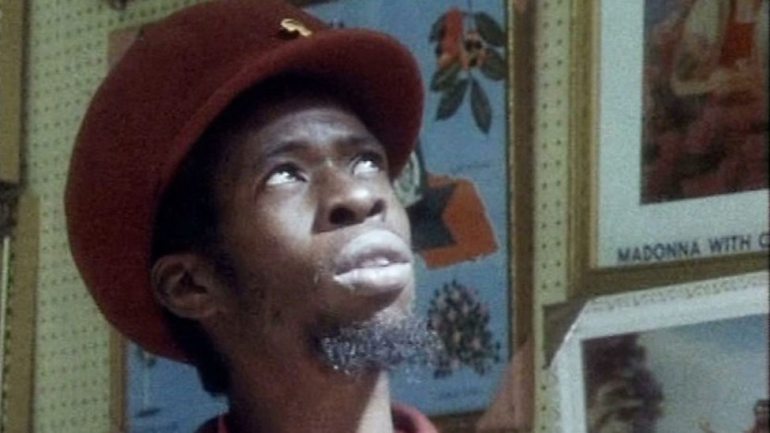
*BREEZE: I think the whole Caribbean is naturally schizophrenic [laugh], and most of all about sex.
I think it’s one of the most sensual, sexual sets of people, but with more hang-ups and still very Victorian about their sexuality. So you have a kind of freedom and spontaneity about the body, and at the same time all kinds of dogma and taboos about different kinds of sex, or the nature of the sex you are having, or who you’re having sex with. I think it’s a schizophrenia that stems from the meeting of Europe and Africa in the first place, which can sometimes be a perfect blend and sometimes can be completely destructive. And I think it shows up most strongly in sex.

So you have Lady Saw, for example, who is very explicit in her sexual lyrics and is loved by the majority of Jamaicans. Yet, there is the whole social establishment that says she must be banned from the stage for the kind of lyrics she’s performing.
And then you have a man like Beenie Man, who sings completely sexually about women, yet his audience is full of women that love him and think that he’s the greatest thing that ever happened. You have poets like me talking about how slackness is degrading to women, and at the same time it’s all women who are jumping up to the slackness at the dancehall. So it’s really hard to kind of say that there’s a true line. I do find it very schizophrenic, and that’s a word that I use a lot. [laugh] My current work is getting much more sexual. I think it’s about time.

Excerpt from:
Dub and Difference: A Conversation with Jean “Binta” Breeze by Jenny Sharpe.
Source: Callaloo, Vol. 26, No. 3 (Summer, 2003)

Image source: Ken Ryan

*Jean “Binta” Breeze  (11 March 1956 – 4 August 2021) was a Jamaican dub poet and storyteller, acknowledged as the first woman to write and perform dub poetry. She worked also as a theatre director, choreographer, actor, and teacher. She performed her work around the world, in the Caribbean, North America, Europe, South-East Asia, and Africa, and has been called “one of the most important, influential performance poets of recent years”.

ON GANJA BOMBING

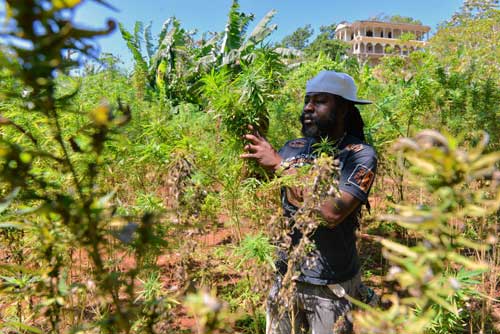
Despite the initiative by the Rastas those forces which harangued Bishop on the question of elections but turned a blind eye to the elections in Guyana still hoped to foment discontent from within. The elementary initiatives towards solving the needs of the working people were affected by the deteriorating security situation as the incidents of bombings and shootings increased, culminating in the June 19, 1980 bombing attack at Queens Park, St George. The Prime Ministers and the officials of the State had gathered to celebrate Labour Day when the bomb exploded. But no one on the platform was hurt; the force of the bomb killed three children and injured others. Some of the elements involved in this bombing campaign were involved in the large scale planting of ganja. This ganja was not for local consumption but for the international capitalist market and the big planters attempted to use the centrality of the weed in the lives of many youths as a leverage to move the Rastas after the previous attempt at demonstrations had failed. Ganja and its use pose a serious problem throughout the Caribbean for the way in which the trade is now linked to international gangsterism. Those imported psychologists and doctors who describe ganja as a dangerous narcotic forget that the British State imported ganja into the Caribbean up until 1907 to sell to the Indian indentured workers. The use of ganja by youths in the sixties and seventies was a principal method of social control and as soon as a youth was perceived by the state as rebellious the charge of – possession of ganja was always a useful weapon in the hands of the coercive apparatus of the state.

Found in Rasta, Ganja and Capitalism, from: THE RASTAFARIANS IN THE EASTERN CARIBBEAN by HORACE CAMPBELL. Source: Caribbean Quarterly, Vol. 26, No. 4, RASTAFARI (December 1980)

Image source: AP Photo/David McFadden

High Grade – Steppaz High Times

Source: High Grade – Steppaz High Times

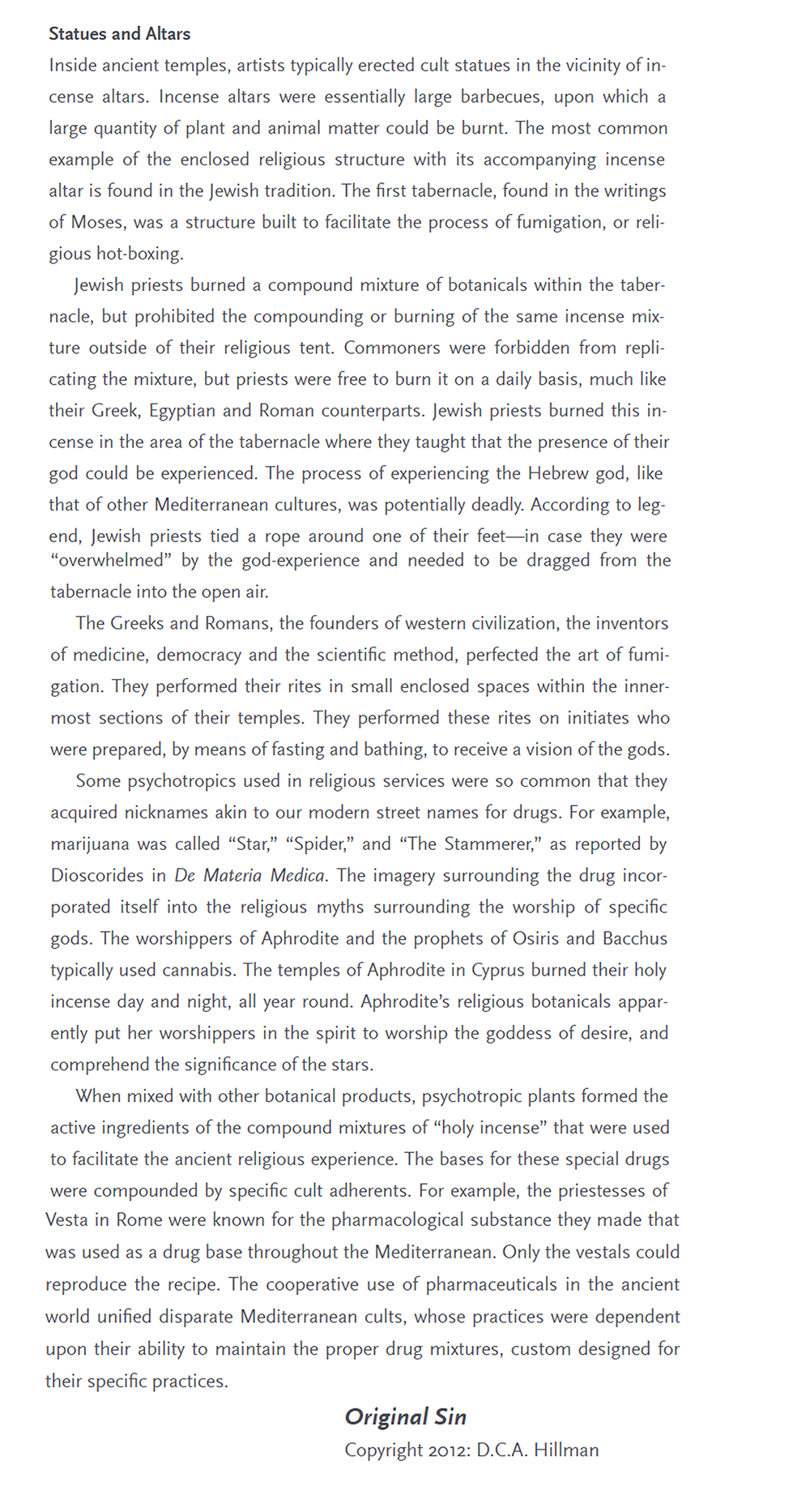
ON STATUES AND ALTARS

Untitled-3.pngFound in CHAPTER 8: Religious Hot-Boxing.
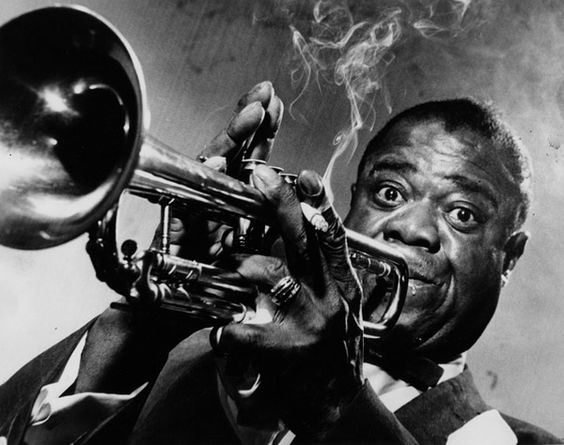
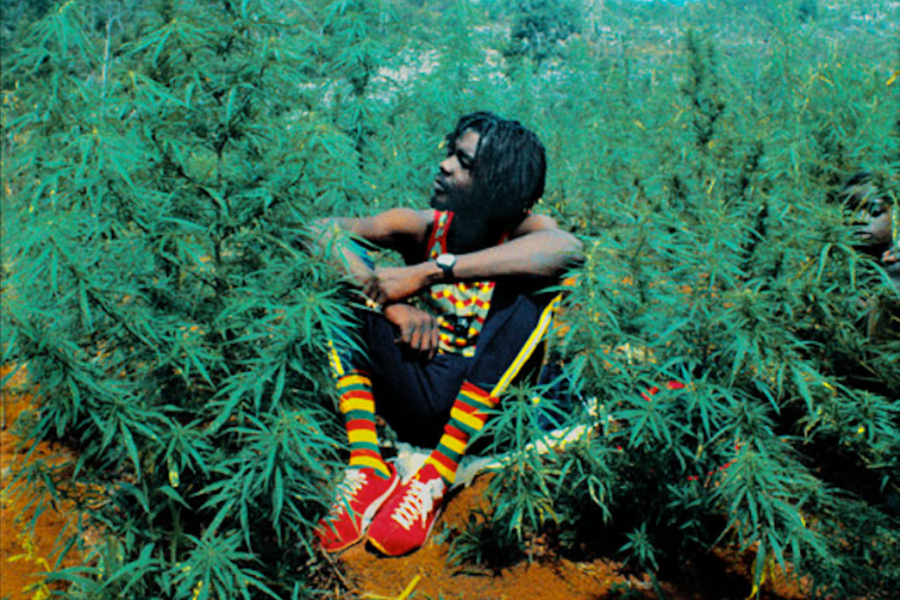
Image source: ©2017 Encyclopædia Britannica, Inc.

ON JAZZING IT UP

According to James A. Munch, who worked closely with Harry Anslinger for many years, Anslinger worked so diligently to try to arrest leading jazz musicians in the 1940s because he felt that they were “role models” for young people. But beyond that, he didn’t like jazz and considered it degenerate. He once wrote in a memorandum that swing had been invented by a pot-using musician, and he didn’t like swing. In Munch’s words, the effect that the musicians were after from marijuana was a lengthening of their sense of time, so that they would be able to put more grace notes into their music than if they simply followed the written score. Munch complained that a regular musician would just play a piece of music the way it was written, but that a musician ‘who used marijuana would work in about twice as many notes, would “jazz” it up.

Found in Marijuana and Civilization,  from: Pharmako/Poeia: Plant Powers, Poisons, and Herbcraft by Dale Pendell, Gary Snyder. 1995.

ON GANJA MUSIC

As the central sacrament to Rastafarians, the importance of ganja (marijuana) has been well documented and this importance extends into the sphere of Rasta-influenced Jamaican music. Rasta-influenced musicians were often outspoken advocates of ganja smoking, with songs full of exhortations to “smoke the herb”: Peter Tosh’s “Legalize It,” Bob Marley’s “Kaya” and “Easy Skanking,” Culture’s “International Herb,” Horace Andy’s “Better Collie,” Lee Perry’s “Free Up the Weed” and “Roast Fish, Cornbread and Collie Weed,” and Leroy Horsemouth Wallace’s “Herb Vendor” are a mere few of hundreds of such songs. Yet while it would probably be difficult to find a Jamaican musician of the roots era who was avowedly anti-ganja, some Jamaican musicians nevertheless felt that the prominence of this theme led to a distorted view of reggae in the world at large, as musicians played to the expectations of their international audiences. Paul Henton voiced a sentiment common among some Jamaican musicians, who felt that their colleagues sung about ganja at least in part “just because they know that the white people love it. If tomorrow morning the people or the fans say ‘Okay, we don’t want to hear anymore of this ganja stuff,’ they’ll stop singing about it and stop promoting it!”
Inside Jamaica, where ganja songs have flourished within several genres of Jamaican popular music (such as roots reggae and ragga), the situation has been more complex. Ganja was declared illegal in Jamaica in 1913 and for the decades since, its illegality has been a primary tool used by the ruling class in the social control of working-class Jamaicans. Correspondingly, it became a combustible element in the constellation of factors (including music, Rastafari, class conflict) that factor into Jamaica’s social tensions. As such, it is not surprising that ganja played a central role in the blended class, cultural, and political content that exploded in Jamaica in the 1970s and that arguably found its most powerful and passionate articulation in roots reggae. This centrality can be felt in the comments of legendary drummer Leroy “Horsemouth” Wallace: “The people respect you in Jamaica when you can put forty and fifty bag a ganja on a plane! We don’t call that drugs. That is ganja business. . . . We do those things like we are revolutionary. We put forty bag on a plane and feel good. . . . We send those so people in America could smoke the good ganja, not just for money alone.”

Found in: The Ganja Factor,  from:  DUB Soundscapes and shattered songs in Jamaican reggae by Michael E. Veal.  Wesleyan University Press 2007.

Image source: Peter Tosh

ON MELODY

Melody is the second aspect of the three-fold song of rhythm, melody, and harmony. From melody we can learn much about our relationships with other energies. Melody cannot exist without relationship. One tone by it­ self does not create a melody. As one tone is placed along side of other tones, melody is formed. Melody – whether, spoken, sung, or played upon an instrument – will soothe and alter emotional and mental states. It can balance men­tal stress and it can be used to relieve pain. Who has not seen a mother singing or humming softly to a crying child? (Often the mother rocks the child while doing so, and the rocking helps restore a soothing rhythm to the child’s metabolism.) By singing to the child, the mother links her energies with those of the child (relationship),and the pain or emotion is soothed and balanced. In this way a gentle form of forced resonance is unconsciously employed. Humming or singing a light melody throughout the day to that child that still lives within us is one of the most therapeutic things we can do for ourselves. It relieves stress and helps us to maintain balance. Every melody is comprised of tones that do affect us on many levels. Here’s a way to experience this: While on your way home from work, sing a simple childhood mel­ody to yourself. This will restore balance and help to cleanse your energy of any negative debris you have accumulated within the work environment.

Found in SACRED SOUNDS: Transformation through Music & Word by Ted Andrews.

Llewellyn Publications, 1995.


ON DUB POETRY

Words, nevertheless, and our attitudes to them, are the heart of the matter, the site of contention between dub poetry’s true believers and those of us applauding only some of the talent. Offered Mikey Smith’s ‘Me Cyaan Believe It’, for example, or Linton Johnson’s ‘Reggae fi Dada’, or Jean Binta Breeze’s ‘Riddym Ravings’ we can enjoy the value-added of performance. For though everybody knows that dub poetry is meant to be performed, and
though some poems are most fully realized in performance, people who enjoy poetry (and not only ‘dub poetry’) tend to be biased in favour of poems that offer riches before and after, not only during or because of, performance.
They privilege the word. Like Gordon Rohlehr we are drawn to ‘the more complex abstracts from experience, in preference to simple statement of it, we need ‘to feel that a writer is trying to use language imaginatively- any language in which he chooses to write.’

Found in ‘Dub Poetry’? by Mervyn Morris.
Source: Caribbean Quarterly, Vol. 43, No. 4, Conference On Caribbean Culture In Honour
Of Professor Rex Nettleford The Literature Papers: A Selection (Dec. 1997), pp. 1-10

Image source: http://www.speaking-volumes.org.uk


FEEDBACK LOOP TEST #1

#JAHBILLAH

ON GLOBAL APPEAL AND SPREAD

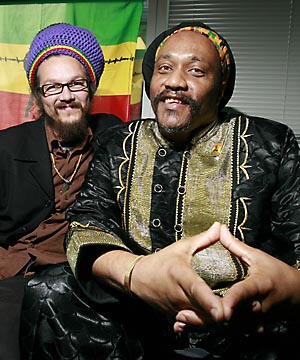
It is my belief that the global appeal and spread of the Jamaican Rastafarian movement can be linked to a number of elements or factors.

The first is the pre-eminent position the Bible holds in Rastafarian ritual and ideology. Second, the stress Rastas place on healthy, natural living and their sub sequent rejection of Western artificiality in the realms of food, medicine, social relationships, etc.

Third, Rastas’ outspoken condemnation of the hypocrisy, corruption, injustice, and white biases inherent in colonial and neocolonial societies and institutions.

Fourth, Rastas’ exhortation to the colonized and subjugated peoples of the world to take pride in their ancestral heritage and culture and to look to their own indigenous traditions for guidance and support.

Fifth, the amorphous and decentralized nature of the movement, which gives adherents everywhere the freedom and flexibility to select and interpret specific aspects of Rastafarian religion and culture in a way that is best suited to their own needs and situations. And finally, but perhaps most importantly, the powerful links that exist between the movement and various aspects of contemporary transnational popular culture – namely music, drugs, and fashion.

Found in Conclusion, from:  TRANSNATIONAL POPULAR CULTURE AND THE GLOBAL SPREAD OF THE JAMAICAN RASTAFARIAN MOVEMENT, by  Neil J. Savishinsky.

Source: NWIG: New West Indian Guide / Nieuwe West-Indische Gids, Vol. 68, No. 3/4 (1994)

Image credit: ROBERT KITCHIN/The Dominion Post

ON REGGAE RASTA


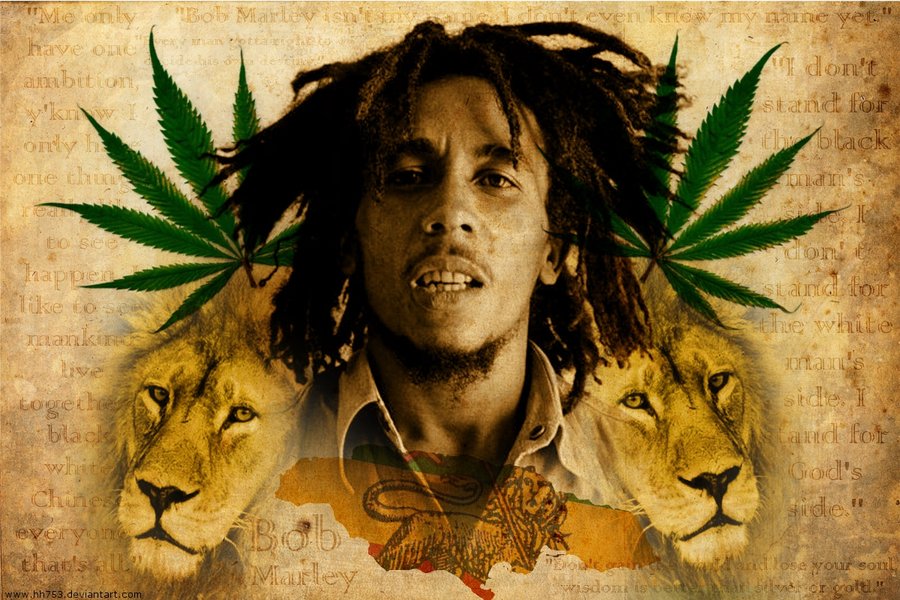
Reggae, the music synonymous with Rastafari and its icon. Bob Marley, was created from the blending of African, neo-African, and African-American musical styles. The Rastafaris were chiefly responsible for introducing the African and neo-African elements into reggae music. Linking reggae and the culture of Rastafari to Africa, Mervyn Alleyne argues that reggae, because of its strong connections to Rastafari and its socially and politically conscious lyrics, is representative of the “traditional African fusion of the secular and religious and the symbiotic interaction of religion (including music and dance) and politics.” Janet DeCosmo also contends that reggae can be seen as a modern continuation of social commentary that is expressed in the oral traditions of African culture.

These African elements tend to underscore the fact that some of the Caribbean musical styles have strong links to an African musical past. As Neil Savishinsky  put it, “reggae, along with other forms of African-American and Caribbean music, may in fact, represent a kind of ‘re-Africanisation’ process….”

More importantly, however, is the fact that reggae music, in addition to being a powerful medium of communicating the message and spirit of Rastafari, has also provided Rastafaris with a distinct identity. It [reggae] is now regarded as “one of the most essential elements of religious expression and shared group identity”.

Found in  Reafricanizing the Caribbean: Black Power and Rastafari Styles.

From:  Resistance, Essentialism, and Empowerment in Black Nationalist Discourse in the African Diaspora: A Comparison of the Back to Africa, Black Power, and Rastafari Movements.

By:  Simboonath Singh in  Journal of African American Studies, Winter 2004, Vol. 8, No. 3, pp. 18-36.

Bob Marley Wallpapeer by HH735

ON EDIBLE AND MEDICINAL PLANTS

kuduss

From Cannabis sativa: An ancient wild edible plant of India
By Mohammed Kuddus, Ibrahim A. M. Ginawi and Awdah Al-Hazimi in Emir. J. Food Agric. 2013.