On International Reggae and secularization of Rastafari 1972-1980

#rebelmusic #reggae #rasta
Ultimately, however, international reggae‘s appeal to international audiences may have had more to do with changes in the image of reggae artists, the packaging of the albums, and the sound of the music itself.

In his efforts to market the Wailers, for example, Blackwell first molded the Waiters‘ image into that of a rock-and-roll group. While reggae “groups” typically had consisted of a loose collection of singers and hired studio musicians, Blackwell promoted the Wailers as a stable, self-contained “band”—much like the Rolling Stones or Led Zeppelin.
Second, Blackwell led a new trend among Jamaica’s record producers toward original, thematic, and full-length LP (long-play) albums, again following the lead of rock-and-roll groups. Previously Jamaica’s
record producers had distributed mostly singles or cheaply produced compilations of “greatest hits”.

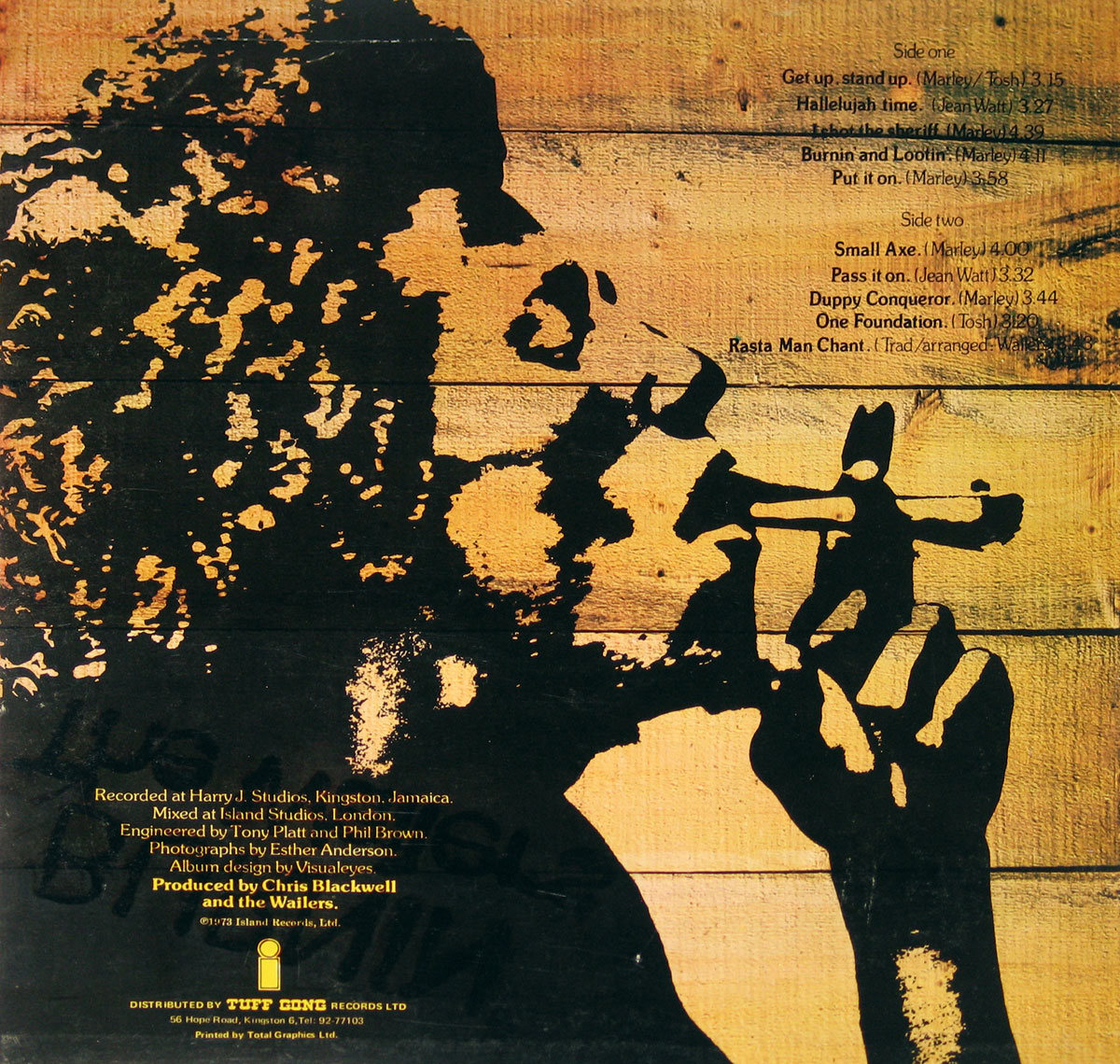
Finally, those albums came packaged in glossy, well-produced jackets promoting the image of the rebellious, ganja-smoking Rastafarian. On the back cover of the Waiters‘ 1973 album Burnin‘, for example, Marley was pictured smoking a 12-inch spliff, or marijuana cigarette. On Peter Tosh‘s 1976 album, Legalize It, the singer was photographed crouched down in a ganja field. Reggae album covers also emphasized the Rastafarian’s symbol of black defiance, the dreadlocks, or displayed the Ethiopian colors of red, green, and gold. The cover of the Wailers‘ 1980 album Uprising, for example, featured a drawing of Bob Marley, along with the album’s title in red, and a background of green mountains
and a gold sun.

While most of the major instrumental innovations of international reggae were established during the early reggae period, international reggae was marked by a more sophisticated and polished studio sound. Most early reggae songs were recorded in primitive studios in Jamaica. International reggae, however, generally was recorded in state-of-the-art studios in the United States or Great Britain.

According to Jones, this helped to undermine “the common accusation made by rock fans that reggae was a music of ‘inferior’ quality”. In the first attempt to reverse this trend, Chris Blackwell took the Wailers‘ instrumental tracks for Catch a Fire, previously recorded in Jamaica, and remixed, edited, and mastered the tracks in a London studio.

Rock critics Ed Ward, Geoffrey Stokes, and Ken Tucker highlighted the dramatic change in reggae’s new sound: “Catch a Fire” was a “revolutionary example of reggae recording, far superior in its technology than most other reggae records”.

U.S. and British record producers also manipulated the instrumentation in reggae arrangements to create a lighter, “softerreggae. Some U.S. record producers would deemphasize reggae’s dominant instruments, the electric bass guitar and drums, and push the keyboard and electric guitar to the front of the mix. In 1980, Jamaican dub poet Linton Kwesi Johnson provided a clear rationale for the systematic manipulation of the reggae sound:
“[there was the] belief that the hard Jamaican sound, with the emphasis on the drum and the bass, would not be as accessible to the non-Jamaican listener as a lighter sounding production would be”.

To appeal to international audiences, reggae musicians also incorporated familiar genres of American music into the reggae arrangement.

During the remixing of the WailersCatch a Fire, for example, Blackwell dubbed traditional rock-and-roll instruments, including rock guitar and synthesizer, over the reggae beat. During the recording of
the same album, a session guitarist, Wayne Perkins, also added guitar solos. Throughout their career, the Wailers dabbled in blues (“Talkin’ Blues” [Natty Dread]), funk (“Is This Love?” [Kaya]), and folk music
(“Redemption Song” [Uprising]). Similarly, Toots and the Maytals, in their 1973 Funky Kingston, fused R&B and reggae into the album’s title song.

In sum, the new international success of reggae music in the 1970s may have been more the result of marketing and changes in its sound than changes in its “message.” Reggae was still a “rebel music.” Growing up in some of Jamaica’s worst slums, reggae musicians still critiqued Jamaica’s neocolonial society. Reggae musicians also expressed concern about international affairs, specifically political problems on the African continent. While still sensitive to the problems at home, they also began
to identify themselves more as Africans than Jamaicans. In the final analysis, however, reggae’s international success probably was more the result of changes in its sound. Record producers improved and “softened” the reggae sound and incorporated new instruments, such as synthesizers and rock guitars, into the reggae arrangement.
Reggae musicians also borrowed freely from musical genres including rhythm and blues and funk. Yet whatever the explanation, reggae’s sudden status as an international musical sensation focused unprecedented attention on the Rastafarian movement and exacerbated tensions within the move-ment. Indeed, the music created whole new groups of supposed Rastafarians apparently attracted to the movement by little more than the image of the “Rastaman” and the music itself. These “pseudoRastafarians had little in common with traditional Rastafarian principles and beliefs.

Parts of Chapter Reggae Music in the 1970s: “Bubbling on the Top 100” from:

Stephen A. King (1998) International reggae, democratic socialism, and the secularization of the Rastafarian movement, 1972–1980, Popular Music and Society, 22:3, 39-60,
DOI: 10.1080/03007769808591713
On Emperor Haile Sellassie I as the Living God

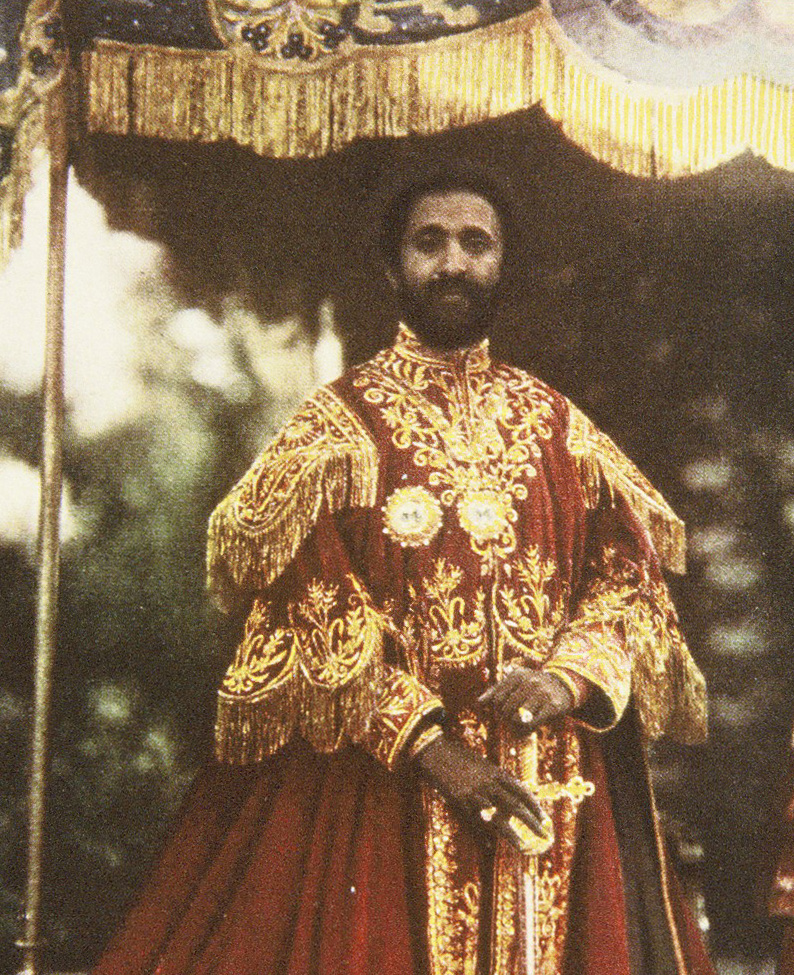
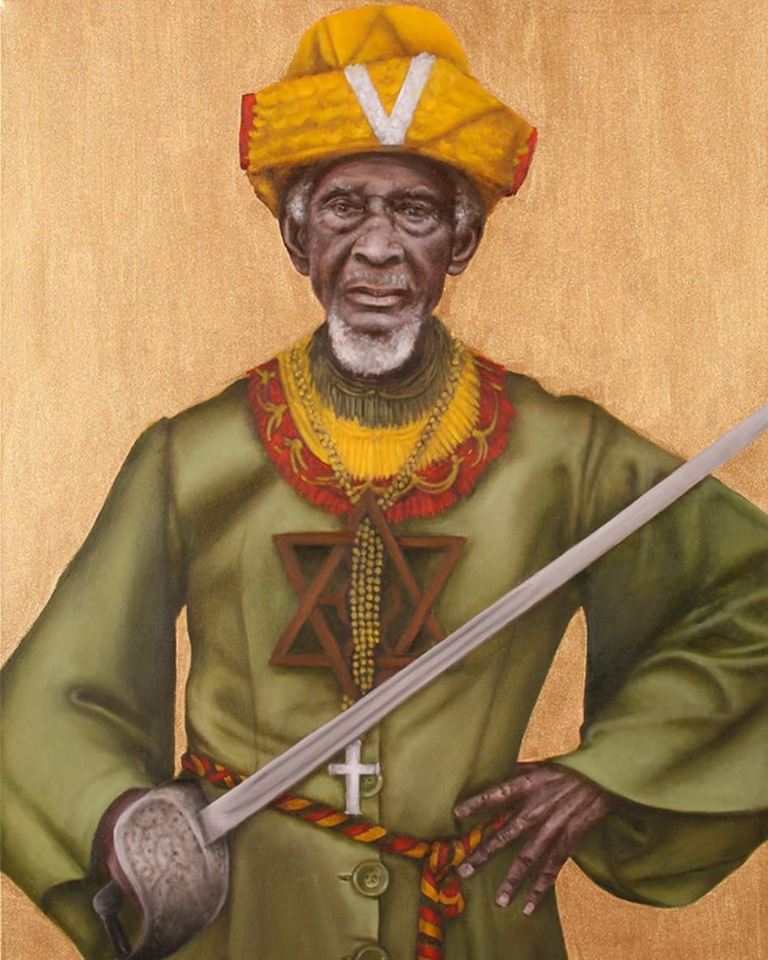
The doctrine that Ras Tafari known to the world as the Emperor Haile Sellassie I of Ethiopia, is the Living God, was developed by several persons independently.

Of these Mr. Leonard P. Howell is genuinely regarded as being the first to preach the divinity of Ras Tafari in Kingston. Howell is said to have fought against King Prempeh of Ashanti (1896), and claimed to speak an African language.

‘The Promised Key’, a basic Ras Tafari text, published in Accra, Ghana around 1930, shows clear evidence of Jamaican authorship. (Jamaica Times 28th May 1938).

Howell also spent several years in the north-eastern U.S., where he came into contact with black and white racism.

Another early preacher was Mr. Joseph Nathaniel Hibbert. Mr. Hibbert was born in Jamaica in 1894, but went with his adopted father to Costa Rica in 1911, returning to Jamaica in 1931. In Costa Rica Mr. Hibbert had leased 28 acres, which he put in bananas. In 1924 he had joined the Ancient Mystic Order of Ethiopia, a Masonic society the constitution of which was revised in 1888, and which became incorporated in 1928 in Panama. Mr. Hibbert became a Master Mason of this Order, and, returning to Jamaica, began to preach Haile Sellassie as the King of Kings, the returned Messiah and the Redeemer of Israel.

This was at Benoah District, St. Andrew, from whence he moved to Kingston to find Howell already preaching Ras Tafari as God at the Redemption Market.  Mr. H. Archibald Dunkley is another man who may claim to have brought the doctrine to Jamaica. Mr. Dunkley was a Jamaican seaman on the Atlantic Fruit Company’s boats, and finally quit the sea on the 8th December 1930, when he landed at Port Antonio off the s.S. St. Mary. Coining to Kingston, Dunkley studied the Bible for two-and-a half years on his own, to determine whether Haile Sellassie was the Messiah whom Garvey had prophesied. Ezekiel 30, I Timothy 6, Revelation 17 and 19 and Isaiah 43 finally convinced him.

In 1933 Dunkley opened his Mission, preaching Ras Tafari as the King of Kings, the Root of David, the Son of the Living God, but not the Father Himself. Other early preachers include Robert Hinds, who joined Howell, and Altamont Read who turned his following over to one Mr. Johnson when he became Mr. N. W. Manley’s bodyguard about 1940.

Found in: HISTORY OF THE MOVEMENT, from:
The Rastafari Movement In Kingston, Jamaica. PART 1
Authors: M. G. SMITH, ROY AUGIER and REX NETTLEFORD
Source: Caribbean Quarterly, Vol. 13, No. 3 (September 1967)

Image source: Colin Edward Murray Art

On Lalibela pipe and coffee

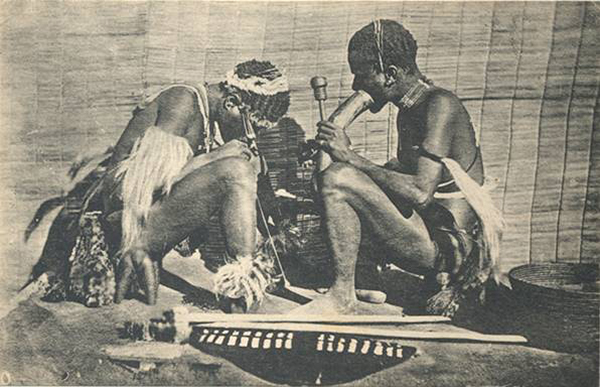
Two of the pipes from Lalibela cave were subsequently tested for cannabis residue on the inside of the bowls. These tests showed conclusively that the two pipes in question were definitely used for the smoking of cannabis. This, together with the fact that no evidence of elbow-bend pipes was found, has been taken as evidence that cannabis was smoked in water pipes in thirteenth-or fourteenth-century Ethiopia. However, caution must be exercised in drawing this conclusion. There was no direct correlation between the pipes and any dates. Rather there was a general correlation between the pipes and the dates, since both were from the same levels. The sites were rather disturbed, and there was evidence that levels may have been contaminated by the extensive digging of pits. In addition, the culture of level II in both sites was similar to that of the people of the area today. Dombrowski postulated only that the excavation showed that Semitic-speaking Ethiopians had reached the Lake Tana area by c. I I00.

There is thus no compelling reason to assume that the pipes in question were deposited before the arrival of tobacco, although that is the most likely hypothesis, and it is known that these pipes were used for smoking something other than tobacco. Our best guess would be that these pipes were used before the introduction of tobacco from the New World, but this is far from proven. Perhaps advances in radiocarbon technology will allow us to obtain reliable dates from the residue in the pipes which would settle the issue of their dates. In the meantime Ethiopia, rather than Persia or southern Africa, has become the most likely place of origin of the water pipe, which may have spread during medieval times on routes similar to those used by coffee, another Ethiopian innovation.

From: ARCHAEOLOGICAL DATA, found in:

African Smoking and Pipes

Author: John Edward Philips

Source: The Journal of African History, Vol. 24, No. 3 (1983)

Image source: Cannabis and Tobacco in Precolonial and Colonial Africa 

On Haile Selassie as God and King

“I know that the Jamaicans are here because of our king,” Daniel Wogu, an eighteen-year-old student and Shashemene inhabitant working toward acceptance in a medical program, told me. “They believe that he is sent from God to save them or make the black people free from slavery. They have their own history,” he continued. “As I have learned
from Ethiopian history, they say that our king went to their country to visit and there were some unexpected happenings. There was rainfall or something. They say then that this proves that Haile Selassie is not actually a man, but is God.”

Henock Mahari, an Ethiopian reggae musician born and raised in Addis Ababa, the city where he still lives and works, said something similar: “He was once in Jamaica and it hadn’t rained, and then it did rain. They accepted him as a God because of this miracle. They see him as a messiah and call Ethiopia their Promised Land and leave their home to come here and finish their life here.”

In a general discussion with my hundred-strong English language class at the Afrika Beza College, a female student told me that “Jamaican people live in Shashemene and they like Ethiopian people very much because Haile Selassie went to their town and at that time there is no rain. When Haile Selassie got there, there was rain. So, after that day, Jamaican people like Ethiopia very much.”

Shemelis Safa, a high school teacher in the town, had a similar explanation for why Rastafari move to Shashemene:
As I know, Haile Selassie went to Jamaica. It was very dry and they needed rain. Unfortunately, when this king arrived in Jamaica, the rain came. There started a superstition, a belief—“oh this is a good person,” they said. Their famous singer Bob Marley and other leaders told the people that the King is a very nice king and Ethiopia is very nice, so they associate the king with their religion. . . . Haile Selassie is from the Solomonic dynasty and they consider Haile Selassie God, so they respect him more than the people in Ethiopia.
We Ethiopians saw Haile Selassie as a king—a man who made many mistakes and did some good things.

Found in The Miracle Story, from Chapter:
Christianity and the King, Marriage and Marijuana.
Book Title: Visions of Zion: Ethiopians and Rastafari in the Search for the Promised Land
by Erin C. MacLeod. NYU Press. (2014)
Image source: African Kings and Queens and world Kings and Queens in forum Deshret at EgyptSearch Forums.

WHAT HAPPENED WHEN HAILE SELASSIE WENT TO JAMAICA?

What happened when Haile Selassie went to Jamaica?

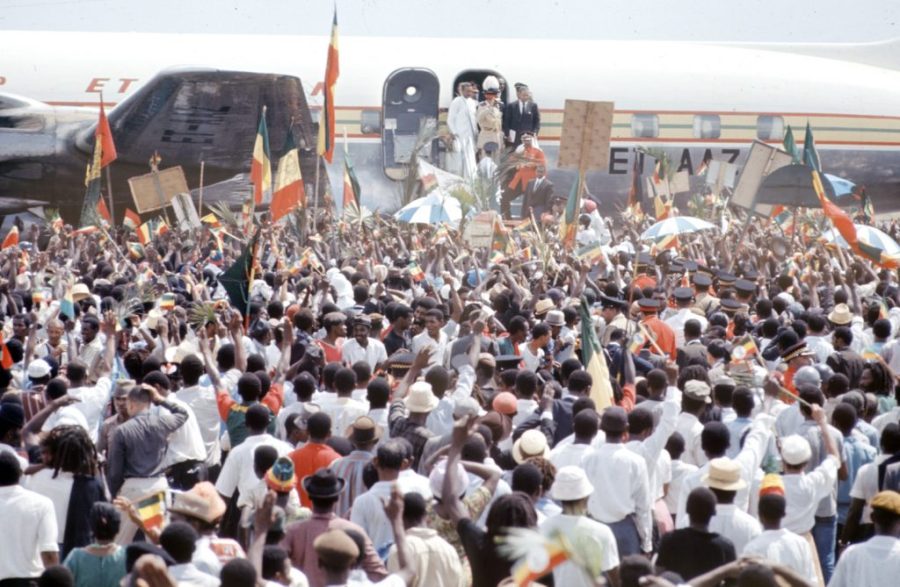
On April 21, 1966, Haile Selassie visited Jamaica. Remember, this was 36-years after his coronation and the enthusiasm of Rasta was undimmed. There was now a new generation of Rastas, many of whom still harboured the vision of an exodus. But by now, many had built an Rastafarian worldview: Babylon was how they described the white-dominated post-colonial system, which directed its efforts to controlling black people and keeping them in a condition Rastas described as “mental slavery,” meaning they were still subservient to whites and accepted their own inferiority. Haile Selassie was overwhelmed by the rapturous reception and clearly liked the lavish praise and worshipful admiration of Rastas.
He did nothing to dispel beliefs in his divine status. By this time, Garvey had died and his criticism of Haile Selassie forgotten. The Emperor himself had been ousted in 1936 after Italy invaded Ethiopia, or Abyssinia, as it was then known. He lived in exile; this, in fact, was one of the principal reasons Garvey attacked him – for leaving his own countrymen at the mercy of Italy. Haile Selassie reinstituted his powers as emperor in 1941, with support from Britain.

We don’t know for sure, but it’s likely that when Haile Selassie visited, a 21-year-old Jamaican who had, the year, before formed a trio called the Wailers, was among the rapturous thousands honouring their redeemer. His name was Robert Nesta Marley.

From HAILE SELASSIE — RASTAFARIAN MESSIAH by Ellis Cashmore.