Alborosie – Police & DUB – Hermit Dubz remix

On selecting Madonna in a dance

It was not unusual for the selector to play Latin, Hip Hop, Disco, Rock & Roll, other music, including songs like Madonna’s ‘Like a Virgin’, and ‘Ain’t Nothing Going on but the Rent’ as examples. Of course these constitute hit songs in their particular genres and their popularity catapulted them into the Jamaican dance scene where they are baptized in Dancehall aesthetic and practice (‘dance- hallified’), especially through dance styles such as the ‘bubble’ along with other directions from the selector. These directions continued in the typical Dancehall style until dawn when the event ended.

From: The dance, found in:
Making space: Kingston’s Dancehall culture and its philosophy of ‘boundarylessness’.
Author: Sonjah Stanley Niaah. 2004. African Identities.
Image source: PASSA PASSA KINGSTON JAMAICA

Stalawa ft Nazizi – Ukiangalia

Scotch Bonnet Records spice up tings with something completely different from Stalawa’s kitchen. A nice soul food meal well steamed for over 3 years. Take heed and listen!

On One-drop

This unique drumbeat can be found in all genres of post-1960 Jamaican popular music, but, when used in this relatively slow and relaxed style of reggae, it provides a significant challenge to performers unfamiliar with Jamaican popular music. During my first attempts to play over this drumbeat, there was a constant urge to count the third-beat emphasis of the kick drum and side-stick as the first beat of the measure. The absence of the rhythmic anchor, normally provided by the kick drum on the first beat of the measure in most European and North American rock/pop music, was initially disconcerting.

Although the one-drop employs the hi-hat, to maintain the motion of the beat during the course of the measure, it is often performed with rubato, forcing the other rhythm section players to establish a timing reference from a rhythmic cycle that can be measured in bars.
The unique nature of this drumbeat demands that the performers in the rhythm section collectively share the responsibility of establishing and maintaining rhythmic motion and stability. It is in this context that the challenge of playing competent reggae guitar becomes most evident.

Found in: Jamaican Rhythmic Perception, from:
Ray Hitchins (2013) Rhythm, Sound and Movement: The Guitarist as Participant-Observer in Jamaica’s Studio Culture, Ethnomusicology Forum.

Jah Sonic Muziek – The Curve EP

Jah Sonic coming with EP featuring 2 vocal cuts, a sax and a dub cut.
Straight outa Amsterdam, mastered by mighty Dub Creator.

Egoless – Live at Outlook 2018

Straight from the Outlook mix series here comes Deep Medi on the beach with mighty Egoless live set. Presumably sound system is royal Dub Smugglers posse and crew.  You can hear massive and patrons wild out and wail giving it a warmer than warm and realer than real type of feel to recording.
It was a infamous  moment when special Croatian Egoless dubbed out with one of his native mammoth live performances and stepped up the beach with his filling of creations, echoes, reverb and delays. 🙂

On Lalibela pipe and coffee

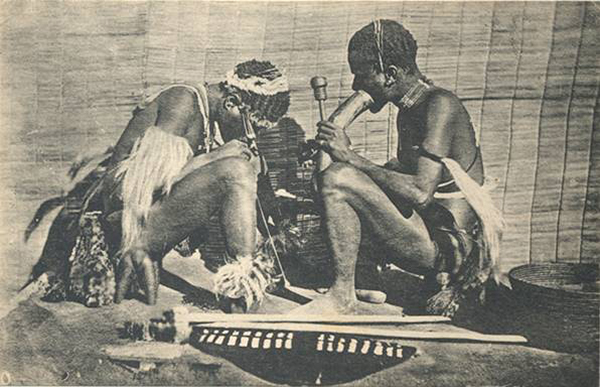
Two of the pipes from Lalibela cave were subsequently tested for cannabis residue on the inside of the bowls. These tests showed conclusively that the two pipes in question were definitely used for the smoking of cannabis. This, together with the fact that no evidence of elbow-bend pipes was found, has been taken as evidence that cannabis was smoked in water pipes in thirteenth-or fourteenth-century Ethiopia. However, caution must be exercised in drawing this conclusion. There was no direct correlation between the pipes and any dates. Rather there was a general correlation between the pipes and the dates, since both were from the same levels. The sites were rather disturbed, and there was evidence that levels may have been contaminated by the extensive digging of pits. In addition, the culture of level II in both sites was similar to that of the people of the area today. Dombrowski postulated only that the excavation showed that Semitic-speaking Ethiopians had reached the Lake Tana area by c. I I00.

There is thus no compelling reason to assume that the pipes in question were deposited before the arrival of tobacco, although that is the most likely hypothesis, and it is known that these pipes were used for smoking something other than tobacco. Our best guess would be that these pipes were used before the introduction of tobacco from the New World, but this is far from proven. Perhaps advances in radiocarbon technology will allow us to obtain reliable dates from the residue in the pipes which would settle the issue of their dates. In the meantime Ethiopia, rather than Persia or southern Africa, has become the most likely place of origin of the water pipe, which may have spread during medieval times on routes similar to those used by coffee, another Ethiopian innovation.

From: ARCHAEOLOGICAL DATA, found in:

African Smoking and Pipes

Author: John Edward Philips

Source: The Journal of African History, Vol. 24, No. 3 (1983)

Image source: Cannabis and Tobacco in Precolonial and Colonial Africa 

On industry, slackness and spirituality

Another influence was the growing backlash against “slackness” and “violence” music in certain circles. Hence the “banning” of Lady Saw from  performing in Montego Bay proclaimed by that city’s Mayor after her notorious success at one of the music festivals there; or the decision by various members of the Jamaican Federation of Musicians to refuse to provide musical backing for singers of slackness or violence, or a renewed policy of filtering of much of this music by certain of the radio stations and a corresponding promotion of “spiritual” music.

The conditions in the “industry” were therefore conducive to a renewal. It is obvious that the swing benefitted enormously from the emergence of heavily “spiritual” singers of the quality of Garnet Silk in the early nineties, or Luciano slightly after, but the dance hall also experienced a duality in some and an outright “conversion” in others of its major figures. Lady Saw, for example, the top female D.J. who continues to be the undisputed queen of sex lyrics, can sing a highly successful song of praise and thanks to God (“Glory be to God”) for her material advancement resulting from those same “slackness” songs. In the midst of his 1991 album of sex lyrics, “Gold”, Capleton sings a song “Bible fi dem,” proclaiming his religious righteousness. It is neither that these singers are being inconsistent nor that they are being opportunist. Indeed, their reconciliation of sex with spirituality is consistent with a value system that does not dichotomize carnality and spirituality.

Naturally, such a mix does not meet with approval from orthodox Rastafari. In discussing “the anointing” of dancehall, Yasus Afari argues that: “You cannot accept just any song into the dance because the dance is to praise Jah.”

Even Capleton becomes intolerant of sexual lyrics in his more recent phase. And yet, Bob Marley had no difficulty in singing songs of sexual expression, if not slackness, recognizing the validity of this human dimension, just as front-line “conscious” singers like Buju Banton today defend the mix of carnality and spirituality.

Found in: Babylon to Vatican: Religion in the Dance Hall
Author: Joseph Pereira
Source: Journal of West Indian Literature, Vol. 8, No. 1 (OCTOBER 1998)

Image source: Lady Saw Net Worth

malakai beats – The Art of Koi Keeping

If you getting into the art of Koi keeping, Japan pop beats and Wu Tang flips, check out malakai beats:

Secret Archives of the Vatican – Barsoom

If you never ear about Secret Archives of the Vatican, best guess is that you never used “ethnic”, “esoteric” and “eclectic” in the same sentence.
The Sleeper Has Awakened!

On sexism in Rasta

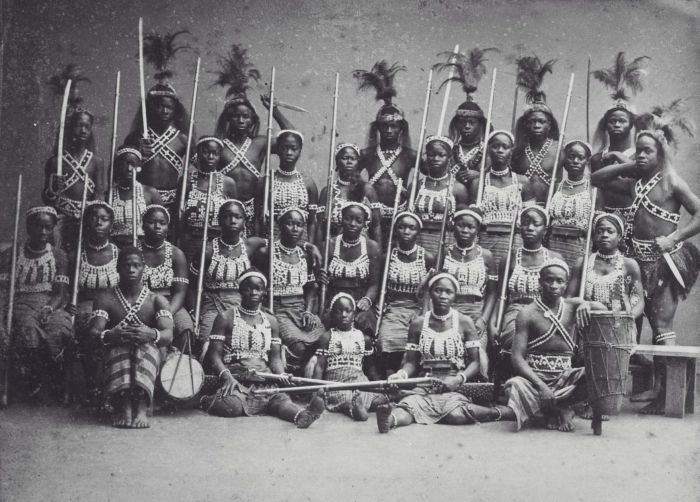
There are some serious ideological problems in Rasta women confronting the sexism within society and within Rasta itself. Any criticism regarding the status of Rasta women within the movement has been discarded as a white construction of reality unsuitable to Black cultures and any mention of gender liberation berated as western, feminist ideology. While a feminist ideology may not provide all the ingredients for a holistic African liberation, for too long has there been little real strategic change for women in Rastafari. In the same way Black men, in negotiating their freedom, have rejected the patronising efforts of white liberals in favour of an innate desire to chart their own liberation, so too must women design their own path to empowerment. The fundamental hurdle to the solution is that racial oppression is more readily understood and addressed than gender oppression.

Black women’s liberation is already stilted by the time they realise that their oppression is tied to their relations with their own brethren. In my experience, Black men support women’s protests as long as they are aimed at the white middle classes. However, when the subject of gender oppression is revealed and the Black man himself is implicated in this oppression, their tones become hushed.

Found in: The movement of Jah people!

from

Great Black Warrior Queens: An examination of the gender currents within Rastafari thought and the adoption of a feminist agenda in the Rasta women’s movement

by LISA-ANNE JULIEN (2003) Agenda.

Image source: Meet the Most Feared Women in History

On Haile Selassie as God and King

“I know that the Jamaicans are here because of our king,” Daniel Wogu, an eighteen-year-old student and Shashemene inhabitant working toward acceptance in a medical program, told me. “They believe that he is sent from God to save them or make the black people free from slavery. They have their own history,” he continued. “As I have learned
from Ethiopian history, they say that our king went to their country to visit and there were some unexpected happenings. There was rainfall or something. They say then that this proves that Haile Selassie is not actually a man, but is God.”

Henock Mahari, an Ethiopian reggae musician born and raised in Addis Ababa, the city where he still lives and works, said something similar: “He was once in Jamaica and it hadn’t rained, and then it did rain. They accepted him as a God because of this miracle. They see him as a messiah and call Ethiopia their Promised Land and leave their home to come here and finish their life here.”

In a general discussion with my hundred-strong English language class at the Afrika Beza College, a female student told me that “Jamaican people live in Shashemene and they like Ethiopian people very much because Haile Selassie went to their town and at that time there is no rain. When Haile Selassie got there, there was rain. So, after that day, Jamaican people like Ethiopia very much.”

Shemelis Safa, a high school teacher in the town, had a similar explanation for why Rastafari move to Shashemene:
As I know, Haile Selassie went to Jamaica. It was very dry and they needed rain. Unfortunately, when this king arrived in Jamaica, the rain came. There started a superstition, a belief—“oh this is a good person,” they said. Their famous singer Bob Marley and other leaders told the people that the King is a very nice king and Ethiopia is very nice, so they associate the king with their religion. . . . Haile Selassie is from the Solomonic dynasty and they consider Haile Selassie God, so they respect him more than the people in Ethiopia.
We Ethiopians saw Haile Selassie as a king—a man who made many mistakes and did some good things.

Found in The Miracle Story, from Chapter:
Christianity and the King, Marriage and Marijuana.
Book Title: Visions of Zion: Ethiopians and Rastafari in the Search for the Promised Land
by Erin C. MacLeod. NYU Press. (2014)
Image source: African Kings and Queens and world Kings and Queens in forum Deshret at EgyptSearch Forums.